
 Source:
 Algerian Iris (Iris unguicularis) short overview
Algerian Iris (Iris unguicularis) is an evergreen, rhizomatous iris that brings color to the quietest part of the gardening year. From late winter into early spring, short stems emerge among narrow, arching leaves and carry fragrant lilac-purple flowers marked with white and yellow. Give it excellent drainage, neutral to slightly alkaline soil, and full winter sun or light seasonal shade. It is a reliable choice for protected beds, rock gardens, and containers in much of USDA Zones 7–9.
Taxonomic classification
Algerian Iris (Iris unguicularis) care guide
Light and placement
Grow in full sun where winters are mild, or in dappled shade beneath deciduous trees where winter and early-spring light still reach the plant. A south- or west-facing wall can provide useful shelter. Too little light may reduce flowering and produce weak, lax leaves; excessive reflected heat with dry roots can scorch foliage.
Watering and humidity
Water deeply after planting and during the first growing season, then let the soil dry partly between waterings. Established plants tolerate dry conditions, especially in summer, but should not be left bone-dry while forming flower buds. Reduce watering in cool, wet weather and ensure excess water drains quickly.
Soil and growing medium
Use a gritty, sharply drained soil or potting mix. Sandy, loamy, rocky, or calcareous conditions are suitable. Neutral to slightly alkaline soil is preferred; avoid heavy, persistently wet ground and improve clay with mineral grit and organic matter without burying the rhizome.
Feeding
Feed lightly in early spring as new growth resumes with a balanced, low-nitrogen fertilizer, or top-dress with a modest amount of mature compost. Do not overfeed or apply strong fertilizer to dry soil. Avoid late-summer nitrogen that may encourage soft growth before cold weather.
Growth and habit
Forms a dense evergreen clump from short rhizomes and remains attractive after flowering. It is slow to settle after disturbance, so avoid unnecessary moving. Thin old or damaged leaves in spring and divide only when the clump becomes crowded or flowering declines.
Planting and repotting
Plant in late summer or early fall while the rhizomes are dormant, setting them shallowly with the upper surface at or just below soil level. Space plants about 12–18 inches apart. Water after planting, then allow the soil surface to dry between waterings as roots establish.
Repot container plants only when crowded, preferably in late summer after flowering and active growth. Use a wide, stable container with drainage holes and a gritty, alkaline-leaning mix. Keep the rhizome near the surface rather than deeply buried.
Propagation and pruning
Propagation
Divide established rhizomatous clumps in late summer or early fall, replanting divisions shallowly. Seed propagation is possible from fully dried capsules but is slower and may not reproduce named cultivars faithfully.
Pruning
Remove yellow, brown, or damaged leaves in spring after flowering. Do not cut healthy evergreen foliage heavily, since it supports the rhizome before and after bloom. Remove spent flower stems if seed is not desired.
Overwintering
In Zones 7–9, leave plants outdoors in a sheltered, well-drained position. In colder areas, mulch lightly after the ground cools and protect the rhizome from prolonged hard freezes, but keep mulch away from the crown. Container plants are more vulnerable and should be moved against a protected wall or into an unheated, bright shelter.
Uses
Use as a winter-flowering accent in protected borders, rock gardens, woodland edges, south-facing sites, and containers. The fragrant blooms can be cut for short indoor arrangements. It is not an edible plant, and all plant parts should be kept away from children and pets.
Appearance
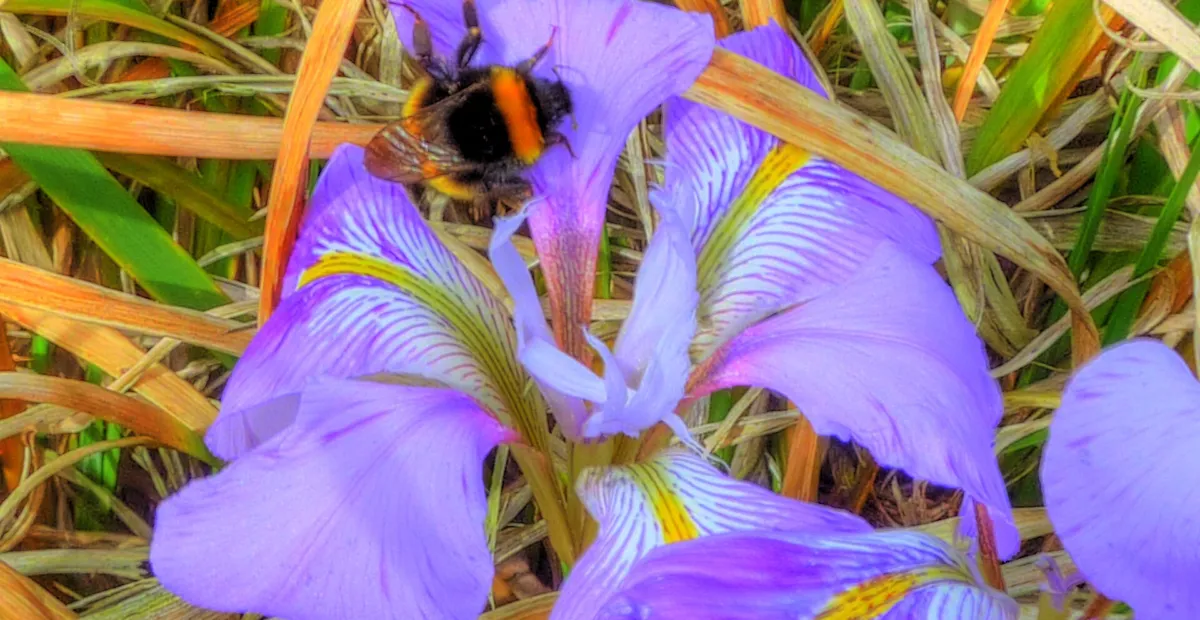
The plant has narrow, evergreen, strap-like leaves that arch outward into a dense clump. Short green flowering stems emerge within the foliage, carrying solitary iris flowers close to the leaves. The flowers are commonly lilac-purple with pale and yellow throat markings, while cultivar colors may differ.
Flowering
Flowers are produced from late winter into early spring, often when few other perennials are blooming. The short flower stems rise within or just above the leaf clump. Individual flowers are iris-like, fragrant, and typically lilac-purple with contrasting pale and yellow markings; color varies among forms and cultivars.
Pollination and visitors
The open, patterned iris flowers are accessible to visiting insects during a season with relatively few blooms. Extension sources list butterflies and hummingbirds among landscape visitors, while broader iris floral biology supports insect pollination. A species-level primary pollinator for this exact iris was not confirmed.
Iris unguicularis photos
Click any photo for a larger view. Source, author and license are shown separately.
Diseases and pests
Diseases
Prevent rhizome rot by planting shallowly in well-drained soil and avoiding summer or winter waterlogging. Remove damaged foliage and divide overcrowded clumps with clean tools. Iris leaf spot and bacterial soft rot may occur where foliage stays wet or sanitation is poor.
Pests
Watch for iris borer where it occurs, aphids on emerging growth, and slugs or snails in damp conditions. Remove debris, maintain airflow, inspect leaves and rhizomes, and use locally approved controls only when damage is significant.
Related diseases and pests
Only Plant Doctor profiles whose host data indicate this plant may be affected are shown here.
 PestStrawberry foliar nematodeAphelenchoides fragariae
 DiseaseBacterial soft rotPectobacterium carotovorum
 Environmental stressWaterlogging
 DiseaseRhizopus soft rotRhizopus stolonifer
 Environmental stressPoor drainage stress (waterlogging)
 DiseaseAlternaria leaf spot and fruit rotAlternaria alternata
 DiseaseRhizoctonia DiseasesRhizoctonia solani Kühn
 DiseaseBacterial WiltRalstonia solanacearum species complex
Toxicity and pollen
Iris species are recognized as toxic to dogs and cats, with the rhizomes containing the highest concentration of irritant compounds. Ingestion may cause drooling, vomiting, diarrhea, or lethargy. Handle rhizomes carefully, keep them away from pets and children, and seek medical or veterinary advice after ingestion.
- Typical season
- Late winter to early spring during flowering
- Pollination / pollen
- Primarily insect-transferred pollen
As an insect-pollinated iris, pollen is generally released within the flower rather than dispersed freely by wind. That suggests lower airborne exposure than wind-pollinated plants, but it does not establish zero allergy risk; sensitive gardeners may still prefer gloves during handling.
Native habitat
Native from northwestern Africa through parts of the eastern Mediterranean, including Algeria, Morocco, Tunisia, Greece, Türkiye, and the Levant. It is associated with Mediterranean climates and subtropical habitats, typically in well-drained soils with seasonal dryness and winter or early-spring growth.
Interesting fact
This species flowers during the winter-to-early-spring period rather than the usual iris season. Its evergreen leaves form a persistent architectural clump. The species is rhizomatous, although some horticultural references describe it loosely as bulb-like. Seeds may bear structures associated with ant dispersal.
Frequently asked questions (FAQ)
The most relevant questions about this plant, with short and direct answers.
🌱Quick care
What is Algerian Iris?⌄
Algerian Iris is the common name for Iris unguicularis, a clump-forming, rhizomatous perennial in the iris family. It is valued for flowering during the late-winter to early-spring period.
How much sun does Algerian Iris need?⌄
Algerian Iris grows best in full sun to partial shade. More sun generally supports stronger flowering, while light afternoon shade can help in hotter climates.
How often should you water Algerian Iris?⌄
Water Algerian Iris moderately while it establishes, then reduce watering once the plant is well rooted. Established plants are drought tolerant, but occasional deep watering during prolonged summer drought can improve vigor.
Is Algerian Iris evergreen?⌄
Algerian Iris usually retains its narrow, evergreen or semi-evergreen foliage in climates where winters are mild. In colder areas, foliage may suffer frost damage even when the rhizomes survive.
Is Algerian Iris easy to grow?⌄
Algerian Iris is generally easy to grow when planted in well-drained soil with adequate light. Poor drainage, excessive watering, and severe winter exposure are more likely to cause problems than ordinary neglect.
🌤️Environment and placement
Where should I plant Algerian Iris?⌄
Plant Algerian Iris in a sunny or lightly shaded location with excellent drainage. A rock garden, dry border, raised bed, or protected foundation planting can work well.
What type of soil does Algerian Iris prefer?⌄
Algerian Iris prefers well-drained sandy, loamy, rocky, or calcareous soil. Heavy clay should be amended or planted in a raised area so water does not remain around the rhizomes.
Can Algerian Iris grow in containers?⌄
Algerian Iris can grow in a container if the pot has drainage holes and the growing medium drains freely. Choose a container large enough for the clump and protect it from severe winter cold because container roots are more exposed.
Is Algerian Iris drought tolerant?⌄
Yes, established Algerian Iris is drought tolerant. Water it during extended drought, especially in the first growing season or when grown in a container.
Is Algerian Iris cold hardy?⌄
Algerian Iris is hardy with protection, but its winter performance depends on local climate, exposure, drainage, and cultivar. In colder areas, plant it in a sheltered site and use a light winter mulch without covering the crown heavily.
💧Care and problems
Why is my Algerian Iris not blooming?⌄
Poor flowering is commonly associated with insufficient light, overcrowding, root disturbance, poor drainage, or excessive fertilizer. A mature clump may also need division if flowering has declined mainly in its center.
How do I fertilize Algerian Iris?⌄
Feed Algerian Iris lightly in poor soil with a balanced, slow-release fertilizer applied around the plant rather than directly on the rhizomes. Avoid heavy feeding, which can encourage foliage at the expense of flowers and may contribute to rot.
Why are the leaves of my Algerian Iris turning brown?⌄
Brown leaves can result from frost, drought, intense heat, poor drainage, or fungal leaf spotting. Remove badly damaged or dead foliage and correct watering or drainage problems before treating for disease.
How do I prevent rot in Algerian Iris?⌄
Prevent rot by planting Algerian Iris in sharply drained soil and avoiding frequent shallow watering. Do not bury the crown or rhizomes deeply, and remove soft, foul-smelling, or visibly decayed tissue when dividing.
Does Algerian Iris need mulch?⌄
Algerian Iris can benefit from a light winter mulch in colder areas, especially when the site is exposed. Keep mulch away from the crown and avoid thick, moisture-retaining layers that can promote rot.
🪴Planting and repotting
When is the best time to plant Algerian Iris?⌄
Plant Algerian Iris in fall or after flowering when conditions are cool and the soil is workable. Avoid planting into waterlogged soil or during periods of severe heat and drought.
How deep should I plant Algerian Iris rhizomes?⌄
Plant Algerian Iris rhizomes at approximately their original depth, keeping them shallow rather than deeply buried. The crown should not be smothered, and the surrounding soil should drain freely.
Can I transplant Algerian Iris?⌄
Yes, Algerian Iris can be transplanted, but it should be moved carefully because excessive root disturbance can delay flowering. Replant divisions at the same depth and water them during dry weather while they reestablish.
✂️Propagation and pruning
How do you propagate Algerian Iris?⌄
The most practical way to propagate Algerian Iris is by dividing established clumps. Divide large sections rather than making many tiny pieces, and ensure each division retains healthy roots and foliage.
When should Algerian Iris be divided?⌄
Divide Algerian Iris in fall or after flowering has finished in spring. Division is most useful when the clump is congested or flowering has weakened in the center.
How often should Algerian Iris be divided?⌄
Algerian Iris does not need routine annual division. Divide it when the clump becomes overcrowded, declines in the center, or produces fewer flowers than it did previously.
Should I cut back Algerian Iris after flowering?⌄
Remove spent flowers and their stalks after blooming, but leave healthy green leaves in place. The foliage helps replenish the rhizomes and supports future flowering.
Can Algerian Iris be grown from seed?⌄
Algerian Iris can be grown from seed, but seed propagation is slower and less predictable than division. Seed-grown plants may take several years to flower and may not come true to a selected cultivar.
⚠️Toxicity and safety
Is Algerian Iris poisonous to dogs and cats?⌄
Yes, Algerian Iris should be treated as toxic to dogs and cats if eaten, with the rhizomes posing particular concern. Possible signs include drooling, vomiting, diarrhea, and lethargy; contact a veterinarian or animal poison service after ingestion.
Is Algerian Iris toxic to humans?⌄
Yes, Algerian Iris is toxic if eaten. Keep rhizomes, leaves, flowers, and seed material away from children, and contact Poison Control or a medical professional if ingestion occurs.
Can Algerian Iris irritate skin?⌄
Handling iris plant material may irritate sensitive skin, particularly when the plant is cut or divided. Wear gloves when working with the rhizomes and wash exposed skin afterward.
🌸Flowering and special interest
When does Algerian Iris bloom?⌄
Algerian Iris typically blooms from late winter into early spring. The exact timing varies with climate, weather, exposure, and cultivar.
Does Algerian Iris flower in winter?⌄
Yes, Algerian Iris is notable for producing flowers during winter or very early spring in mild climates. Frost or prolonged cold can delay blooming or damage open flowers.
What color are Algerian Iris flowers?⌄
Algerian Iris commonly produces blue, lavender, or violet flowers, often with contrasting markings on the falls. Cultivars may also offer paler or white flowers.
Are Algerian Iris flowers fragrant?⌄
Some Algerian Iris flowers are fragrant, although fragrance intensity varies among plants and cultivars. Fragrance is often easiest to notice during mild weather.
Similar plants
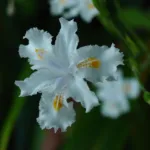 He bamboo iris (simplified Chinese: 扁竹兰 (Iris confusa) care guideIris confusa
 Siberian Iris (Iris sibirica) care guideIris sibirica
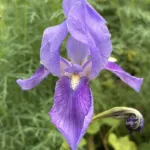 Iris x germanica (Iris germanica) care guideIris germanica
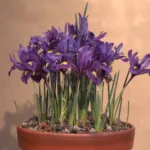 Netted Iris (Iris reticulata) care guideIris reticulata
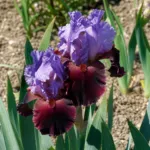 Iris ‘Romantic Evening’Iris 'Romantic Evening'
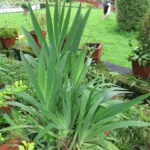 Blackberry Lily (Iris domestica) care guideIris domestica