
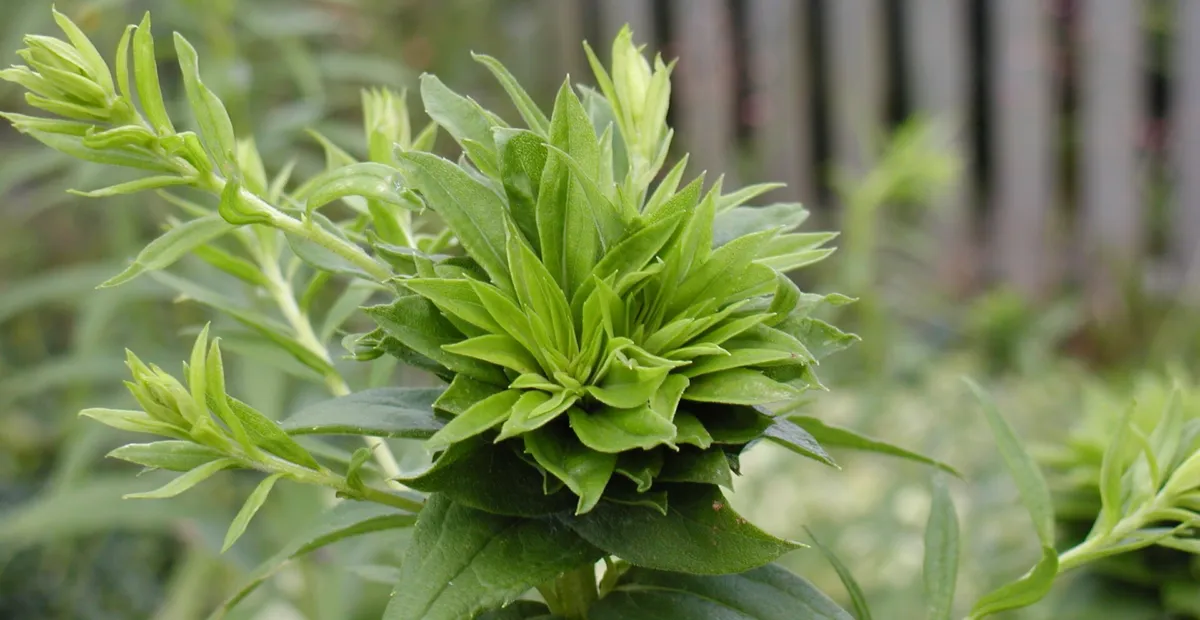
Aster yellows
‘Candidatus Phytoplasma asteris’Aster yellows overview
Aster yellows is a systemic, leafhopper-transmitted disease caused by ‘Candidatus Phytoplasma asteris’ and related strains. It affects many vegetables, ornamentals, weeds and some woody plants across the United States. Typical signs include yellowing, stunting, witches’ broom growth, leaflike green flowers and malformed roots. Infected plants do not recover, so early removal and vector management are essential.
Typical conditions
Overview
Aster yellows occurs throughout the United States and can affect hundreds of plant species, especially herbaceous plants in the aster family, but also vegetables, cereals, weeds and selected woody hosts. Symptoms vary with host species, phytoplasma subgroup, plant age and environmental conditions.
The pathogen lives in the plant phloem and in its insect vectors. Because the infection becomes systemic and cannot be eliminated from an established plant, diagnosis and management focus on confirmation, removal of infected plants, exclusion of vectors and reduction of nearby reservoirs.
Symptoms and identification
- Pale green to yellow foliage, sometimes with red or purple discoloration.
- Stunting, shortened internodes and clusters of thin, weak shoots forming a witches’ broom.
- Flowers that are dwarfed, distorted, remain green, or are partly replaced by leaflike structures called phyllody.
- Host-specific symptoms may include premature bolting, malformed umbels, hairy or thin carrot roots, undersized bulbs or tubers, and poor-quality flower spikes.
- Symptoms can resemble viral disease, herbicide injury, nutrient imbalance or genetic fasciation; laboratory testing may be needed for confirmation.
Causes and spread
Infected leafhoppers acquire the phytoplasma while feeding on an infected plant. After an internal latent period, the organism reaches the insect’s salivary glands and can be inoculated into healthy plants during later feeding. The pathogen is not spread by ordinary contact between plants and does not persist in dead plant debris, although infected crowns and roots of perennial plants may remain reservoirs while alive.
Spread is favored by movement of leafhoppers from weedy areas, cereal or forage fields, and other infected crops. Several leafhopper species can transmit aster-yellows phytoplasmas, and the vector association differs by region and phytoplasma strain.
Life cycle and persistence
The phytoplasma alternates between living plant phloem and the bodies of phloem-feeding insects. Leafhoppers acquire it during feeding, the phytoplasma multiplies or circulates within the insect, and transmission becomes possible after roughly two weeks or longer depending on temperature and vector species. Following inoculation, plants may require about 3–4 weeks or more before symptoms become obvious.
Perennial weeds and ornamentals can carry the pathogen between seasons. Many aster leafhoppers migrate seasonally in the United States, and weather fronts, crop harvest and dry conditions can alter their movement into gardens and fields.
Treatment and control
There is no reliable curative treatment for an infected garden or crop plant. Remove symptomatic plants promptly, including roots or crowns where feasible, and dispose of them in a way that prevents living leafhoppers from continuing to feed. Do not propagate from infected material.
In commercial crops, monitor vector populations with crop-appropriate scouting methods such as sweep-net sampling and use locally applicable action thresholds when available. Vector suppression can reduce new infections but cannot reverse infections that have already occurred, and symptom development may lag behind transmission.
Low-impact and biological control
Prioritize exclusion and sanitation: use insect-excluding row covers, reflective mulch, clean propagation material and prompt removal of infected plants. Reduce perennial weed reservoirs and volunteer plants without destroying beneficial insect habitat unnecessarily. Encourage a diverse beneficial-insect community, but do not rely on biological control alone because leafhoppers can transmit the phytoplasma before symptoms are visible and effective natural-enemy suppression is inconsistent.
For organic production, use only inputs permitted by the applicable USDA National Organic Program rules and the crop’s production standard; no organic material cures an infected plant.
Prevention
- Buy inspected, pathogen-free transplants, crowns, bulbs, corms and tubers.
- Scout regularly for leafhopper activity and remove plants showing characteristic symptoms promptly.
- Control perennial weeds and volunteer hosts around production areas, while recognizing that weed removal alone cannot eliminate a pathogen with such a wide host range.
- Use floating row covers over susceptible crops during the period of leafhopper activity; install them before exposure and seal edges well.
- Use light-colored or reflective mulch where practical to reduce leafhopper landing and feeding.
- Do not save seed cloves, crowns, corms or tubers from symptomatic plants.
- For valuable plants or uncertain symptoms, submit appropriate tissue to a university or commercial plant diagnostic laboratory.
Interesting facts
- Phytoplasmas lack a rigid cell wall and cannot be cultured like ordinary plant-pathogenic bacteria.
- Aster yellows is a disease name covering genetically diverse phytoplasma strains and host associations, so symptoms and vector importance can vary geographically.
- Flower parts changing into green leaves is called phyllody; it results from disruption of normal floral development.
- The pathogen has been reported from more than 300 food, forage, ornamental and weed species, but not every reported host has been confirmed with modern molecular methods.
- Seed is not considered a known pathway for aster yellows phytoplasma; vegetative propagation material and insect transmission are more important risks.
No pesticide cures aster yellows or eliminates the phytoplasma from an infected plant. Insecticides, where justified by monitoring, are directed only at leafhopper vectors and may not prevent transmission. Use only products legally authorized for leafhoppers on the specific crop or ornamental in your state and country, and follow the current product label, including restrictions, protective equipment, reentry intervals and preharvest intervals. Because labels and registrations change, consult your state extension recommendations and current label before use.
Affected plants
The plants below are linked to this problem by structured host-plant data. The list updates automatically as new plant profiles are added.
 Onion (Allium cepa) care guideAllium cepa
 Allium christophii care guideAllium christophii
 Bunching onion (Allium fistulosum) care guideAllium fistulosum
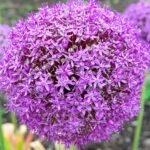 Giant Allium (Allium giganteum) care guideAllium giganteum
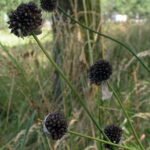 Ornamental onion (Allium) care guideAllium
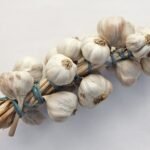 Garlic (Allium sativum) care guideAllium sativum
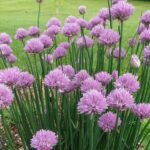 Chives (Allium schoenoprasum) care guideAllium schoenoprasum
 Ransoms (Allium ursinum) care guideAllium ursinum
 Wild leek or broadleaf wild leek (Allium ampeloprasum) care guideAllium ampeloprasum
 Shallot (Allium cepa Aggregatum Group)Allium cepa Aggregatum Group
 Cepa Group (Allium cepa Group)Allium cepa Cepa Group
 Rakkyo (Allium chinense) care guideAllium chinense