One week your houseplant looks upright and tidy. The next, its stems are reaching across the windowsill, leaning into the room or flopping dramatically over the edge of the pot. It can look like something has gone badly wrong—but sideways growth is often a message, not a mystery.
Your plant may be telling you that the light is coming from one direction, that new growth has become too soft or heavy, that the roots are struggling to anchor the top growth, or that its natural growth habit is more relaxed than you realized. The good news is that most causes are easy to investigate. Once you learn to read the shape of the plant, you can usually respond before the stems become permanently weak.
First, identify what “sideways” actually means
Not every leaning plant has the same problem. Take a moment to look at the whole plant rather than immediately adding a stake or moving it into direct sun.
- The entire plant leans toward a window: directional light is the most likely cause.
- Stems are long, thin and widely spaced: the plant is probably stretching for more light. Gardeners often call this “leggy” growth.
- One heavy stem bends or flops: the plant may simply need support, pruning or a sturdier growing habit.
- Leaves and stems droop all over: check watering, root health and temperature before assuming the plant needs more light.
- New shoots spread sideways from the base: this may be normal growth, especially in spider plants, snake plants, bromeliads and plants that produce offsets.
- The stem falls from loose potting mix: inspect the roots and the pot. A root problem may be preventing the plant from staying anchored.
The direction, texture and age of the growth provide useful clues. A firm, green stem that gradually angles toward a window is a different situation from a soft stem emerging from constantly wet soil.
The most common message: “I need more usable light”
Plants grow toward light in a response called phototropism. When light comes mainly from one side, growth hormones help cells on the shaded side of the stem elongate, causing the stem to bend toward the brighter direction.
Indoors, this happens easily because even a bright-looking room can provide far less light than outdoors. A plant several feet from a window may receive only a fraction of the light available right beside the glass. Seasonal changes matter, too. A location that worked in July may become too dim in December when the sun sits lower, days are shorter and nearby trees block more light.
Low light can also change the shape of new growth. Stems may produce longer spaces between leaves, smaller leaves or paler foliage as the plant tries to reach a better position. The plant is not necessarily dying; it is reallocating growth in search of energy.
How to improve light without causing sun damage
Move the plant closer to an appropriate window gradually. A sudden jump from a dim corner to strong afternoon sun can scorch leaves, particularly on plants adapted to forest understories, such as pothos, philodendrons, peace lilies and many ferns.
- Start by moving the plant 1 to 2 feet closer to the window for several days.
- Watch for crisp tan patches, bleached areas or unusually hot leaves.
- Use a sheer curtain if the window receives intense summer afternoon sun.
- Turn the pot a quarter-turn every week or two to encourage more even growth.
- If natural light is limited, consider a full-spectrum LED grow light on a timer.
Turning the pot helps distribute light, but it does not replace adequate light. A plant that is stretching dramatically will usually need a brighter location, not just more frequent rotation.
Compare varieties before you “correct” the plant
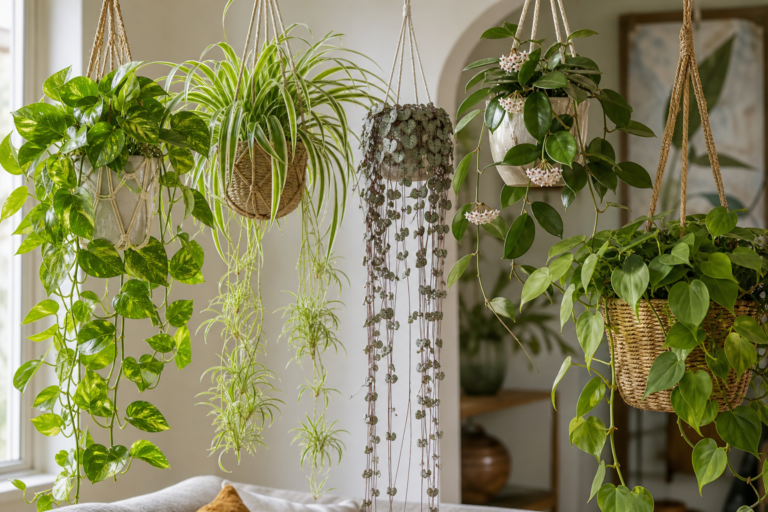
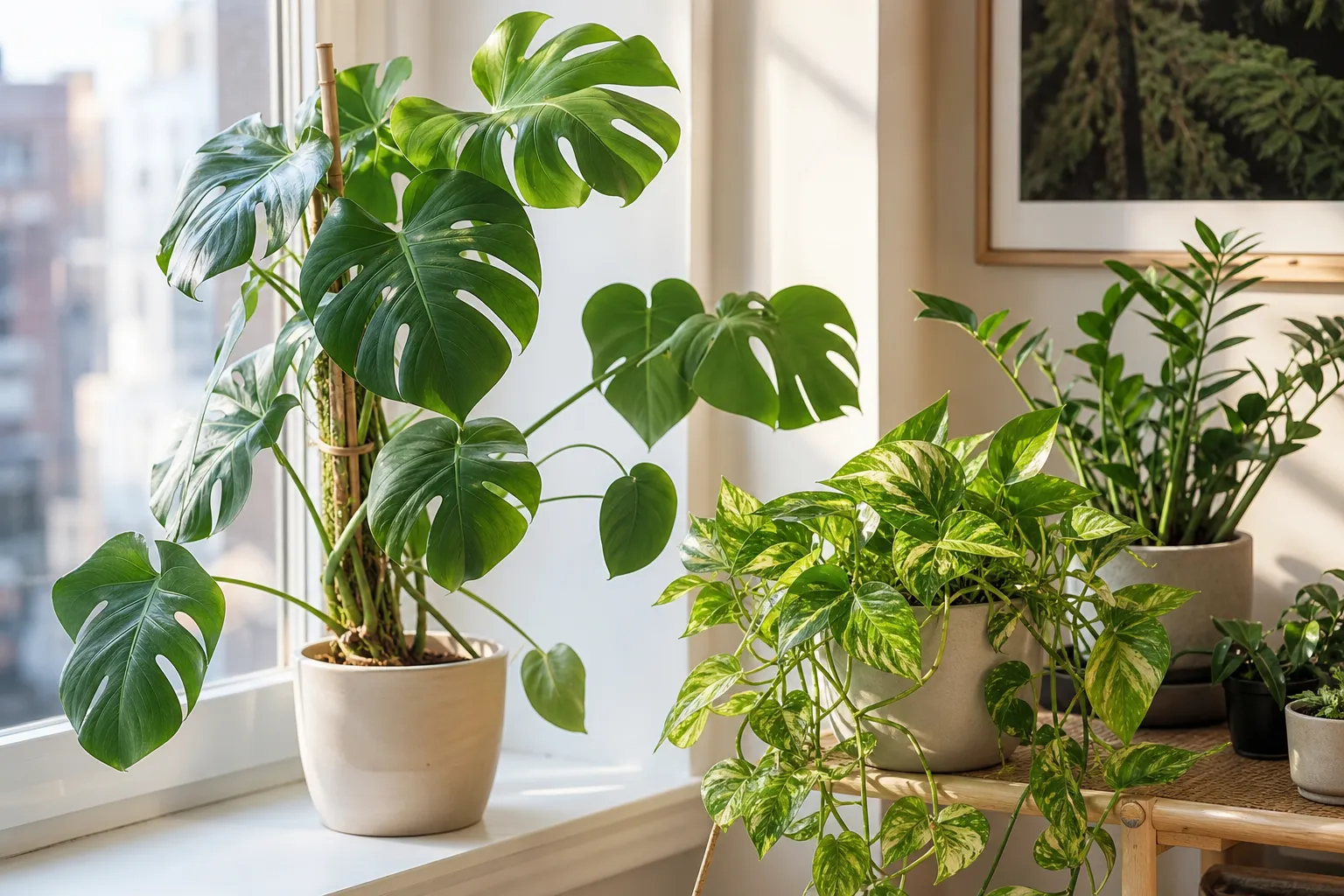
Different houseplants—and even different cultivars of the same species—naturally grow in different shapes. A trailing pothos is supposed to spill over a shelf. A monstera may lean as it searches for a climbing surface. A jade plant can become shrub-like and top-heavy, while a snake plant usually stays more upright as it produces vertical leaves from the base.
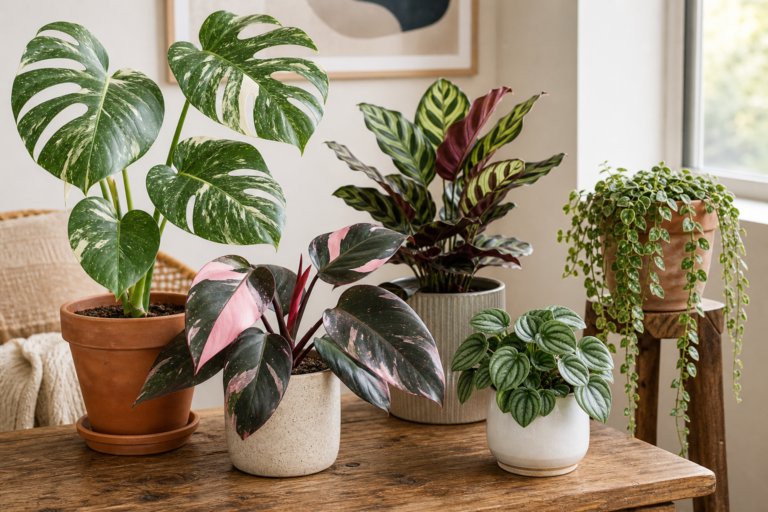
Variegated plants often grow more slowly than green forms because sections of their leaves contain less chlorophyll. They may need brighter indirect light to maintain compact growth, but their pale areas can also scorch more quickly in harsh direct sun. A compact cultivar may remain bushy while a vigorous, standard form of the same plant becomes sprawling in the same room.
Before changing everything, compare your plant with a reliable care label or a mature example of the same variety. Ask whether the plant is truly stretching or simply expressing its normal habit.
A useful comparison at home
If you own two similar plants, place one near a bright east-facing window and keep the other in its usual interior location. Over four to six weeks, record the length of new stems, the number of new leaves and the direction of growth.
For example, you might compare two pothos cuttings. One could produce 6 inches of new vine with leaves spaced about 3 inches apart, while the brighter-grown cutting produces 4 inches with leaves spaced closer together. That simple comparison will not establish a universal rule, but it can show how your home’s light affects your plants.
When sideways growth points to watering trouble
Watering problems usually cause drooping rather than deliberate leaning, but the two symptoms can overlap. A plant that repeatedly wilts may develop weak stems. A plant kept in wet, poorly drained mix may suffer damaged roots, leaving the top growth unable to stay firm.
Do not water by calendar alone. Check the soil and the pot’s weight. Insert your finger about 1 to 2 inches into the mix for many foliage plants, or use a wooden chopstick to check deeper in a large container. Succulents and plants with thick leaves generally need the mix to dry more thoroughly than moisture-loving tropical plants.
Try a measured watering test
For one week, choose a plant that is growing sideways and record exactly what happens. Weigh the dry pot on a household scale if it is small enough, or note its weight by lifting it. Then water slowly until a little excess drains from the bottom. Measure the amount with a kitchen measuring cup.
- Small 4-inch pot: begin by testing about 1 cup of water.
- Medium 6-inch pot: begin by testing about 2 to 3 cups.
- Larger floor plant: water slowly in stages rather than pouring a large amount all at once.
- Empty the saucer after about 10 to 15 minutes so the pot does not sit in standing water.
These are starting measurements, not fixed prescriptions. Potting mix, plant type, temperature, humidity and root density all change how much water a plant uses. The important part is to water thoroughly when the plant needs it, then allow the appropriate portion of the mix to dry before watering again.
In a simple home trial, you may find that a 6-inch pothos in a warm room needs 2 cups every 8 to 10 days in one season, but only 1 to 1½ cups every 12 to 16 days in winter. Another plant in the same-size pot may need a completely different schedule. Measure, observe and adjust instead of copying a rigid routine.
Check the roots and the pot before reaching for fertilizer
A leaning plant is not automatically hungry. Fertilizer cannot compensate for poor light, waterlogged roots or a container that tips easily. In fact, pushing fast growth in dim conditions can make the plant even softer and more stretched.
Inspect the drainage hole. Roots growing out of the bottom may indicate that the plant has filled its container, although roots at the drainage hole are not an emergency by themselves. If water runs straight through, the root ball may have become extremely dry or tightly packed. If the mix stays wet for many days and smells sour, investigate more carefully.
When repotting is appropriate, choose a container only about 2 inches wider in diameter than the current one. A much larger pot holds more unused, wet mix around the roots and can make watering problems worse. Always use a container with a drainage hole and a potting mix suited to the plant.
Signs that the root zone deserves attention
- The plant rocks loosely even though the stem looks healthy.
- The potting mix stays wet far longer than it used to.
- Leaves wilt despite damp soil.
- Roots are dark, mushy or collapsing rather than firm and light-colored.
- The plant has stopped producing healthy new growth after a period of decline.
Root inspection can stress a plant, so do it when the evidence points to a root-zone problem. If the plant is simply leaning toward the window and otherwise looks vigorous, start with light and rotation instead.
Sometimes the plant needs a climbing partner
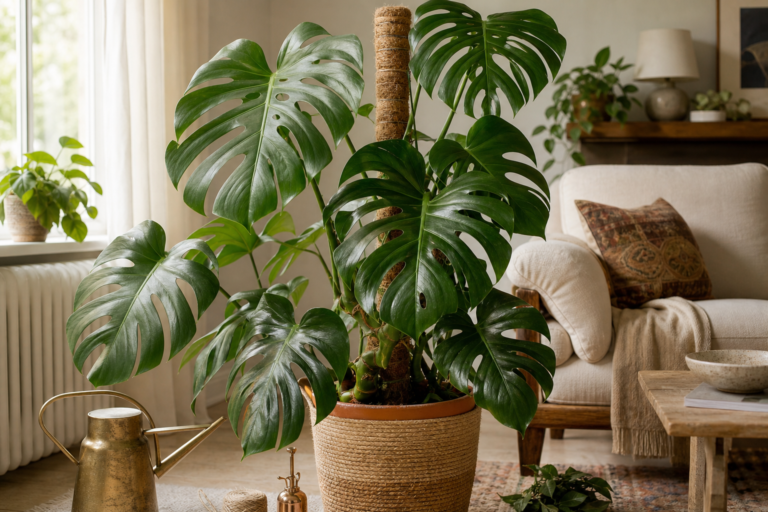
Some plants are not designed to stand alone. Monstera, heartleaf philodendron, hoya and many vining plants naturally climb, scramble or trail. Their sideways growth may be an invitation to provide a trellis, moss pole, bamboo stake or shelf edge.
Support the plant gently rather than forcing every stem upright. Use soft ties, plant clips or loosely wrapped garden tape, leaving room for the stem to expand. Attach the stem at several points instead of tying it tightly in one place. A support can guide new growth, but it cannot turn an already stretched stem back into compact growth.
For a large or top-heavy plant, a heavier pot may help. Place the plant at the same depth as before, firm the mix lightly around the root ball and avoid burying stems that normally grow above the soil.
Pruning can restore balance—but timing matters
If stems have become long and bare, pruning can encourage a fuller shape. Use clean, sharp scissors or pruners and cut just above a leaf node—the small point where a leaf or branch joins the stem. New shoots often develop from nodes below the cut, though the exact response depends on the species and growing conditions.
- Remove dead, damaged or badly weak growth first.
- Trim no more than about one-quarter to one-third of the plant at a time unless you know the species tolerates harder pruning.
- Prune during active growth when possible.
- Improve light before or immediately after pruning so new shoots do not stretch again.
- Use healthy cuttings for propagation only when the plant is otherwise vigorous.
Do not prune a severely stressed plant simply to make it look tidy. Correct the underlying light, water or root issue first, then shape it gradually.
A five-minute sideways-growth diagnosis
Use this quick sequence whenever a plant suddenly changes direction:
- Look at the light. Is the brightest window or lamp clearly on one side?
- Study the new growth. Is it thin and widely spaced, or thick and naturally trailing?
- Feel the soil. Is it dry several inches down, or still wet from the last watering?
- Check the pot. Does it have drainage, and does the plant wobble in the mix?
- Inspect the leaves. Look for pests, yellowing, scorch, crisp edges or widespread drooping.
- Compare the variety. Is this normal for the plant’s mature form?
- Choose one change. Adjust light, watering, support or pruning rather than changing everything at once.
Make a note of the date and photograph the plant from the same angle every week. This turns a vague problem into a visible pattern. If the newest growth becomes sturdier and the plant stops reaching, your adjustment is working.
What your plant is really saying
Sideways growth is often a practical message: “The light is over there,” “I need something to climb,” or “My top growth is getting ahead of my roots and support.” It is not a sign that you have failed as a plant parent. Plants respond to their surroundings, and those responses give you useful information.
Start with the simplest explanation, make one gentle correction and give the plant time to respond. With brighter, appropriate light, careful watering, a stable pot and occasional pruning or support, many leaning houseplants can regain a healthier shape. And even when a plant never becomes perfectly upright, its sideways habit may be part of its charm—and a reminder that indoor plants are still doing what they have always done: reaching for the conditions that help them grow.