

Tomato red spider mite (Tetranychus evansi)
Tetranychus evansi Baker & PritchardTomato red spider mite (Tetranychus evansi) overview
The tomato red spider mite, Tetranychus evansi, is a tiny sap-feeding pest most strongly associated with tomato and other solanaceous crops. It causes pale stippling, bronzing, leaf drying and webbing, often developing rapidly in hot, dry conditions. Because it can resemble other spider mites, confirmation may require microscopic examination, especially when regulatory or commercial decisions are involved.
Typical conditions
Overview
Tetranychus evansi is commonly called the tomato red spider mite in English-language plant-health references. It is most strongly associated with Solanaceae and is particularly damaging to tomato (Solanum lycopersicum), eggplant (Solanum melongena), potato (Solanum tuberosum) and tobacco (Nicotiana tabacum).
Adults and immature stages feed by piercing leaf cells, usually on the underside. Individual mites are difficult to see without magnification; colonies may be recognized by moving specks, pale feeding marks and silk. Several spider mite species produce similar injury, so a hand lens or diagnostic laboratory is useful when the identification matters.
Symptoms and identification
- Fine yellow, white or bronze stippling on leaves, progressing from lower foliage upward.
- Leaf bronzing, curling, drying and premature drop during severe infestations.
- Fine silk strands or patches of webbing, usually concentrated on leaf undersides and crowded shoot tips.
- Reduced vigor, flower or fruit production and possible plant death when heavy feeding is prolonged.
- On tomato, symptoms can be mistaken for drought stress, nutrient injury or twospotted spider mite damage.
Tap a suspect leaf over white paper and inspect the moving specks with a hand lens. Species confirmation generally requires examination of mites by an experienced diagnostician.
Causes and spread
Infestations begin when mites are introduced on infested transplants, cuttings, tools, clothing, plant debris or nearby host weeds. They can move between touching plants and may disperse on wind currents, including by silk strands from crowded colonies.
Important reservoirs include volunteer solanaceous plants and weeds such as black nightshade (Solanum nigrum and related species). The documented host range is broad, but susceptibility and economic importance vary considerably among plants and mite populations.
Life cycle and persistence
Females lay eggs singly, mainly on the undersides of leaves, often among silk strands. The sequence is egg, six-legged larva, protonymph, deutonymph and adult. Unfertilized eggs produce males, while fertilized eggs produce females.
Under favorable warm conditions, development from egg to adult may take about one to two weeks. Reproduction can continue through much of the year where temperatures permit; cold periods reduce egg production and development, but this species is not generally regarded as having a true winter diapause. Dense colonies may aggregate on younger upper foliage and disperse on silk.
Treatment and control
- Confirm that mites are present before treating. Check several leaves from different parts of the plant and distinguish active mites from immobile debris.
- For small infestations, remove heavily infested leaves and dispose of them in sealed waste; do not compost infested material unless the composting process is reliably hot.
- Use a firm, clean water spray directed at leaf undersides to dislodge mites and webbing. Repeat as needed while avoiding prolonged leaf wetness or soil erosion.
- For protected culture, consider a commercially available biological-control program based on scouting and compatibility with the crop and existing natural enemies.
- If a pesticide is necessary, select a legally authorized miticide or insecticide-miticide product for the specific crop and use site. Rotate effective modes of action according to the current label and resistance-management guidance rather than repeating one active ingredient.
Sprays often perform poorly when dense webbing protects mites or when coverage of leaf undersides is incomplete. Treating only the most visibly damaged leaves may not stop an established colony.
Low-impact and biological control
Begin with sanitation, weed removal, plant-stress reduction and repeated water dislodging. In greenhouses, biological control may include predatory mites such as Neoseiulus californicus, but performance depends on crop cultivar, trichomes, temperature, humidity, prey density and release timing.
Phytoseiulus persimilis should not be assumed to be an effective solution for T. evansi; research indicates that this prey can be unsuitable for its development and reproduction. Choose natural enemies using a supplier or extension specialist familiar with this specific pest, and avoid residues that are harmful to beneficial mites.
Horticultural oils or insecticidal soaps may be useful in some settings when the product label permits use on the crop, but they require thorough contact coverage and can injure foliage under heat, drought or high-light conditions. Test a small area first and follow the label.
Prevention
- Buy clean, inspected transplants and quarantine new plants before placing them with established crops.
- Inspect leaf undersides weekly with a hand lens, especially during hot, dry weather.
- Remove volunteer tomatoes, potatoes and nightshade weeds around production areas.
- Reduce dust and avoid drought stress with consistent irrigation appropriate to the crop and soil.
- Use clean tools and avoid moving from infested plants to healthy plants without washing hands or equipment.
- Maintain adequate plant spacing and prune only as appropriate to improve inspection and air movement.
- Do not apply broad-spectrum insecticides routinely; they can kill predatory mites and trigger secondary spider mite outbreaks.
Interesting facts
- T. evansi is especially associated with solanaceous plants, although records include hosts in many other plant families.
- Its colonies can be unusually aggregative and may remain concentrated on previously attacked foliage rather than dispersing immediately.
- The pest is closely related in appearance to the twospotted spider mite, Tetranychus urticae; field symptoms alone cannot reliably separate them.
- Black nightshade and other volunteer solanaceous plants can maintain populations between crop cycles.
- Tomato leaf glandular hairs and pesticide residues can influence the success of predatory-mite biological control.
Use only pesticide products legally authorized in the United States for the specific crop, site and pest, and follow the current EPA-approved label exactly. Check crop-specific preharvest intervals, reentry restrictions, pollinator precautions and resistance-management requirements. Do not infer legality from a product’s use on another crop or against another spider mite species.
Affected plants
The plants below are linked to this problem by structured host-plant data. The list updates automatically as new plant profiles are added.
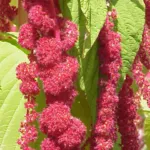 Love-lies-bleeding (Amaranthus caudatus) care guideAmaranthus caudatus
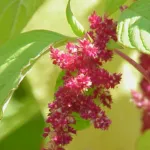 Edible amaranth (Amaranthus tricolor) care guideAmaranthus tricolor
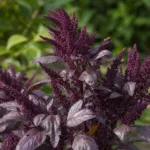 Purple amaranth (Amaranthus blitum) care guideAmaranthus blitum
 Amaranth (Amaranthus cruentus) care guideAmaranthus cruentus
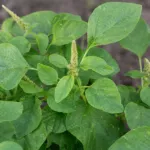 Amaranth (Amaranthus dubius) care guideAmaranthus dubius
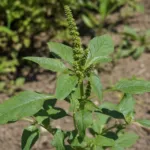 Smooth Pigweed (Amaranthus hybridus) care guideAmaranthus hybridus
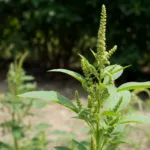 Slender amaranth or green amaranth (Amaranthus viridis) care guideAmaranthus viridis
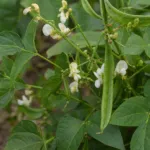 He tepary bea (Phaseolus acutifolius) care guidePhaseolus acutifolius
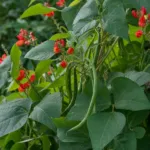 Snap bean (Phaseolus coccineus) care guidePhaseolus coccineus
 Butter bea (Phaseolus lunatus) care guidePhaseolus lunatus
 String Bean (Phaseolus vulgaris) care guidePhaseolus vulgaris
 Solanum aethiopicum care guideSolanum aethiopicum