
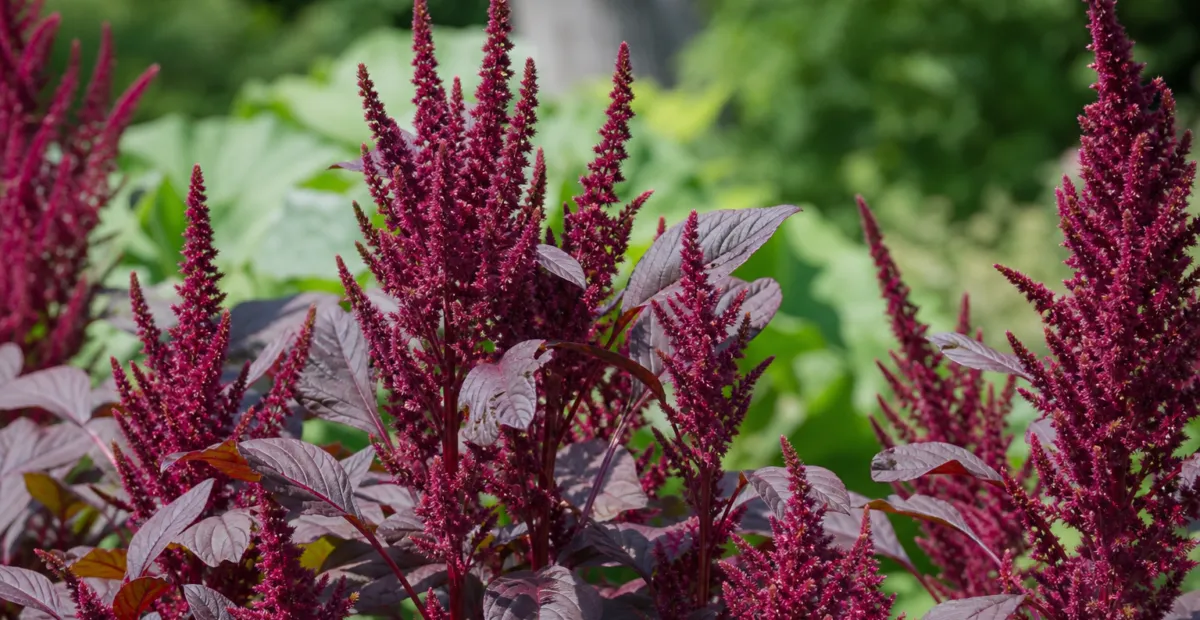
 AI-generated illustration
Amaranth (Amaranthus cruentus) short overview
Amaranth is a fast-growing warm-season annual valued in the United States for its upright form, colorful terminal flower clusters, tender leafy greens, and nutritious seeds. Amaranthus cruentus performs best in full sun, fertile soil, and consistently moderate moisture. It can serve as a striking bedding or container plant, a cut-flower subject, or a dual-purpose edible crop when grown from correctly identified seed and harvested at the appropriate stage.
Taxonomic classification
Amaranth (Amaranthus cruentus) care guide
Light and placement
Give amaranth a site with at least 6 hours of direct sun, preferably with southern or western exposure and protection from strong winds. Plants in insufficient light become tall, thin, and less productive, while severe heat combined with reflected light can scorch leaves. In very hot climates, light afternoon shade can reduce stress, but too much shade reduces branching, leaf production, and sturdy flower stems.
Watering and humidity
Water deeply when the upper inch of soil begins to dry, keeping moisture reasonably even during establishment and active growth. Avoid repeated shallow watering and do not leave containers standing in water. Mature plants tolerate brief dry periods better than seedlings, but drought can reduce leaf quality and cause premature flowering. Humidity is usually not a special requirement; prioritize spacing and airflow in humid weather.
Soil and growing medium
Use fertile loam or a compost-enriched raised-bed mix that drains freely while retaining some moisture. Heavy clay can restrict roots and hold excess water, whereas very sandy soil may require more frequent irrigation and organic matter. A slightly acidic to mildly alkaline reaction is generally suitable. Avoid waterlogged ground, especially in containers, and do not use a dense potting mix without added drainage material.
Feeding
Incorporate finished compost or a modest all-purpose fertilizer before sowing. If plants remain pale or growth is weak, apply a balanced liquid fertilizer at half strength once during active growth. Avoid heavy nitrogen applications late in the season because they can produce soft, overly leafy growth and delay or weaken the ornamental seed heads. Do not fertilize drought-stressed or newly transplanted plants until they recover.
Growth and habit
This species develops quickly from seed and forms an upright, often branched annual with a strong central stem. It may be grown as a leafy vegetable early in the season or allowed to mature into a tall ornamental and seed crop. Early thinning improves stem strength and air circulation. Tall plants in exposed sites may need discreet staking, particularly when flower heads become heavy or when grown in rich soil.
Planting and repotting
Direct-sow after danger of frost when soil has warmed, because cold conditions slow emergence and can weaken seedlings. Scatter or sow shallowly, cover lightly, and keep the seedbed evenly moist until emergence. Thin promptly so plants do not compete for light. For transplants, move young plants outdoors after frost and before they become root-bound; late transplanting can encourage premature flowering or poor establishment.
Container-grown plants are best moved only while young, before the root system becomes crowded. Use a deep container with drainage holes and a fertile, free-draining potting mix. Because mature plants become tall and top-heavy, choose the final container early and place it where it will not need frequent moving. Repotting is rarely worthwhile late in the season once flowering has begun.
Propagation and pruning
Propagation
Propagate from seed. Sow very shallowly in warm soil and keep the surface evenly moist until germination, which is usually rapid under warm conditions. Thin crowded seedlings early. For a short growing season, start seed indoors in biodegradable cells 4–6 weeks before the last frost and transplant young seedlings with minimal root disturbance. Save seed only from healthy, correctly identified plants isolated from unwanted amaranth types if uniformity matters.
Pruning
Pinch or harvest young shoots if a bushier leafy plant is desired. For ornamental stems, remove weak side shoots only when necessary and support tall plants before heavy flower heads develop. Cut mature stems for arrangements after the inflorescences have colored but before extensive seed shedding. At season’s end, remove spent plants before seed dispersal if volunteers are not wanted.
Overwintering
This is normally treated as a frost-tender annual in the United States. There is no practical need to overwinter mature plants indoors; they decline after frost. Collect fully mature, dry seed heads before hard frost, clean the seed, and store it dry in a sealed labeled container. Remove diseased or unwanted plants promptly rather than carrying them through winter.
Uses
Young leaves are used as cooked greens and the seeds can be cleaned and cooked or milled, although culinary use should be limited to correctly identified, cleanly grown plants. Ornamental forms provide strong vertical color in beds and containers, and mature stems can be used as fresh or dried cut material. Avoid harvesting from plants exposed to herbicides, contaminated soil, or heavy roadside pollution. Cooking leafy portions and discarding the water can reduce soluble oxalates and nitrates.
Appearance
Amaranth has simple, long-petioled leaves that range from ovate to broadly lance-shaped and may be green, reddish, or purple-tinged. Stems are angular and can show red coloration. The identifying feature is the terminal and axillary inflorescence: numerous tiny flowers are grouped into upright spikes or an open, branched panicle, often green, pink, red, or maroon depending on the form.
Flowering
The apparent flower heads are inflorescences made of many tiny, unshowy flowers rather than large individual blossoms. Terminal and axillary spikes or branched panicles develop during the warm growing season, often becoming more conspicuous as they mature and produce seed. Flowering can begin earlier when plants are stressed, crowded, transplanted late, or exposed to shortening day length.
Pollination and visitors
The species is primarily wind-pollinated, with pollen released from small flowers in exposed inflorescences. Individual flowers may be visited opportunistically by insects, but reliable evidence is insufficient to characterize Amaranthus cruentus as a strongly animal-pollinated garden plant.
Amaranthus cruentus photos
Click any photo for a larger view. Source, author and license are shown separately.
Diseases and pests
Diseases
Common problems include damping-off in cold, wet seedbeds, foliar spots, white rust, and occasional fungal diseases favored by crowding. Use clean seed and containers, sow in warm well-drained soil, water at the base, and provide good air circulation. Remove badly affected foliage and avoid overhead irrigation. Rotate edible plantings and do not compost severely diseased material if the pathogen is unknown.
Pests
Caterpillars, leaf-chewing insects, flea beetles, aphids, and occasional stem or root-feeding pests may damage plants. Inspect undersides of leaves frequently, hand-pick large caterpillars, and use row cover over young plants where practical. Encourage natural enemies and avoid routine broad-spectrum insecticides, especially because the plant’s flowers can expose treatments to visiting insects.
Related diseases and pests
Only Plant Doctor profiles whose host data indicate this plant may be affected are shown here.
 PestTomato red spider mite (Tetranychus evansi)Tetranychus evansi Baker & Pritchard
 PestBeet ArmywormSpodoptera exigua (Hübner)
 PestChilli thripsScirtothrips dorsalis Hood
 DiseasePseudomonas viridiflava bacterial blightPseudomonas viridiflava
 DiseasePolymyxa betae — Vector of Beet RhizomaniaPolymyxa betae Keskin
 DiseaseLettuce mosaicLettuce mosaic virus
 PestBeet Cyst NematodeHeterodera schachtii
 DiseaseCucumber mosaic virusCucumber mosaic virus
Toxicity and pollen
Amaranthus cruentus is cultivated as a leafy vegetable and grain crop, but edible portions can contain oxalates and nitrates, with levels affected by plant age, growing conditions, and preparation. Cook leaves thoroughly and discard the cooking water when eating substantial quantities. Do not consume plants from contaminated or chemically treated sites. Evidence does not support classifying the species as a highly poisonous ornamental, but individual dietary sensitivities and kidney-stone risk warrant caution.
- Typical season
- Usually July–September in much of the United States
- Pollination / pollen
- Light, abundant wind-dispersed pollen
Amaranth releases abundant, lightweight pollen from small flowers, and wind can carry it beyond the plant. This differs from toxicity: a person may react to airborne pollen without being poisoned by touching the plant. People with seasonal pollen sensitivity should avoid handling flowering plants on dry, windy days and may prefer gloves and washing after garden work.
Native habitat
Amaranthus cruentus is native to seasonally dry tropical regions from Central Mexico through Nicaragua. It grows as an annual in open, disturbed, cultivated, and seasonally warm habitats, generally favoring exposed sites and reasonably fertile soils. In the United States it is cultivated and has also been recorded outside cultivation in many regions, where plants depend on frost-free periods for completion of their life cycle.
Interesting fact
Amaranthus cruentus is one of the principal grain amaranths cultivated worldwide. The species has also been selected for vegetable and ornamental forms, so plants sold under the same species name may differ greatly in leaf color, seed color, branching, and flower-head shape. Its minute flowers are grouped into showy inflorescences, and its seeds are technically fruits called utricles.
Frequently asked questions (FAQ)
The most relevant questions about this plant, with short and direct answers.
🌱Quick care
What is Amaranthus cruentus commonly called in the United States?⌄
Amaranthus cruentus is commonly called amaranth in the United States. It may be grown for edible greens, grain, or colorful ornamental flower clusters, depending on the cultivar.
Is Amaranthus cruentus an annual or perennial?⌄
Amaranthus cruentus is a frost-tender annual. It completes its life cycle in one growing season and usually dies after exposure to freezing temperatures.
How much sun does Amaranthus cruentus need?⌄
Amaranthus cruentus grows best in full sun, with at least 6 hours of direct light daily. It can tolerate some partial shade in hot climates, but reduced light may limit growth and color.
How often should I water Amaranthus cruentus?⌄
Water Amaranthus cruentus when the soil surface begins to dry, keeping moisture moderate and reasonably even. Established plants tolerate some drought, but severe dryness can cause early flowering and reduce leaf production.
How tall does Amaranthus cruentus get?⌄
Amaranthus cruentus commonly grows about 2 to 7 feet tall, depending on cultivar and growing conditions. Tall plants may need staking or a sheltered location to prevent lodging.
🌤️Environment and placement
What temperature does Amaranthus cruentus prefer?⌄
Amaranthus cruentus prefers warm conditions, generally around 70–85°F. Plant it outdoors only after the soil has warmed and the risk of frost has passed.
Can Amaranthus cruentus grow in USDA hardiness zones?⌄
Amaranthus cruentus can be grown as a warm-season annual across much of the United States. In every zone, use local frost dates rather than the zone number alone to determine planting time.
What soil is best for Amaranthus cruentus?⌄
Use fertile, well-drained loam for Amaranthus cruentus. It tolerates a broad soil-pH range, but growth is generally best in mildly acidic to neutral soil, roughly pH 5.5–7.0.
Can Amaranthus cruentus grow in containers?⌄
Amaranthus cruentus can grow in a large container with drainage holes, fertile potting mix, full sun, and consistent moisture. Choose a shorter cultivar when possible because mature plants can become top-heavy.
Does Amaranthus cruentus tolerate drought?⌄
Amaranthus cruentus has moderate drought tolerance after establishment. Do not allow prolonged severe drought, especially while seedlings are developing or when growing the plant for tender greens.
💧Care and problems
Why is my Amaranthus cruentus flowering too early?⌄
Early flowering is often associated with drought, heat stress, crowding, cultivar response, or delayed transplanting. Keep plants evenly watered and harvest young shoots regularly if your goal is leafy greens.
Why is Amaranthus cruentus falling over?⌄
Amaranthus cruentus may fall over because of its height, weak stems, wind, heavy flower heads, excessive nitrogen, or dense planting. Provide support early and avoid overly rich nitrogen fertilization.
What pests commonly attack Amaranthus cruentus?⌄
Amaranthus cruentus may be attacked by flea beetles, leaf-feeding beetles, aphids, and other general garden pests. Inspect the undersides of leaves and use physical or locally approved controls when damage is significant.
Why are the leaves of my Amaranthus cruentus turning pale?⌄
Pale leaves may result from nutrient deficiency, water stress, root problems, or excessive fertilization. Check drainage and moisture first, then use a soil test before adding fertilizer.
How should I fertilize Amaranthus cruentus?⌄
Amaranthus cruentus usually performs well in fertile soil amended with compost or a balanced fertilizer used according to its label. Avoid excessive nitrogen because it can encourage weak growth and increase nitrate accumulation in edible foliage.
Can I harvest Amaranthus cruentus more than once?⌄
You can harvest Amaranthus cruentus repeatedly for greens by removing young leaves and tender shoot tips. Continued harvesting is most productive before heavy flowering, when foliage generally becomes less tender.
🪴Planting and repotting
When should I plant Amaranthus cruentus outdoors?⌄
Sow Amaranthus cruentus outdoors after the last expected frost, when soil temperatures are at least about 60°F and preferably closer to 70°F. Cold, wet soil can delay or prevent germination.
How deep should I plant Amaranthus cruentus seeds?⌄
Plant Amaranthus cruentus seeds very shallowly, about 1/8–1/4 inch deep, or barely cover them with fine soil. The seeds are tiny and may fail to emerge if planted too deeply.
How far apart should Amaranthus cruentus plants be?⌄
Thin Amaranthus cruentus seedlings to about 6–12 inches apart for leafy production, or use wider spacing for large grain or ornamental plants. Rows are commonly spaced about 12–24 inches apart.
Can Amaranthus cruentus be started indoors?⌄
Amaranthus cruentus can be started indoors about 6–8 weeks before the local last frost date. Transplant carefully after hardening off, because mature roots and stems can be sensitive to disturbance.
How long does Amaranthus cruentus take to germinate?⌄
Amaranthus cruentus commonly germinates in about 5–10 days under warm, moist conditions. Germination slows substantially in cool soil, particularly below approximately 50°F.
How long does Amaranthus cruentus take to mature?⌄
Young leaves may be harvested roughly 5–8 weeks after sowing, while seed maturity often takes about 90–100 days. Exact timing varies with cultivar, temperature, day length, and whether the plant is grown for greens or grain.
✂️Propagation and pruning
How do you propagate Amaranthus cruentus?⌄
Amaranthus cruentus is normally propagated from seed. Sow fresh seed directly in the garden or start it indoors, then thin or transplant seedlings once conditions are warm.
Can Amaranthus cruentus reseed itself?⌄
Amaranthus cruentus can reseed itself if mature seed heads are left in place. Remove unwanted seed heads before seeds drop, because volunteer seedlings may appear throughout the garden.
How do I collect Amaranthus cruentus seeds?⌄
Collect Amaranthus cruentus seeds when the flower heads are dry and the seeds release easily. Cut the heads into a bag, finish drying them in a protected place, then separate and store the clean seed in a cool, dry container.
⚠️Toxicity and safety
Are Amaranthus cruentus leaves edible?⌄
Young Amaranthus cruentus leaves and tender stems are generally edible and can be eaten raw or cooked like spinach. Use plants grown from correctly identified, pesticide-free seed rather than unknown wild plants.
Are Amaranthus cruentus seeds edible?⌄
Amaranthus cruentus seeds are edible when properly cleaned and prepared, and some cultivars are grown specifically as grain amaranth. Do not assume every ornamental seed packet is suitable for food production.
Does Amaranthus cruentus contain oxalates or nitrates?⌄
Amaranthus cruentus leaves can contain oxalates and nitrates, with levels affected by cultivar, growing conditions, and plant age. People prone to kidney stones or advised to limit these compounds should ask a healthcare professional before eating large amounts.
Can you eat Amaranthus cruentus raw?⌄
Young Amaranthus cruentus leaves can be eaten raw, but cooking is commonly preferred. Cooking and discarding the cooking water may reduce some soluble antinutrients, although it does not eliminate every dietary concern.
🌸Flowering and special interest
When does Amaranthus cruentus flower?⌄
Amaranthus cruentus usually flowers in summer to early fall, sometimes beginning about 4–8 weeks after sowing. Timing varies by cultivar, day length, temperature, and water availability.
What do Amaranthus cruentus flowers look like?⌄
Amaranthus cruentus produces dense, often upright or branching flower clusters that may be red, burgundy, green, gold, or purple depending on the cultivar. The small flowers are individually inconspicuous but form showy plume-like heads.
Should I remove the flowers from Amaranthus cruentus?⌄
Remove flowers or developing seed heads if you want to prolong production of tender greens and limit reseeding. Leave them in place if you want ornamental display or mature seed.
Similar plants
 Azure Monkshood (Aconitum carmichaelii) care guideAconitum carmichaelii
 Monkshood (Aconitum ‘Stainless Steel’)Aconitum 'Stainless Steel'
 Monkshood (Aconitum ‘Bressingham Spire’)Aconitum 'Bressingham Spire'
 Golden full moon maple (Acer shirasawanum ‘Aureum’)Acer shirasawanum 'Aureum'
 Globosum (Acer platanoides ‘Globosum’)Acer platanoides 'Globosum'
 Striped maple (Acer pensylvanicum) care guideAcer pensylvanicum