
Polymyxa betae — Vector of Beet Rhizomania
Polymyxa betae KeskinPolymyxa betae — Vector of Beet Rhizomania overview
Polymyxa betae is a microscopic, obligate root parasite and persistent soilborne vector of Beet necrotic yellow vein virus, the cause of beet rhizomania. The organism usually produces little direct damage by itself, but viruliferous populations can spread the virus to beet roots, causing stunting, yellowing, wilt, reduced root size, low sugar content and a characteristic proliferation of fine feeder roots.
Typical conditions
Overview
Polymyxa betae is not a conventional fungus, although older agricultural references often call it a soilborne fungus. Modern classifications place it among the plasmodiophorid protists in the order Plasmodiophorida. It cannot be grown readily on ordinary artificial culture media and must complete its biological cycle in living roots.
The major U.S. concern is beet rhizomania in sugar beet, table beet and related Beta crops. The severe symptoms are primarily caused by BNYVV after transmission by viruliferous P. betae; the vector itself is often inconspicuous.
Symptoms and identification
Infected beet plants may show uneven growth, general stunting, pale green to bright yellow foliage, wilting during hot or high-demand periods, and patchy decline across a field. Symptoms can resemble nutrient deficiency, water stress or other root diseases.
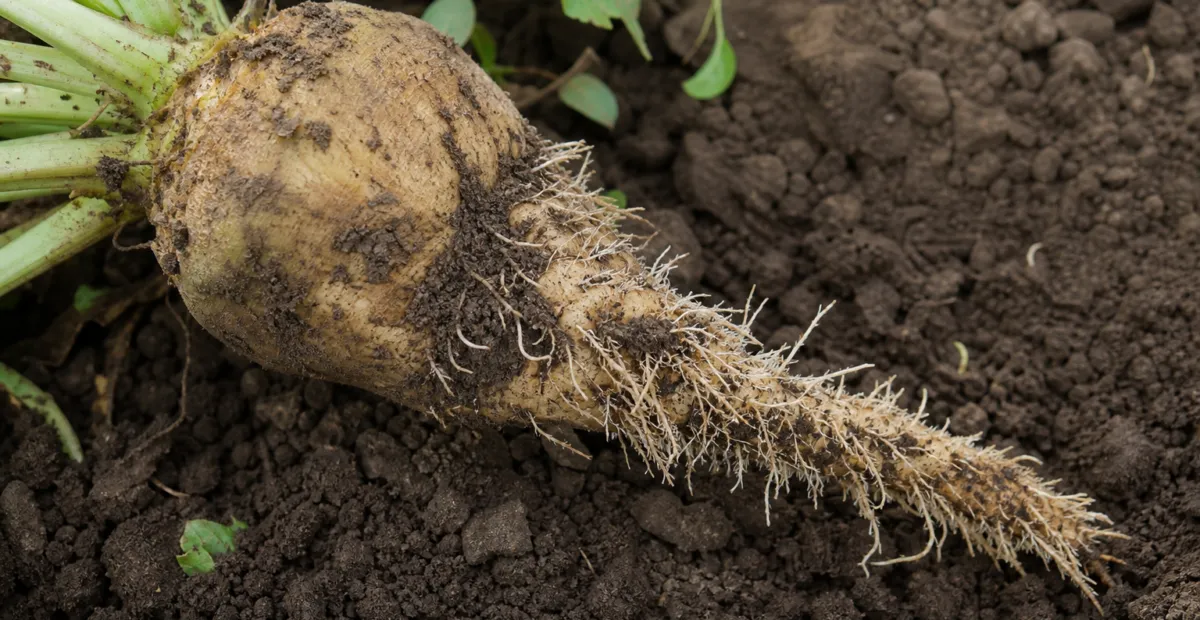
Roots from early-infected plants are often small and constricted, with a dense “bearded” or “hairy-root” mass of fine lateral roots. Cross-sections may show pale or dark vascular zoning or rings. Root weight, sucrose concentration and storage quality can decline substantially. Confirmation normally requires laboratory testing for BNYVV and/or detection of P. betae resting structures or nucleic acid.
Causes and spread
Viruliferous resting spores and zoospores introduce BNYVV into young beet roots. Infection is favored when soil pores remain filled with water, allowing motile zoospores to move toward root hairs. The organism spreads slowly through soil on its own, but infested soil can move much farther on tillage and harvest equipment, boots, animals, transplants, harvested roots and muddy water.
Runoff, irrigation return flows, poor drainage, compaction and repeated beet production can concentrate inoculum. Weed hosts may help maintain P. betae populations, but host range varies among isolates and not every reported host is equally important in U.S. fields.
Life cycle and persistence
Long-lived resting spores occur in clusters called cystosori in infected roots and soil. Under suitable moisture and temperature, they germinate and release swimming primary zoospores. These reach young roots, commonly enter through root hairs or epidermal cells, and develop within root tissues.
The parasite produces additional sporangial stages and secondary zoospores. As infected roots age or die, new resting spores form and return to the soil. In wet fields, cycles may be repeated during successive irrigation or rainfall events. Resting spores can remain viable for many years—often more than a decade under favorable protection in soil—so short rotations may not eliminate risk.
Treatment and control
There is no practical curative treatment that removes P. betae or BNYVV from an established field. Fungicide applications are not a dependable control for this vector. Once symptoms are visible, management should focus on limiting additional spread and protecting future crops.
- In affected production areas, select cultivars carrying appropriate BNYVV resistance or tolerance and obtain current regional recommendations.
- Reduce excess irrigation and improve drainage, especially in compacted or low-lying areas.
- Sanitize equipment after working infested soil and prevent muddy water from flowing into clean fields.
- Harvest and handle affected beet lots to minimize soil movement, and maintain accurate field histories for future rotations.
- Confirm suspected cases with laboratory testing because nutrient disorders, curly top, root rots and water stress can produce overlapping symptoms.
Low-impact and biological control
For organic and low-input systems, the most useful measures are exclusion and cultural management rather than a spray program. Rotate away from beets for several years, improve soil structure and drainage, avoid unnecessary irrigation, suppress volunteer beets and locally important weed hosts, and clean equipment between fields. Use certified seed and resistant or tolerant cultivars permitted under the production system. Composting or disposing of infected roots should prevent contaminated soil and root debris from being spread to clean ground; ordinary incorporation does not reliably eradicate long-lived resting spores.
Prevention
- Use locally recommended sugar beet or table-beet cultivars with documented rhizomania/BNYVV tolerance where the disease has been detected or is a known regional risk.
- Prefer seed and planting material from reputable suppliers, and avoid moving field soil between farms.
- Clean soil from tillage, planting and harvesting equipment, tires, boots and tools before entering clean fields.
- Improve drainage, correct compaction and manage irrigation to avoid prolonged saturation and standing water.
- Use a long rotation away from beet crops; a four-year or longer interval is commonly recommended, although the appropriate interval depends on local inoculum pressure and crop value.
- Control volunteer beets and remove important susceptible weed hosts where practical, while recognizing that host range differs among isolates.
- Report unusual symptoms to a county extension office, crop consultant or plant diagnostic laboratory; do not diagnose from foliage alone.
Interesting facts
- Polymyxa betae is a protist, not a true fungus, despite the wording in many older extension resources.
- Only some populations or zoospores carry BNYVV; non-viruliferous infections may be nearly symptomless.
- The characteristic hairy-root symptom is largely a response to BNYVV, not evidence that the vector alone has caused severe root injury.
- The organism is an obligate parasite and is difficult to culture on standard laboratory media.
- Documented hosts include members of the Beta and Chenopodium groups, but host range and epidemiological importance vary among isolates.
- Resting spores can persist for many years, making prevention of soil movement especially important.
No verified pesticide program should be recommended for eliminating Polymyxa betae from soil. Use only products legally authorized for the specific crop and problem in the United States, and follow the current EPA-approved label, state requirements, reentry interval, preharvest interval and all protective-use directions. Chemical products should not replace resistant varieties, sanitation, drainage and rotation.
Affected plants
The plants below are linked to this problem by structured host-plant data. The list updates automatically as new plant profiles are added.
 Love-lies-bleeding (Amaranthus caudatus) care guideAmaranthus caudatus
 Edible amaranth (Amaranthus tricolor) care guideAmaranthus tricolor
 Purple amaranth (Amaranthus blitum) care guideAmaranthus blitum
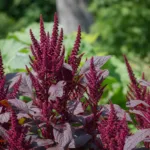 Amaranth (Amaranthus cruentus) care guideAmaranthus cruentus
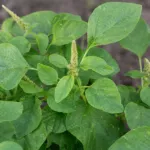 Amaranth (Amaranthus dubius) care guideAmaranthus dubius
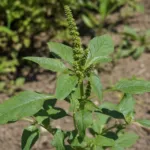 Smooth Pigweed (Amaranthus hybridus) care guideAmaranthus hybridus
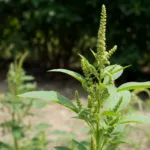 Slender amaranth or green amaranth (Amaranthus viridis) care guideAmaranthus viridis
 Beet (Beta vulgaris) care guideBeta vulgaris