
Diplodia tip blight of pine
Diplodia sapinea (synonyms include Sphaeropsis sapinea and Diplodia pinea)Diplodia tip blight of pine overview
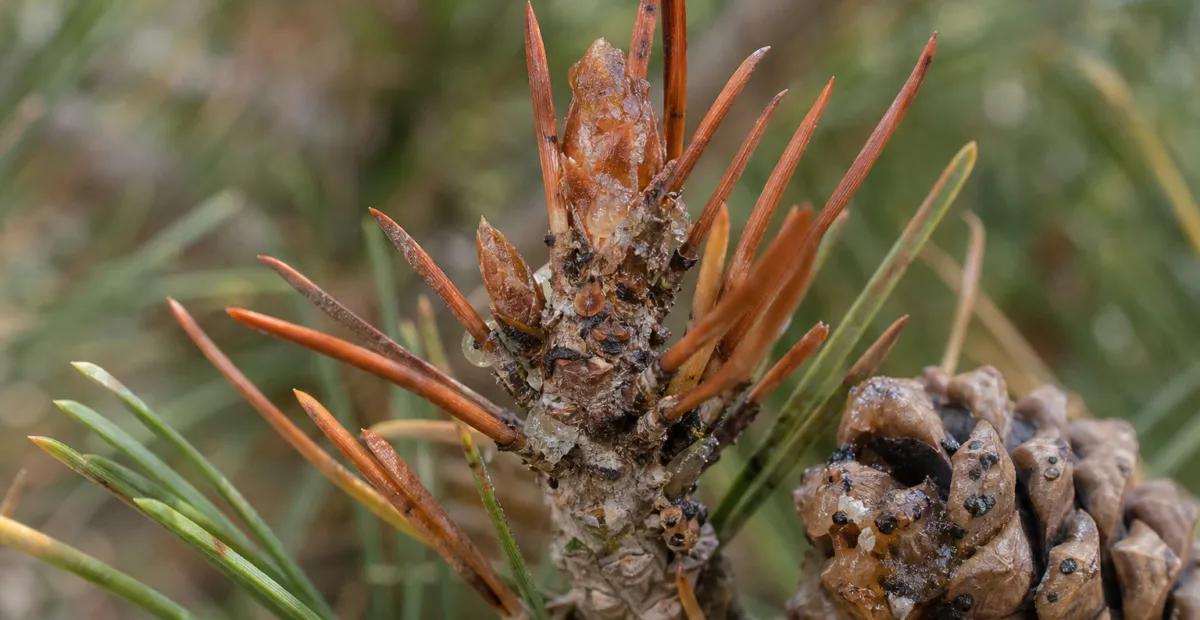
Diplodia sapinea causes a damaging shoot blight and canker disease of pine, especially Austrian, Scots, ponderosa, mugo, red, jack and other two- and three-needle pines. Infected candles stop elongating, needles turn tan to reddish brown, resin may ooze from buds or cankers, and black fungal fruiting bodies develop on needles, cone scales and dead shoots. Drought, hail, pruning wounds and other stresses often intensify disease.
Typical conditions
Overview
Diplodia sapinea primarily affects Pinus species in nurseries, Christmas tree plantations, windbreaks, parks, landscapes and forests. The disease is often most conspicuous on current-year shoots: new candles are killed before they fully elongate, leaving clusters of short brown needles at branch tips. Cankers may extend into older twigs and branches, and repeated infection can deform crowns and reduce tree vigor.
Diagnosis should distinguish Diplodia from other causes of pine tip dieback, including insect injury, frost damage, drought, hail, other canker fungi and the related species Diplodia scrobiculata. Laboratory identification is advisable when management or tree-removal decisions depend on a precise diagnosis.
Symptoms and identification
- New shoots stop elongating and die rapidly, often shortly after budbreak.
- Needles on killed candles become short, tan, reddish brown or gray and commonly remain attached.
- Small resin droplets may appear around infected buds; dead shoots and branches can develop resin-soaked, amber-to-dark cankers.
- Small black pycnidia may erupt at needle bases, on fascicle sheaths, dead shoots, bark and second-year cone scales.
- Repeated shoot killing causes branch-tip dieback, sparse or distorted crowns, reduced growth and, in severe cases, branch or tree death.
Symptoms are easiest to assess by comparing current-year shoot length with healthy shoots and examining dead candle bases and cone scales with a hand lens.
Causes and spread
The pathogen survives and produces spores in infected shoots, needles and especially older cone scales. Rain and high humidity wet these structures and promote release and spread of conidia. Spores are carried short distances by splashing rain, wind-driven rain and contaminated pruning equipment or plant material.
New shoots are particularly vulnerable from roughly two weeks after budbreak through the early candle-growth period, with timing varying by pine species and local weather. Infection is favored when wet spring conditions coincide with susceptible expanding shoots. Drought, heat, hail, frost, storm damage, compacted soil, root injury and other stresses can convert otherwise limited colonization into damaging disease.
Life cycle and persistence
Diplodia sapinea can overwinter in dead shoots, needles and cones and may also persist without symptoms inside living pine tissues. During wet weather, black pycnidia release conidia. These spores infect susceptible elongating shoots, commonly through young needles, buds or wounds. The fungus then colonizes and kills the current shoot, producing additional pycnidia that contribute to later disease cycles.
Second-year cones are important inoculum reservoirs because they can retain numerous fruiting bodies for extended periods. The fungus is primarily asexual in its commonly observed disease cycle, although genetic studies indicate that recombination may occur in some populations.
Treatment and control
There is no practical treatment that restores a killed pine candle or removes the fungus from an entire mature tree. Prune dead shoots and cankered branches back into visibly healthy wood when feasible, making cuts outside the canker margin and avoiding wet conditions. Remove pruned material and conspicuous infected cones from the site.
For valuable landscape trees, have a certified arborist assess crown condition, structural safety, root-zone stress and whether the diagnosis is confirmed. Correct chronic drought, compaction, drainage or root injury. Fungicide protection, where appropriate, is preventive rather than curative and must be timed to local budbreak and label directions; it is generally most useful on high-value trees with a history of disease and repeated susceptible shoot growth.
Low-impact and biological control
Use an integrated, nonchemical approach: maintain even soil moisture during drought, protect roots from compaction, improve airflow, remove infected shoots and cones, sanitize pruning tools, and avoid creating wounds during wet weather. Select less susceptible pine species for replacement plantings rather than repeatedly replanting a highly susceptible species in the same stressful site.
No home-prepared organic spray should be assumed effective against established Diplodia infection. Biological products may be marketed for some ornamental or nursery uses, but efficacy and legal use depend on the specific product, crop and state; follow the current label and local extension guidance.
Prevention
- Choose pine species and provenances suited to the local United States site, climate and soil conditions; avoid planting highly susceptible pines where recurring Diplodia has been severe.
- Maintain tree vigor with adequate rooting space, appropriate irrigation during drought and a mulch layer kept several inches away from the trunk.
- Reduce injury from hail, construction, string trimmers, mowers and unnecessary pruning. Prune during dry weather and disinfect tools between trees and between visibly diseased cuts.
- Remove and dispose of heavily infected shoots, branches and fallen cones when practical, especially before wet spring weather. Do not leave diseased cone and shoot debris beneath valuable trees.
- Improve spacing and airflow in dense plantings, and inspect nursery stock for shortened candles, resinous shoots and black fruiting bodies.
Interesting facts
- The disease is also widely called Sphaeropsis tip blight or Diplodia shoot blight because the fungus has been known under the former names Sphaeropsis sapinea and Diplodia pinea.
- Apparently healthy pine shoots may harbor the fungus without visible symptoms, which helps explain why sanitation alone may not eliminate disease from an established planting.
- Black pycnidia on second-year cone scales are among the most useful field clues, especially when combined with short, brown current-year shoots.
- Most severe United States problems occur in stressed landscape, windbreak, park, nursery and plantation settings rather than in every naturally established pine stand.
Use only fungicide products legally authorized for Diplodia or Sphaeropsis tip blight on the specific pine crop or ornamental site in the United States and your state. Follow the current product label exactly, including timing, rate, personal protective equipment, re-entry and environmental restrictions. Fungicides protect susceptible new growth and do not cure dead shoots, eradicate latent infections or replace sanitation and stress reduction; consult a licensed applicator or certified arborist for high-value trees.