
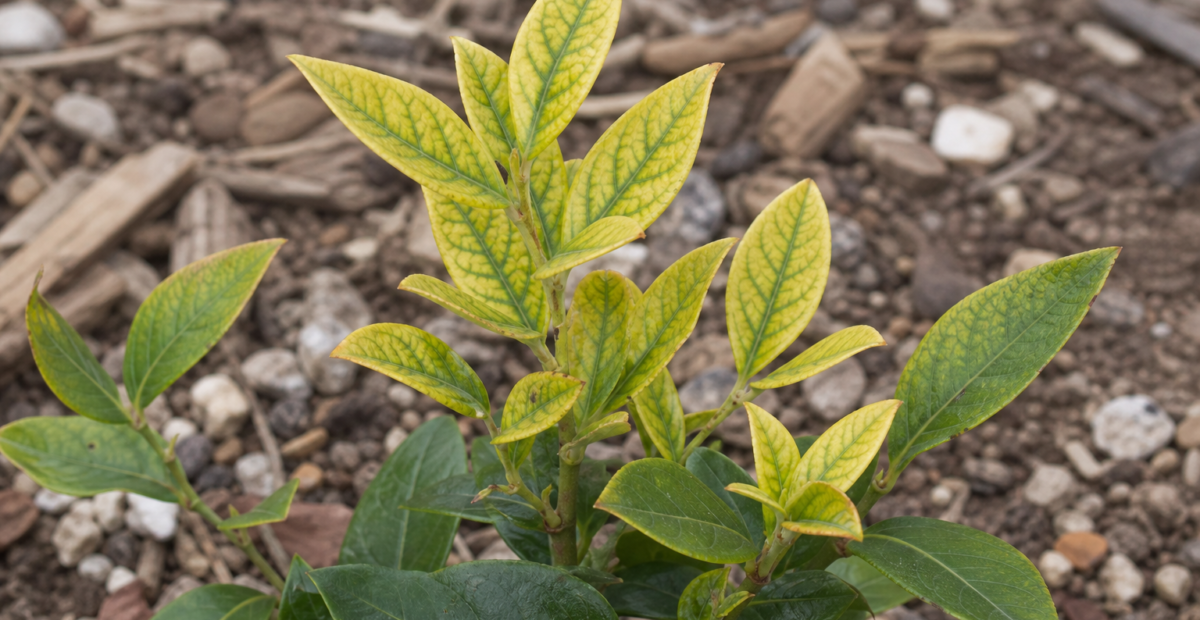
Iron Deficiency Chlorosis
Iron Deficiency Chlorosis overview
Iron deficiency, often called iron chlorosis, is an environmental nutrient disorder in which young leaves turn yellow between the veins while the veins remain green. In United States gardens it is commonly linked to alkaline or calcareous soil, poor drainage, compaction, overwatering, or unsuitable plant selection. The soil may contain abundant iron, but the nutrient is chemically unavailable to roots.
Typical conditions
Overview
Iron is required for chlorophyll formation and several enzyme systems. Because iron is relatively immobile within plants, deficiency symptoms usually begin on the youngest leaves and expanding shoots. The disorder affects many crops and ornamentals, but susceptibility varies greatly among species and cultivars.
Diagnosis should combine the leaf pattern with a soil or growing-media test. Similar chlorosis can result from manganese deficiency, root injury, waterlogging, compacted soil, vascular disorders, herbicide injury or other stresses. A leaf-tissue test may help, but tissue iron concentration does not always reflect the amount of physiologically available iron.
Symptoms and identification
The characteristic early symptom is interveinal chlorosis on young leaves: the tissue becomes pale green, yellow or cream-colored while the veins remain distinctly green. As the disorder worsens, the contrast may fade, leaves can become almost white, growth may be reduced, and brown necrotic spots or scorched margins may develop.
- Symptoms are strongest on new leaves rather than the oldest foliage.
- Some grasses and cereals may show yellow striping on young leaves.
- Symptoms may occur on one branch, one planting area or the entire plant depending on root-zone conditions.
- Severe, prolonged chlorosis can cause premature leaf drop, weak growth and irreversible tissue damage.
Causes and spread
High soil pH is the most common cause in many US landscapes. Above neutral and especially in alkaline, calcareous soils, iron becomes less soluble and roots cannot readily absorb it. Free lime can neutralize acidifying amendments and make long-term correction difficult.
Compaction, poor drainage, cool wet spring soil, excessive irrigation, drought, root damage, high soluble salts and unsuitable root-zone conditions can further reduce uptake. Excess phosphate or imbalances involving manganese, copper or zinc may aggravate symptoms. In soybean, nitrate-rich conditions and bicarbonate associated with wet calcareous soil can intensify iron deficiency chlorosis. The disorder does not spread from plant to plant.
Life cycle and persistence
Iron deficiency has no pathogen lifecycle. It develops when roots cannot acquire or metabolize enough physiologically available iron. Symptoms often become visible during cool, wet spring conditions or during rapid flushes of new growth, then intensify as leaves expand. Corrected growth may green up, but severely damaged older leaves generally do not recover fully.
Plant species differ in iron-acquisition strategy. Some broadleaf plants acidify the root zone and reduce iron chemically, while grasses release compounds that bind iron and assist uptake. This explains why cultivars and species can perform very differently in the same soil.
Treatment and control
Confirm the likely cause before treating. A soil test is the practical first step; test the root-zone pH and consider a professional diagnosis if symptoms are patchy, severe or inconsistent with iron chlorosis.
- Correct irrigation, drainage and compaction problems first.
- If the soil lacks free lime, carefully planned elemental sulfur may gradually lower pH, but rates depend on soil texture, depth and test results. Recheck pH rather than applying repeated unmeasured doses.
- Where iron supplementation is appropriate, use a labeled iron chelate selected for the measured pH. EDDHA-type chelates are generally the most reliable choice in strongly alkaline soil; other chelates may work only within narrower pH ranges.
- Iron sulfate or other inorganic iron sources may provide short-term or crop-specific benefit but can be ineffective in high-lime soil and may injure foliage or roots if misapplied.
- Foliar iron can temporarily improve appearance in some crops, but coverage, timing and repeat applications are critical, and leaf burn is possible. It is not a substitute for correcting the root-zone problem.
For established trees and shrubs with severe recurring chlorosis, consult a certified arborist or extension specialist about species suitability and professionally applied treatments. Midseason treatment may not restore already damaged foliage.
Low-impact and biological control
Organic practices can reduce the conditions that limit iron uptake, although they cannot reliably overcome strongly calcareous soil. Incorporate well-matured organic matter where appropriate, maintain a surface mulch without piling it against stems, improve drainage, and irrigate deeply but only as needed. Grow acid-loving plants in a dedicated acidic bed or container using a suitable planting medium and monitor pH over time.
Organic iron products, composts and naturally derived amendments should not be assumed to correct high-pH chlorosis. Use them only according to the product label and after confirming that the amendment fits the crop and soil chemistry. Avoid unverified homemade acidification or excessive manure and compost, which can increase salts or phosphorus.
Prevention
Start with the right plant in the right soil. Acid-loving plants such as blueberries, azaleas and rhododendrons are poor choices for persistently alkaline or calcareous ground unless they are grown in a properly prepared acidic bed or container. Select cultivars and rootstocks with documented tolerance where iron chlorosis is recurrent.
- Test soil pH, soluble salts and, when relevant, free lime before adding iron or acidifying products.
- Improve drainage and avoid routine overwatering; allow the root zone to receive oxygen.
- Relieve compaction without damaging major roots and maintain an organic mulch layer.
- Use irrigation water appropriate for the crop; hard, alkaline water can counter acidification.
- Avoid excessive phosphate and unneeded micronutrient applications.
- In field crops, use locally recommended tolerant varieties and avoid planting susceptible crops in known calcareous problem areas.
Interesting facts
Iron chlorosis does not necessarily mean the soil contains little total iron. In alkaline soil, iron can be abundant yet unavailable because it is converted into insoluble compounds. Iron solubility decreases dramatically as pH rises.
Some chlorotic plants contain as much or more total iron in their leaves than healthy plants because the iron is present in a form that cannot be used effectively. This is one reason visual diagnosis and soil or tissue testing must be interpreted together.
Iron deficiency is especially conspicuous on acid-loving plants grown outside their preferred soil range, while some grasses, native plants and cultivars have physiological mechanisms that allow better iron acquisition under alkaline conditions.
Iron deficiency is not controlled with pesticides. Use only fertilizer, soil-amendment or plant-treatment products legally authorized for the crop and problem in the United States, and follow the current product label for rates, timing, protective equipment and application method. Do not apply sulfur, iron salts or chelates without considering soil pH, free lime, crop sensitivity and possible phytotoxicity.
Affected plants
The plants below are linked to this problem by structured host-plant data. The list updates automatically as new plant profiles are added.
 Field maple (Acer campestre) care guideAcer campestre
 Paperbark Maple (Acer griseum) care guideAcer griseum
 Downy Japanese Maple (Acer japonicum) care guideAcer japonicum
 Boxelder (Acer negundo) care guideAcer negundo
 Acer palmatum care guideAcer palmatum
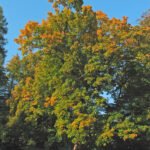 He Norway maple (Acer platanoides) care guideAcer platanoides
 Sycamore maple (Acer pseudoplatanus) care guideAcer pseudoplatanus
 Red maple (Acer rubrum) care guideAcer rubrum
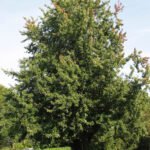 Silver maple (Acer saccharinum) care guideAcer saccharinum
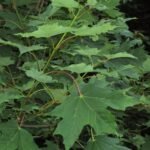 Sugar maple (Acer saccharum) care guideAcer saccharum
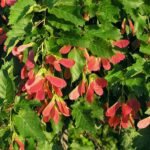 Tatar Maple (Acer tataricum) care guideAcer tataricum
 Amur Maple (Acer tataricum ginnala) care guideAcer tataricum ginnala