
Cucurbit Scab
Cladosporium cucumerinumCucurbit Scab overview
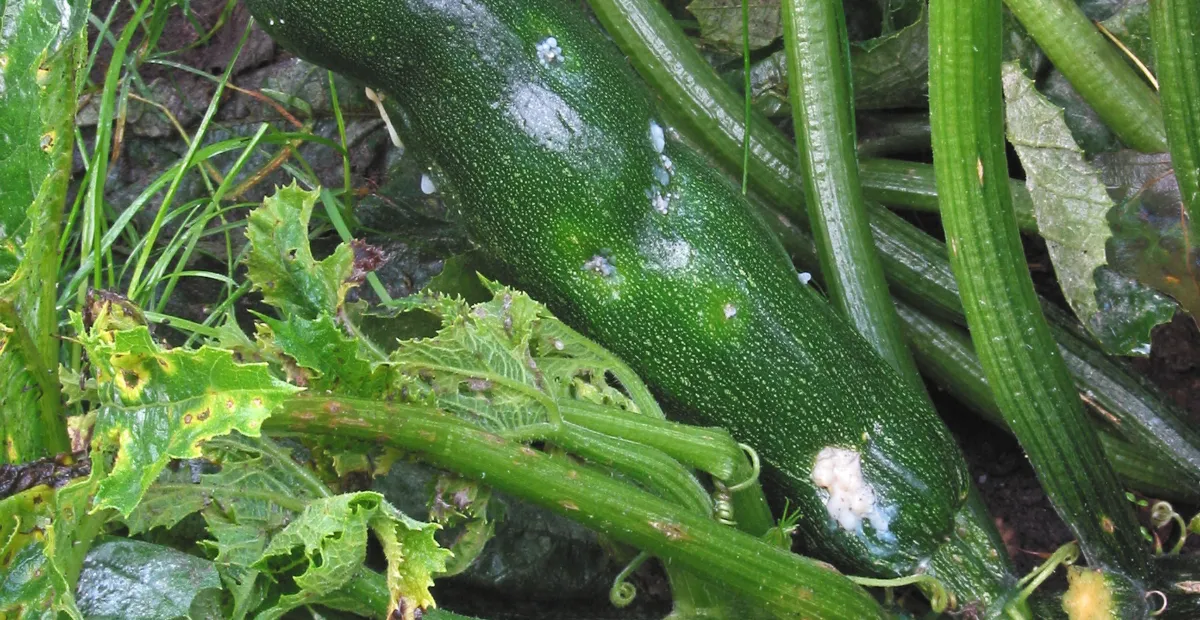
Cucurbit scab is a fungal disease caused by Cladosporium cucumerinum, most damaging on cucumber, summer squash, pumpkin, winter squash and melons. Cool, wet weather favors infection. Small gray, angular leaf spots may become shot holes, while young fruit develops sunken, sticky lesions that enlarge into corky scabs and may later decay from secondary bacteria.
Typical conditions
Overview
Cucurbit scab, also called cucumber scab or gummosis, is caused by the fungus Cladosporium cucumerinum. It can affect leaves, petioles, stems and fruit of cucurbits, although fruit damage is usually the most important problem. Cucumber, summer squash, pumpkin, winter squash and muskmelon are commonly affected. Watermelon is generally highly resistant, but superficial infection can occur under severe disease pressure.
The disease is favored by cool, wet conditions and may be confused with angular leaf spot, insect injury or other fruit rots. Confirmation is strongest when the characteristic scab lesions occur together with the appropriate weather history and, when necessary, laboratory examination.
Symptoms and identification
- Leaves: Small pale-green, water-soaked spots become gray to white, angular lesions, often with a yellow halo. Older centers may fall out, producing ragged or shot-hole foliage.
- Petioles and stems: Elongated gray-brown lesions may develop, particularly during prolonged wet weather.
- Fruit: Young fruit develops small, sunken, greasy or water-soaked spots resembling insect punctures. Lesions may ooze sticky or gummy material, enlarge into cavities and become corky or scabby.
- Advanced lesions: An olive-green to dark velvety fungal layer may form in fruit cavities. Secondary bacteria can invade and cause foul-smelling soft rot.
- Host variation: Symptoms and severity vary with crop, cultivar and fruit age. Resistant cultivars may show only superficial or restricted lesions.
Causes and spread
The pathogen survives mainly in infected cucurbit residue and may also be seedborne. Spores are dispersed by splashing rain, irrigation water, moist air currents, contaminated tools, equipment, workers and insects moving through wet plants. Disease can spread rapidly when foliage remains wet and temperatures are near 59–77°F.
Infection is especially likely where susceptible cucurbits are grown repeatedly in the same bed, crop debris is left in place, plants are crowded, or overhead watering extends leaf wetness into the evening. Wounds and natural openings can make fruit more vulnerable, although the pathogen can also infect susceptible young tissues directly.
Life cycle and persistence
Cladosporium cucumerinum overwinters in infected vines, leaves and fruit residue and may persist in soil-associated debris for multiple seasons. Under cool, moist conditions, the fungus produces airborne and water-dispersed conidia. After reaching susceptible tissue, spores can germinate and penetrate within roughly 9 hours under favorable conditions. Leaf symptoms may become visible in about 3 days, followed by additional sporulation and repeated secondary infection cycles while wet weather continues.
Fruit infected when young is most likely to develop deep, conspicuous scab cavities. Older or more resistant fruit may develop smaller, shallower or corky lesions.
Treatment and control
Remove badly infected leaves and scabbed fruit promptly when practical, especially before they produce visible spore masses. Bag or otherwise contain removed material and dispose of it away from the growing area. Improve airflow, stop overhead watering and reduce plant-to-plant contact. Harvest usable fruit promptly because scabbed tissue is readily invaded by soft-rot bacteria.
Fungicides are most useful preventively or at the earliest stage of disease development; they cannot restore damaged fruit or cure established cavities. For commercial production or severe recurring disease, use local Extension recommendations and rotate fungicide groups according to the current label and resistance-management guidance.
Low-impact and biological control
- Use resistant cucumber varieties, clean seed, crop rotation and thorough residue removal as the primary controls.
- Maintain dry foliage with drip irrigation, morning watering and adequate plant spacing.
- Use clean stakes, trellises, pruners and harvest containers; disinfect tools between visibly diseased plants.
- Remove infected fruit and foliage before spore-producing lesions become widespread.
- Where permitted and appropriate, use a biological or mineral-based fungicide only if the product is registered for the crop and disease in the United States and the label permits the intended use. Such products work best as part of an integrated program, not as a substitute for sanitation and resistant varieties.
Prevention
- Plant certified or otherwise pathogen-free seed, and avoid saving seed from diseased cucurbits.
- Choose cucumber cultivars with documented scab resistance when available; resistance is less consistently available across other cucurbit crops.
- Rotate cucurbits out of the bed for at least 2 years; a longer interval is prudent where disease has been severe.
- Remove and destroy infected vines, leaves and fruit after harvest. Do not place diseased material in a home compost pile unless the process reliably reaches pathogen-destroying temperatures.
- Use drip or soaker irrigation rather than overhead irrigation, and water early enough for foliage to dry.
- Provide spacing, trellising and weed control that improve airflow and reduce contact with wet soil.
- Do not work among cucurbits while plants are wet, and clean tools after cutting diseased tissue.
Interesting facts
- Cucurbit scab is distinct from potato common scab; the causal organisms and management differ.
- Fruit infection is often more damaging than leaf infection because even shallow scabs can make marketable fruit unacceptable.
- The olive-green velvety growth in a fruit cavity can help distinguish scab from some bacterial or abiotic injuries, although laboratory confirmation may still be needed.
- Watermelon is considered highly resistant, while cucumber cultivars with useful scab resistance are widely available.
- Secondary soft-rot bacteria frequently enter older scab lesions and can greatly accelerate fruit decay.
Use only fungicides legally registered and currently labeled in your state for the specific cucurbit crop and disease. Follow the current product label for application timing, rate, reentry interval, preharvest interval, protective equipment and maximum seasonal use. Do not assume that a product labeled for another crop, another Cladosporium disease or another country is legal or effective for cucurbit scab.
Affected plants
The plants below are linked to this problem by structured host-plant data. The list updates automatically as new plant profiles are added.
 Maroon cucumbe (Cucumis anguria) care guideCucumis anguria
 Horned Melon (Cucumis metuliferus) care guideCucumis metuliferus
 Cucumber (Cucumis sativus) care guideCucumis sativus
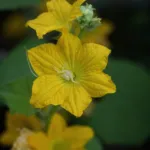 Melon or true melo (Cucumis melo) care guideCucumis melo
 Cantalupensis Group (Cucumis melo Cantalupensis Group)Cucumis melo Cantalupensis Group
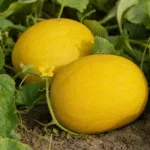 Mango melon (Cucumis melo Chito Group)Cucumis melo Chito Group
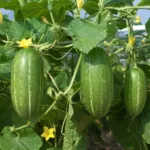 Oriental pickling melon (Cucumis melo Conomon Group)Cucumis melo Conomon Group
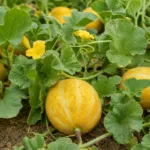 Dudaim melon (Cucumis melo Dudaim Group)Cucumis melo Dudaim Group
 Flexuosus Group (Cucumis melo Flexuosus Group)Cucumis melo Flexuosus Group
 Inodorus Group (Cucumis melo Inodorus Group)Cucumis melo Inodorus Group
 Makuwa Group (Cucumis melo Makuwa Group)Cucumis melo Makuwa Group
 Momordica Group (Cucumis melo Momordica Group)Cucumis melo Momordica Group