
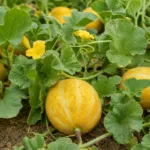
 AI-generated illustration
Flexuosus Group (Cucumis melo Flexuosus Group) short overview
Cucumis melo Flexuosus Group is a warm-season melon group grown for slender, cucumber-like fruits that are usually harvested immature. The annual vines are vigorous, sprawling climbers with lobed leaves and small yellow flowers. Despite its familiar culinary name in the United States, this plant is botanically a melon rather than a true cucumber. Full sun, fertile well-drained soil, steady moisture, and a sturdy trellis support the best growth and straighter fruit.
Taxonomic classification
Flexuosus Group (Cucumis melo Flexuosus Group) care guide
Light and placement
Give this melon a full-sun position with at least 8 hours of direct light, ideally on a south- or southwest-facing trellis. Morning sun helps foliage dry quickly, while afternoon light supports fruit production. Weak, elongated vines and sparse flowering suggest insufficient light; bleached patches, scorched leaves, or severe midday wilt can indicate excessive heat at the roots or reflected heat rather than a need for shade.
Watering and humidity
Water deeply at the soil line when the upper inch feels dry, keeping moisture consistent while vines flower and fruits enlarge. Mulch helps reduce rapid drying and soil splash. Reduce watering slightly as late fruits approach harvest if plants remain healthy, but do not allow repeated drought followed by flooding. Avoid wetting foliage late in the day, especially in humid regions.
Soil and growing medium
Use fertile loam or amended garden soil that drains freely yet holds steady moisture. Incorporate finished compost before planting, but avoid heavy, poorly drained clay or compacted beds. Raised beds are useful where spring soils stay wet. A slightly acidic to neutral reaction suits nutrient uptake; extreme alkalinity can contribute to iron or micronutrient deficiency.
Feeding
Mix compost or well-rotted organic matter into the planting area before sowing. Once vines begin vigorous growth, apply a balanced vegetable fertilizer at label rate or use a modest side-dressing. Avoid repeated high-nitrogen feeding after flowering begins because it can favor leaves over fruit. Do not fertilize drought-stressed, waterlogged, or visibly diseased plants until the root zone has recovered.
Growth and habit
This is a vigorous annual vine that sprawls across soil or climbs readily when supported. Trellising saves space and can improve air circulation and fruit cleanliness, but heavy fruits may need slings or other support. Harvesting frequently encourages continued production. Allow adequate room around the root crown and direct young shoots early, before stems become tangled.
Planting and repotting
Sow outdoors only after frost danger has passed and the soil is warm. Plant seeds 1/2–1 inch deep in rich, prepared soil, or transplant sturdy seedlings with minimal root disturbance. Train vines onto a trellis while young. Use black plastic or organic mulch to warm soil and reduce weeds, but keep mulch away from the stem.
Container plants can be transplanted once roots hold the soil together and nighttime temperatures remain warm. Use a large container with drainage holes, fertile potting mix, and a trellis. Repotting established vines is usually poorly tolerated, so choose the final container before vigorous growth begins.
Propagation and pruning
Propagation
Propagate by seed. Direct sow after the last frost or start seeds indoors 4–6 weeks before the expected last frost. Transplant once seedlings have several true leaves and the soil is warm. Use fresh, healthy seed and avoid disturbing the roots during planting.
Pruning
No routine pruning is required. Guide young vines onto the trellis and remove damaged, diseased, or badly tangled growth with clean tools. If space is limited, selectively shorten excess side shoots after the main framework is established, but avoid heavy cutting because leaves are needed for fruit production.
Overwintering
This annual melon is not suitable for outdoor overwintering where frost occurs. Remove spent vines after harvest and clear diseased debris from the bed. In frost-free regions, plants may continue briefly into fall, but cold nights slow growth and fruit development.
Uses
Harvest immature fruits for fresh salads, sandwiches, yogurt dishes, stir-fries, and other cucumber-style preparations. Young fruits generally have thin skin and mild flavor and are often used without peeling. Older fruits become firmer and more melon-like, with stronger aroma as they ripen. Culinary names can be confusing because this plant is a melon, not Cucumis sativus.
Appearance
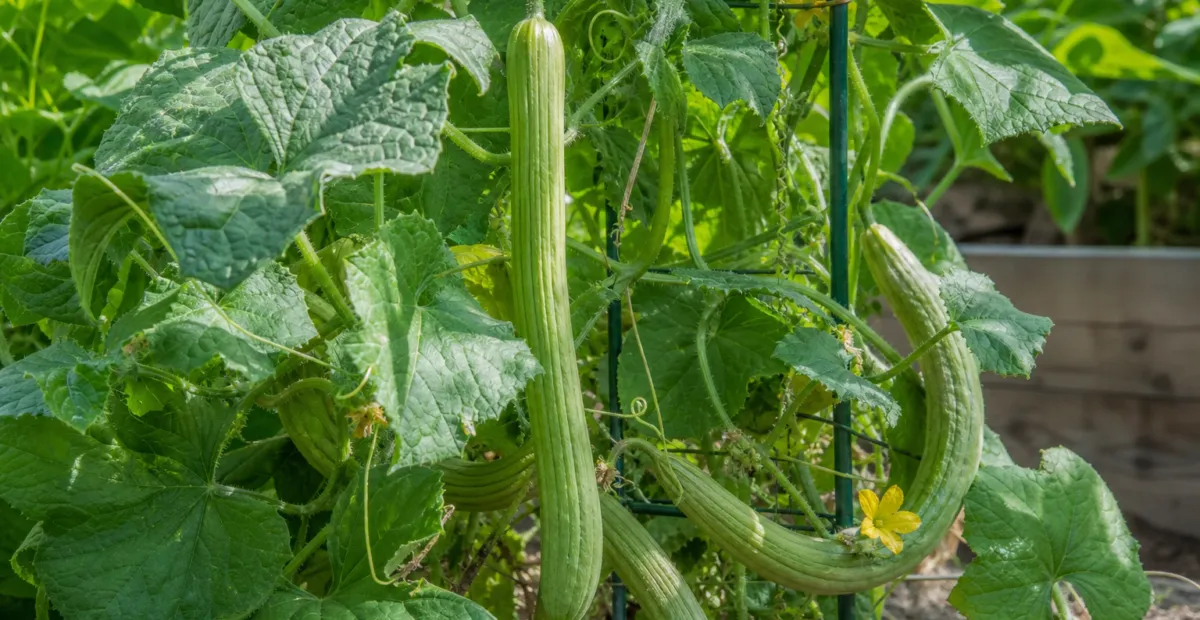
Stems are slender, angular to round, and covered with short hairs. Leaves are green, rough-textured, rounded to kidney-shaped, and shallowly five-lobed. Tendrils help the vine climb. Small pale-yellow flowers arise from the leaf axils, while the characteristic fruits are long, narrow, often curved or twisted, and may show longitudinal ribs or furrows.
Flowering
Plants produce male and female flowers, commonly on the same vine, and some cultivars may also produce perfect flowers. Flowers are small and yellow, with five rounded lobes. Female flowers are receptive for a short period, often about one day, so regular insect activity during flowering is important for reliable fruit set.
Pollination and visitors
The yellow flowers are insect-pollinated, with bees and bumblebees documented as important visitors to Cucumis melo flowers. Pollinator activity transfers pollen from male flowers to female flowers and directly affects fruit set, seed formation, and fruit development.
Cucumis melo Flexuosus Group photos
Click any photo for a larger view. Source, author and license are shown separately.
Diseases and pests
Diseases
Common cucurbit problems include powdery mildew, downy mildew, bacterial wilt, mosaic viruses, and damping-off. Prevent problems with crop rotation, clean seed, good spacing, drip irrigation, and prompt removal of diseased plants. Control cucumber beetles because they can spread bacterial wilt and viruses. Do not compost severely diseased vines.
Pests
Cucumber beetles, squash bugs, aphids, spider mites, and whiteflies may attack foliage or transmit diseases. Inspect leaf undersides and young growth regularly. Use row cover until flowering, hand-pick larger pests, wash off aphids, and use a labeled treatment only when monitoring shows a damaging population. Protect flowers from insecticide exposure.
Toxicity and pollen
Cucumis melo is cultivated as an edible food crop, and the ASPCA lists muskmelon, the same species, as non-toxic to dogs and cats. Normal food-related precautions still apply: spoiled fruit, large quantities, rind, or swallowed seeds can cause choking or digestive upset, and individual food allergies are possible.
- Typical season
- Summer, during flowering
- Pollination / pollen
- Heavy, insect-carried pollen released within open flowers
The flowers rely mainly on insect transfer, so pollen is not characteristically dispersed as a large airborne cloud. This does not mean zero allergy risk: melon allergy and pollen-food cross-reactions have been documented, but these concern fruit proteins and individual sensitization rather than ordinary garden pollen exposure.
Native habitat
The group is cultivated rather than treated as a single wild habitat type. It is adapted to warm, frost-free growing seasons, strong sunlight, fertile soils, and dependable moisture. Regional forms are associated with Asia and the Middle East, while modern selections are grown in gardens and commercial vegetable systems worldwide.
Interesting fact
Flexuosus Group fruits resemble cucumbers but belong to the melon species Cucumis melo. Fruits are usually harvested immature and used like cucumbers. Some fruits can reach roughly 2–3 feet in length, although harvest size varies by cultivar. Mature fruits may yellow and develop a stronger muskmelon aroma.
Frequently asked questions (FAQ)
The most relevant questions about this plant, with short and direct answers.
🌱Quick care
What is Cucumis melo Flexuosus Group?⌄
Cucumis melo Flexuosus Group is a frost-tender annual melon grown for long, slender, cucumber-like fruits harvested while immature. In the United States, it is commonly sold under names such as Armenian cucumber, snake cucumber, or snake melon.
Is Cucumis melo Flexuosus Group a cucumber or a melon?⌄
It is botanically a melon, not a true cucumber, because it belongs to Cucumis melo rather than Cucumis sativus. Its immature fruits resemble cucumbers in flavor, texture, and culinary use.
How much sun does Cucumis melo Flexuosus Group need?⌄
Provide full sun, meaning at least 6–8 hours of direct sunlight daily. Strong light supports vigorous vines, flowering, and reliable fruit production.
How often should I water Cucumis melo Flexuosus Group?⌄
Water regularly to maintain moderate, even moisture, especially during flowering and fruit development. Avoid repeated drought followed by heavy watering, which can stress the vine and reduce fruit quality.
Is Cucumis melo Flexuosus Group frost hardy?⌄
No, Cucumis melo Flexuosus Group is frost-tender and can be damaged or killed by freezing temperatures. Plant outdoors only after the danger of frost has passed and the soil has warmed.
🌤️Environment and placement
What temperature does Cucumis melo Flexuosus Group need to grow well?⌄
It grows best in warm weather, with soil around 70°F for dependable germination and warm nights after planting. Cold soil and cool weather can delay emergence and slow early growth.
What is the best soil for Cucumis melo Flexuosus Group?⌄
Use fertile, well-drained loam enriched with compost or other organic matter. A slightly acidic to neutral soil, approximately pH 6.0–6.8, is suitable when drainage is good.
Can Cucumis melo Flexuosus Group grow in containers?⌄
Yes, it can grow in a large container if given fertile potting mix, consistent moisture, full sun, and strong trellis support. Choose a container large enough for an extensive root system and vigorous vine.
Does Cucumis melo Flexuosus Group need a trellis?⌄
A trellis is recommended but not mandatory. Vertical growing saves space and often produces straighter fruits, while unsupported vines can spread several feet across the ground.
How much space does Cucumis melo Flexuosus Group need?⌄
Allow roughly 18–36 inches between plants when growing them in rows, with additional room for trailing vines or a trellis. Mature vines commonly reach about 6–9 feet long.
💧Care and problems
Why is my Cucumis melo Flexuosus Group not producing fruit?⌄
Poor pollination is a common cause because male and female flowers must be pollinated by insects. Encourage bee activity, avoid spraying insecticides on open flowers, and check whether female flowers are forming small swollen fruits beneath the blossoms.
Why does Cucumis melo Flexuosus Group have flowers but no cucumbers?⌄
The plant may have male flowers before female flowers, or female flowers may be failing to receive enough pollen. Hot, wet, or insect-poor conditions can reduce pollination, so hand-pollinating flowers in the morning may help.
What pests commonly attack Cucumis melo Flexuosus Group?⌄
Cucumber beetles, aphids, and spider mites may attack the foliage and vines. Cucumber beetles are especially concerning because they can spread bacterial wilt and other diseases.
What diseases affect Cucumis melo Flexuosus Group?⌄
Possible problems include powdery mildew, downy mildew, anthracnose, wilt, scab, stem blight, leaf spot, and mosaic viruses. Good air circulation, drip irrigation, crop rotation, and prompt removal of severely diseased plants can reduce risk.
How can I prevent disease on Cucumis melo Flexuosus Group?⌄
Water the soil rather than the foliage, provide adequate spacing and airflow, and avoid planting it where melons, cucumbers, squash, pumpkins, or watermelons recently grew. Rotating cucurbit crops for about three years can help reduce some soilborne and pest-related problems.
Does Cucumis melo Flexuosus Group need fertilizer?⌄
It benefits from fertile soil amended with compost and may respond to a balanced or slow-release vegetable fertilizer. Avoid excessive nitrogen, which can produce lush vines with fewer flowers and fruits.
Should I prune Cucumis melo Flexuosus Group?⌄
Routine pruning is usually unnecessary, although removing damaged leaves and guiding vines onto a trellis is helpful. Avoid heavy pruning because the leaves provide energy for flowering and fruit development.
When should I harvest Cucumis melo Flexuosus Group fruits?⌄
Harvest the fruits while they are young, tender, and cucumber-like, often around 12 inches long and 1 inch in diameter, depending on the cultivar. Older fruits may become drier, tougher, and less pleasant to eat.
Can I eat Cucumis melo Flexuosus Group skin?⌄
Yes, the thin skin is generally edible when the fruit is harvested young and can be eaten without peeling. Wash the fruit well and peel it if the skin has become tough or if you prefer a smoother texture.
How should I use Cucumis melo Flexuosus Group fruits?⌄
Use young fruits raw in salads, sliced as a cucumber substitute, stir-fried, added to soups, or preserved as pickles. Their mild, cucumber-like flavor makes them versatile in both fresh and cooked dishes.
🪴Planting and repotting
When should I plant Cucumis melo Flexuosus Group in the United States?⌄
Direct-sow or transplant it outdoors after the local last frost date, once the soil has warmed to about 70°F. In short-season areas, start seeds indoors roughly 4–6 weeks before the expected last spring frost.
How deep should I plant Cucumis melo Flexuosus Group seeds?⌄
Sow the seeds about 1 inch deep in warm soil, then keep the seedbed evenly moist until emergence. Thin seedlings to approximately 18–36 inches apart after they establish.
Can I transplant Cucumis melo Flexuosus Group seedlings?⌄
Yes, but transplant carefully because melon-family roots can be sensitive to disturbance. Use biodegradable pots or handle the root ball gently, and transplant only after frost risk has passed.
How long does Cucumis melo Flexuosus Group take to produce a harvest?⌄
Under warm, favorable conditions, the first harvest may begin about 50–70 days after sowing, although timing varies by cultivar and climate. Cool weather, transplant stress, drought, and disease can delay production.
Can Cucumis melo Flexuosus Group grow on the ground?⌄
Yes, the vines can trail along the ground if enough space is available. Mulch beneath developing fruits can reduce contact with wet soil, while trellising improves airflow and fruit shape.
✂️Propagation and pruning
How is Cucumis melo Flexuosus Group propagated?⌄
It is normally propagated from seed. Sow fresh seeds directly outdoors in warm soil or start them indoors in individual containers several weeks before outdoor planting.
Can I save seeds from Cucumis melo Flexuosus Group?⌄
Yes, seeds can be saved from fully mature fruits, but plants may not come true if different Cucumis melo groups or cultivars flower nearby. For predictable results, use seed from a known cultivar or isolate flowering plants.
Does Cucumis melo Flexuosus Group cross with cucumbers?⌄
It generally does not cross with true cucumbers because they are different species. It can cross with other Cucumis melo plants, including some melons, so isolation may be needed for reliable saved seed.
How should I support Cucumis melo Flexuosus Group vines?⌄
Use a sturdy trellis, cage, or fence capable of supporting vigorous vines and heavy fruit. Tie or guide young stems early, and support especially long fruits with slings if the trellis is used vertically.
⚠️Toxicity and safety
Is Cucumis melo Flexuosus Group toxic to dogs or cats?⌄
Cucumis melo Flexuosus Group is generally considered non-toxic to dogs and cats. Even non-toxic produce can cause digestive upset if eaten in large quantities, and fruits should be served plain rather than with seasonings or ingredients unsafe for pets.
🌸Flowering and special interest
What do Cucumis melo Flexuosus Group flowers look like?⌄
The plant produces small yellow flowers, with separate male and female flowers on the same vine. Insect pollination transfers pollen from male flowers to female flowers, allowing the elongated fruits to develop.
Why does Cucumis melo Flexuosus Group produce mostly male flowers?⌄
Young vines commonly produce male flowers first, while female flowers appear later as the plant matures. Excess nitrogen, stress, or unfavorable temperatures can also affect flower production and fruit set.
Similar plants
 Inodorus Group (Cucumis melo Inodorus Group)Cucumis melo Inodorus Group
  Makuwa Group (Cucumis melo Makuwa Group)Cucumis melo Makuwa Group
  Oriental pickling melon (Cucumis melo Conomon Group)Cucumis melo Conomon Group
  Dudaim melon (Cucumis melo Dudaim Group)Cucumis melo Dudaim Group
  Melon or true melo (Cucumis melo) care guideCucumis melo
  Cantalupensis Group (Cucumis melo Cantalupensis Group)Cucumis melo Cantalupensis Group