
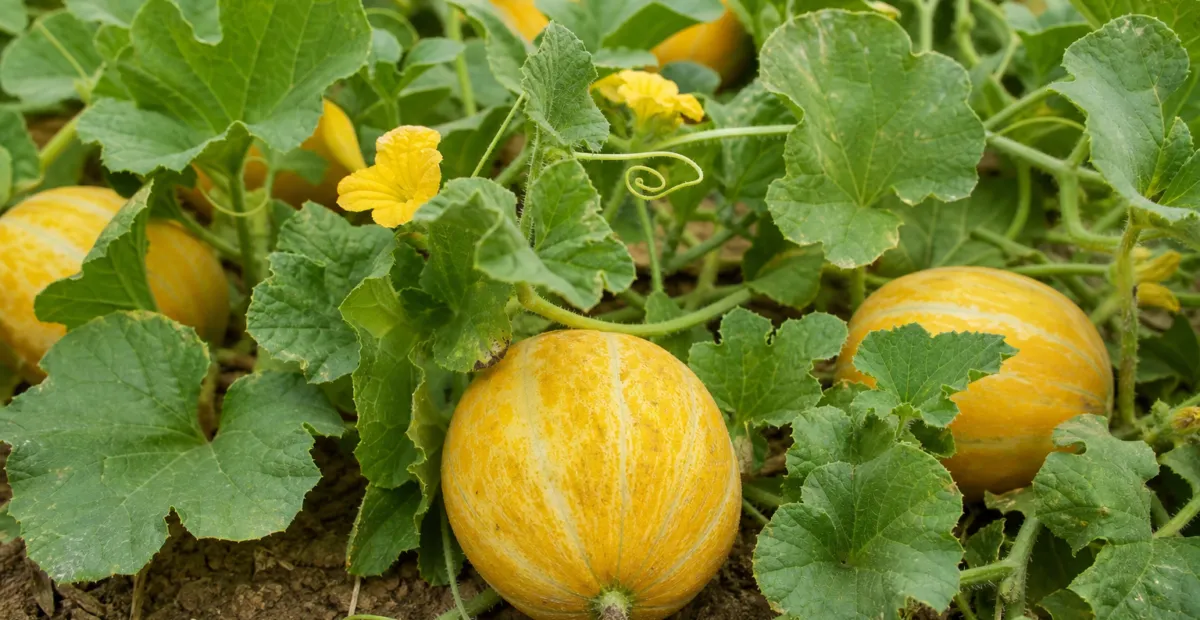
 AI-generated illustration
Dudaim melon (Cucumis melo Dudaim Group) short overview
Dudaim melon is a distinctive horticultural group within Cucumis melo, grown for its small, round to oval fruits, thin rind, and often powerful fragrance. The annual vine produces rough, shallowly lobed leaves, tendrils, and yellow cucurbit flowers. In the United States it needs a long, warm growing season, full sun, fertile well-drained soil, and room to trail or climb. Names and fruit fragrance vary among accessions.
Taxonomic classification
Dudaim melon (Cucumis melo Dudaim Group) care guide
Light and placement
Grow in the brightest available position, ideally with at least 8 hours of direct sun and a south- or west-facing exposure. A trellis can improve air movement and keep fruit cleaner, but trailing vines also perform well on warm mulch. Pale, weak growth and poor flowering suggest insufficient light; scorched leaves or sudden midday wilt can indicate excessive heat combined with inadequate water rather than a need for shade.
Watering and humidity
Water deeply when the upper inch of soil begins to dry, keeping moisture reasonably even from planting through fruit enlargement. Mulch helps reduce rapid fluctuations. Water at the soil line in the morning and avoid persistent wet foliage. Reduce watering slightly as fruit approaches maturity if the plant remains healthy, but do not allow severe drought, which can reduce fruit size and quality.
Soil and growing medium
Use fertile, friable soil with rapid drainage; raised beds or broad planting mounds are useful where soil stays wet. Sandy loam is especially suitable, while compacted clay can restrict roots and promote disease. Incorporate mature compost, not fresh manure. A mildly acidic to neutral soil around pH 6.0–6.5 supports nutrient availability; correct major pH problems using a soil test rather than guesswork.
Feeding
Work mature compost into the bed before planting and apply a balanced vegetable fertilizer according to the label or soil-test recommendation. Avoid excessive nitrogen, which encourages leaves and vines at the expense of fruiting. If growth is vigorous and foliage is dark green, do not keep feeding heavily. Supplemental fertilizer is most useful early in growth and around the start of flowering, not after fruit is well developed.
Growth and habit
Plants produce slender, branching vines that may trail across several square yards or climb a support using tendrils. Some stems can root where they contact moist soil, allowing the plant to form a broad mat. Train young vines early if using a trellis, support developing fruits with slings when necessary, and remove badly diseased foliage rather than repeatedly shortening healthy runners.
Planting and repotting
Sow outdoors after frost danger has passed and soil has warmed, or start seeds indoors only 2–4 weeks before transplanting. Plant ½–1 inch deep in hills or raised beds, then thin to the strongest seedling. Handle roots gently because melon seedlings dislike disturbance. Provide warm soil, steady moisture, and early protection from cucumber beetles and cold nights.
Container-grown plants need a large final container, preferably at least 15–20 gallons, with drainage holes and a sturdy trellis or space for trailing vines. Transplant only while plants are young and handle the root ball carefully. Repotting after vigorous growth begins can cause a setback, so direct sowing or an early move into the final container is preferable.
Propagation and pruning
Propagation
Propagate by seed. Sow fresh, properly identified seed ½–1 inch deep after the soil has warmed, or start indoors shortly before transplanting. Keep seedlings warm and disturb the root ball as little as possible. Because Cucumis melo groups cross readily, isolate flowering plants or hand-pollinate and bag flowers when maintaining seed purity.
Pruning
Pruning is optional. Train or redirect young runners while they are flexible, and remove damaged or diseased leaves promptly. Avoid heavy pruning because the plant needs substantial foliage to support fruit development. On a trellis, limit overcrowded side growth only when it reduces airflow or makes fruit support difficult.
Overwintering
This is a frost-tender annual in most of the United States. Harvest remaining mature fruit before the first freeze and remove vines after frost or crop completion. Indoor overwintering is generally impractical because the plant requires strong light, warmth, space, and pollination; save seed instead where legally and horticulturally appropriate.
Uses
Primarily grown as an edible and ornamental novelty melon. Small fruits are valued for their appearance and fragrance, but flavor and sweetness vary and some forms are considered more aromatic than dessert-quality. Fruits can be displayed or harvested for culinary testing only when the seed source is correctly identified and the fruit is sound and mature. It is also useful in educational gardens and melon diversity collections.
Appearance
The stems are angled and short-hairy, with a rough texture. Leaves are alternate, hairy, and shallowly lobed, commonly with three to seven lobes. Each leaf node bears a simple tendril. Small yellow cucurbit flowers occur in the leaf axils. Mature fruits are typically round to oval and may be mottled or striped yellow-orange, although rind pattern, fragrance, and fruit size vary among Dudaim accessions.
Flowering
The species produces separate staminate and pistillate or hermaphroditic flowers, depending on genotype and accession. Flowers arise from leaf axils during warm-season growth, with male flowers generally more numerous. Fruit set depends on successful insect transfer of pollen during the short period when flowers are receptive. Flowering normally continues while vines remain actively growing and temperatures stay warm.
Pollination and visitors
Cucumis melo flowers provide pollen and nectar for bees, and research on melon pollination documents bees as important flower visitors and fruit-set agents. Bumblebees may also visit cucurbit flowers in gardens. Pollinator activity is greatest during the morning, when flowers are open and receptive. Avoid insecticide applications during bloom, especially on open flowers.
Diseases and pests
Diseases
Common melon problems include powdery mildew, downy mildew, fusarium or other soil-borne wilts, damping-off, and virus diseases. Use clean seed, warm well-drained soil, crop rotation, drip irrigation, and good spacing. Remove badly infected foliage and avoid working among wet plants. Yellowing, distorted new growth, or sudden vine collapse warrants diagnosis before treatment because symptoms overlap among diseases and root problems.
Pests
Cucumber beetles, squash bugs, aphids, spider mites, and caterpillars may attack leaves, flowers, or young fruit. Inspect plants frequently, especially under leaves and at the stem base. Use row covers before flowering, hand-pick larger pests, control weeds, and use targeted products only when necessary. Protect flowers and pollinators by avoiding broad-spectrum sprays during bloom.
Toxicity and pollen
No specific toxic principle is established for Cucumis melo, and ASPCA lists muskmelon as non-toxic to dogs and cats. Sound, properly identified melon fruit is generally treated as a food crop, but spoiled, bitter, or unusually malformed cucurbit fruit should not be eaten. Choking, digestive upset, and pesticide exposure remain practical concerns; wash produce and prevent access to treated plant material.
- Typical season
- Summer through early fall
- Pollination / pollen
- Heavy, insect-carried pollen released within open flowers
Melon pollen is generally released by flowers and transported by visiting insects rather than carried widely on wind. Airborne exposure is therefore usually limited compared with wind-pollinated plants, but it is not necessarily zero. People with pollen or cucurbit sensitivities should avoid handling flowers during peak bloom if symptoms occur and should seek medical advice for persistent reactions.
Native habitat
The cultivated melon complex is associated with warm regions of Africa and southern Asia, but Dudaim is maintained mainly as a horticultural group rather than a clearly bounded wild species. It prefers open, sunny sites, warm soils, and a long frost-free period. In the garden it behaves like other melons, favoring fertile soils that drain quickly after rain and suffering in cold, waterlogged ground.
Interesting fact
Dudaim fruits are often intensely aromatic despite their small size. The group has been treated under several competing botanical arrangements. Dudaim and Chito types have historically been difficult to distinguish consistently. Some accessions lack the fragrance traditionally associated with the group. The plants can root at vine nodes that touch moist soil.
Frequently asked questions (FAQ)
The most relevant questions about this plant, with short and direct answers.
🌱Quick care
What is Cucumis melo Dudaim Group?⌄
Cucumis melo Dudaim Group is a small-fruited melon group commonly called Dudaim melon, pomegranate melon, or Queen Anne’s pocket melon. It is grown as a frost-tender annual for its ornamental, fragrant fruits.
Is Dudaim melon a melon or a cucumber?⌄
Dudaim melon is a melon, not a true cucumber, although both belong to the Cucurbitaceae family. Its accepted botanical identity is within Cucumis melo, the melon species.
How much sun does Dudaim melon need?⌄
Dudaim melon needs full sun, ideally at least 6–8 hours of direct sunlight daily. Strong light supports vigorous vines, flowering, and fruit development.
How often should I water Dudaim melon?⌄
Water Dudaim melon regularly to keep the soil evenly moist but not waterlogged. Increase watering during hot, dry weather and avoid wetting the foliage late in the day.
Is Dudaim melon frost hardy?⌄
Dudaim melon is not frost hardy and should be grown as a warm-season annual in the United States. Protect plants from frost and wait until the soil and air have warmed before planting outdoors.
🌤️Environment and placement
What soil is best for Dudaim melon?⌄
The best soil for Dudaim melon is fertile, well-drained sandy loam or loam. A slightly acidic to neutral soil with good organic matter and drainage supports healthy roots.
Can Dudaim melon grow in containers?⌄
Dudaim melon can grow in a large container if it receives full sun and has ample drainage. Choose a container holding roughly 10–15 gallons and provide a sturdy trellis or allow the vines to trail.
Can Dudaim melon grow on a trellis?⌄
Dudaim melon can be grown on a strong trellis because its vines climb with tendrils. Support developing fruits with slings if their weight begins to strain the vine.
How much space does Dudaim melon need?⌄
Allow approximately 3–5 feet between Dudaim melon plants when growing them on the ground. Trellising can reduce the footprint, but the vines still need room for airflow and fruit production.
What USDA zones can grow Dudaim melon?⌄
Dudaim melon can be grown in any USDA zone as a warm-season annual if it has enough frost-free time to mature. In cooler zones, start seeds indoors or use transplants to extend the season.
💧Care and problems
Why is my Dudaim melon not producing fruit?⌄
A Dudaim melon may fail to produce fruit because of insufficient sunlight, cool temperatures, excess nitrogen, drought, or poor pollination. Provide warm full-sun conditions and protect flowering plants from unnecessary insecticide use.
Why are Dudaim melon leaves turning yellow?⌄
Yellow leaves on Dudaim melon commonly result from overwatering, poor drainage, nutrient stress, aging foliage, or disease. Check the root-zone moisture, improve drainage, and inspect leaves for spots, mildew, or insect damage.
What pests attack Dudaim melon?⌄
Common pests of Dudaim melon include aphids, cucumber beetles, squash bugs, spider mites, and melon or squash vine pests. Monitor plants frequently and use the least-disruptive control appropriate for the infestation.
What diseases affect Dudaim melon?⌄
Dudaim melon can be affected by powdery mildew, downy mildew, bacterial diseases, fusarium wilt, and other problems common to Cucumis melo. Good airflow, clean watering practices, crop rotation, and resistant seed when available can reduce risk.
Should Dudaim melon vines be pruned?⌄
Dudaim melon vines usually do not require heavy pruning, but removing damaged leaves and poorly placed growth can improve airflow. Avoid excessive pruning because the leaves are needed to power fruit development.
How do I help Dudaim melon fruit ripen?⌄
Help Dudaim melon fruit ripen by providing full sun, consistent moisture during growth, and avoiding heavy nitrogen feeding late in the season. Once fruit is mature, slightly reducing watering may improve flavor, but do not let the plant wilt severely.
🪴Planting and repotting
When should I plant Dudaim melon seeds?⌄
Plant Dudaim melon seeds outdoors after the last spring frost, when soil temperatures are around 65°F or warmer. In short-season areas, start seeds indoors about 3–4 weeks before transplanting.
How deep should Dudaim melon seeds be planted?⌄
Plant Dudaim melon seeds about 1 inch deep in warm, prepared soil. Keep the seedbed evenly moist until germination, which is usually more reliable in consistently warm conditions.
How long does Dudaim melon take to germinate?⌄
Dudaim melon seeds commonly germinate in about 4–10 days under warm conditions. Germination may be slower or uneven if the soil is cool or allowed to dry out.
Can I transplant Dudaim melon seedlings?⌄
You can transplant Dudaim melon seedlings, but do so carefully because melons dislike root disturbance. Use biodegradable pots or transplant young plants while they are small, after outdoor temperatures and soil have warmed.
How do I fertilize Dudaim melon?⌄
Fertilize Dudaim melon by incorporating compost before planting and using a balanced vegetable fertilizer only as needed. Avoid excessive nitrogen, which can produce lush vines with fewer flowers and fruits.
✂️Propagation and pruning
How is Dudaim melon propagated?⌄
Dudaim melon is normally propagated from seed. Sow fresh, properly stored seeds in warm soil or start them indoors in individual containers to minimize root disturbance.
Can I save seeds from Dudaim melon?⌄
You can save seeds from a fully mature Dudaim melon if the plant was not a hybrid and was isolated from other Cucumis melo plants. Dry the cleaned seeds thoroughly and store them in a cool, dry, dark place.
Will Dudaim melon cross-pollinate with other melons?⌄
Dudaim melon can cross-pollinate with compatible Cucumis melo plants, including some other melon groups. If seed purity matters, separate flowering plants or hand-pollinate and protect the flowers.
⚠️Toxicity and safety
Are Dudaim melon plants toxic to people or pets?⌄
No specific toxicity is documented for Cucumis melo Dudaim Group, but ornamental or volunteer fruits should not be eaten unless the plant is positively identified and the fruit is known to be mature and suitable for consumption. Cucurbit fruits that taste distinctly bitter should be discarded.
Can children eat Dudaim melon?⌄
Children may eat a positively identified, mature Dudaim melon in small amounts if the particular fruit is known to be edible and does not taste bitter. Do not allow children to sample unidentified volunteer melons or any bitter-tasting fruit.
🌸Flowering and special interest
When does Dudaim melon flower?⌄
Dudaim melon flowers during the warm growing season, generally after the vine has produced several true leaves and sufficient vegetative growth. Flowers are typically yellow and are pollinated mainly by bees and other insects.
Why does Dudaim melon have flowers but no fruit?⌄
Dudaim melon may flower without setting fruit when pollinators are scarce, temperatures are stressful, or the plant is producing male flowers before female flowers. Hand-pollinating female flowers in the morning can improve fruit set.
How can I tell male and female Dudaim melon flowers apart?⌄
Female Dudaim melon flowers have a small swollen ovary resembling a miniature fruit beneath the petals, while male flowers have a slender stalk. Pollinate female flowers with pollen from a freshly opened male flower.
What do Dudaim melon fruits look like?⌄
Dudaim melon fruits are small and round to oval, with thin rinds that may show contrasting green, yellow, orange, or striped coloring as they mature. The flesh is generally pale or white, and the fruits are noted for their fragrance.
Are Dudaim melons edible?⌄
Dudaim melons are generally described as edible, but their flavor and texture can vary substantially among plants and seed lines. They are often grown for fragrance and ornamental appeal rather than as a dependable sweet dessert melon.
When are Dudaim melons ready to harvest?⌄
Harvest Dudaim melons when their rind has developed mature color, the fruit is strongly fragrant, and the stem begins to dry or release easily, depending on the strain. Because maturity signs vary, use color and aroma together rather than size alone.
Similar plants
 Cantalupensis Group (Cucumis melo Cantalupensis Group)Cucumis melo Cantalupensis Group
  Momordica Group (Cucumis melo Momordica Group)Cucumis melo Momordica Group
  Oriental pickling melon (Cucumis melo Conomon Group)Cucumis melo Conomon Group
  Makuwa Group (Cucumis melo Makuwa Group)Cucumis melo Makuwa Group
  Melon or true melo (Cucumis melo) care guideCucumis melo
  Mango melon (Cucumis melo Chito Group)Cucumis melo Chito Group