
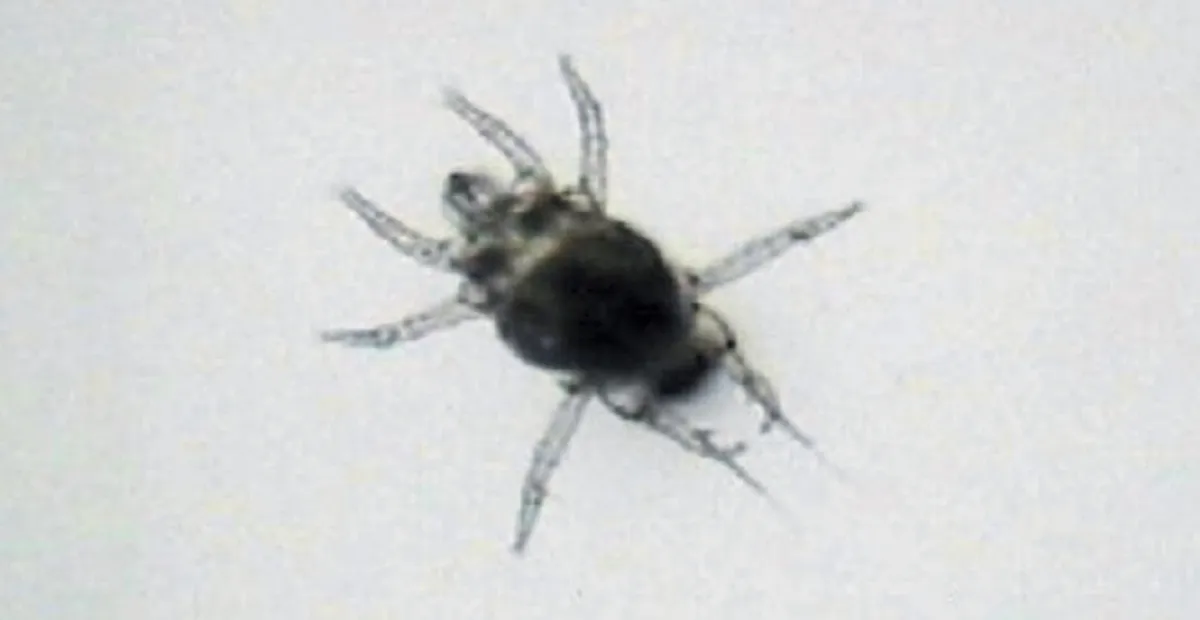
Broad mite
Polyphagotarsonemus latus (Banks)Broad mite overview
Broad mite, Polyphagotarsonemus latus, is a minute tarsonemid mite that attacks tender growing points, young leaves, flower buds and small fruit. Its toxic saliva causes tightly curled, hardened, bronzed or distorted growth, often before mites can be found. The pest is especially troublesome in warm, humid greenhouses and on susceptible vegetable, fruit and ornamental plants.
Typical conditions
Overview
Broad mite is a very small arachnid in the family Tarsonemidae. Adults are generally about 0.1–0.3 mm long and usually require magnification for reliable detection. Females may be yellow, amber or greenish, while males are smaller and have an enlarged hind-leg structure used to carry quiescent female nymphs.
The pest has a broad host range, particularly in tropical and subtropical production. In the United States it is commonly encountered in greenhouses, nurseries, gardens and warm-season crops. Damage is concentrated on rapidly expanding leaves, shoots, flower buds and small fruit.
Diagnosis should consider look-alike causes, including herbicide injury, boron or zinc deficiency, heat or moisture stress, and other mite or thrips damage. A hand lens or microscope and inspection of the newest growth are important for confirmation.
Symptoms and identification
- Newest leaves become tightly curled, cupped, puckered, thickened, brittle or hardened.
- Growing tips and flower buds may be twisted, stunted or malformed; internodes can become shortened.
- Leaves may turn downward and develop bronze, coppery, purplish or dull green coloration.
- Young fruit can develop russeted, corky or scarred surfaces, with cracking as the fruit expands.
- Symptoms may continue to appear after mites have disappeared because the affected tissue was injured while expanding.
Broad mite injury can resemble glyphosate or other broadleaf-herbicide drift, boron deficiency, zinc deficiency, physiological stress or some viral disorders. Confirm suspected infestations by examining the youngest tissues with at least a 10× hand lens; higher magnification is often needed.
Causes and spread
Damage results from feeding on immature plant tissue and from toxic saliva injected during feeding. Broad mites favor protected sites such as leaf folds, buds, growing points and depressions in young fruit, where contact sprays may have difficulty reaching them.
Spread occurs through infested transplants, cuttings, tools, workers, plant contact and movement of infested plant material. Males carry quiescent female nymphs to new foliage. Broad mites may also be transported between plants by certain whiteflies. Crowded greenhouse crops, overlapping foliage and movement of untreated stock increase the risk of rapid establishment.
Life cycle and persistence
The life cycle includes egg, larva, quiescent nymph and adult. Females lay eggs on leaf undersides, protected young tissue or depressions in fruit. Eggs commonly hatch in about 2–3 days under favorable conditions. Larvae feed briefly, then enter a nonfeeding quiescent stage; males may carry quiescent females and mate with them immediately after maturation.
Development can be rapid in warm conditions, allowing several overlapping generations during a crop cycle. Females may lay approximately 30–76 eggs over an 8–13-day period, although rates vary with host, temperature and humidity. Mites are easily overlooked because of their size and concealed feeding sites.
Treatment and control
First confirm the diagnosis, because distorted growth is not specific to broad mite. Inspect several affected shoots and nearby apparently healthy plants with a hand lens or microscope. If mites are found, isolate or remove heavily infested plants where feasible and treat the youngest growth and protected sites thoroughly.
For greenhouse and nursery crops, an effective integrated program may combine sanitation, removal of hotspots, careful coverage of developing foliage, and conservation or introduction of compatible predatory mites. Because damaged leaves do not recover, judge success by whether new growth develops normally rather than by the appearance of old injury.
On citrus and other fruit crops, consider crop stage, expected injury and the presence of natural enemies before intervention. No universal treatment threshold applies across hosts and production systems; use local extension recommendations and crop-specific monitoring guidance.
Low-impact and biological control
Nonchemical suppression begins with mite-free propagation material, quarantine, sanitation and removal of badly infested tissue. In protected culture, commercially available predatory mites may contribute to control when released early and when pesticide residues, temperature and humidity are compatible with their survival.
Horticultural oils, insecticidal soaps, neem-based products and wettable sulfur are sometimes used in US home and commercial production, but effectiveness depends on reaching mites in buds and distorted tissue. Test any product on a small number of plants first, avoid phytotoxic combinations, and follow the product label exactly. Do not apply oils or sulfur under conditions that create crop injury.
Prevention
- Purchase plants and cuttings from reputable suppliers and inspect new material before it enters a greenhouse or growing area.
- Quarantine incoming plants, especially ornamentals and vegetatively propagated stock, and inspect new growth with magnification.
- Remove and discard severely infested plants or growing tips when practical; seal material before disposal.
- Reduce plant-to-plant contact, avoid excessive nitrogen that produces overly succulent growth, and maintain good airflow without causing water stress.
- Control weeds and volunteer plants that may harbor mites near production areas.
- Clean tools, benches, carts and hands between infested and healthy crop areas.
- Scout weekly during warm weather, concentrating on the newest leaves, buds and small fruit. Record hotspots rather than treating an entire crop automatically.
- Preserve predatory mites by avoiding unnecessary broad-spectrum insecticides and miticides.
Interesting facts
- Broad mites are much smaller than common spider mites and are often identified first by their characteristic injury rather than by seeing the pest.
- Eggs can appear translucent with distinctive white speckling caused by surface structures.
- Males carrying quiescent female nymphs help the pest disperse efficiently within a crop.
- Broad mite has been documented on plants in at least 60 families, but susceptibility and economic importance vary greatly among hosts.
- In the United States, severe broad mite injury has been documented on watermelon, and cucumber is considered highly susceptible in research and extension contexts.
Use only pesticide products legally authorized for broad mite on the specific crop in the United States and in the state where the crop is grown. Follow the current label for crop, pest, rate, application method, personal protective equipment, reentry interval, preharvest interval and resistance-management requirements. Product registrations and permitted uses change; do not rely on an old extension list or apply a product solely because it is labeled for another mite or another crop. Choose the least disruptive effective option when natural enemies or pollinators are present.
Affected plants
The plants below are linked to this problem by structured host-plant data. The list updates automatically as new plant profiles are added.
 Polka Dot Begonia (Begonia maculata) care guideBegonia maculata
 King begonia (Begonia rex) care guideBegonia rex
 Begonia ‘Cocktail’Begonia 'Cocktail'
 Begonia ‘Double Red’Begonia 'Double Red'
 Begonia ‘Escargot’Begonia 'Escargot'
 Begonia ‘Gryphon’Begonia 'Gryphon'
 Begonia ‘Lucerna’Begonia 'Lucerna'
 Begonia ‘Obliqua’Begonia 'Obliqua'
 Begonia ‘Olympia’Begonia 'Olympia'
 Begonia ‘Tuberhybrida’Begonia 'Tuberhybrida'
 Begonia benaratensis care guideBegonia benaratensis
 Tuberous begonia (Begonia boliviensis) care guideBegonia boliviensis