
 Source:
 Begonia ‘Escargot’ short overview
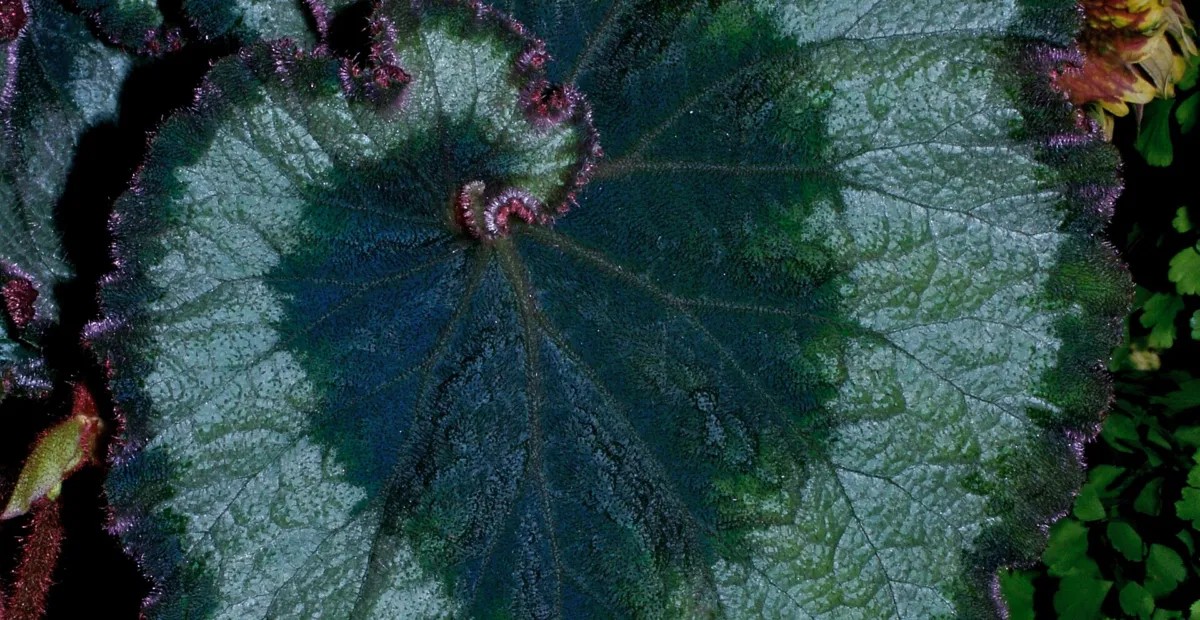
Begonia ‘Escargot’ is a Rex begonia cultivar prized for its dramatic, snail-shell-like leaf spiral. Its asymmetrical leaves combine olive green, silver-gray, mauve and reddish tones, with softly hairy, bullate surfaces and red undersides. This tender, rhizomatous perennial is usually grown indoors or as a shaded summer container plant in the United States. Bright filtered light, airy soil, careful watering and good circulation help preserve its color and prevent rot.
Taxonomic classification
Begonia ‘Escargot’ care guide
Light and placement
Place in bright filtered light near an east window, or a few feet back from a bright south- or west-facing window. Gentle morning sun may be tolerated, but strong direct midday sun can bleach or scorch the patterned leaves. Leggy growth, muted color and small leaves suggest insufficient light; crispy margins, faded patches or scorched areas suggest excessive intensity.
Watering and humidity
Water thoroughly when the upper portion of the mix has begun to dry, then let excess drain completely. Avoid leaving the pot in standing water and keep water off dense foliage when possible. Reduce frequency in cool, low-light winter conditions, but do not allow the rhizome and roots to remain bone dry for prolonged periods. Humidity helps, while stagnant wet air encourages disease.
Soil and growing medium
Use an airy indoor mix based on peat or coco coir with fine bark and perlite, or another porous mix that drains rapidly while retaining modest moisture. The rhizome should sit at or just above the surface rather than being buried deeply. A slightly acidic to neutral reaction is suitable; dense, waterlogged or compacted soil greatly increases the risk of rhizome and stem rot.
Feeding
Feed during active growth with a balanced liquid houseplant fertilizer diluted to about one-quarter to one-half the label rate every 3–4 weeks. Water first if the mix is dry to reduce root stress. Pause or greatly reduce feeding during cool, dim winter conditions and after repotting until fresh growth resumes. Flush the container occasionally to limit soluble-salt buildup.
Growth and habit
This cultivar forms a compact, spreading mound from a creeping rhizome. Its visual impact comes from the leaves rather than abundant flowers. Rotate the container periodically for balanced growth, remove damaged leaves promptly and avoid crowding plants, since dense foliage and poor circulation can promote fungal problems.
Planting and repotting
Use a clean container with drainage and plant into a pre-moistened, airy mix. Position the rhizome horizontally with its upper surface exposed or nearly exposed. Establish in bright filtered light, avoid fertilizer for several weeks after disturbing the roots, and keep the mix lightly but consistently moist while new growth develops.
Repot only when the container is crowded or the mix has degraded, preferably during active growth. Move up one container size rather than using an oversized pot. Replant the rhizome shallowly, keep the crown exposed, and avoid heavy watering until disturbed roots begin to recover.
Propagation and pruning
Propagation
Propagate vegetatively by leaf cuttings, sections of leaf or rhizome division. For rhizome division, use a clean blade to separate a section with at least one viable growth point, then place it shallowly in a porous, lightly moist mix. Propagation is best during active growth, when warmth and bright filtered light support rooting.
Pruning
Routine pruning is minimal. Remove yellow, damaged or diseased leaves at the base with clean scissors. Cut off spent flower stems if desired, especially when they crowd the foliage. Avoid hard cutting into the rhizome unless removing damaged tissue or taking propagation material.
Overwintering
Bring outdoor plants indoors before nights approach 50°F. Place them in bright filtered light away from heaters and cold drafts, reduce watering as growth slows, and maintain ventilation. Do not expose the plant to frost. Check carefully for mites, mealybugs and thrips before bringing it inside.
Uses
Primarily an ornamental foliage houseplant, tabletop specimen or shaded summer container plant. It can also be displayed in sheltered patios, balconies and frost-free conservatories. It is not recommended as a culinary or medicinal plant, and should be kept away from pets because Begonia plants are listed as toxic if eaten.
Appearance
The signature feature is a pronounced single spiral at the leaf base, resembling a snail shell. Leaves are obliquely asymmetrical, ovate, bullate and toothed, with a dark olive-green margin, a broad silver-gray band and mauve-pink to reddish shading. Pink-haired petioles and red leaf undersides add diagnostic detail.
Flowering
Flowering is secondary to the foliage display. Small pale flowers can be produced on slender branched stems, with flowering behavior varying according to light, temperature and plant maturity. Many growers remove flower stems when they detract from the foliage or appear during stressful conditions.
Pollination and visitors
Reliable cultivar-specific documentation of animal pollinators or flower visitors was not found. The small flowers are ornamental and secondary to the foliage, so no pollinator group is assigned.
Begonia 'Escargot' photos
Click any photo for a larger view. Source, author and license are shown separately.
Diseases and pests
Diseases
The main risks are gray mold, powdery mildew, stem rot and rhizome rot. Prevent problems with porous soil, drainage, moderate watering, foliage kept relatively dry and good air circulation. Remove affected tissue promptly, isolate symptomatic plants and correct persistent wetness or overcrowding before considering a labeled treatment.
Pests
Watch for aphids, mealybugs, thrips, caterpillars, vine weevil and tarsonemid mites. Inspect leaf undersides and petiole joints regularly, isolate new plants, and begin with hand removal or a labeled insecticidal soap or horticultural oil where appropriate. Repeat treatments as directed and avoid spraying stressed plants.
Related diseases and pests
Only Plant Doctor profiles whose host data indicate this plant may be affected are shown here.
 PestCitrus mealybugPlanococcus citri
 PestCyclamen mitePhytonemus pallidus
 PestBroad mitePolyphagotarsonemus latus (Banks)
 DiseaseCucumber mosaic virusCucumber mosaic virus
 DiseaseBlack Root RotBerkeleyomyces basicola
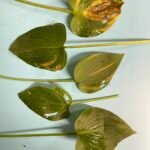 PestStrawberry foliar nematodeAphelenchoides fragariae
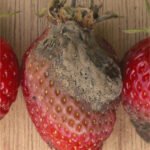 DiseaseGray MoldBotrytis cinerea
 DiseaseMaple powdery mildewSawadaea bicornis
Toxicity and pollen
ASPCA lists Begonia species as toxic to dogs and cats because of soluble calcium oxalates, with vomiting and salivation among reported signs; underground parts are especially concerning. Cultivar-specific toxicology is limited, so keep this cultivar away from pets and supervise children around the plant. Seek veterinary or poison-control advice after ingestion.
- Typical season
- Usually summer to fall indoors
- Pollination / pollen
- Fine pollen from small flowers; airborne release is limited in typical indoor culture
This is a flowering plant, but ‘Escargot’ is mainly grown indoors for foliage and produces relatively small flowers. No cultivar-specific airborne-allergy evidence was found. Indoor pollen exposure is therefore expected to be limited, though sensitive individuals should avoid handling flowers if symptoms occur.
Native habitat
This is a cultivated hybrid or cultivar rather than a wild population with a defined native habitat. Rex begonias are associated horticulturally with warm, humid, frost-free conditions and porous, moisture-retentive but well-aerated substrates.
Interesting fact
The cultivar name refers to the distinctive snail-shell-like spiral in the leaf. ‘Escargot’ was included in the RHS Rex Begonia Cultorum Group trial and received an Award of Garden Merit. Its leaves can reach roughly 14 inches long under favorable conditions.
Frequently asked questions (FAQ)
The most relevant questions about this plant, with short and direct answers.
🌱Quick care
How do you care for Begonia 'Escargot'?⌄
Give Begonia 'Escargot' bright filtered light, moderate even moisture, a loose well-drained mix, and good humidity with gentle airflow. Protect it from direct sun, cold drafts, and waterlogged soil.
🌤️Environment and placement
Is Begonia 'Escargot' an indoor plant?⌄
Yes, Begonia 'Escargot' is most commonly grown as an indoor foliage plant in the United States. It can spend warm summer months outdoors in bright shade, but it must return indoors before temperatures approach 50°F.
How much light does Begonia 'Escargot' need?⌄
Place it in bright filtered or indirect light. Direct midday sun can scorch or bleach the leaves, while very low light may reduce growth and dull the spiral pattern.
Can Begonia 'Escargot' grow in a north-facing window?⌄
It can grow in a bright north-facing window, especially during summer, but growth may be slower than in brighter filtered light. Move it closer to the window or add a grow light if new leaves become small or widely spaced.
Can Begonia 'Escargot' tolerate direct sunlight?⌄
Begonia 'Escargot' generally does not tolerate strong direct sunlight, particularly through a south- or west-facing window. Use a sheer curtain or place the plant several feet from intense glass-filtered sun.
What humidity does Begonia 'Escargot' need?⌄
Moderate to high, stable humidity is helpful, especially during dry indoor winters. Grouping plants or using a humidifier is safer than frequent misting, which can leave foliage wet and encourage disease.
What temperature is best for Begonia 'Escargot'?⌄
Keep Begonia 'Escargot' warm and stable, ideally around 60–80°F. It is frost tender and may suffer from cold drafts, chilly windows, or temperatures near 50°F and below.
Can Begonia 'Escargot' be grown in a terrarium?⌄
It can grow in a spacious, well-ventilated terrarium if the light is filtered and the substrate drains freely. Avoid sealed, stagnant conditions because prolonged wet foliage and poor airflow can encourage mildew and rot.
💧Care and problems
How often should you water Begonia 'Escargot'?⌄
Water when the upper portion of the potting mix has begun to dry, then water thoroughly and let excess drain away. Do not follow a fixed weekly schedule because indoor light, temperature, and pot size change drying time.
Should Begonia 'Escargot' stay moist or dry out between waterings?⌄
Keep the mix moderately and evenly moist, but never saturated. Allowing the surface and upper layer to dry slightly between waterings helps reduce rhizome and root rot.
Why are the leaves of my Begonia 'Escargot' turning brown at the edges?⌄
Brown leaf edges commonly result from underwatering, very dry air, excess fertilizer salts, or intense light. Check the root-zone moisture, improve humidity gradually, and flush accumulated salts from the mix if drainage is good.
Why is my Begonia 'Escargot' drooping?⌄
Drooping may indicate that the plant is too dry, too wet, chilled, or stressed after a change in location. Check the mix before watering; limp leaves with wet soil can signal root or rhizome damage rather than thirst.
Why are my Begonia 'Escargot' leaves curling?⌄
Leaves may curl from low humidity, inconsistent watering, heat, direct sun, or pest activity. Inspect the undersides for mites or other pests and correct environmental stress before removing affected leaves.
Why is my Begonia 'Escargot' losing leaves?⌄
Leaf loss can follow overwatering, underwatering, cold exposure, sudden environmental changes, poor light, or disease. Remove damaged foliage, check the roots and rhizome, and keep the plant in stable filtered light with careful watering.
Why does Begonia 'Escargot' have white powder on its leaves?⌄
White powdery patches are commonly powdery mildew, a fungal disease favored by poor airflow and damp foliage. Isolate the plant, keep leaves dry, improve air circulation, and use a labeled treatment according to its directions if needed.
What pests attack Begonia 'Escargot'?⌄
Common pests include spider mites and mealybugs, particularly when conditions are hot, dry, or crowded. Look for stippling, webbing, cottony clusters, or sticky residue and treat promptly with an appropriate houseplant control.
🪴Planting and repotting
What soil is best for Begonia 'Escargot'?⌄
Use a loose, humus-rich, fast-draining potting mix that retains some moisture without becoming soggy. A quality indoor mix amended with materials such as perlite, fine bark, or another aerating component is suitable.
Does Begonia 'Escargot' need a shallow pot?⌄
A shallow pot is often preferable because rex begonias have a surface-oriented rhizome and dislike excess wet mix below the roots. Always use a container with drainage holes and avoid choosing a pot much larger than the root system.
When should I repot Begonia 'Escargot'?⌄
Repot when roots or the rhizome have filled the container, drainage has deteriorated, or the potting mix has broken down. Move it only one pot size larger and repot during active growth when possible.
Should the rhizome of Begonia 'Escargot' be buried?⌄
No, keep the rhizome at or just above the surface of the potting mix rather than burying it deeply. A buried, constantly wet rhizome is more prone to rot.
✂️Propagation and pruning
How do you propagate Begonia 'Escargot' from a leaf?⌄
Propagate it from a healthy leaf or leaf section placed on lightly moist, sterile, well-draining medium, with the veins touching or cut across the medium as appropriate. Keep it warm, humid, and bright but indirect until plantlets form.
Can Begonia 'Escargot' be propagated in water?⌄
Leaf propagation is generally more dependable in a moist propagation medium than in water. Small stem or petiole cuttings may root in water, but they should be moved to a well-drained mix once roots develop.
Can you divide Begonia 'Escargot'?⌄
Yes, a mature plant can be divided if it has distinct rhizome sections with roots and growing points. Use a clean blade, keep each division in a small well-drained pot, and avoid burying the rhizome.
How do you prune Begonia 'Escargot'?⌄
Prune by removing yellow, damaged, or diseased leaves at the base with clean scissors. Pinching or trimming leggy growth can encourage a fuller appearance, but avoid removing too much foliage at one time.
⚠️Toxicity and safety
Is Begonia 'Escargot' toxic to cats and dogs?⌄
Yes, Begonia 'Escargot' should be treated as toxic to cats and dogs if eaten because begonias contain soluble calcium oxalates. Keep it out of reach and contact a veterinarian if a pet chews or swallows any part.
Which part of Begonia 'Escargot' is most toxic to pets?⌄
The underground portions of begonias generally contain the highest concentration of irritating soluble calcium oxalates, although other plant parts should also be kept away from pets. Ingestion can cause drooling, vomiting, or oral irritation.
Is Begonia 'Escargot' safe for children?⌄
It is best to keep Begonia 'Escargot' away from young children who may chew plant material. Ingestion can irritate the mouth and digestive tract, so seek medical advice or poison-control guidance if it is eaten.
🌸Flowering and special interest
Does Begonia 'Escargot' flower?⌄
Yes, Begonia 'Escargot' can produce small pinkish or whitish flowers, but it is primarily grown for its spiral-patterned foliage. Flowers may be sparse indoors and are usually less prominent than the leaves.
Should I remove the flowers from Begonia 'Escargot'?⌄
Remove flower stalks if you prefer the plant to direct more energy toward foliage or if the blooms become unattractive. Leaving them in place is also harmless when the plant is healthy.
Why is my Begonia 'Escargot' not flowering?⌄
Limited flowering is normal for a foliage-focused rex begonia and does not necessarily indicate a problem. Insufficient light, low nutrition during active growth, or environmental stress can further reduce blooms.
Similar plants
 Yellow lantern chili (Capsicum chinense) care guideCapsicum chinense
 Capsicum baccatum care guideCapsicum baccatum
 Serrano (Capsicum annuum ‘Serrano’)Capsicum annuum 'Serrano'
 Purple Beauty (Capsicum annuum ‘Purple Beauty’)Capsicum annuum 'Purple Beauty'
 Numex Twilight (Capsicum annuum ‘Numex Twilight’)Capsicum annuum 'Numex Twilight'
 Explosive Ember Chili Pepper (Capsicum annuum ‘Explosive Ember’)Capsicum annuum 'Explosive Ember'