

Cyclamen mite
Phytonemus pallidusCyclamen mite overview
Cyclamen mite is a microscopic tarsonemid mite that feeds in crowns, buds and unfolding leaves of cyclamen, strawberries and numerous ornamentals. Infested plants develop crinkled, hardened, curled or stunted growth, distorted flowers and sometimes dwarfed fruit. Because symptoms can resemble herbicide injury, nutrient disorders or viruses, confirmation with a 20× lens or diagnostic laboratory is important before treatment.
Typical conditions
Overview
Cyclamen mite is a very small plant-feeding mite in the family Tarsonemidae. Adults are generally about 0.01 inch long and are pale, translucent, pinkish orange or yellowish brown. They are not visible to the unaided eye and usually require at least a 20× hand lens or microscope.
The mites shelter in crowns, buds, leaf folds and other actively growing tissues. Feeding can inject saliva that disrupts normal tissue expansion, so newly emerging leaves and flowers may be permanently distorted. Similar symptoms can result from broad mite, herbicide exposure, boron or zinc deficiency, viruses and other physiological problems.
Symptoms and identification
- Young leaves emerge stunted, crinkled, thickened, hardened, puckered or curled inward.
- Leaf stems may fail to elongate, producing a compact or tufted crown.
- Terminal growth may be dwarfed, bronzed, brownish green or otherwise discolored.
- Flower buds may abort; emerging petals can be distorted, discolored or fail to open.
- Severe strawberry infestations can cause dwarf plants, small dry fruit and seeds that stand out on the berry surface.
- Symptoms are often concentrated in new growth and may appear after the mites have moved deeper into protected tissue.
Look for mites and smooth, pale oval eggs in buds, along midribs, in leaf folds and around the crown using at least 20× magnification. Unlike spider mites, cyclamen mites normally do not produce conspicuous webbing.
Causes and spread
Infestations are commonly introduced on infested nursery stock, runners, crowns, cuttings or greenhouse plants. Mites can then move by direct contact between leaves, workers handling plants, tools, trays, harvest equipment and other plant-contact surfaces. In strawberry production, pickers, bees, birds and equipment can transfer mites between plants or fields. Air movement may assist short-range spread in dense greenhouse crops.
Cool, humid conditions and protected young tissue allow populations to increase rapidly. Symptoms may be confused with herbicide injury, nutrient deficiency, virus infection or broad mite, so avoid treating solely from appearance when confirmation is possible.
Life cycle and persistence
Cyclamen mite develops through egg, larva, nymph or quiescent stage, and adult stages. Eggs are smooth, pale or glossy white and are deposited in buds, leaf folds, crowns or other protected young tissue. Larvae have three pairs of legs; nymphs and adults have four.
Depending on temperature and crop conditions, egg-to-adult development may take roughly 1–3 weeks. Females may live about a month and produce approximately 12–20 eggs in some ornamental-crop references; strawberry populations can reproduce rapidly and may complete a generation in about two weeks during summer. Adult females can overwinter in strawberry crowns and may be carried into new plantings on infested transplants.
Treatment and control
Confirm the diagnosis before treating. Submit representative plants to a university or state diagnostic laboratory when symptoms are atypical, when broad mite or virus is possible, or when no mites can be found under magnification.
Remove and destroy heavily infested plants promptly. For valuable greenhouse crops, isolate affected lots and treat only when a current label permits use on that crop and site. Because mites feed inside buds and folded young tissue, thorough coverage and precise timing are important; repeat applications, if permitted, must follow the label and should be selected with resistance management and beneficial-mite compatibility in mind.
Do not expect damaged leaves or flowers to recover. Judge success by the condition of newly developing growth and by follow-up inspections. Heat-treatment methods are crop-specific and can injure plants; use them only when an authoritative crop protocol or specialist recommendation supports the exact temperature, duration and plant material.
Low-impact and biological control
Begin with sanitation and exclusion rather than routine spraying. Remove and destroy badly infested plants and nearby plants when practical, especially in greenhouse benches or small plantings. Do not compost infested material if viable mites could be redistributed.
- Use certified or carefully inspected mite-free transplants and propagation stock.
- Isolate incoming plants and inspect crowns, buds and unfolding leaves before placing them near established crops.
- Scout with a 20× lens, concentrating on new growth and plant crowns.
- Release commercially available predatory mites only as a preventive or early-season measure, before populations are high; suitability depends on crop, temperature, humidity and pesticide compatibility.
- Protect naturally occurring predatory mites and other beneficials by avoiding unnecessary broad-spectrum insecticides and disruptive miticides.
- For edible crops, use only organically approved products that are currently registered and labeled for the crop and pest in the United States; horticultural oils, insecticidal soaps or sulfur may injure some plants and are not automatically appropriate.
Prevention
Buy propagation material from reputable sources and reject plants with compact, crinkled crowns, distorted buds or malformed young leaves. Quarantine new plants, inspect them under magnification and keep suspect material separate.
- Start with clean greenhouse benches, tools, trays and containers.
- Work from clean areas toward suspect or infested areas, changing gloves or washing hands between lots.
- Remove volunteer plants and crop debris that may harbor mites.
- Do not place new plants beside infested stock.
- Maintain crop spacing and scouting access so new growth can be inspected regularly.
- In strawberries, use mite-free nursery plants and monitor crowns early in the season, especially in fall-planted or second-year plantings.
Interesting facts
- Cyclamen mites are mites rather than insects and are related more closely to spiders and ticks.
- Their concealed feeding site is a major reason contact sprays often perform poorly.
- Damage can continue to be visible after mites have left the affected tissue.
- Male thread-footed mites have specialized hind legs; microscopic characters, including features of the fourth femur, may be needed for definitive identification.
- Harmless tarsonemid mites can occur in strawberry fields, so management should focus on plants showing characteristic injury rather than on mite presence alone.
Use only miticides or other pesticide products legally authorized and currently labeled in the United States for cyclamen mite on the specific crop and site. Follow the current label exactly, including crop, rate, personal protective equipment, reentry interval, preharvest interval and resistance-management directions. Product registrations and permitted uses can change; do not rely on a product list from an older publication. Contact a state extension specialist or licensed applicator when crop value or identification is uncertain.
Affected plants
The plants below are linked to this problem by structured host-plant data. The list updates automatically as new plant profiles are added.
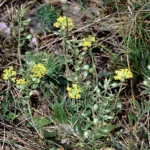 Alyssum montanum care guideAlyssum montanum
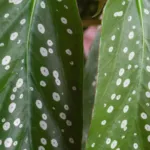 Polka Dot Begonia (Begonia maculata) care guideBegonia maculata
 King begonia (Begonia rex) care guideBegonia rex
 Begonia ‘Cocktail’Begonia 'Cocktail'
 Begonia ‘Double Red’Begonia 'Double Red'
 Begonia ‘Escargot’Begonia 'Escargot'
 Begonia ‘Gryphon’Begonia 'Gryphon'
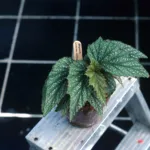 Begonia ‘Lucerna’Begonia 'Lucerna'
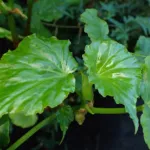 Begonia ‘Obliqua’Begonia 'Obliqua'
 Begonia ‘Olympia’Begonia 'Olympia'
 Begonia ‘Tuberhybrida’Begonia 'Tuberhybrida'
 Begonia benaratensis care guideBegonia benaratensis