 Source:
 Begonia ‘Tuberhybrida’ short overview
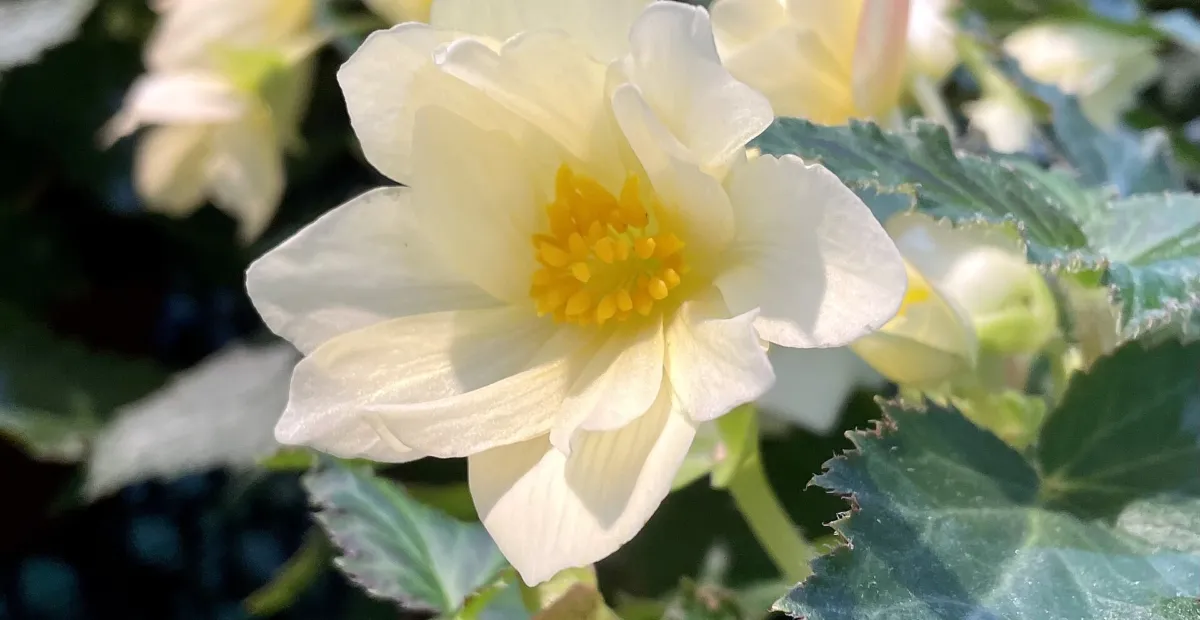
Begonia 'Tuberhybrida' is a horticultural group of tuberous begonias bred primarily for exceptionally showy summer flowers. Plants may be upright, bushy, cascading, single-flowered, double-flowered, frilled, rose-formed, camellia-formed, or picotee, with colors ranging from white and yellow to orange, pink, and red. In the United States, they are usually grown as seasonal container or bedding plants, with the tubers lifted and stored indoors where winters are cold.
Taxonomic classification
Begonia ‘Tuberhybrida’ care guide
Light and placement
Give bright filtered light or partial shade, ideally with gentle morning sun and protection from intense afternoon exposure. An east-facing position, lightly shaded patio, or bright spot beneath an open tree canopy is suitable. Pale, stretched growth and few flowers suggest insufficient light; scorched leaves, faded blooms, or collapsed plants indicate excessive sun or heat. Protect tall forms from strong wind because the stems are brittle.
Watering and humidity
Water when the upper surface of the mix begins to dry, then soak thoroughly and allow excess water to drain. Keep the root zone evenly moist during active growth, but never leave the tuber sitting in water; water trapped in the tuber’s central depression can promote rot. Reduce watering as foliage yellows in late season and stop during dormancy. Humidity is helpful, but air movement is more important than misting.
Soil and growing medium
Use a porous, organically rich container mix that drains quickly while retaining moderate moisture. A quality peat- or coir-based mix amended with compost and perlite or fine bark is suitable. Avoid dense garden clay and waterlogged media, which encourage tuber and stem rot. A slightly acidic to neutral reaction is appropriate; do not lime heavily unless a soil test indicates a need.
Feeding
Feed during active leaf and flower production with a complete, balanced fertilizer at the label rate or slightly diluted. Apply after watering so dry roots are not exposed to fertilizer salts, and repeat at reasonable intervals rather than overfeeding. Excess nitrogen can produce weak, leafy growth, while excessive fertilizer or irregular moisture may contribute to bud drop. Taper feeding as the plant enters dormancy.
Growth and habit
The group includes upright, compact, spreading, and pendulous forms. Plants develop seasonal shoots from a flattened tuber and commonly become dormant after the growing season. Large-flowered forms may need discreet staking, especially in exposed containers. Removing spent blooms and selected female flowers can redirect energy toward continued display of the larger male flowers.
Planting and repotting
Start dormant tubers indoors about 2½–3 months before outdoor planting. Set each tuber concave-side up in barely moist, porous mix and avoid filling the central hollow with water. Move plants outdoors only after frost danger has passed and harden them gradually. Choose a sheltered partial-shade site with good drainage and protection from strong wind.
Repot or pot up in late winter as dormant tubers begin to sprout. Use a clean container only slightly larger than the root system and a fresh porous mix. Keep the tuber shallow, with the hollow upper surface exposed or lightly covered. Avoid moving plants repeatedly once stems and buds are developed.
Propagation and pruning
Propagation
Propagate from seed or stem/rooting cuttings. Start seed in winter because seedlings need a long season to flower. Young shoots can be rooted in a sterile, lightly moist medium under high humidity. Tuber division is possible in some horticultural practice but is more prone to rot and disease than cuttings or seed.
Pruning
Remove spent flowers and yellowing leaves with clean scissors. If stems become weak or crowded, thin selected shoots early in the season rather than cutting heavily into the tuber. At dormancy, allow foliage to yellow naturally before cutting back the dried top growth.
Overwintering
In regions colder than Zone 9, lift tubers before hard frost or move containers to a frost-free location. Gradually reduce watering as foliage yellows, then cure tubers in a dry place. Store clean, dry tubers in paper bags or breathable packing material in a dark, cool location around 40–50°F, checking periodically for rot. Restart in late winter.
Uses
Used for shaded beds, porch containers, window boxes, hanging baskets, and seasonal displays. Pendulous forms are particularly effective in baskets, while upright large-flowered forms suit containers and sheltered borders. They are ornamental only; do not use the plant as food or medicine, and keep tubers away from pets and children who may chew plant material.
Appearance
Plants arise from a tuber and have soft, brittle, succulent-leaning stems with asymmetrical, glossy leaves. Foliage may be green, bronze, or touched with red. Flowers are conspicuous and highly variable, including single, double, ruffled, frilled, rose, camellia, bicolor, and picotee forms. The combination of a tuberous base, uneven leaves, and large showy flowers helps distinguish this group from wax and rex begonias.
Flowering
Flowers are produced over an extended summer season when plants remain cool, evenly watered, and well fed. The larger, showier flowers are generally male blooms, while smaller female flowers may occur beside them. Cultivars vary widely in petal count, edge texture, color pattern, and orientation, with pendulous forms often displaying downward-facing flowers.
Pollination and visitors
The flowers are insect-pollinated, but this complex cultivated group is selected primarily for floral appearance rather than documented pollinator value. Small insects may visit accessible, single or less-doubled flowers; densely double exhibition flowers can restrict access to reproductive structures. No specific pollinator species is sufficiently documented for this exact group.
Begonia 'Tuberhybrida' photos
Click any photo for a larger view. Source, author and license are shown separately.
Diseases and pests
Diseases
The main risks are tuber or stem rot, powdery mildew, Botrytis, and bacterial or fungal leaf problems. Prevent disease with porous soil, careful watering, good spacing, and air circulation. Remove damaged tissue and fallen debris promptly, avoid wetting foliage late in the day, and discard severely rotted tubers rather than propagating from them.
Pests
Watch for aphids, thrips, whiteflies, mealybugs, slugs, and snails. Inspect new growth and leaf undersides regularly. Use hand removal, water sprays, barriers, or insecticidal soap when appropriate, following the product label. Reduce shelter for slugs and snails, and avoid broad-spectrum insecticides when flowers are being visited.
Related diseases and pests
Only Plant Doctor profiles whose host data indicate this plant may be affected are shown here.

Toxicity and pollen
Begonias contain soluble calcium oxalates, with the underground tuber generally considered the most hazardous part. Chewing may cause mouth irritation, drooling, vomiting, or gastrointestinal upset in pets; larger exposures can be more serious. Keep tubers and trimmings away from dogs, cats, children, and grazing animals, and seek medical or veterinary advice after suspected ingestion.
- Typical season
- Usually summer through early fall outdoors
- Pollination / pollen
- Heavy, flower-associated pollen primarily handled by visitors
This is an insect-pollinated flowering group, so its pollen is not typically released in the large, wind-borne quantities associated with major seasonal allergy plants. However, low airborne exposure does not mean zero risk for every person. Sensitive gardeners should avoid rubbing flowers near the face and wash hands after handling plants.
Native habitat
This is an artificial hybrid group rather than a wild species with one native habitat. Its ancestry is associated mainly with tuberous begonias from cool, seasonally dry highland regions of tropical South America, including Andean areas. Cultivated plants prefer cool-to-moderate temperatures, moist but sharply drained organic soil, filtered light, and a dry dormant period.
Interesting fact
The group was developed chiefly for large flowers during the Victorian era. Tuberous hybrids include several formal flower classes, including picotee and fimbriata types. A single plant bears both male and female flowers, but the male flowers are usually larger and more decorative. The tuber allows the plant to survive an annual resting period.
Frequently asked questions (FAQ)
The most relevant questions about this plant, with short and direct answers.
🌱Quick care
What is Begonia 'Tuberhybrida'?⌄
Begonia 'Tuberhybrida' is a group of tuber-forming hybrid begonias grown for showy summer flowers. It is frost tender and commonly grown as a seasonal outdoor plant or overwintered from dormant tubers.
🌤️Environment and placement
How much light does Begonia 'Tuberhybrida' need?⌄
Give Begonia 'Tuberhybrida' partial shade or bright, filtered light. Gentle morning or late-afternoon sun is usually acceptable, but intense midday sun can scorch leaves and flowers.
Can Begonia 'Tuberhybrida' grow in full shade?⌄
Begonia 'Tuberhybrida' can survive in bright shade, but deep shade often produces more foliage and fewer flowers. Choose a location with filtered light and good air circulation.
Is Begonia 'Tuberhybrida' suitable for a porch or patio?⌄
Yes, Begonia 'Tuberhybrida' performs well in a sheltered container on a shaded porch or patio. Protect it from strong wind, harsh sun, and heavy rain because its stems and flowers are easily damaged.
Can Begonia 'Tuberhybrida' survive winter outdoors?⌄
Begonia 'Tuberhybrida' generally cannot survive freezing temperatures outdoors because it is frost tender. In warm USDA Zones 9–11, it may persist more easily, but protection from cold and wet winter soil may still be needed.
💧Care and problems
How often should I water Begonia 'Tuberhybrida'?⌄
Water Begonia 'Tuberhybrida' regularly so the potting mix stays lightly and evenly moist, but never waterlogged. Allow excess water to drain, and let the surface become slightly less moist before watering again.
Can Begonia 'Tuberhybrida' tolerate drought?⌄
No, Begonia 'Tuberhybrida' is not drought tolerant and may wilt or lose buds when allowed to dry repeatedly. However, constantly wet soil is also harmful because it can cause tuber and stem rot.
How do I fertilize Begonia 'Tuberhybrida'?⌄
Feed Begonia 'Tuberhybrida' lightly and regularly during active growth with a balanced fertilizer according to the product label. Excess fertilizer can reduce flowering or contribute to bud drop, so avoid heavy applications.
Why are the flower buds falling off my Begonia 'Tuberhybrida'?⌄
Bud drop can result from excess water, excessive fertilizer, drought, heat, or sudden changes in growing conditions. Keep the mix evenly moist, avoid overfeeding, and provide cool, sheltered partial shade.
Does Begonia 'Tuberhybrida' need staking?⌄
Some Begonia 'Tuberhybrida' cultivars benefit from staking because their stems are brittle and may bend under large flowers or wind. Insert supports carefully so the tuber is not injured.
When should I stop watering Begonia 'Tuberhybrida' for dormancy?⌄
Taper off watering when Begonia 'Tuberhybrida' leaves yellow and flowering declines, rather than stopping abruptly while the plant is still actively growing. Once the foliage has died back, keep the dormant tuber much drier.
How do I prevent tuber rot in Begonia 'Tuberhybrida'?⌄
Prevent tuber rot by using a porous, well-drained mix, watering carefully, and never allowing water to sit in the tuber's hollow center. Good air circulation and reduced watering during dormancy are also important.
What pests commonly affect Begonia 'Tuberhybrida'?⌄
Common pests of Begonia 'Tuberhybrida' include aphids, mealybugs, whiteflies, thrips, mites, slugs, snails, and black vine weevil larvae. Inspect new growth, leaf undersides, and the root zone regularly.
What diseases affect Begonia 'Tuberhybrida'?⌄
Powdery mildew, leaf spots, stem rot, gray mold, and tuber rot can affect Begonia 'Tuberhybrida'. Avoid overcrowding, improve air circulation, water the soil rather than the foliage, and remove badly affected plant material.
🪴Planting and repotting
What type of soil is best for Begonia 'Tuberhybrida'?⌄
Use a rich, loose, well-drained potting mix for Begonia 'Tuberhybrida'. A container with drainage holes is essential because compacted or waterlogged soil increases the risk of rot.
How do I plant Begonia 'Tuberhybrida' tubers?⌄
Plant the tuber with its concave, indented side facing upward and cover it only shallowly at first. Keep the mix lightly moist while shoots develop, then add a little more mix as the plant grows.
When should I start Begonia 'Tuberhybrida' tubers indoors?⌄
Start Begonia 'Tuberhybrida' tubers indoors about 2½ to 3 months before the last expected spring frost in your area. Move them outdoors only after frost danger has passed and temperatures are reliably mild.
When can I plant Begonia 'Tuberhybrida' outdoors?⌄
Plant Begonia 'Tuberhybrida' outdoors after the last spring frost, when the soil and nighttime temperatures have warmed. In much of the United States, this means late spring, although timing varies by USDA hardiness zone.
How far apart should Begonia 'Tuberhybrida' plants be spaced?⌄
Space Begonia 'Tuberhybrida' plants about 12 to 18 inches apart in the ground, allowing room for air movement. In containers, avoid overcrowding because dense foliage encourages fungal problems.
Can Begonia 'Tuberhybrida' be grown in containers?⌄
Yes, Begonia 'Tuberhybrida' is especially well suited to containers, window boxes, and hanging baskets. Use a lightweight, well-drained mix and a pot with drainage holes.
How do I overwinter Begonia 'Tuberhybrida' in the United States?⌄
Before the first fall frost, reduce watering as the leaves yellow, allow the plant to die back, and store the dormant tuber in a cool, dry, frost-free place. Replant or restart it indoors in late winter or early spring.
✂️Propagation and pruning
How can I propagate Begonia 'Tuberhybrida'?⌄
Begonia 'Tuberhybrida' can be propagated by seed, stem cuttings, or division of the tuber. Tuber division is practical only when each section has a viable bud, and the cut pieces should be allowed to dry before planting.
Can I propagate Begonia 'Tuberhybrida' from stem cuttings?⌄
Yes, take about 3-inch stem-tip or surplus-shoot cuttings just below a node and root them in a lightly moist medium. Keep them out of direct sun at roughly 60–65°F while roots develop.
How do I divide a Begonia 'Tuberhybrida' tuber?⌄
Divide a dormant tuber so every section contains at least one healthy bud, then let the cut surfaces dry for several days before planting. Division carries a risk of rot, so use clean tools and avoid keeping the medium wet.
⚠️Toxicity and safety
Is Begonia 'Tuberhybrida' toxic to pets?⌄
Yes, Begonia 'Tuberhybrida' should be treated as toxic to dogs, cats, and horses if eaten because begonias contain soluble calcium oxalates. The underground parts are generally the most hazardous; contact a veterinarian or poison-control service after ingestion.
Is Begonia 'Tuberhybrida' poisonous to people?⌄
Begonia 'Tuberhybrida' should not be eaten and may irritate the mouth, throat, or digestive system. Keep tubers and plant material away from children, and seek medical advice if a significant amount is swallowed.
🌸Flowering and special interest
Why is my Begonia 'Tuberhybrida' not flowering?⌄
Begonia 'Tuberhybrida' may fail to flower because of insufficient light, excessive shade, overfertilizing, heat stress, or an immature tuber. Bright filtered light, regular feeding, and stable moisture usually encourage better flowering.
How long does Begonia 'Tuberhybrida' bloom?⌄
Begonia 'Tuberhybrida' commonly blooms from early summer into fall, often for several months, until frost or declining conditions end the season. Bloom duration depends on the cultivar, climate, light, and care.
Should I remove spent flowers from Begonia 'Tuberhybrida'?⌄
Yes, remove faded flowers and yellowing leaves from Begonia 'Tuberhybrida' to keep the plant tidy and redirect energy toward continued growth. Handle the brittle stems carefully to avoid breakage.
Should I remove the female flowers from Begonia 'Tuberhybrida'?⌄
Removing female flowers can help some Begonia 'Tuberhybrida' plants continue producing larger showy blooms by preventing seed development. The smaller female flowers usually appear beside the larger male flowers.