
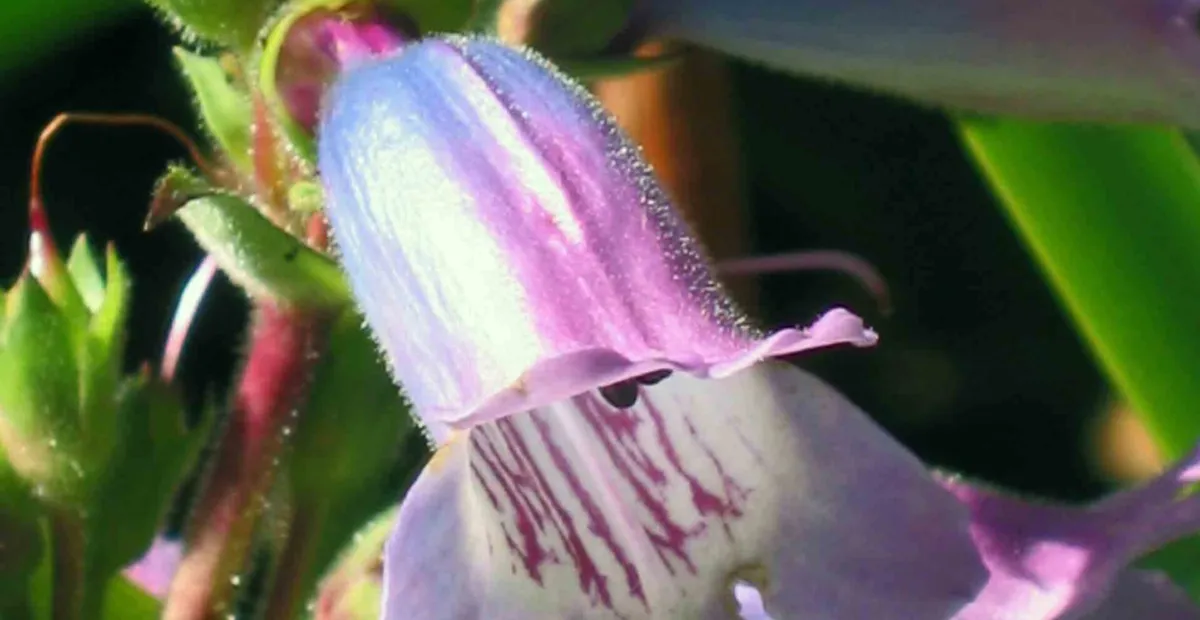
 Source:
 Penstemon ‘Evelyn’ short overview
Penstemon 'Evelyn' is a compact, bushy beardtongue valued for its long season of soft rose-pink tubular flowers. Each bloom has a white throat marked with dark red lines, held in slim panicles above narrow green foliage. This semi-evergreen perennial suits sunny borders, containers, rock gardens, and mixed pollinator plantings. Give it sharply drained soil, avoid winter wet, and trim it regularly to maintain a vigorous, floriferous plant.
Taxonomic classification
Penstemon ‘Evelyn’ care guide
Light and placement
Grow in full sun for the strongest flowering, ideally with a south-, east-, or west-facing exposure and good air movement. Partial afternoon shade can help in very hot climates, but too much shade produces weak, floppy growth and fewer flowers. Pale, stretched shoots suggest insufficient light; scorched foliage or rapid wilting suggests excessive heat or drought rather than a need for deep shade.
Watering and humidity
Water deeply when newly planted, allowing the upper soil to dry slightly between sessions. Once established, irrigate during prolonged dry spells rather than keeping the soil constantly wet. Reduce watering in cool weather and protect the crown from winter saturation. Average outdoor humidity is adequate; avoid wetting foliage late in the day.
Soil and growing medium
Use a porous, well-drained soil or raised-bed mix containing loam, sand, or fine gravel. Penstemon 'Evelyn' tolerates a broad pH range, including acidic, neutral, and alkaline soils, but drainage is more important than fine pH adjustment. Avoid heavy clay that remains wet in winter; amend structure rather than creating a rich, water-retentive pocket.
Feeding
Penstemon 'Evelyn' is not heavily demanding in open ground. Apply a thin layer of compost or a balanced slow-release fertilizer in spring if growth is weak. Container plants can receive a dilute balanced fertilizer in spring. Avoid heavy nitrogen feeding, which can produce soft, leafy growth and reduce flowering or winter resilience.
Growth and habit
This cultivar forms a compact, bushy clump with upright flowering stems and a semi-evergreen habit in mild climates. Plants can become woody or leggy with age if they are not cut back, and older specimens may flower less freely. Annual rejuvenation and propagation from cuttings help maintain compact, productive plants.
Planting and repotting
Plant in spring after the soil can be worked, or in early fall where winters are moderate. Set the crown at soil level rather than burying the stems. Space plants about 16–24 inches apart, allowing airflow around the bushy clumps. Water deeply during establishment, then reduce irrigation as roots develop.
Move container plants into the next pot size when roots fill the mix, preferably in spring. Use a free-draining perennial mix with added grit or perlite, and ensure the container has an unobstructed drainage hole. Replant at the same depth and water thoroughly once, then allow the surface to dry slightly between waterings.
Propagation and pruning
Propagation
For a named cultivar, use softwood or semi-ripe cuttings to preserve the parent’s characteristics. Take non-flowering 4–5 inch tips in summer or early fall, remove lower leaves, and root them in a free-draining propagation mix. Division is possible for vigorous clumps in spring, while seed may not reproduce the cultivar accurately.
Pruning
Remove faded flower spikes during the growing season to encourage additional bloom. In fall, cut stems back by about one-third to reduce windrock while leaving some foliage for winter protection. In spring, once basal shoots are visible, cut old stems down just above the lowest healthy new growth.
Overwintering
In well-drained ground, established plants generally need little winter protection. In colder regions, leave some foliage until spring, keep mulch away from the crown, and shelter plants from prolonged wet. Container roots are more exposed to freezing; move pots against a protected wall or insulate them during extended freezes. Take late-summer cuttings as insurance in severe climates.
Uses
Use it for sunny perennial borders, cottage-style plantings, containers, rock gardens, and mixed pollinator beds. Its long flowering period provides seasonal color and nectar resources. It is ornamental only; no culinary or medicinal use is supported for this cultivar.
Appearance
The plant has narrow, lance-shaped leaves arranged along slender branched stems. Foliage is mid-green, slightly glaucous beneath, and may remain through mild winters. Stems can be yellow-green with a faint purple tinge and may become somewhat floppy under the weight of the flower panicles. The combination of narrow leaves, rose-pink tubes, white throats, and dark red lines is distinctive.
Flowering
Flowers are carried in slim panicles on upright, sometimes slightly floppy stems. The tubular corollas are rose-pink to red-pink, about 1 inch long, with white throats marked by dark red lines. Blooming normally begins in early or midsummer and can continue into early fall, especially when spent spikes are removed.
Pollination and visitors
RHS lists this cultivar among plants supporting bees and other pollinating insects. Penstemon flowers are characteristically visited by bees, including wild bees and bumblebees, which can access nectar and pollen through the tubular corolla. No single pollinator species was sufficiently documented for this exact cultivar.
Penstemon 'Evelyn' photos
Click any photo for a larger view. Source, author and license are shown separately.
Diseases and pests
Diseases
Potential problems include leaf spots, rust, root rot, and occasional fungal damage, especially where foliage stays wet or soil drains poorly. Improve air circulation, water at the base, remove affected leaves, and avoid overhead irrigation. Discard severely diseased plants rather than composting them.
Pests
Aphids, leafhoppers, thrips, spider mites, slugs, and occasional chewing insects may occur. Inspect new growth and leaf undersides, rinse off light infestations, and use targeted insecticidal soap only when needed. Encourage beneficial insects and avoid routine broad-spectrum insecticides during bloom.
Related diseases and pests
Only Plant Doctor profiles whose host data indicate this plant may be affected are shown here.
 DiseaseImpatiens necrotic spot virus diseaseImpatiens necrotic spot orthotospovirus
 DiseaseCucumber mosaic virusCucumber mosaic virus
 PestBroad mitePolyphagotarsonemus latus (Banks)
 DiseaseAlternaria leaf spot and fruit rotAlternaria alternata
 PestOnion thripsThrips tabaci Lindeman
 PestMelon thripsThrips palmi Karny
 PestChilli thripsScirtothrips dorsalis Hood
 PestDracaena ThripsParthenothrips dracaenae
Toxicity and pollen
No cultivar-specific human or pet toxicity record was located in the authoritative sources reviewed. That absence should not be treated as proof of universal safety. Prevent children and pets from eating ornamental plant material, and seek medical or veterinary advice after substantial ingestion or if symptoms occur.
- Typical season
- Typically June–September in much of the United States, varying with climate and flowering time.
- Pollination / pollen
- Insect-presented pollen; airborne relevance not established
The flowers are insect-pollinated and do not appear to be a major wind-pollen source in the available horticultural literature, but cultivar-specific airborne pollen measurements and allergy studies were not located. People with pollen sensitivity should monitor personal reactions during bloom and avoid handling flowers if symptoms occur.
Native habitat
This is a cultivated hybrid rather than a wild species with a single native habitat. Its Penstemon lineage is associated broadly with North American herbaceous plants adapted to open, sunny conditions. In cultivation, it performs best in climates that provide good summer light and winter drainage rather than persistently wet ground.
Interesting fact
‘Evelyn’ received the RHS Award of Garden Merit in 1993 and was reconfirmed in 2016. It is also recorded under the names ‘Phyllis’ and ‘Sissinghurst Pink’. The flowers have a distinctive white throat lined with dark red markings. Named penstemons are best maintained from cuttings because seedlings may differ from the parent.
Frequently asked questions (FAQ)
The most relevant questions about this plant, with short and direct answers.
🌱Quick care
How do you care for Penstemon 'Evelyn'?⌄
Grow Penstemon 'Evelyn' in full sun to partial shade, well-drained soil, and moderate moisture. Let excess water drain freely, especially during winter.
Is Penstemon 'Evelyn' a perennial?⌄
Yes, Penstemon 'Evelyn' is a clump-forming perennial that is semi-evergreen in mild climates. Its foliage may thin or suffer winter damage in colder, wetter locations.
How big does Penstemon 'Evelyn' get?⌄
Penstemon 'Evelyn' typically grows about 18–24 inches tall and approximately 12–16 inches wide. Size varies with climate, soil, and winter conditions.
What color are the flowers on Penstemon 'Evelyn'?⌄
Penstemon 'Evelyn' produces pink to rose-pink tubular flowers with lighter throats and darker markings. The flowers are held on upright, branching stems.
🌤️Environment and placement
Does Penstemon 'Evelyn' need full sun?⌄
Penstemon 'Evelyn' flowers best in full sun, ideally with at least 6 hours of direct light daily. It can tolerate partial shade but may bloom less heavily or become less compact.
Can Penstemon 'Evelyn' grow in partial shade?⌄
Yes, Penstemon 'Evelyn' can grow in partial shade, particularly where afternoon heat is intense. Choose the brightest site available to support stronger stems and more flowers.
What type of soil is best for Penstemon 'Evelyn'?⌄
Use well-drained loam, sandy soil, or gritty perennial soil for Penstemon 'Evelyn'. Avoid heavy, waterlogged soil because prolonged wetness can damage the crown and roots.
Is Penstemon 'Evelyn' drought tolerant?⌄
Penstemon 'Evelyn' becomes moderately drought tolerant after establishment but still performs best with consistent, moderate moisture. Water during prolonged heat or drought, then allow the soil to drain and dry slightly.
Can Penstemon 'Evelyn' grow in containers?⌄
Yes, Penstemon 'Evelyn' can grow in a container with drainage holes and a gritty, fast-draining potting mix. Containers dry out and freeze faster than garden soil, so monitor watering and winter exposure carefully.
Is Penstemon 'Evelyn' suitable for a rock garden?⌄
Yes, Penstemon 'Evelyn' suits rock gardens and gravel borders when the soil drains sharply. It should not be placed where rainwater collects around the crown.
💧Care and problems
How often should you water Penstemon 'Evelyn'?⌄
Water Penstemon 'Evelyn' when the upper layer of soil begins to dry, rather than following a fixed schedule. Water more often while establishing and less during cool or wet weather.
Should Penstemon 'Evelyn' be fertilized?⌄
Penstemon 'Evelyn' usually needs little fertilizer and can flower well in moderately lean soil. Avoid heavy feeding, which can encourage soft growth and reduce longevity.
Why is my Penstemon 'Evelyn' not flowering?⌄
Poor flowering is most often caused by insufficient light, excessive moisture, overly rich soil, or winter damage. Move or improve drainage if possible, and avoid excessive nitrogen fertilizer.
Why is Penstemon 'Evelyn' wilting?⌄
Wilting may result from drought, root damage, or soil that stays too wet. Check the soil several inches down and improve drainage if it remains saturated.
What pests affect Penstemon 'Evelyn'?⌄
Penstemon 'Evelyn' may be affected by slugs, snails, spider mites, or eelworms. Inspect new growth and foliage regularly, particularly in damp conditions or protected growing spaces.
How do you protect Penstemon 'Evelyn' over winter?⌄
Protect Penstemon 'Evelyn' by keeping the crown relatively dry and applying a loose, dry winter mulch in colder areas. Avoid sealing wet material against the plant, because winter moisture can cause rot.
🪴Planting and repotting
When should you plant Penstemon 'Evelyn'?⌄
Plant Penstemon 'Evelyn' in spring or early fall, allowing roots time to establish before severe heat or freezing weather. Spring planting is safer in regions with harsh or wet winters.
How far apart should Penstemon 'Evelyn' be planted?⌄
Space Penstemon 'Evelyn' about 12–18 inches apart, depending on the desired density and local growing conditions. Good spacing improves air circulation and reduces prolonged moisture around the foliage.
Can Penstemon 'Evelyn' be grown in wet soil?⌄
No, Penstemon 'Evelyn' should not be grown in persistently wet soil. Use raised beds, gravelly amendments, or another site if drainage is poor.
Can Penstemon 'Evelyn' be transplanted?⌄
Yes, Penstemon 'Evelyn' can be transplanted, preferably in spring or early fall. Lift it with a substantial root ball, replant at the original depth, and keep it moderately watered while it reestablishes.
✂️Propagation and pruning
How do you propagate Penstemon 'Evelyn'?⌄
Propagate Penstemon 'Evelyn' from softwood cuttings in early summer, semi-hardwood cuttings in midsummer, or division in spring. Cuttings are generally preferred when you want plants true to the cultivar.
Can Penstemon 'Evelyn' be grown from seed?⌄
Seed may not reproduce Penstemon 'Evelyn' reliably because it is a named cultivar and seedlings can vary from the parent. Use cuttings or division for the most consistent results.
When should Penstemon 'Evelyn' be divided?⌄
Divide Penstemon 'Evelyn' in spring when new growth begins. Replant healthy divisions promptly in well-drained soil and water them until established.
Should Penstemon 'Evelyn' be deadheaded?⌄
Yes, deadhead Penstemon 'Evelyn' after flowers fade to improve its appearance and encourage additional blooming. Remove spent flower stems without damaging emerging buds or basal foliage.
When should Penstemon 'Evelyn' be cut back?⌄
Cut Penstemon 'Evelyn' back to the basal foliage or ground level in early spring rather than late fall. Leaving some top growth over winter can provide protection in colder climates.
⚠️Toxicity and safety
Is Penstemon 'Evelyn' toxic to dogs or cats?⌄
The toxicity of Penstemon 'Evelyn' has not been confirmed by a cultivar-specific record located for this plant. Prevent pets and children from eating it, and contact a veterinarian or poison-control service if ingestion causes symptoms.
🌸Flowering and special interest
When does Penstemon 'Evelyn' bloom?⌄
Penstemon 'Evelyn' generally blooms from midsummer into early or mid-fall. Deadheading and suitable sunlight can help extend the flowering period.
Does Penstemon 'Evelyn' attract bees or hummingbirds?⌄
Yes, the tubular flowers of Penstemon 'Evelyn' can attract bees and hummingbirds. Its usefulness to pollinators depends on local wildlife, flower availability, and garden conditions.
Is Penstemon 'Evelyn' good for cottage gardens?⌄
Yes, Penstemon 'Evelyn' works well in cottage borders, mixed perennial beds, gravel gardens, and wildlife-friendly plantings. Its pink flower spikes combine well with salvias, catmint, grasses, and other drought-tolerant perennials.
Similar plants
 Yellow lantern chili (Capsicum chinense) care guideCapsicum chinense
 Capsicum baccatum care guideCapsicum baccatum
 Serrano (Capsicum annuum ‘Serrano’)Capsicum annuum 'Serrano'
 Purple Beauty (Capsicum annuum ‘Purple Beauty’)Capsicum annuum 'Purple Beauty'
 Numex Twilight (Capsicum annuum ‘Numex Twilight’)Capsicum annuum 'Numex Twilight'
 Explosive Ember Chili Pepper (Capsicum annuum ‘Explosive Ember’)Capsicum annuum 'Explosive Ember'