
 Source:
 Begonia ‘Obliqua’ short overview
Begonia 'Obliqua' is the horticultural name supplied for a plant corresponding to the accepted species Begonia obliqua, a tropical Caribbean begonia native to the Leeward and Windward Islands. Reliable sources confirm its taxonomic identity, epiphytic ecology, and wet-tropical origin, but accessible horticultural documentation for this exact quoted cultivar name is limited. Treat it as a warm, humidity-loving begonia requiring filtered light, sharply drained organic media, and protection from frost.
Taxonomic classification
Begonia ‘Obliqua’ care guide
Light and placement
Place in bright, filtered light near an east- or north-facing window, or several feet from a bright south- or west-facing window behind a sheer curtain. Gentle morning sun can be tolerated, but strong midday or afternoon sun may scorch leaves and fade flowers. Stretching, long gaps between leaves, and weak flowering suggest insufficient light; bleached patches, crisp margins, or sudden leaf scorch indicate excessive direct sun.
Watering and humidity
Water thoroughly when the upper 0.5–1 inch of mix begins to dry, then let excess drain completely. Do not allow the root zone to remain saturated or stand in a saucer. Water less often during low-light winter conditions, but do not let the plant become bone-dry for extended periods. High humidity is useful, though crowded, stagnant conditions increase disease risk.
Soil and growing medium
Use an airy container medium based on fine bark, peat or coco coir, and perlite, with enough organic matter to hold moisture without becoming dense. The pot must have an open drainage hole. A slightly acidic to neutral reaction is appropriate. Avoid heavy garden soil and compact mixes that exclude oxygen around the roots.
Feeding
During active growth, feed every 3–4 weeks with a complete liquid houseplant fertilizer diluted to about one-quarter to one-half the label strength. Apply to already-moist mix to reduce root stress. Pause or greatly reduce feeding when growth slows in winter, after repotting, or when the plant is drought-stressed or diseased.
Growth and habit
This is a warm-climate, shrub-like begonia with an upright to bushy habit. In cultivation, stems may become open or leggy when light is weak. Regular tip pinching encourages branching, while stable warmth, moisture, and airflow help maintain compact growth. Exact behavior may vary because documentation for the quoted cultivar identity is limited.
Planting and repotting
Use a container or a protected, frost-free planting site with filtered light and excellent drainage. Set the root ball level with the surrounding medium and water thoroughly after planting. Establish gradually, avoiding abrupt exposure to direct sun, dry wind, or cool nights. In most of the United States, container culture is more practical than permanent outdoor planting.
Repot when roots fill the container or the mix breaks down, usually in spring or during active growth. Move only one pot size larger and refresh the airy medium without compacting it around the roots. Check for soft or dark roots and remove damaged tissue before replanting. Avoid frequent disturbance of a plant that is actively flowering.
Propagation and pruning
Propagation
Softwood or stem cuttings can be rooted in a sterile, airy medium kept lightly moist and humid. Seed propagation is possible for the species, but seedlings may not reproduce a named cultivar uniformly. Take cuttings during active growth, use clean tools, and provide bright filtered light without strong sun while roots form.
Pruning
Pinch growing tips to encourage branching and remove weak or damaged stems with clean pruners. After flowering, lightly shorten overly long shoots to maintain a balanced form. Avoid removing large amounts of foliage at once, especially when the plant is stressed or recovering from root problems.
Overwintering
Bring containers indoors before temperatures fall below 55–60°F. Place in bright filtered light, maintain moderate-to-high humidity, and reduce watering as light and growth decline. Keep foliage away from cold windows, drafts, and heating vents. Do not overwinter in a dark, cool, saturated medium because this encourages root and stem problems.
Uses
Best used as a specimen houseplant, conservatory plant, shaded container plant, or seasonal patio accent in warm climates. Its ornamental value comes from begonia foliage, tropical form, and pink flowers. No culinary or medicinal use should be assumed for this exact identity.
Appearance
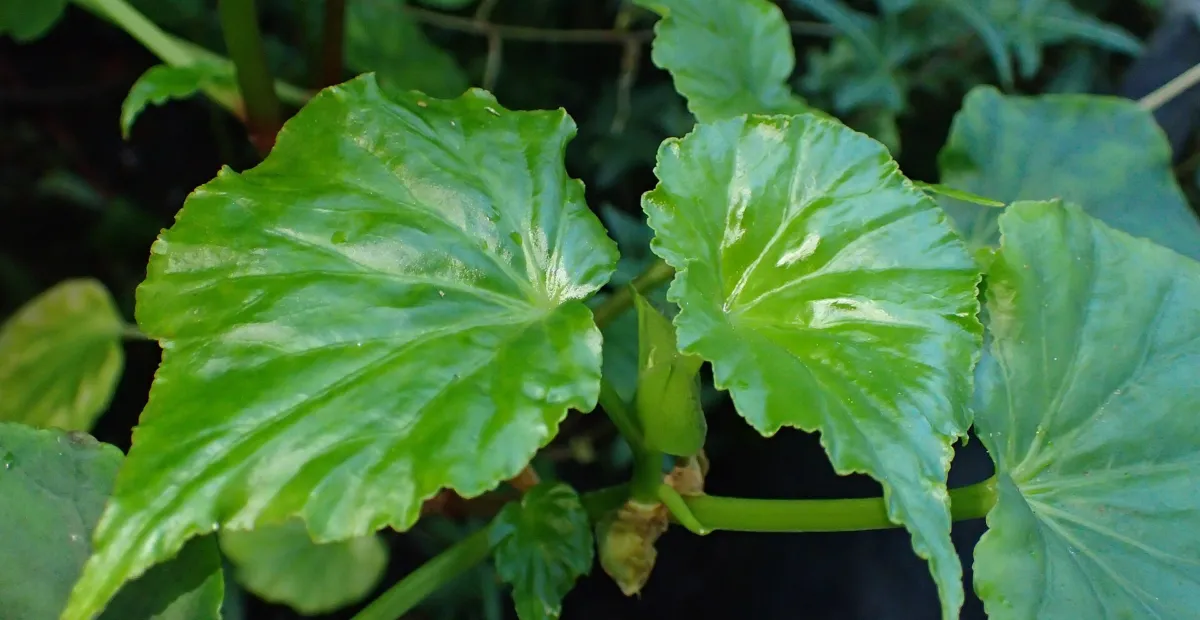
Begonia obliqua is associated with asymmetrical begonia leaves, rose-toned stems and flower stalks, and pink flowering reported by specialist begonia sources. The plant is an epiphyte in nature, so its roots benefit from aeration rather than dense, waterlogged soil. Leaf shape, color intensity, and flower performance may vary among cultivated plants sold under this name.
Flowering
Begonias produce separate staminate and pistillate flowers, often on the same plant. Specialist descriptions of B. obliqua report bright pink flowers and rose-colored peduncles, but a dependable month-by-month flowering calendar for the quoted cultivar in the United States was not located. Under indoor conditions, flowering is most likely during periods of strong active growth.
Pollination and visitors
The flowers have exposed reproductive structures and are compatible with insect pollination, but a specific pollinator species or well-established visitor assemblage for Begonia obliqua was not confirmed in the available authoritative sources. Do not treat the plant as a documented high-value pollinator plant without local observation.
Begonia 'Obliqua' photos
Click any photo for a larger view. Source, author and license are shown separately.
Diseases and pests
Diseases
Poor drainage, overwatering, and stagnant humidity can contribute to root rot, stem rot, powdery mildew, and bacterial or fungal leaf spots. Prevent problems with porous media, clean pots, foliage kept reasonably dry, good spacing, and airflow. Remove affected leaves promptly and correct the underlying moisture or ventilation issue before considering a labeled treatment.
Pests
Common indoor begonia pests may include thrips, aphids, mealybugs, scale, and spider mites, especially under dry or stressed conditions. Inspect leaf undersides and new growth regularly. Isolate affected plants, wash foliage when appropriate, and use insecticidal soap or another product labeled for the pest and plant, following the label exactly.
Related diseases and pests
Only Plant Doctor profiles whose host data indicate this plant may be affected are shown here.

Toxicity and pollen
Independent authoritative evidence specific to Begonia obliqua or the quoted cultivar was not located in the sources reviewed. Because Begonias may contain irritating calcium oxalate compounds and plant material should not be eaten, keep the plant away from children and pets and avoid ingestion. Seek professional advice after a significant exposure.
- Typical season
- During flowering; U.S. timing not established
- Pollination / pollen
- Flower pollen released from exposed stamens
Begonia obliqua produces pollen in its male flowers, but evidence about airborne concentration and allergy effects for this exact taxon is insufficient. Its flowers are generally associated with insect rather than wind dispersal, which may limit airborne spread, but insect pollination does not prove zero allergy risk. Sensitive people should avoid handling flowers closely if symptoms occur.
Native habitat
Kew records Begonia obliqua as an epiphyte native to the Lesser Antilles, where it occurs in a wet tropical biome. This ecology indicates warm temperatures, consistently humid air, frequent moisture, and organic but aerated rooting conditions. The natural distribution does not imply outdoor hardiness in the continental United States.
Interesting fact
Begonia obliqua was one of the begonia species associated with Linnaeus's original 1753 treatment of the genus. Modern taxonomic resources accept it as a species and list numerous historical synonyms. The species is epiphytic, distinguishing its natural ecology from many bedding begonias commonly grown in soil.
Frequently asked questions (FAQ)
The most relevant questions about this plant, with short and direct answers.
🌱Quick care
What is Begonia 'Obliqua'?⌄
Begonia 'Obliqua' is the horticultural identity supplied for Begonia obliqua, a tropical begonia in the family Begoniaceae. It should not be confused with unrelated plants sold under similar “obliqua” names.
How much light does Begonia 'Obliqua' need?⌄
Give Begonia 'Obliqua' bright filtered or indirect light. Protect it from strong midday sun, which can scorch its leaves and dry the growing mix too quickly.
How often should I water Begonia 'Obliqua'?⌄
Water Begonia 'Obliqua' when the surface of the mix begins to dry, keeping the root zone evenly moist but never waterlogged. The exact interval depends on pot size, light, humidity, and indoor temperature.
Is Begonia 'Obliqua' easy to grow indoors?⌄
Begonia 'Obliqua' can be grown indoors when provided with bright filtered light, steady moisture, warmth, and good airflow. It is less forgiving of cold, stagnant conditions, and repeated drying than many common houseplants.
🌤️Environment and placement
What temperature is best for Begonia 'Obliqua'?⌄
Keep Begonia 'Obliqua' warm, ideally above about 55°F, and protect it from cold drafts and sudden temperature drops. It is a tropical plant and should be protected from frost.
Does Begonia 'Obliqua' need high humidity?⌄
Begonia 'Obliqua' generally benefits from moderate to high humidity, especially in heated or air-conditioned homes. Improve humidity with a humidifier or by grouping plants, while maintaining airflow around the foliage.
Can Begonia 'Obliqua' grow outside in the United States?⌄
Begonia 'Obliqua' can grow outdoors year-round only in reliably frost-free parts of the United States, such as suitable warm areas of USDA Zones 10–11. Elsewhere, grow it in a container and bring it indoors before cold weather.
Can Begonia 'Obliqua' tolerate direct sunlight?⌄
Begonia 'Obliqua' usually performs best without harsh direct sun. A small amount of gentle morning or late-afternoon sun may be tolerated, but intense exposure can cause leaf scorch and moisture stress.
What soil is best for Begonia 'Obliqua'?⌄
Use a loose, well-drained, humus-rich begonia or houseplant mix for Begonia 'Obliqua'. The mix should retain some moisture while allowing excess water to drain freely from the pot.
💧Care and problems
Why are the leaves of my Begonia 'Obliqua' turning yellow?⌄
Yellow leaves on Begonia 'Obliqua' often indicate excess moisture, poor drainage, aging foliage, or insufficient light. Check the roots and potting mix before watering again, and do not let the plant sit in runoff.
Why is Begonia 'Obliqua' dropping leaves?⌄
Begonia 'Obliqua' may drop leaves after drying out, exposure to cold or drafts, abrupt relocation, or prolonged overwatering. Stabilize light, temperature, humidity, and watering rather than making several changes at once.
How do I prevent root rot in Begonia 'Obliqua'?⌄
Prevent root rot by using a draining pot and porous, humus-rich mix, then watering only when the upper layer has begun to dry. Empty saucers and cachepots promptly so the roots are not left submerged.
Why does Begonia 'Obliqua' have brown leaf edges?⌄
Brown edges can result from dry soil, low humidity, hot direct sunlight, fertilizer buildup, or cold injury. Correct the underlying condition and trim only badly damaged tissue with clean scissors.
What pests commonly attack Begonia 'Obliqua'?⌄
Begonia 'Obliqua' can be affected by common houseplant pests such as mealybugs, whiteflies, spider mites, and thrips. Inspect leaf undersides and stems regularly, isolate affected plants, and treat promptly with a product labeled for indoor plants.
How should I fertilize Begonia 'Obliqua'?⌄
Feed actively growing Begonia 'Obliqua' lightly with a balanced, water-soluble houseplant fertilizer diluted according to the label. Avoid fertilizing dry soil or applying heavy doses, which can damage the roots.
🪴Planting and repotting
When should I repot Begonia 'Obliqua'?⌄
Repot Begonia 'Obliqua' when roots fill the container, drainage slows, or the mix breaks down, preferably during active growth. Move it into only a slightly larger pot to reduce the risk of staying too wet.
What type of pot is best for Begonia 'Obliqua'?⌄
Choose a pot with drainage holes for Begonia 'Obliqua', using a size appropriate for its root system. Terracotta can help the mix dry faster, while plastic may be useful in a dry indoor environment.
Can Begonia 'Obliqua' grow in a terrarium?⌄
Begonia 'Obliqua' may suit a spacious, ventilated terrarium or vivarium if the container provides bright filtered light and consistently moist but airy conditions. Avoid sealed, stagnant setups where wet foliage and poor airflow encourage disease.
✂️Propagation and pruning
How can I propagate Begonia 'Obliqua'?⌄
Begonia 'Obliqua' is commonly propagated from suitable stem or leaf cuttings, but exact success can vary with the plant material and its verified horticultural identity. Use clean tools, a sterile airy medium, warmth, and bright indirect light.
Can Begonia 'Obliqua' be propagated in water?⌄
A stem cutting of Begonia 'Obliqua' may root in water, although rooting in a clean, airy propagation medium often produces a smoother transition to potting. Keep the cutting warm and replace water regularly if using this method.
Should I prune Begonia 'Obliqua'?⌄
Prune Begonia 'Obliqua' mainly to remove damaged growth, improve shape, or encourage branching. Make cuts just above a healthy node with clean scissors, and avoid removing a large proportion of foliage at once.
⚠️Toxicity and safety
Is Begonia 'Obliqua' toxic to cats and dogs?⌄
The toxicity of Begonia 'Obliqua' is not reliably established for cats, dogs, or people, so treat it as a plant that should not be eaten. Keep it away from pets and children, and contact a veterinarian or poison service if ingestion occurs.
🌸Flowering and special interest
Does Begonia 'Obliqua' flower?⌄
Yes, Begonia 'Obliqua' can produce separate male and female flowers in clusters when it receives adequate light, warmth, moisture, and nutrition. Flowering may be limited when the plant is stressed or grown in low light.
How can I encourage Begonia 'Obliqua' to bloom?⌄
Encourage blooming with bright filtered light, steady moisture, warm temperatures, and light regular feeding during active growth. Removing spent flowers can improve appearance, but it cannot compensate for inadequate light or root stress.
Why is my Begonia 'Obliqua' not flowering?⌄
Begonia 'Obliqua' may fail to flower because of insufficient light, cool temperatures, recent stress, weak growth, or excessive nitrogen. Improve growing conditions gradually and allow time for new mature growth to develop.
Similar plants
 Begonia semperflorens care guideBegonia semperflorens
 King begonia (Begonia rex) care guideBegonia rex
 Begonia ‘Tuberhybrida’Begonia 'Tuberhybrida'
 Iron Cross Begonia (Begonia masoniana) care guideBegonia masoniana
 Begonia ‘Double Red’Begonia 'Double Red'
 Begonia benaratensis care guideBegonia benaratensis