
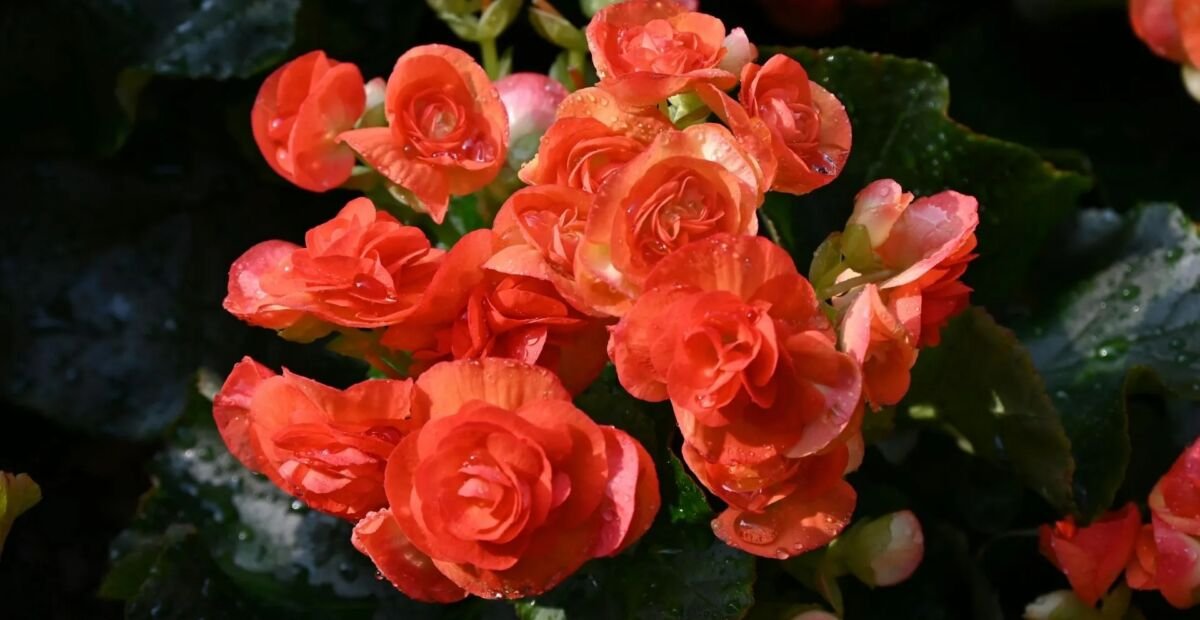
 AI-generated illustration
Begonia benaratensis short overview
Begonia benaratensis is a little-known creeping begonia native to the limestone landscapes of Sarawak, Borneo. It has slender stems that root at the nodes, small plain-green leaves, and pendent fruits. The species grows on lightly shaded, moss-covered rock faces below 300 metres and has been observed flowering throughout the year in cultivation in Sarawak. Its localized habitat and limited published horticultural information make it a specialist botanical subject rather than a widely available garden plant.
Taxonomic classification
Begonia benaratensis care guide
Light and placement
Provide bright filtered light or gentle partial shade, similar to the lightly shaded rock faces where the species occurs naturally. An east-facing window, shaded greenhouse bench, or terrarium position with bright ambient light is more suitable than harsh midday sun. Pale, stretched growth suggests insufficient light; bleached patches, crisp margins, or sudden leaf loss indicate excessive direct sun or heat.
Watering and humidity
Use a porous medium and water when the surface begins to lose its sheen, keeping the root zone consistently but lightly moist. Water thoroughly, then allow excess to drain; do not leave the pot standing in water. In winter or during slow growth, reduce frequency while maintaining humidity. Good air circulation is important because constantly wet leaves and stagnant air encourage fungal problems.
Soil and growing medium
A specialist mix should combine fine orchid bark or another open mineral component with moisture-retentive organic material and additional drainage. Limestone rubble or another calcium-bearing amendment may reflect the native substrate, but avoid compact garden soil. The natural habitat is mossy limestone rock, so the growing medium should stay airy, drain quickly, and retain enough moisture for the shallow creeping stems.
Feeding
Feed only during active growth with a balanced liquid fertilizer diluted to about one-quarter to one-half of the label strength every three to four weeks. Flush the medium occasionally to limit salt accumulation. Do not feed a stressed, newly divided, freshly rooted, or dormant plant; resume lightly once new growth is evident.
Growth and habit
This is a creeping species whose slender stems can root at the nodes and spread across a suitable surface. Its habit is useful for a shallow container, humid display, or carefully managed terrarium. Allow stems to trail naturally, or pin selected nodes against moist medium to encourage establishment. Avoid crowding, which reduces airflow around the low-growing foliage.
Planting and repotting
Use a shallow container or a well-drained humid planting pocket. Set the plant at the same depth at which it was growing, keeping the crown uncovered. Press selected nodes lightly against the medium if rooting is desired, but do not bury the entire stem. Establish in bright shade with steady moisture and high humidity before increasing feeding.
Repot only when the medium has decomposed, drainage has declined, or rooted stems have filled the available surface. Move the plant into a shallow container only slightly larger than the previous one. Handle the fine creeping stems gently, refresh the open medium, and keep the crown at its original level.
Propagation and pruning
Propagation
Stem cuttings containing one or more nodes are the most practical likely method, because nodes can root naturally; use clean tools and a moist, airy medium under high humidity. Seed propagation is possible in principle for a flowering species, but documented species-specific germination guidance was not located. Keep cuttings warm, shaded, and ventilated until rooted.
Pruning
Remove damaged or diseased leaves with clean scissors. Trim only overly long or congested stems when necessary, cutting just above a healthy node. Use removed healthy sections for propagation rather than routinely cutting back the whole plant.
Overwintering
Do not expose this Sarawak tropical to frost or cold outdoor winters. Grow indoors, in a heated greenhouse, or in a warm terrarium. Maintain bright filtered light, reduce watering slightly during slower growth, and keep leaves dry enough overnight to limit fungal disease. Avoid placing it beside cold windows, heaters, or forced-air vents.
Uses
Its best-supported use is as a specialist living collection or controlled indoor, terrarium, greenhouse, or shaded container plant. It is also botanically valuable as a representative of the localized limestone flora of Sarawak. No verified culinary, medicinal, or other practical use was located.
Appearance
The plant is glabrous throughout, with slender creeping stems and small plain-green leaves. Leaf blades are described as ovate or rounded and approximately 1.5–4 × 2.2–5 cm, with a simple entire margin and several prominent basal veins. Pendent fruit stalks and the lack of hairs help distinguish it from some related limestone begonias.
Flowering
Begonia benaratensis bears separate male and female flowers, as is characteristic of the genus. Published species notes describe male flowers with approximately 25–30 stamens and female tepals about 8–10 × 3–8 mm. Flowering throughout the year has been recorded in Sarawak cultivation, but a reliable flowering calendar for United States-grown plants is unavailable.
Pollination and visitors
Species-specific visitor observations were not located. The flowers are structurally consistent with insect pollination in Begonia, but no reliable record naming the principal visitor for Begonia benaratensis was found. The insect code is therefore used at a broad level, while attraction strength remains unknown.
Diseases and pests
Diseases
The main preventive priorities are airy media, clean water, good circulation, and avoiding prolonged leaf wetness. Watch for gray mold, soft stem or crown rot, and leaf-spot symptoms, especially in stagnant humid conditions. Remove affected tissue promptly, isolate the plant, improve ventilation, and avoid reusing contaminated medium. Chemical treatment should follow the product label and local regulations.
Pests
Inspect stems, leaf undersides, and growing points for mealybugs, scale, thrips, and spider mites. Quarantine new plants, remove small infestations with a cotton swab or water spray, and use insecticidal soap or another labeled treatment when needed. Repeat treatments as directed, because eggs and sheltered insects may survive a single application.
Related diseases and pests
Only Plant Doctor profiles whose host data indicate this plant may be affected are shown here.
 PestCitrus mealybugPlanococcus citri
 PestCyclamen mitePhytonemus pallidus
 PestBroad mitePolyphagotarsonemus latus (Banks)
 DiseaseCucumber mosaic virusCucumber mosaic virus
 DiseaseBlack Root RotBerkeleyomyces basicola
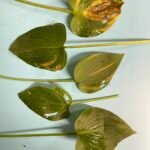 PestStrawberry foliar nematodeAphelenchoides fragariae
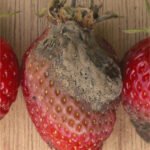 DiseaseGray MoldBotrytis cinerea
 DiseaseRhizopus soft rotRhizopus stolonifer
Toxicity and pollen
No authoritative species-specific toxicity assessment for Begonia benaratensis was located. Begonia species are not interchangeable for safety decisions, so absence of evidence should not be treated as proof of edibility or pet safety. Keep the plant away from children and animals, avoid ingestion, and seek professional medical or veterinary advice after a suspected exposure.
- Typical season
- No United States exposure season documented
- Pollination / pollen
- Insect-associated pollen; airborne dispersal relevance is not documented for this species
Begonia benaratensis produces pollen as a flowering plant, but no direct study of its airborne pollen, allergenicity, or United States exposure risk was located. Its flowers are associated with insect pollination, yet that does not establish zero allergy risk. Sensitive growers should avoid handling flowers during release and use ventilation when working with cultivated specimens.
Native habitat
The species is associated with lightly shaded, mossy limestone rock faces below 300 metres in Sarawak, Borneo. It occurs in localized patches, sometimes alongside Begonia rhodoneura. The habitat is warm, humid, and periodically wet but well drained at the rock surface, with shallow organic matter and mineral-rich limestone influence.
Interesting fact
The species was described as new to science in 2013. Its stems can root at the nodes, allowing a creeping plant to occupy small pockets of substrate. It is morphologically close to Begonia apiensis but differs in several floral, stipular, and fruit characters. Plants grown on a soil pocket over a concrete wall at Semenggoh reportedly grew well and flowered year-round.
Frequently asked questions (FAQ)
The most relevant questions about this plant, with short and direct answers.
🌱Quick care
What is Begonia benaratensis?⌄
Begonia benaratensis is a rare tropical begonia species in the family Begoniaceae, native to Sarawak, Borneo. It is an accepted botanical name and does not have a verified English common name.
Does Begonia benaratensis have a common name?⌄
No documented English common name is established for Begonia benaratensis. Use the scientific name rather than inventing or translating a common name.
Is Begonia benaratensis easy to grow?⌄
Begonia benaratensis is likely challenging for beginners because it is adapted to a narrow, humid limestone-cliff habitat. Consistent moisture, excellent drainage, filtered light, and stable tropical conditions are especially important.
Is Begonia benaratensis rare?⌄
Begonia benaratensis has a highly restricted known natural distribution, recorded from Gunung Benarat in Sarawak. Its narrow range makes accurate identification, responsible sourcing, and conservation-minded cultivation especially important.
🌤️Environment and placement
What light does Begonia benaratensis need?⌄
Provide bright filtered light to partial shade. Avoid intense midday sun, which can scorch foliage, but do not place it in deep shade if you want compact growth and reliable flowering.
Can Begonia benaratensis grow indoors?⌄
Begonia benaratensis can be grown indoors if it receives bright indirect light, high humidity, warm temperatures, and strong air circulation. A terrarium or greenhouse-style setup may be more suitable than a typical dry room.
Does Begonia benaratensis need high humidity?⌄
Yes, high humidity is beneficial because the species comes from a wet tropical environment. Maintain humid air without keeping the leaves constantly wet or trapping stagnant air around the plant.
What temperatures are best for Begonia benaratensis?⌄
Keep Begonia benaratensis warm year-round, ideally in stable tropical conditions. It is frost-tender and should be protected from cold drafts, freezing temperatures, and prolonged exposure below normal indoor temperatures.
Can Begonia benaratensis grow outdoors in the United States?⌄
It can grow outdoors year-round only in warm, frost-free parts of the United States, such as suitable areas of southern Florida or Hawaii. Elsewhere, grow it in a container or protected greenhouse and bring it indoors before cold weather.
Where does Begonia benaratensis grow naturally?⌄
Begonia benaratensis is endemic to Gunung Benarat in Sarawak, Malaysian Borneo. It grows on lightly shaded, slightly damp, mossy vertical limestone cliff faces at roughly 130–300 meters of elevation.
💧Care and problems
How often should I water Begonia benaratensis?⌄
Water when the surface begins to dry, keeping the substrate evenly moist but never waterlogged. Let excess water drain completely, because stagnant conditions can cause root or stem problems.
Why are the leaves of my Begonia benaratensis turning yellow?⌄
Yellow leaves commonly indicate excessive moisture, poor drainage, insufficient light, or natural aging. Check the roots and substrate first, then correct watering and improve airflow before watering again.
Why is Begonia benaratensis wilting even though the soil is wet?⌄
Wilting in wet soil often points to root or stem damage caused by stagnant conditions. Move the plant into a more porous mix, remove rotted tissue if present, and provide airflow while keeping the remaining roots lightly moist.
How do I prevent rot on Begonia benaratensis?⌄
Prevent rot by using an airy limestone-based substrate, watering thoroughly but allowing excess water to drain, and avoiding constantly saturated surfaces. Good ventilation and keeping damaged leaves or stems dry also help.
Does Begonia benaratensis need fertilizer?⌄
Use fertilizer sparingly during active growth, preferably a dilute balanced fertilizer rather than frequent strong feeding. Because the species is associated with specialized limestone cliffs, avoid heavy fertilization and flush accumulated salts periodically.
🪴Planting and repotting
What soil is best for Begonia benaratensis?⌄
Use a porous, humus-rich limestone-based substrate that retains some moisture while draining quickly. A fine, airy mix with organic matter and limestone-derived mineral material is more appropriate than dense potting soil.
Does Begonia benaratensis need limestone in its soil?⌄
Limestone is appropriate because the species is restricted to limestone habitats in nature. Include clean limestone chips, crushed limestone, or another suitable calcium-carbonate component without allowing the mix to become compacted.
What pot should I use for Begonia benaratensis?⌄
Choose a small pot with generous drainage holes and a porous growing medium. Because this begonia has a creeping, node-rooting habit, a shallow container or mounted setup may work better than a deep, moisture-retentive pot.
When should I repot Begonia benaratensis?⌄
Repot only when the substrate has broken down, drainage has declined, or roots have filled the container. Disturb the plant as little as possible, and repot during active warm growth rather than during cold or stressful conditions.
✂️Propagation and pruning
How can I propagate Begonia benaratensis?⌄
Propagation is most plausibly done from healthy stem sections with viable nodes, because the species has creeping stems that root at the nodes. However, species-specific propagation guidance is limited, so success rates and the best medium are not well established.
Can Begonia benaratensis be propagated from leaves?⌄
Leaf propagation should not be assumed to work reliably for Begonia benaratensis. Species-specific evidence is limited, while node-bearing stem cuttings are more consistent with its documented creeping, node-rooting growth habit.
Should I prune Begonia benaratensis?⌄
Prune only to remove damaged, diseased, or excessively long growth. Use sterile tools and avoid removing large portions of the plant at once, since this rare species may recover slowly under suboptimal conditions.
⚠️Toxicity and safety
Is Begonia benaratensis toxic to cats or dogs?⌄
Species-specific toxicity information for Begonia benaratensis has not been established. Keep it away from pets and children because begonias as a group contain irritating compounds, but do not assign a confirmed toxicity classification to this species without direct evidence.
Is Begonia benaratensis safe to touch?⌄
Routine handling is not specifically documented as hazardous, but sensitive people may prefer gloves when pruning or repotting. Avoid ingesting any part of the plant, and wash your hands after handling it.
Can I collect Begonia benaratensis from the wild?⌄
Do not collect Begonia benaratensis from the wild. Because it has a very restricted natural range, obtain plants only through documented legal propagation or reputable botanical sources that can verify their origin.
🌸Flowering and special interest
Does Begonia benaratensis flower?⌄
Yes, Begonia benaratensis produces separate male and female flowers, as do many begonias. The exact flowering schedule and flower performance in cultivation are not well documented, so stable warmth and adequate filtered light are the safest recommendations.
Why is my Begonia benaratensis not flowering?⌄
A lack of flowers may result from insufficient light, immature growth, temperature stress, or unsuitable humidity. Provide bright filtered light and stable warm conditions, but recognize that cultivation data for this species are limited.
Similar plants
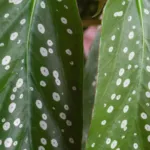 Polka Dot Begonia (Begonia maculata) care guideBegonia maculata
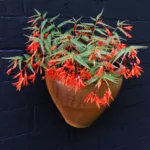 Tuberous begonia (Begonia boliviensis) care guideBegonia boliviensis
 Begonia ‘Double Red’Begonia 'Double Red'
 Begonia ‘Obliqua’Begonia 'Obliqua'
 Hardy begonia (Begonia grandis) care guideBegonia grandis
 Begonia ‘Cocktail’Begonia 'Cocktail'