 Source:
 Begonia semperflorens short overview
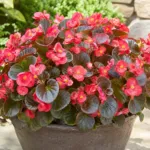
Begonia semperflorens is a historically used name for a group of compact, fibrous-rooted begonias now associated with Begonia cucullata and cultivated wax-begonia hybrids. These plants form neat mounds of fleshy stems and glossy green, bronze, or burgundy leaves, with small white, pink, red, or orange flowers produced from spring until frost. In the United States, they are usually grown as warm-season bedding plants, container specimens, or tender perennials brought indoors for winter.
Taxonomic classification
Begonia semperflorens care guide
Light and placement
Give bright light with morning sun or filtered afternoon sun. Bronze-leaved forms generally tolerate more direct light than green-leaved forms, while hot reflected light can scorch leaves or cause wilting. In beds, an east-facing or lightly shaded south or west exposure is useful. Sparse growth, long internodes, and fewer flowers suggest too little light; bleached patches, crisp margins, or midday collapse suggest excessive heat or sun.
Watering and humidity
Water thoroughly when the upper surface begins to dry, then let excess drain. Keep the root zone moderately and consistently moist during hot weather, but never leave containers standing in water. Reduce frequency indoors or during cool, cloudy periods. Water the soil rather than repeatedly wetting dense foliage, because prolonged leaf wetness and poor air movement encourage Botrytis and stem problems.
Soil and growing medium
Use a loose, fertile medium that drains freely yet retains some moisture. A quality all-purpose potting mix amended with compost or fine bark is suitable for containers; heavy clay should be improved with organic matter and drainage rather than left saturated. A slightly acidic to neutral reaction is appropriate. Avoid compacted soil, waterlogged sites, and mixes that dry into a hard crust.
Feeding
Feed container plants every two to four weeks during active flowering with a balanced liquid fertilizer diluted to label strength, or use a controlled-release fertilizer at planting. Garden plants benefit from compost incorporated before planting and light supplemental feeding if growth is pale or weak. Do not fertilize newly transplanted, drought-stressed, chilled, or dormant plants until they resume active growth.
Growth and habit
Plants usually develop a compact, rounded, bushy habit from fibrous roots and succulent stems. They branch readily and can remain floriferous without elaborate training. Pinching young plants encourages fuller branching; removing spent flowers is optional because many modern selections continue blooming without intensive deadheading. Dense planting should be avoided where humidity is high.
Planting and repotting
Harden nursery plants gradually before setting them outdoors. Plant after frost danger in fertile, well-drained soil, keeping the crown at its original level. Space plants to maintain air movement and water at the base during establishment. In containers, use a drainage hole and avoid burying the stem deeply.
Repot overwintered plants in spring when new growth begins, moving only one container size larger. Use fresh, porous potting mix and a container with drainage. If roots are crowded, loosen them gently and avoid burying the fleshy crown or lower stem.
Propagation and pruning
Propagation
Take 2–3 inch stem cuttings in warm conditions, removing leaves from the lower section and rooting them in water or a clean, lightly moist medium. Seed is possible but difficult because the seed is dust-fine; surface-sow indoors, provide strong light, and keep the medium evenly moist without covering the seed.
Pruning
Pinch growing tips early in the season to encourage branching. Remove damaged or diseased stems promptly with clean shears. Cut plants back lightly before bringing containers indoors, but avoid severe pruning while plants are chilled or drought-stressed.
Overwintering
Plants are killed by frost. Before cold weather, bring container specimens indoors, inspect for pests, trim weak growth, and place them in bright light with reduced watering. In colder regions, garden plants are generally treated as annuals; overwintered plants may become leggy and can be cut back in spring.
Uses
Used for mass bedding, edging, borders, window boxes, hanging or patio containers, and bright indoor overwintering. It is valued for dependable color in partial shade and for foliage that remains attractive between flowering flushes. Do not treat it as an edible or medicinal plant; ingestion can irritate people and pets.
Appearance
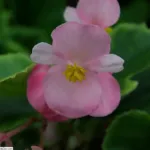
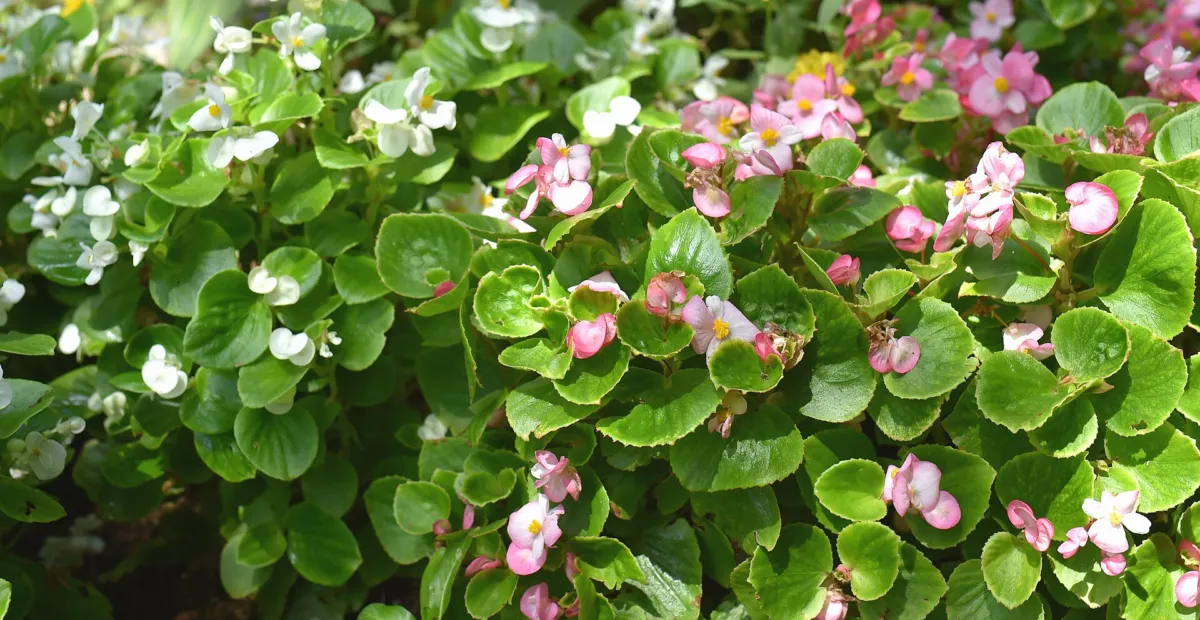
The stems are fleshy and often translucent to reddish, with alternate, asymmetrical leaves that have toothed or gently wavy margins. Leaf surfaces are glossy or waxy and may be green, bronze, burgundy, or combinations of these colors. Small flowers are borne in loose clusters from leaf axils, and plants may carry male and female flowers separately on the same individual.
Flowering
Flowers are produced continuously or intermittently from spring until frost when plants remain warm, watered, and actively growing. Male and female flowers may occur on the same plant, and cultivated forms can have single or double blooms. Flower colors include white, pink, red, and orange, with some cultivars showing contrasting margins or bicolored patterns.
Pollination and visitors
The associated Begonia cucullata flowers are visited primarily by bees, with published observations also recording syrphid flies and beetles. Studies of annual plantings in the United States and Europe indicate that begonia cultivars can receive bee, bumblebee, and syrphid visits, although visitation varies substantially among cultivars and is not uniformly high.
Begonia semperflorens photos
Click any photo for a larger view. Source, author and license are shown separately.
Diseases and pests
Diseases
Powdery mildew, Botrytis, and stem or root rot are favored by crowded planting, wet foliage, poor drainage, and stagnant humidity. Improve spacing and airflow, water at the soil line, remove affected tissue, and discard severely rotted plants. Avoid chronically wet media and sanitize tools between cuts.
Pests
Watch for mealybugs and thrips, particularly on indoor or crowded plants. Inspect leaf axils and new growth regularly, isolate infested containers, and remove light infestations with a water spray or cotton swab. Use insecticidal soap or another labeled treatment according to directions, repeating only as needed.
Related diseases and pests
Only Plant Doctor profiles whose host data indicate this plant may be affected are shown here.

Toxicity and pollen
Begonia species are listed as toxic to dogs and cats because of soluble calcium oxalates, with the underground parts generally considered the most concentrated. Chewing may cause oral irritation, drooling, vomiting, or gastrointestinal upset. Keep plants and fallen pieces away from pets and seek veterinary advice if significant ingestion occurs.
- Typical season
- Spring through fall outdoors
- Pollination / pollen
- Exposed, insect-collected floral pollen
The flowers produce pollen that is presented to visiting insects rather than released as a major wind-borne pollen cloud. That does not make allergy risk impossible, but routine outdoor exposure is generally expected to be low compared with strongly wind-pollinated plants. Sensitive people should avoid rubbing flowers or handling large quantities if irritation occurs.
Native habitat
Wild relatives associated with this name occur in warm South American environments, including moist or seasonally moist open habitats and forest-edge settings. They favor warmth, adequate moisture, and soils that drain rather than remain stagnant. Commercial semperflorens plants are selected for garden conditions and are not native North American flora.
Interesting fact
The epithet semperflorens means “ever-flowering” and reflects the unusually long blooming period. The name has a complicated taxonomic history and is not accepted as a separate species by current Kew treatment. Commercial wax begonias commonly combine Begonia cucullata ancestry with other related South American begonias. Leaves are thick and waxy, helping plants tolerate brief dry periods.
Frequently asked questions (FAQ)
The most relevant questions about this plant, with short and direct answers.
🌱Quick care
What is Begonia semperflorens?⌄
Begonia semperflorens is a compact, fibrous-rooted begonia commonly grown for continuous summer flowers and waxy green or bronze foliage. In the United States, plants are often sold as wax begonias or Semperflorens begonias, although many garden plants are hybrids.
Is Begonia semperflorens annual or perennial?⌄
Begonia semperflorens is a tender perennial in warm climates but is commonly grown as an annual in much of the United States. It can survive outdoors year-round mainly in USDA Zones 10–11 when protected from frost.
🌤️Environment and placement
How much light does Begonia semperflorens need?⌄
Begonia semperflorens grows in full sun to partial shade, but the best exposure depends on the foliage color. Bronze-leaved cultivars generally tolerate more sun, while green-leaved plants often prefer morning sun and afternoon shade in hot climates.
Can Begonia semperflorens grow in full sun?⌄
Yes, Begonia semperflorens can grow in full sun when the soil stays evenly moist. In areas with intense summer heat, protect green-leaved cultivars from harsh afternoon sun to reduce leaf scorch.
Is Begonia semperflorens a good indoor plant?⌄
Yes, Begonia semperflorens can be grown indoors in a bright window or under grow lights. Provide good air circulation, avoid constantly wet soil, and reduce watering if indoor light levels are low.
What temperature is best for Begonia semperflorens?⌄
Begonia semperflorens grows best in warm conditions and is damaged by frost. Bring outdoor plants indoors before freezing weather, and protect them from prolonged temperatures below about 55°F.
Does Begonia semperflorens need humidity indoors?⌄
Begonia semperflorens appreciates moderate humidity indoors but does not require tropical greenhouse conditions. Prioritize good air circulation and avoid keeping the foliage constantly wet, which can increase disease problems.
💧Care and problems
How often should I water Begonia semperflorens?⌄
Water Begonia semperflorens when the soil surface begins to dry, keeping the root zone evenly moist but never soggy. Plants in full sun, containers, or hot weather may need water more frequently than plants in partial shade.
Why are the leaves of my Begonia semperflorens turning yellow?⌄
Yellow leaves commonly result from overwatering, poor drainage, or insufficient light. Check that the container drains freely, allow the surface to dry slightly between waterings, and move the plant to brighter light if it is also leggy.
Why is my Begonia semperflorens wilting even though the soil is wet?⌄
Wilting in wet soil often indicates root or stem damage from overwatering and poor drainage. Remove severely damaged tissue, improve drainage, and let the surface dry slightly before watering again.
Why is my Begonia semperflorens getting leggy?⌄
Begonia semperflorens becomes leggy when it receives too little light or is not pinched back. Move it to brighter light and trim the shoot tips lightly to encourage fuller branching.
Does Begonia semperflorens need fertilizer?⌄
Begonia semperflorens benefits from moderate feeding during active growth. Apply a controlled-release fertilizer for flowering annuals according to the package directions, or use a diluted liquid fertilizer periodically without overfeeding.
How do I overwinter Begonia semperflorens?⌄
To overwinter Begonia semperflorens, bring it indoors before frost, cut it back lightly if needed, and place it in a bright location. Water less during winter, but do not allow the plant to remain bone-dry for long periods.
What pests attack Begonia semperflorens?⌄
Common pests include mealybugs, spider mites, thrips, scale, whiteflies, slugs, and snails. Inspect the undersides of leaves regularly and address infestations early with a treatment labeled for begonias.
What diseases affect Begonia semperflorens?⌄
Begonia semperflorens can develop powdery mildew, botrytis, bacterial leaf spot, stem rot, and root rot. Improve air circulation, water at the soil line, avoid persistently wet soil, and remove badly infected plant material.
Why are my Begonia semperflorens stems rotting?⌄
Stem rot is usually associated with excessive moisture, poor drainage, or wet foliage combined with limited air circulation. Remove rotted sections, use fresh well-drained soil if necessary, and allow the plant to dry slightly between waterings.
🪴Planting and repotting
What soil is best for Begonia semperflorens?⌄
Use fertile, humus-rich, well-drained potting soil or garden loam for Begonia semperflorens. The soil should retain some moisture while allowing excess water to drain quickly from the roots.
Can Begonia semperflorens grow in containers?⌄
Yes, Begonia semperflorens grows very well in containers, window boxes, and hanging baskets. Choose a pot with drainage holes and avoid using a container much larger than the root system, since excess wet soil can encourage rot.
How far apart should Begonia semperflorens be planted?⌄
Space Begonia semperflorens about 8–12 inches apart, depending on the cultivar’s mature size. Wider spacing improves air circulation, while closer spacing is suitable for compact container displays.
When should I plant Begonia semperflorens outdoors?⌄
Plant Begonia semperflorens outdoors after the local last frost date, when nighttime temperatures are reliably warm. Acclimate greenhouse-grown plants gradually to outdoor light to reduce sun and wind stress.
✂️Propagation and pruning
Can Begonia semperflorens be propagated from cuttings?⌄
Yes, Begonia semperflorens is readily propagated from stem cuttings. Take a healthy nonflowering shoot, remove the lower leaves, and root it in clean, lightly moist propagation media under bright indirect light.
Can Begonia semperflorens be grown from seed?⌄
Yes, Begonia semperflorens can be grown from seed, but the seeds are extremely small and the process is slower and more delicate than taking cuttings. Sow them on the surface of a fine, sterile medium because they need light to germinate.
Should I prune Begonia semperflorens?⌄
Light pruning is useful for Begonia semperflorens when stems become leggy or damaged. Pinch or cut just above a leaf node to encourage branching, and remove diseased tissue with clean tools.
⚠️Toxicity and safety
Is Begonia semperflorens toxic to pets?⌄
Begonia semperflorens is considered low-severity toxic if eaten, with calcium oxalates associated with mouth irritation and gastrointestinal upset. Keep it away from pets and children, and contact a veterinarian or poison-control service if a significant amount is consumed.
Is Begonia semperflorens toxic to humans?⌄
Begonia semperflorens may irritate the mouth, throat, or stomach if eaten, so it should not be treated as an edible plant. Keep plant material away from young children and seek medical advice after substantial ingestion or severe symptoms.
🌸Flowering and special interest
Should I deadhead Begonia semperflorens?⌄
Deadheading is optional because Begonia semperflorens usually continues flowering without it. Removing faded flowers and damaged growth can improve appearance and may help maintain a tidy, well-branched plant.
Why is my Begonia semperflorens not flowering?⌄
Insufficient light is a common reason Begonia semperflorens fails to flower, although excessive nitrogen or waterlogged soil can also reduce blooms. Provide bright light, well-drained soil, and moderate fertilizer rather than heavy feeding.
How long does Begonia semperflorens bloom?⌄
Begonia semperflorens can bloom from late spring until frost outdoors when it receives adequate light and consistent moisture. In frost-free climates or under suitable indoor conditions, flowering may continue for much longer.