 Source:
 Iron Cross Begonia (Begonia masoniana) short overview
Iron Cross Begonia is a rhizomatous tropical perennial prized for its dramatic foliage rather than its small flowers. Its broad, asymmetrical green leaves carry a dark brown cross-like marking over the main veins and a distinctly rough, hairy surface. Native to limestone habitats in southern China and northern Vietnam, it is usually grown as a houseplant or conservatory specimen in bright filtered light, porous soil, steady humidity and frost-free conditions.
Taxonomic classification
Iron Cross Begonia (Begonia masoniana) care guide
Light and placement
Place near an east- or west-facing window, or a few feet back from a bright south-facing window behind a sheer curtain. Bright filtered light supports compact growth and stronger leaf markings. Harsh direct sun can scorch or bleach the leaves, while very low light may produce weak, stretched petioles and duller coloration. Rotate the pot periodically for even growth.
Watering and humidity
Water thoroughly when the upper inch of mix begins to dry, then let excess drain fully. Keep the root zone lightly and consistently moist during active growth, but never leave the rhizome in standing water. Reduce frequency in winter when growth slows. Water the soil rather than the foliage, because persistently wet leaves can encourage spotting and fungal problems.
Soil and growing medium
Use a loose indoor mix containing fine bark or coco coir, perlite and a modest amount of compost or other humus. The mix should hold some moisture while releasing excess water quickly. Good aeration is especially important because the shallow creeping rhizome can rot in saturated soil. The species is reported from limestone habitats and tolerates a broad pH range, so extreme acidity is unnecessary.
Feeding
Feed during spring and summer growth with a complete balanced liquid fertilizer diluted to about one-quarter strength, approximately every two to four weeks. Apply only to already-moist soil. Pause or greatly reduce feeding during cool, dark winter conditions and after repotting until fresh growth resumes. Avoid strong fertilizer, which can damage roots and promote soft, weak growth.
Growth and habit
This species develops a creeping rhizome with basal leaves and a clumping, spreading presentation. It is mainly maintained as a foliage specimen; remove damaged leaves at the base to improve air circulation and appearance. Avoid burying the rhizome deeply, and give the plant enough horizontal room for the leaf stalks to radiate outward.
Planting and repotting
Use a container with drainage holes and position the creeping rhizome so its upper surface remains exposed or barely covered. Firm the mix gently around the roots without compressing it. Water once after planting, allow excess to drain, and keep the plant warm, sheltered and evenly moist while it establishes.
Repot in spring when the container is crowded or the mix has broken down. Move only one pot size larger, use a fresh porous mix and keep the rhizome at the surface. Check for soft or darkened roots, remove damaged tissue with a sterile blade, and avoid watering heavily until any disturbed areas have begun to recover.
Propagation and pruning
Propagation
Propagation is possible from seed, leaf cuttings and sections of healthy rhizome. Rhizome sections are practical during active growth: each section should retain a viable growth point and be placed shallowly in a clean, airy medium. Keep cuttings warm, lightly moist and humid but not saturated until roots and new growth develop.
Pruning
No routine pruning is required. Remove yellowed, diseased or badly damaged leaves by cutting their stalks cleanly near the rhizome. Disinfect tools before and after cutting, and avoid removing large amounts of healthy foliage at once.
Overwintering
Bring the plant indoors before nights approach 55°F. Provide bright filtered light, stable warmth, moderate to high humidity and less frequent watering during winter. Keep it away from cold glass, drafts and heating vents. Do not expose it to frost; outdoor cultivation is limited to reliably warm, frost-free climates.
Uses
Primarily used as an indoor foliage plant, terrarium or greenhouse specimen, and sheltered container plant in frost-free climates. Its patterned leaves provide ornamental interest even when it is not flowering. It is not supported here as an edible or medicinal plant, and ingestion should be prevented because the plant contains soluble calcium oxalates.
Appearance
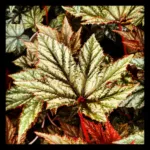
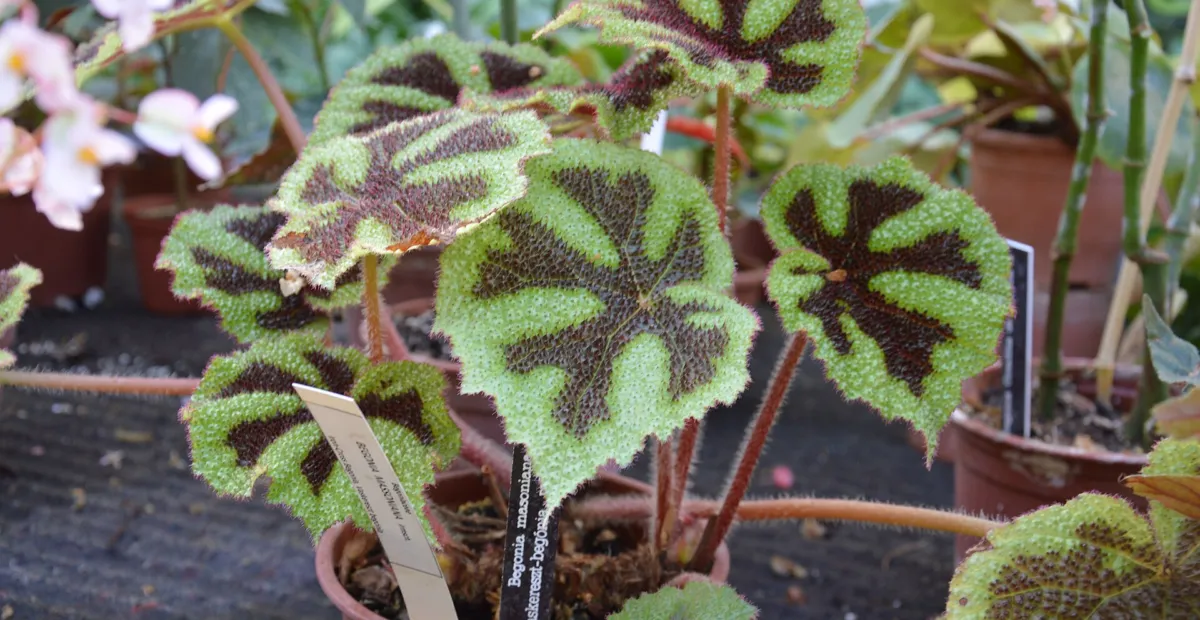
Leaves are broad, obliquely ovate to nearly round, asymmetrical and deeply cordate at the base. Their rough surface is covered with hairs and raised texture, while dark brown bands converge along the principal veins to form the characteristic cross-like pattern. Petioles are hairy, and the foliage may show reddish tones beneath or among the hairs.
Flowering
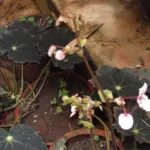
Male and female flowers occur in the same branched inflorescence. The flowers are small and pale greenish-white, appearing mainly as a secondary feature above the foliage. A dependable flowering calendar for indoor culture in the United States is not well established, so flowering may vary with warmth, light and plant maturity.
Pollination and visitors
Reliable species-specific documentation of animal pollinators or regular flower visitors was not found. The plant has separate male and female flowers in the same inflorescence, but the available horticultural sources do not establish a characteristic visitor group.
Begonia masoniana photos
Click any photo for a larger view. Source, author and license are shown separately.
Diseases and pests
Diseases
The principal risks are rhizome or stem rot, gray mold, powdery mildew and leaf spot. Prevent problems with a porous mix, drainage, careful watering and dry foliage. Improve air movement without exposing the plant to cold drafts. Remove affected leaves promptly and isolate symptomatic plants; avoid routinely wetting the leaves or keeping the pot constantly saturated.
Pests
Possible pests include mealybugs, aphids, mites, thrips, caterpillars and vine weevil in greenhouse or container settings. Inspect leaf undersides, petioles and the rhizome surface regularly. Isolate new plants, remove small infestations manually, and use insecticidal soap or another labeled treatment according to its US directions when necessary.
Related diseases and pests
Only Plant Doctor profiles whose host data indicate this plant may be affected are shown here.

Toxicity and pollen
ASPCA lists Iron Cross Begonia as toxic to dogs and cats because of soluble calcium oxalates, with vomiting and salivation among reported signs; the underground parts are identified as the most toxic. Keep the plant away from pets and children, wear gloves when handling damaged tissue, and contact a veterinarian or poison-control service if ingestion is suspected.
- Pollination / pollen
- Pollen is produced by the male flowers, but airborne dispersal relevance is not well documented.
This flowering species produces pollen in its male flowers, but reliable evidence about airborne pollen levels or common allergy effects in United States homes was not found. Insect-associated flower structure does not prove zero allergy risk. People with known plant or pollen sensitivities should avoid handling flowers closely and monitor their own response.
Native habitat
In its native range, the species is associated with wet to seasonally dry subtropical and tropical forest environments, including rocky limestone slopes, caves and shallow leaf litter at roughly 100–300 meters elevation. Its rhizomatous habit and preference for porous, fast-draining organic substrate reflect those sheltered, rocky conditions.
Interesting fact
The species name honors English plant collector L. Maurice Mason. The dark central leaf marking inspired the common name Iron Cross Begonia. Although often grouped informally with rex begonias in horticulture, it is a distinct species with a creeping rhizome and characteristic hairy, textured leaves. It was first introduced to England from Singapore in the 1950s.
Frequently asked questions (FAQ)
The most relevant questions about this plant, with short and direct answers.
🌱Quick care
How do you care for an Iron Cross Begonia (Begonia masoniana)?⌄
Grow Iron Cross Begonia in bright filtered light, porous well-drained soil, and evenly moist conditions without waterlogging. Keep it warm, sheltered, and moderately to highly humid, especially during active growth.
🌤️Environment and placement
Is Begonia masoniana an indoor or outdoor plant?⌄
Begonia masoniana is best grown indoors in the United States because it is frost-tender. It can spend summer outdoors in bright shade if temperatures stay warm and the plant is protected from wind, intense sun, and heavy rain.
How much light does an Iron Cross Begonia need?⌄
Provide bright, indirect or filtered light, such as near an east- or west-facing window with a sheer curtain. Avoid strong midday or afternoon sun, which can scorch the leaves and fade their markings.
Can Begonia masoniana grow in low light?⌄
Begonia masoniana can tolerate some partial shade, but very low light often causes slower growth and less intense leaf coloration. Move it closer to a bright filtered window if the stems become stretched or new leaves are small.
What temperature is best for Iron Cross Begonia?⌄
Keep Iron Cross Begonia in a warm, stable room, ideally in the low 70s Fahrenheit. Protect it from temperatures below about 55°F, cold drafts, frost, and sudden changes near windows or doors.
Does Begonia masoniana need high humidity?⌄
Begonia masoniana prefers moderate to high humidity, although established plants may tolerate around 50% indoor humidity. A humidifier or a well-ventilated plant cabinet is more reliable than misting the textured leaves.
Can Iron Cross Begonia survive winter outdoors?⌄
Iron Cross Begonia generally cannot survive frost or freezing temperatures outdoors in the United States. Bring containers indoors before temperatures approach 55°F and place the plant away from cold glass, drafts, and heating vents.
💧Care and problems
How often should you water an Iron Cross Begonia?⌄
Water when the surface of the potting mix is beginning to dry, then soak the mix thoroughly and let excess water drain. Water less often in fall and winter as growth slows, but do not allow the rhizome to remain in soggy soil.
Should I mist Begonia masoniana leaves?⌄
Avoid routine misting because water can remain trapped in the puckered foliage and increase the risk of leaf spotting or mildew. Raise humidity with a humidifier, grouped plants, or a ventilated humidity setup instead.
Why are my Iron Cross Begonia leaves turning brown and crispy?⌄
Brown, crispy edges most often indicate dry air, underwatering, excessive direct sun, or heat stress. Check the roots and soil moisture, move the plant out of harsh sun, and increase humidity while maintaining good air circulation.
Why are Begonia masoniana leaves turning yellow?⌄
Yellow leaves commonly result from overwatering, poor drainage, low light, or natural aging of older foliage. Check that the pot drains freely and allow the upper layer of the mix to dry slightly before watering again.
Why is my Iron Cross Begonia losing leaves?⌄
Leaf loss can follow overwatering, root or rhizome rot, cold exposure, low humidity, sudden relocation, or severe drying. Inspect the base for soft tissue and correct the environmental stress before watering again.
Why does Begonia masoniana have spots on its leaves?⌄
Leaf spots may develop when foliage stays wet, air circulation is poor, or the plant has bacterial or fungal disease. Keep leaves dry, remove badly affected tissue with clean tools, and isolate the plant if the spotting spreads.
What pests attack Iron Cross Begonia?⌄
Iron Cross Begonia may attract aphids, mealybugs, spider mites, and occasionally thrips or caterpillars. Inspect leaf undersides and stems regularly, then treat an infestation promptly with an appropriate labeled houseplant product.
Why is my Begonia masoniana not growing?⌄
Slow growth may be normal during winter, but persistent stagnation can result from low light, cold temperatures, compacted soil, root damage, or inconsistent watering. Provide warmth, bright filtered light, airy soil, and stable moisture during the growing season.
🪴Planting and repotting
What type of soil is best for Begonia masoniana?⌄
Use a porous, humus-rich potting mix that retains some moisture but drains quickly. A quality houseplant mix amended with materials such as perlite, orchid bark, or another coarse aeration component is suitable.
What kind of pot does an Iron Cross Begonia need?⌄
Choose a pot with drainage holes that is only slightly larger than the root system. A shallow or moderately sized container works well because the plant grows from a rhizome and stays healthiest when excess soil does not remain wet.
How do you repot Begonia masoniana?⌄
Repot Begonia masoniana when the mix has broken down, drainage has declined, or roots fill the container. Refresh the porous mix, keep the rhizome near the soil surface rather than burying it deeply, and water lightly after repotting.
When is the best time to repot an Iron Cross Begonia?⌄
The best time to repot is during active growth in spring or early summer. Avoid unnecessary repotting during a winter slowdown or when the plant is already stressed by cold, drought, or disease.
✂️Propagation and pruning
How do you propagate Begonia masoniana?⌄
Begonia masoniana is commonly propagated from leaf cuttings, and it can also be propagated by stem cuttings or sections of rhizome. Use clean tools, a sterile porous medium, warmth, and steady moisture without saturation.
Can you propagate Iron Cross Begonia from a single leaf?⌄
Yes, a healthy leaf can produce new plantlets when its veins or petiole are placed correctly in a moist, airy propagation medium. Propagation may be slow, so provide bright filtered light and avoid disturbing the cutting while it roots.
Can Begonia masoniana be propagated in water?⌄
Stem cuttings may root in water, but leaf cuttings are generally better started in a light, moist medium. Transfer water-rooted cuttings once roots are established, taking care not to keep the young plant constantly waterlogged.
Does Iron Cross Begonia need pruning?⌄
Iron Cross Begonia usually needs little pruning beyond removing dead, damaged, or diseased leaves. Pinching excessively long growth can help maintain a fuller shape, while trimming an overgrown rhizome can keep it within the pot.
⚠️Toxicity and safety
Is Begonia masoniana toxic to cats and dogs?⌄
Yes, Iron Cross Begonia is toxic to cats, dogs, and horses because it contains soluble calcium oxalates. The underground parts are especially hazardous and may cause oral irritation, vomiting, drooling, or more serious symptoms if eaten.
Is Begonia masoniana poisonous to people?⌄
Begonia masoniana should not be eaten and may irritate the mouth, throat, or digestive system because it contains soluble calcium oxalates. Keep it away from children and avoid contact with sap if you have sensitive skin.
Should you wear gloves when handling Iron Cross Begonia?⌄
Wear gloves when taking cuttings, dividing the rhizome, or handling damaged tissue if you are prone to skin irritation. Wash your hands afterward and keep plant debris away from children and pets.
🌸Flowering and special interest
Should I remove the flowers from Begonia masoniana?⌄
You do not need to remove the flowers, but you may cut spent flower stalks to keep the plant tidy. Begonia masoniana is grown mainly for its patterned foliage, and its small greenish-white flowers are usually a secondary feature.
How often does Begonia masoniana flower?⌄
Begonia masoniana is not considered a heavy bloomer, and flowering can be seasonal or sporadic indoors. Small greenish-white flowers may appear above the foliage when the plant has adequate light and favorable growing conditions.
What do Iron Cross Begonia flowers look like?⌄
The flowers are small and greenish-white, arranged in upright clusters above the leaves. They are less showy than the plant’s large, rough-textured leaves with their dark cross-shaped markings.