
 Source:
 Begonia ‘Olympia’ short overview
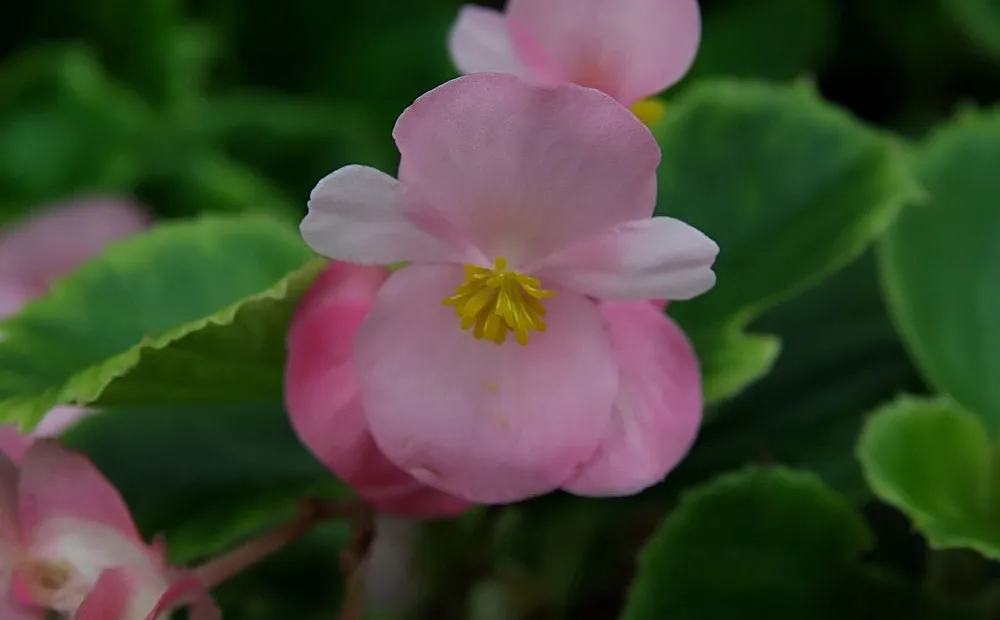
Begonia 'Olympia' is a horticultural wax-begonia selection associated with the Semperflorens Cultorum Group and marketed in the United States as a compact bedding and container plant. Available records identify an ‘Olympia’ form with bronze foliage, but they do not consistently document one single flower color or a fully standardized cultivar description. Treat it as a frost-tender, warm-season begonia that performs best in fertile, evenly moist, well-drained soil and bright light softened by afternoon shade.
Taxonomic classification
Begonia ‘Olympia’ care guide
Light and placement
Give ‘Olympia’ bright light with morning sun and afternoon shade, especially in hot summer climates. Bronze-leaved wax begonias generally tolerate more sun than green-leaved forms, but intense reflected heat can still scorch foliage. Weak, stretched growth and sparse flowers indicate insufficient light; bleached patches, crispy margins, or bronzing beyond the normal cultivar color suggest excessive direct sun or heat.
Watering and humidity
Water thoroughly when the upper inch of mix begins to dry, then allow excess water to drain completely. Keep the root zone evenly moist during hot weather and active flowering, but do not leave the container standing in water. Reduce frequency in cool, cloudy weather or indoors during winter. Water at the soil surface in the morning when possible to reduce leaf-disease pressure.
Soil and growing medium
Use a porous, fertile mix containing compost or other stable organic matter, with enough drainage material to prevent saturation. A commercial all-purpose container mix is suitable when it drains freely. Slightly acidic to neutral conditions support nutrient availability; persistently alkaline media can contribute to iron-related chlorosis. Avoid compacted garden soil in containers.
Feeding
Apply a balanced slow-release fertilizer for flowering annuals according to the product label, or use a dilute complete liquid fertilizer during active growth. Feed after plants are established and watered, not into dry soil. Avoid heavy nitrogen applications, which can produce lush foliage with fewer flowers, and stop routine feeding when growth slows indoors in winter.
Growth and habit
This is a compact, branching wax-begonia type suited to mass planting and containers. It forms a rounded mound from fleshy stems and fibrous roots, with flowers produced in leaf axils over a long warm-season period. Pinching is usually unnecessary, but removing spent clusters and occasional weak stems helps maintain a tidy, well-branched display.
Planting and repotting
Harden nursery plants gradually before placing them outdoors. Plant after the local last-frost period in a bed or container with good drainage, keeping the crown at soil level. Space plants roughly 8–12 inches apart according to the desired density and cultivar vigor. Water consistently during establishment, while protecting new plants from cold nights and intense afternoon heat.
Move container plants into fresh, free-draining mix when roots fill the pot or watering becomes unusually frequent. Increase pot size only modestly and keep the crown at its former level. Repot in spring or when active growth resumes; avoid oversized pots, which retain excess moisture around the fibrous roots.
Propagation and pruning
Propagation
Seed and stem cuttings are the documented practical methods for Semperflorens-type begonias. Sow seed indoors well before the outdoor growing season because the seed is fine and light-dependent; do not bury it deeply. Take nonflowering stem cuttings during active growth and root them in a clean, lightly moist, airy medium. Exact seed uniformity depends on whether the original plant is a named hybrid or an open-pollinated selection.
Pruning
Remove spent flower clusters and yellowing leaves to keep the plant tidy. If stems become stretched or uneven, cut them back selectively just above a healthy leaf node. Avoid severe cutting during cold, low-light indoor conditions, when recovery is slower and wet stems are more prone to rot.
Overwintering
Treat outdoor plants as frost tender. Before the first expected frost, take healthy cuttings or move a container specimen indoors to a bright window. Keep it warm, reduce watering as light levels fall, and maintain good air circulation. Plants may flower indoors if light is strong, but growth can slow substantially in winter.
Uses
Useful for bedding displays, edging, window boxes, patio containers, mixed planters, and sheltered balcony plantings. Bronze foliage provides contrast with green-leaved plants and pale flowers. It is ornamental only; do not treat this cultivar as edible or medicinal. Keep plant material away from pets because Begonia plants contain soluble calcium oxalates.
Appearance
The documented ‘Olympia’ form is associated with glossy bronze foliage and a compact bushy habit. Leaves are rounded to broadly ovate, fleshy, and asymmetrical, with a waxy surface typical of Semperflorens Cultorum begonias. Flower color is not reliably established for the undifferentiated name ‘Olympia’; named color forms and series entries should not be treated as identical without matching plant labels.
Flowering
Semperflorens-type begonias produce separate male and female flowers in loose clusters in the leaf axils. The group is day-neutral and can flower over a long season when warmth and light are adequate. In United States gardens, flowering normally begins in late spring and continues until frost; exact color and doubleness cannot be assigned confidently to the bare name ‘Olympia’.
Pollination and visitors
Begonia flowers can receive visits from bees and other small insects, and studies of cultivated annual begonias have recorded bees, bumblebees, and syrphid flies among visitors. Visitation is variable among cultivars and generally low compared with plants selected specifically for pollinator gardens, so ‘Olympia’ should not be presented as a major nectar or pollen resource.
Begonia 'Olympia' photos
Click any photo for a larger view. Source, author and license are shown separately.
Diseases and pests
Diseases
Watch for Botrytis, powdery mildew, stem or root rot, and viral symptoms such as distorted growth or irregular rings and patches. Prevent problems with porous soil, moderate spacing, good air movement, and watering that keeps foliage dry. Remove diseased material promptly; discard plants with suspected virus symptoms rather than propagating them.
Pests
Common problems include aphids, mealybugs, mites, thrips, scale, caterpillars, slugs, and snails. Inspect leaf undersides and new growth regularly. Isolate infested containers, wash foliage where appropriate, and use a labeled control suited to begonias after testing sensitive foliage. Reduce overwatering and dense debris, which encourage fungus gnats and mollusks.
Related diseases and pests
Only Plant Doctor profiles whose host data indicate this plant may be affected are shown here.
 PestCitrus mealybugPlanococcus citri
 PestCyclamen mitePhytonemus pallidus
 PestBroad mitePolyphagotarsonemus latus (Banks)
 DiseaseCucumber mosaic virusCucumber mosaic virus
 DiseaseBlack Root RotBerkeleyomyces basicola
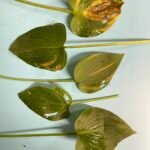 PestStrawberry foliar nematodeAphelenchoides fragariae
 DiseaseMaple powdery mildewSawadaea bicornis
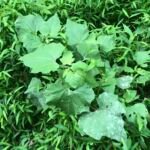 DiseaseCucurbit Powdery MildewPodosphaera xanthii (Castagne) U. Braun & Shishkoff
Toxicity and pollen
Begonias contain soluble calcium oxalates. The ASPCA lists Begonia spp. as toxic to dogs, cats, and horses, with vomiting and salivation possible after ingestion; underground parts are considered the most toxic. Avoid chewing or ingestion, wear gloves if sap irritates the skin, and contact a veterinarian or poison-control service after a pet eats the plant.
- Typical season
- Outdoor flowering season, generally late spring through fall
- Pollination / pollen
- Pollen is exposed in staminate flowers and is primarily handled by visiting insects rather than dispersed by wind.
This insect-pollinated begonia is not generally regarded as a major wind-borne pollen source. Its flowers nevertheless produce pollen, and individual sensitivity cannot be ruled out. Keeping foliage and flowers clean indoors, providing ventilation, and avoiding direct handling of pollen-bearing stamens can reduce nuisance exposure for highly sensitive people.
Native habitat
The associated Semperflorens Cultorum Group comes from horticultural breeding involving warm-climate South American Begonia lineages. Its ecological analogue is a warm, humid forest-edge or understory environment with filtered light, organic matter, regular moisture, and rapid drainage. The cultivated plant is not a native North American species and is not frost adapted.
Interesting fact
The name ‘Olympia’ appears in multiple wax-begonia series and color designations, including bronze-leaved and named-color forms. This makes the undifferentiated cultivar name difficult to match to one botanical description. Semperflorens begonias are day-neutral, so flowering is governed more by warmth and light intensity than by a strict photoperiod.
Frequently asked questions (FAQ)
The most relevant questions about this plant, with short and direct answers.
🌱Quick care
What is Begonia 'Olympia'?⌄
Begonia 'Olympia' is a bronze-leaved wax begonia cultivar in the Begonias group, valued for glossy foliage and abundant flowers. It is commonly grown as a warm-season bedding plant or container annual in the United States.
Is Begonia 'Olympia' an annual or perennial?⌄
Begonia 'Olympia' is usually grown as an annual outdoors in the United States because it does not tolerate frost. It can persist as a perennial indoors or in frost-free climates with suitable warmth and light.
🌤️Environment and placement
How much light does Begonia 'Olympia' need?⌄
Give Begonia 'Olympia' bright light with protection from intense afternoon sun. Morning sun or filtered light is generally suitable, while harsh afternoon exposure can scorch the leaves and flowers.
Can Begonia 'Olympia' grow in full sun?⌄
Begonia 'Olympia' may tolerate some full sun when conditions are mild and the soil stays evenly moist, but afternoon shade is safer. In hot summer regions, protect it from direct midday and afternoon sunlight.
Where should I place Begonia 'Olympia' outdoors?⌄
Place Begonia 'Olympia' in a container, window box, or garden bed with bright light, afternoon shade, and good air circulation. Avoid locations that remain waterlogged or receive reflected heat from walls and pavement.
What temperature can Begonia 'Olympia' tolerate?⌄
Begonia 'Olympia' prefers warm conditions and should be protected from frost. Bring containers indoors or cover plants before temperatures approach freezing, because frost can cause severe damage or kill the plant.
💧Care and problems
How often should I water Begonia 'Olympia'?⌄
Water Begonia 'Olympia' whenever the soil surface begins to dry, keeping the root zone evenly moist but never soggy. Water at the soil line and allow excess water to drain freely from containers.
Why are the leaves of my Begonia 'Olympia' turning brown?⌄
Brown leaves on Begonia 'Olympia' commonly result from drought, intense afternoon sun, dry air, or fertilizer-salt buildup. Check moisture and drainage first, then move the plant to brighter filtered light if the damage is sun-related.
Why is Begonia 'Olympia' wilting even though the soil is wet?⌄
Wilting in wet soil usually indicates poor drainage, root stress, or root rot rather than a need for more water. Move the plant into a well-drained mix, remove badly damaged roots if necessary, and reduce watering until recovery begins.
Does Begonia 'Olympia' need fertilizer?⌄
Begonia 'Olympia' benefits from light, regular feeding during active growth. Apply a balanced fertilizer according to the label, avoiding heavy applications that can cause excess foliage, salt injury, or reduced flowering.
Should I deadhead Begonia 'Olympia'?⌄
Deadheading is optional for Begonia 'Olympia' but helps keep the plant neat and removes fading flowers. Pinch or snip off spent blooms and yellowing leaves without damaging healthy stems.
What pests commonly affect Begonia 'Olympia'?⌄
Begonia 'Olympia' can be affected by aphids, mealybugs, mites, thrips, caterpillars, and fungus gnats. Inspect leaves and stems regularly, improve air circulation, and address infestations early with a treatment labeled for ornamental plants.
What diseases can affect Begonia 'Olympia'?⌄
Begonia 'Olympia' is most vulnerable to problems encouraged by excess moisture, including gray mold, powdery mildew, stem rot, and root rot. Use well-drained soil, water at the base, and provide space for foliage to dry.
🪴Planting and repotting
What soil is best for Begonia 'Olympia'?⌄
Use a fertile, organic-rich, well-drained potting mix or loam for Begonia 'Olympia'. The mix should retain some moisture while allowing excess water to drain quickly around the roots.
Can Begonia 'Olympia' be grown in containers?⌄
Yes, Begonia 'Olympia' grows well in containers, window boxes, and mixed planters. Choose a pot with drainage holes and avoid placing the container in a saucer of standing water.
When should I plant Begonia 'Olympia' outdoors?⌄
Plant Begonia 'Olympia' outdoors after the danger of frost has passed and nighttime temperatures are consistently mild. Harden nursery plants gradually before exposing them to strong outdoor light and wind.
How do I repot Begonia 'Olympia'?⌄
Repot Begonia 'Olympia' when roots fill the container or water runs through the pot unusually quickly. Move it into a pot only one size larger using fresh, well-drained mix, and water lightly after repotting.
✂️Propagation and pruning
Can Begonia 'Olympia' be propagated from cuttings?⌄
Begonia 'Olympia' can generally be propagated from healthy stem cuttings, although named cultivars may not be consistently available from seed. Root cuttings in a clean, lightly moist medium under bright indirect light.
Can I grow Begonia 'Olympia' from seed?⌄
Begonia 'Olympia' may be offered as seed-grown material, but plants raised from seed may vary and may not reproduce the exact cultivar reliably. Stem cuttings are preferable when preserving the parent plant's traits is important.
Should Begonia 'Olympia' be pruned?⌄
Prune Begonia 'Olympia' lightly to remove damaged growth, spent flowers, or lanky stems and to encourage a fuller shape. Avoid removing large amounts of foliage at one time, especially during heat or drought.
⚠️Toxicity and safety
Is Begonia 'Olympia' toxic to pets?⌄
Yes, Begonia 'Olympia' is toxic if eaten by pets and may cause low-severity irritation or gastrointestinal signs. Keep it away from dogs, cats, and other animals that chew plants, and contact a veterinarian if ingestion occurs.
Is Begonia 'Olympia' poisonous to people?⌄
Begonia 'Olympia' presents a low-severity human exposure concern, particularly if plant material is eaten or causes irritation. Keep it away from young children and avoid ingesting any part of the plant.
🌸Flowering and special interest
How do I keep Begonia 'Olympia' blooming?⌄
Keep Begonia 'Olympia' evenly moist, provide bright filtered light, and feed lightly during active growth to support continued flowering. Remove faded flowers and damaged foliage to maintain a tidy plant and encourage new growth.
What colors do Begonia 'Olympia' flowers come in?⌄
Begonia 'Olympia' is associated with the bronze-leaved Olympia wax-begonia line, which includes selections with flowers in colors such as pink, rose, red, and white. The exact flower color depends on the named color selection sold with the plant.
Similar plants
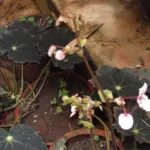 Eyelash Begonia (Begonia bowerae) care guideBegonia bowerae
 Begonia benaratensis care guideBegonia benaratensis
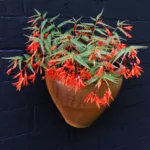 Tuberous begonia (Begonia boliviensis) care guideBegonia boliviensis
 Begonia ‘Escargot’Begonia 'Escargot'
 Clubbed begonia (Begonia cucullata) care guideBegonia cucullata
 King begonia (Begonia rex) care guideBegonia rex