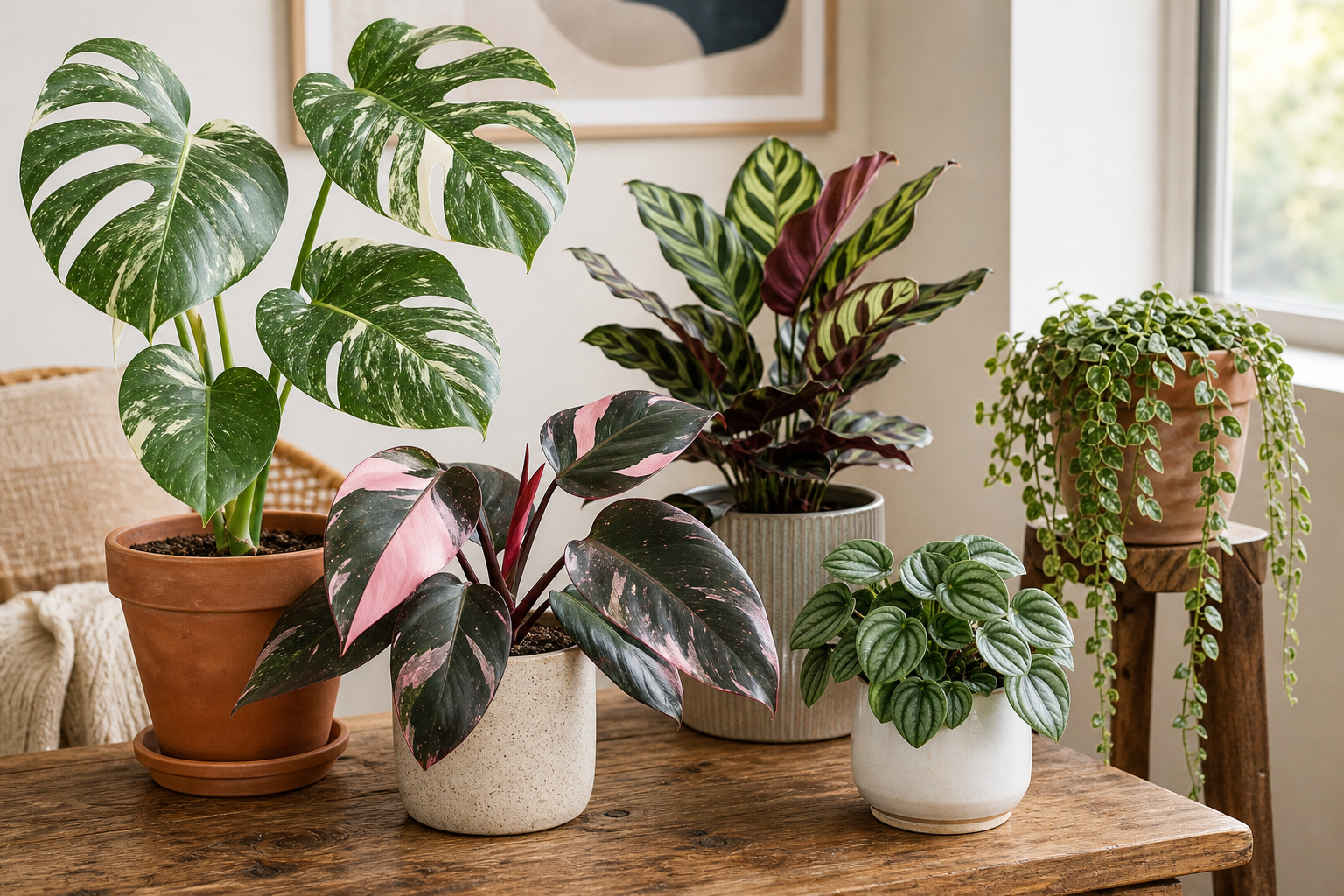
Houseplant style took a playful turn in 2025. Collectors still loved dramatic leaves and tropical silhouettes, but the biggest wish-list plants also offered something extra: creamy variegation, pink foliage, unusual textures, compact growth, or a chance to turn everyday plant care into a small growing experiment.
That does not mean you need a greenhouse, a rare-plant budget, or a perfect sunroom. Many of the season’s most talked-about plants were available through U.S. garden centers, independent plant shops, grocery stores, and online retailers. The real trick was choosing a plant that suited your light, schedule, and willingness to monitor moisture.
Below are five plants that defined the 2025 houseplant conversation. Consider this a trend guide rather than a strict popularity ranking: availability and pricing varied widely by region, while some plants became more affordable as growers produced them in larger numbers.
1. Monstera ‘Thai Constellation’: the statement plant with a starry pattern
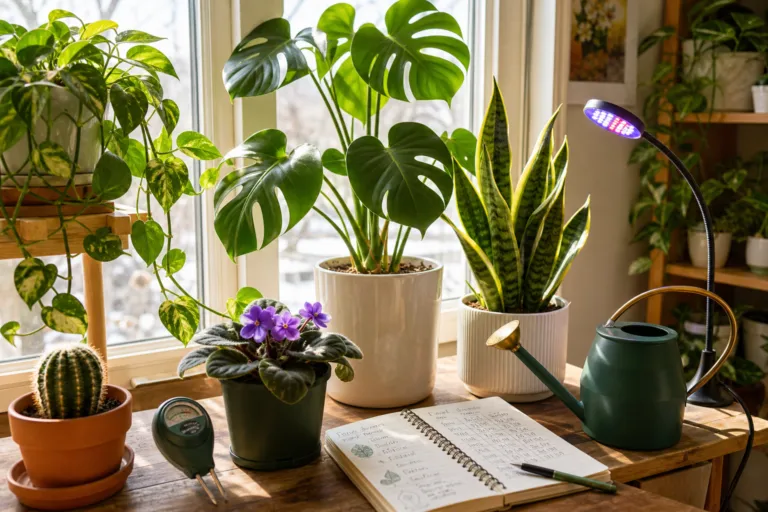
Few plants represented the 2025 collector look better than Monstera deliciosa ‘Thai Constellation’. Its large, split leaves are marked with cream-colored flecks and brushstrokes, giving each new leaf a pattern that feels almost hand-painted. Unlike a plain green Monstera, no two leaves look exactly alike.
The appeal goes beyond appearance. ‘Thai Constellation’ can become a substantial indoor plant, making it useful when you want one strong focal point instead of a crowded collection of small pots. A moss pole, trellis, or sturdy stake can help it grow upward and display its leaves more effectively.
What to look for when buying
- Choose a plant with several healthy leaves and firm stems.
- Look for cream variegation spread across more than one leaf rather than a single highly patterned leaf.
- Check the pot for pests, mushy roots, or a sour smell before bringing it home.
- Be cautious with unusually cheap plants advertised only by a nickname; confirm the botanical name on the label.
Give this Monstera bright, indirect light. A few hours of gentle morning sun may be helpful, but strong afternoon sun through glass can scorch leaves. In a dim room, the plant may survive, but growth and variegation display will usually be less impressive.
Water thoroughly when the upper 2 to 3 inches of potting mix feel dry. Let excess water drain completely, then empty the saucer or decorative cover pot. In a simple home trial, a 6-inch plant in a well-draining mix might need about 2 to 3 cups of water every 10 to 14 days in a bright, warm room – but treat that as a starting observation, not a fixed rule. Pot size, humidity, season, and root development can change the schedule considerably.
2. Pink Princess Philodendron: foliage in a fashionable color palette
Pink Princess Philodendron, commonly sold as Philodendron erubescens ‘Pink Princess’, remained a favorite for anyone drawn to colorful foliage. Its deep green leaves can develop splashes of pink, burgundy, and cream, creating a moody but cheerful look that works especially well with neutral interiors.
This plant also encouraged a useful lesson for beginners: variegation is not always predictable. One leaf may be heavily marked while the next emerges mostly green. Light, plant maturity, and the growing point all influence the pattern you see over time.
How to compare plants in the store
Do not judge a plant only by the brightest existing leaf. Examine the newest unfurling leaf and the stem near the growing point. A plant with some attractive variegation and a healthy, actively growing tip may offer better long-term potential than a stressed plant with one spectacular leaf.
- Bright, indirect light helps support strong growth and visible color.
- Use a loose, airy mix that drains freely.
- Allow the top portion of the mix to dry before watering again.
- Rotate the pot every week or two so growth stays more balanced.
In our editorial-style watering test, a young plant in a 5-inch pot used approximately 1 to 1.5 cups of water every 7 to 12 days during active growth when placed near a bright east-facing window. The same plant needed less frequent watering in winter and after being moved farther from the window. The practical measurement is simple: water slowly until a small amount drains from the bottom, then record the date and check the soil before repeating.
If the plant produces several mostly green leaves, avoid making drastic changes immediately. First check light, roots, and general health. Pruning decisions are best made carefully, because cutting too aggressively can remove healthy growth without guaranteeing a stronger pattern.
3. Calathea and other prayer plants: patterned leaves for the indoor jungle
Calatheas, now often sold under related botanical names such as Goeppertia, brought intricate patterns into the 2025 houseplant mix. Peacock plant, rattlesnake plant, rose-painted calathea, and ‘White Fusion’ each offer a different combination of stripes, feathering, spots, and contrasting leaf undersides.
These plants were popular because they look decorative even without flowers. Their leaves can make a bathroom shelf, bedroom corner, or shaded office feel lush and layered. They are also a good choice if you enjoy observing small daily changes: some prayer plants move their leaves in response to light and darkness.
Make humidity and watering easier
Calatheas prefer warmth, indirect light, and evenly moist – but not waterlogged – potting mix. They can struggle in dry air, especially near forced-air heating or cooling. A naturally humid bathroom with suitable light may be ideal, while placing the plant directly beside a radiator or air-conditioning vent is usually less helpful.
- Keep the plant away from cold drafts and sudden temperature changes.
- Use a pot with drainage holes.
- Water when the surface begins to dry, checking below the top layer with your finger.
- Remove standing water from the saucer after watering.
- Group plants together or use a pebble tray to modestly increase local humidity.
For a 6-inch calathea, a reasonable starting measurement is 1.5 to 2 cups of water every 5 to 8 days in a warm, bright room, with longer intervals during the darker months. Instead of following the calendar, test the mix at two depths: the top inch may feel dry while the root zone remains damp. If the lower mix is still wet, wait and check again in a day or two.
Brown edges do not always point to one single cause. Dry air, inconsistent watering, excess fertilizer, salt buildup, and direct sun can all contribute. Focus first on steady care rather than trying several treatments at once.
4. Hoya: a collector-friendly vine with sculptural leaves
Hoyas gained fresh attention in 2025 because they combine strong visual character with a wide range of forms. Some have thick, waxy leaves; others display silver flecks, narrow foliage, heart-shaped leaves, or trailing stems. When mature and grown in suitable conditions, many can produce clusters of star-shaped flowers.
Popular choices include Hoya carnosa and its variegated forms, Hoya kerrii, Hoya compacta, and silver-splashed varieties. Their slower growth can be part of the charm: a Hoya feels like a plant you get to know over time rather than a quick decorating purchase.
Why Hoyas suit busy plant parents
Hoyas generally prefer to dry somewhat between waterings, especially when grown in a porous mix and a container with drainage. They enjoy bright, filtered light and can often handle a little gentle morning sun. Very low light may keep a Hoya alive but can limit growth and flowering.
- Choose a chunky, fast-draining mix.
- Let the pot become noticeably lighter before watering again.
- Support trailing stems with a hoop, trellis, or shelf.
- Avoid cutting off short flowering spurs unless they are damaged; future blooms may develop there.
In a home comparison, a 6-inch Hoya in a bright window used roughly 1 to 2 cups of water every 12 to 20 days, while a plant in a cooler or darker room went longer. Thick leaves store moisture, so frequent small drinks can be more problematic than a thorough watering followed by a proper drying period.

5. Peperomia: small, stylish, and ideal for limited space
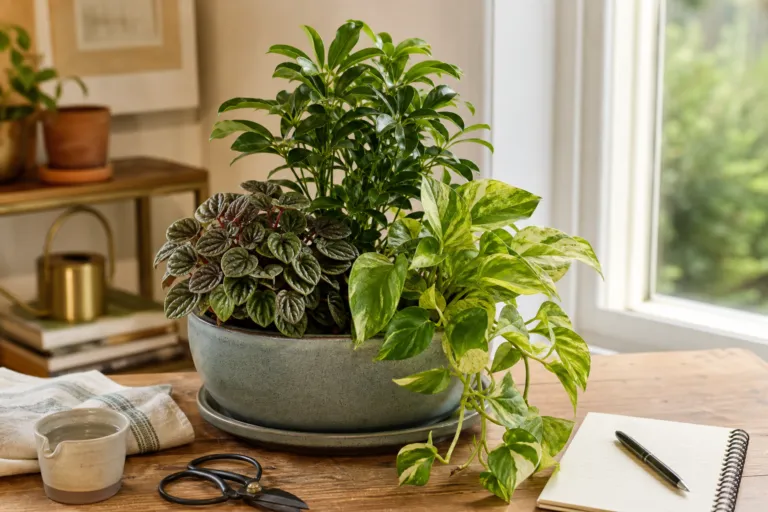
Peperomias were one of the smartest 2025 choices for apartments, office shelves, plant cabinets, and anyone who wanted variety without a giant floor plant. The genus includes compact, bushy, and trailing plants with rippled, striped, rounded, red-edged, or succulent-like leaves.
Try Peperomia obtusifolia for thick, glossy leaves; Peperomia caperata for deeply textured foliage; or a trailing type such as Peperomia prostrata for a small hanging display. Because the group is so diverse, read the plant label carefully rather than relying only on the common name.
A forgiving plant – with one important warning
Many peperomias tolerate ordinary household conditions and remain compact, but they dislike sitting in saturated soil. Their relatively small root systems can struggle when a pot is oversized or when the mix drains slowly.
- Use a small container with a drainage hole.
- Choose bright, indirect light, avoiding harsh summer sun.
- Allow the upper half of the potting mix to dry before watering.
- Repot only when roots have filled the container or growth has clearly stalled.
For a 4-inch peperomia, start with about three-quarters to 1 cup of water every 10 to 16 days, then adjust after checking the mix. In a trial with two similar plants, the one in a terracotta pot dried several days sooner than the one in plastic. That small comparison shows why watering instructions should describe conditions, not promise an exact weekly routine.

How to choose a 2025 trend plant without regret
Before buying, match the plant to the room rather than the other way around. A plant that needs bright, filtered light will not thrive simply because it looks perfect on a dark bookshelf.
- Low to medium light: consider a green-leaved peperomia, Hoya, or adaptable trailing plant.
- Bright indirect light: Monstera ‘Thai Constellation’, Pink Princess Philodendron, and many calatheas can perform well.
- Dry indoor air: choose a Hoya or peperomia, or be prepared to improve humidity for a calathea.
- Limited space: select a compact peperomia or small Hoya instead of a climbing Monstera.
- Collector mindset: compare several specimens and buy the healthiest plant, not necessarily the rarest label.
After bringing a new plant home, keep it separate from your collection for a couple of weeks and inspect leaves, stems, and the soil surface regularly. This short observation period makes it easier to notice stress or unwanted hitchhikers before the plant joins the rest of your indoor garden.
The lasting lesson behind the trends
The most desirable plants of 2025 were not all easy, and the easiest plants were not always the most dramatic. The better trend is learning to read light, test soil moisture, and choose a plant whose needs fit your routine.
Start with one plant, keep a simple watering note on your phone, and measure how much water you actually use. Once you understand how your home affects a Monstera, Philodendron, calathea, Hoya, or peperomia, you will be far more prepared for the next houseplant trend – and much more likely to enjoy it for years.