Source:
 Compacta (Hoya carnosa ‘Compacta’) short overview
Hoya carnosa 'Compacta' is an evergreen tropical vine prized for its tightly curled, rope-like leaves and fragrant clusters of waxy flowers. It grows best indoors in bright filtered light, a loose fast-draining mix, and a pot that dries somewhat between waterings. Give it support or let the stems trail, and avoid disturbing the long flower spurs where future blooms develop. Hoya carnosa 'Compacta' is a distinctive evergreen tropical vine selected for its tightly curled, rope-like foliage.
Taxonomic classification
Compacta (Hoya carnosa ‘Compacta’) care guide
Light and placement
Place in bright filtered light near an east- or west-facing window, or slightly back from a bright south-facing window. Gentle morning or late-afternoon sun can be useful, but harsh direct midday sun through glass may scorch leaves. Sparse, stretched growth and few flowers suggest insufficient light; bleached patches, crisp edges, or reddening suggest excess intensity.
Watering and humidity
Water thoroughly until excess drains, then allow the upper portion of the mix to dry before watering again. Do not keep the pot standing in water. Water more frequently during warm, bright growth and less often in winter or low light. Good drainage matters more than maintaining constantly high humidity.
Soil and growing medium
Use a porous, fast-draining mix with substantial organic matter, such as quality indoor potting mix amended with orchid bark and perlite. A slightly acidic to neutral reaction is suitable. Avoid dense soil that stays wet around the fleshy roots.
Feeding
Feed during active spring and summer growth with a balanced liquid houseplant fertilizer diluted to about half the label rate every 4–6 weeks. Water first if the mix is dry. Reduce or stop feeding in low-light winter conditions and do not fertilize a stressed, recently repotted, or dormant plant.
Growth and habit
This cultivar develops flexible, woody-based vines with short internodes and tightly folded leaves. Stems can climb a trellis or trail from a hanging container. Growth becomes more vigorous with warmth and strong indirect light, while low light produces sparse, elongated stems and may delay flowering.
Planting and repotting
In the United States, grow this tender cultivar in containers rather than outdoor beds except in frost-free areas. Set it at the same depth as its original root ball, provide support at planting, and keep the medium evenly settled but not saturated while roots establish.
Repot only when the container is crowded or the mix has broken down, preferably after flowering. Move up just one pot size and preserve the root ball as much as practical; hoyas often flower better when slightly root-bound.
Propagation and pruning
Propagation
Propagate from stem cuttings containing at least one healthy node. Root cuttings in water, a lightly moist propagation medium, or sphagnum/perlite with warmth and bright indirect light. Spring through summer is generally the easiest period, and allowing the cut surface to dry briefly can reduce rot.
Pruning
Prune lightly to remove damaged, overcrowded, or excessively long stems. Avoid cutting off short, leafless flower spurs because they can produce future umbels. Make cuts just above a node with clean, sharp tools, and use healthy pieces for propagation.
Overwintering
Bring outdoor plants indoors before temperatures approach 50°F. Keep the plant in bright light, away from cold windows and heating vents, and reduce watering as growth slows. Avoid sudden moves from very dim conditions into intense sun.
Uses
Primarily an ornamental indoor vine valued for its unusual curled foliage, long life, fragrant flowers, and suitability for hanging baskets or trellises. It can also be grown seasonally outdoors in warm, frost-free locations. It is not presented as a culinary or medicinal plant.
Appearance
Leaves are thick, glossy, leathery, and strongly folded or twisted, often overlapping so closely that the stems resemble a living rope. The green foliage may show silver flecking typical of Hoya carnosa. New stems are flexible and green, becoming firmer with age; spherical flower clusters arise from persistent spurs.
Flowering
Mature plants produce rounded umbels of waxy, star-shaped flowers. Blooms are usually white to pale pink with a pink or reddish corona and may release a noticeable fragrance, often strongest in the evening. Flowering is more likely when the plant is mature, well lit, and left undisturbed after flower spurs form.
Pollination and visitors
Hoya carnosa flowers produce nectar and fragrance, and nocturnal insect visitation has been suggested by floral traits. Moth involvement is plausible, but published pollination evidence is not definitive and is not specific to every 'Compacta' plant.
Diseases and pests
Diseases
Prevent root and stem rot with a porous mix, drainage holes, and careful watering. Watch for fungal spotting or soft, dark tissue after prolonged dampness; remove affected material, improve airflow, and correct the watering problem before using any treatment.
Pests
Inspect leaf joints and stems for mealybugs, scale, aphids, and spider mites. Isolate affected plants, remove pests with a cotton swab or water spray, and repeat a labeled insecticidal soap or horticultural oil treatment as directed. Avoid treating drought-stressed plants or hot, bright foliage.
Related diseases and pests
Only Plant Doctor profiles whose host data indicate this plant may be affected are shown here.
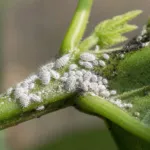 PestCotton mealybugPhenacoccus solenopsis Tinsley
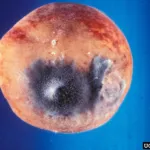 DiseaseRhizopus soft rotRhizopus stolonifer
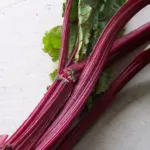 DiseaseBacterial soft rotPectobacterium carotovorum
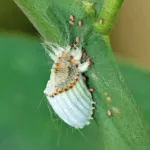 PestCottony Cushion ScaleIcerya purchasi
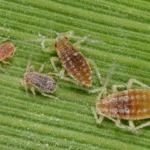 PestMealy Plum AphidHyalopterus pruni (Geoffroy, 1762)
 PestMelon aphid (cotton aphid)Aphis gossypii Glover
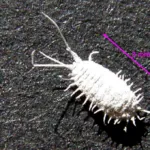 PestObscure mealybugPseudococcus viburni
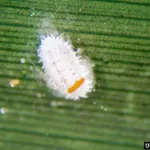 PestCitrus mealybugPlanococcus citri
Toxicity and pollen
Hoya carnosa is listed by a major US animal-poison database as non-toxic to dogs and cats. Normal handling is not considered hazardous, but sap may irritate sensitive skin and any plant material can cause stomach upset if eaten in quantity. Keep cuttings and fertilizer away from children and pets.
- Typical season
- No reliable US outdoor pollen season is established; indoor flowering is the relevant context.
- Pollination / pollen
- Pollen packaged in pollinia; limited airborne dispersal expected
This is an insect-pollinated flowering plant with pollen packaged in pollinia rather than freely shed as a large airborne cloud. That suggests relatively low airborne pollen exposure, but no cultivar-specific clinical allergy assessment was located; sensitive people should still avoid contact with sap and flowers if symptoms occur.
Native habitat
The species is associated with humid, warm forest-edge environments in tropical and subtropical Asia, often growing epiphytically or among organic debris rather than in heavy ground soil. The cultivar itself is maintained in horticulture and has no confirmed natural distribution.
Interesting fact
The cultivar's leaves are naturally contorted and overlap along the stems, creating a rope-like appearance. Its flowers arise from persistent spurs, so old flowering structures should not be removed. The historic name Hoya compacta has also been used for cultivated forms allied to Hoya carnosa.
Frequently asked questions (FAQ)
The most relevant questions about this plant, with short and direct answers.
🌱Quick care
How do you care for Hoya carnosa 'Compacta'?⌄
Give Hoya carnosa 'Compacta' bright filtered light, a loose fast-draining mix, and moderate watering after the soil has partially dried. Protect it from temperatures below 50°F and avoid leaving the roots in standing water.
How often should you water Hoya carnosa 'Compacta'?⌄
Water Hoya carnosa 'Compacta' when the potting mix has partially dried, then let excess water drain completely. The interval may range from about 1 to 3 weeks depending on light, temperature, pot size, and soil structure.
Does Hoya carnosa 'Compacta' need bright light?⌄
Yes, Hoya carnosa 'Compacta' grows best in bright filtered or indirect light. Too little light can produce weak growth and reduce flowering, while intense hot afternoon sun through glass may scorch the leaves.
Is Hoya carnosa 'Compacta' easy to grow indoors?⌄
Yes, Hoya carnosa 'Compacta' is generally an easy indoor plant when it receives bright light and is not overwatered. Its thick, curled leaves store some moisture, but the roots still require good drainage.
🌤️Environment and placement
Where should I place Hoya carnosa 'Compacta' indoors?⌄
Place Hoya carnosa 'Compacta' near a bright east- or west-facing window, or slightly back from a bright south-facing window. Filter strong midday sun with a sheer curtain if the leaves begin to bleach or scorch.
Can Hoya carnosa 'Compacta' grow in a north-facing window?⌄
Hoya carnosa 'Compacta' can survive in a bright north-facing window, but growth and flowering may be slower. Move it closer to the glass or supplement with a grow light if the stems become sparse.
What temperature is best for Hoya carnosa 'Compacta'?⌄
Keep Hoya carnosa 'Compacta' in a warm indoor range, preferably above 60°F, and protect it below 50°F. Avoid cold drafts, unheated porches, and sudden temperature changes.
Does Hoya carnosa 'Compacta' need high humidity?⌄
Hoya carnosa 'Compacta' appreciates moderate to high humidity, but household humidity is often adequate if watering and drainage are managed well. A humidifier can help in very dry winter air, especially when humidity stays below about 30%.
Can Hoya carnosa 'Compacta' grow outside in the United States?⌄
Hoya carnosa 'Compacta' can grow outside during warm weather in frost-free conditions with filtered light. Bring it indoors before temperatures approach 50°F because it is frost tender.
💧Care and problems
Why are the leaves on my Hoya carnosa 'Compacta' turning yellow?⌄
Yellow leaves on Hoya carnosa 'Compacta' are often caused by overly wet soil, poor drainage, or insufficient light. Check the roots and potting mix before watering again, and remove severely damaged tissue.
Why is my Hoya carnosa 'Compacta' dropping leaves?⌄
Leaf drop can result from overwatering, prolonged drought, cold exposure, or a sudden change in light or location. Let the mix partially dry between waterings and keep the plant warm with stable conditions.
Why are the leaves on Hoya carnosa 'Compacta' wrinkled?⌄
Wrinkled leaves usually indicate that Hoya carnosa 'Compacta' is not taking up enough water, often because the mix is too dry or the roots are damaged by rot. Check both root health and soil moisture instead of watering automatically.
What causes root rot in Hoya carnosa 'Compacta'?⌄
Root rot in Hoya carnosa 'Compacta' is usually caused by consistently wet soil, poor drainage, or a container without an effective drainage hole. Remove rotted roots, use fresh airy mix, and reduce watering until the plant recovers.
Should I fertilize Hoya carnosa 'Compacta'?⌄
Yes, fertilize Hoya carnosa 'Compacta' lightly during active growth with a balanced houseplant fertilizer diluted according to the label. Avoid fertilizing dry, stressed, or newly repotted plants because concentrated fertilizer can damage roots.
How fast does Hoya carnosa 'Compacta' grow?⌄
Hoya carnosa 'Compacta' is typically a slow- to moderate-growing houseplant. Bright light, warmth, active-season feeding, and a well-aerated root environment encourage faster growth.
Why is my Hoya carnosa 'Compacta' not growing?⌄
Slow growth is commonly caused by low light, cool temperatures, compacted soil, root damage, or seasonal dormancy. Improve light and drainage first, then avoid frequent repotting while the plant is otherwise healthy.
🪴Planting and repotting
What soil is best for Hoya carnosa 'Compacta'?⌄
Use a loose, organic, fast-draining houseplant mix for Hoya carnosa 'Compacta', amended with materials such as orchid bark and perlite if the mix holds water. The finished soil should stay airy rather than dense or soggy.
What type of pot does Hoya carnosa 'Compacta' need?⌄
Use a pot with a drainage hole that is only slightly larger than the root ball. Hoya carnosa 'Compacta' tolerates being somewhat root-bound, while an oversized pot can hold excess moisture and increase rot risk.
When should I repot Hoya carnosa 'Compacta'?⌄
Repot Hoya carnosa 'Compacta' when roots crowd the container, the mix has broken down, or water drains unusually poorly. Spring or early summer is suitable, but avoid repotting while the plant is actively budding or flowering unless necessary.
Should I repot Hoya carnosa 'Compacta' after buying it?⌄
Do not repot Hoya carnosa 'Compacta' immediately unless the nursery mix is waterlogged, the roots are damaged, or the container lacks drainage. Let the plant acclimate first, then repot only when there is a clear need.
✂️Propagation and pruning
How do you propagate Hoya carnosa 'Compacta'?⌄
Propagate Hoya carnosa 'Compacta' from stem cuttings containing at least one or two healthy nodes. Root the cuttings in water or a lightly moist, airy rooting medium, then pot them once a useful root system has formed.
Can you propagate Hoya carnosa 'Compacta' from a leaf?⌄
A single leaf of Hoya carnosa 'Compacta' may form roots but usually cannot produce a new vine without a viable piece of stem tissue containing a node. Use a stem cutting rather than a leaf-only cutting for reliable propagation.
Can Hoya carnosa 'Compacta' be propagated in water?⌄
Yes, Hoya carnosa 'Compacta' stem cuttings can root in water when at least one node is submerged and the leaves remain above the water. Transfer the cutting to a porous mix after roots develop, and keep the new medium evenly but lightly moist.
Should I prune Hoya carnosa 'Compacta'?⌄
Prune Hoya carnosa 'Compacta' only to remove dead, damaged, or unwanted growth or to shape a long vine. Do not remove short flowering spurs, because future flower clusters may develop from those same structures.
⚠️Toxicity and safety
Is Hoya carnosa 'Compacta' toxic to cats and dogs?⌄
Hoya carnosa 'Compacta' is generally classified as non-toxic to cats and dogs because it is a cultivar of Hoya carnosa. Eating any plant material can still cause mild stomach upset, so discourage pets from chewing it.
Is Hoya carnosa 'Compacta' safe for children?⌄
Hoya carnosa 'Compacta' is not generally considered poisonous, but it should not be treated as edible. Keep plants, potting mix, and fertilizer away from young children to prevent choking or gastrointestinal problems.
🌸Flowering and special interest
How do I get Hoya carnosa 'Compacta' to bloom?⌄
Provide Hoya carnosa 'Compacta' with bright filtered light, consistent care, and a slightly snug pot. Mature plants may need time to flower, and low light, frequent disturbance, or excessive pruning can delay blooming.
When does Hoya carnosa 'Compacta' flower?⌄
Hoya carnosa 'Compacta' commonly flowers during the brighter, warmer growing season when the plant is mature and receiving sufficient light. Indoor bloom timing varies with light exposure, temperature, and the plant's age.
What do Hoya carnosa 'Compacta' flowers look like?⌄
Hoya carnosa 'Compacta' produces small, waxy, star-shaped flowers in rounded clusters, often with pale pink to white petals and a contrasting central structure. The blooms may be fragrant, especially in the evening.
Why is my Hoya carnosa 'Compacta' growing leaves but not flowers?⌄
The most common reason is insufficient bright light, although the plant may also be too young or recently disturbed. Increase filtered light gradually, avoid cutting flower spurs, and give the plant time to mature.
Should I remove old flowers from Hoya carnosa 'Compacta'?⌄
Remove only the spent flowers themselves from Hoya carnosa 'Compacta' and leave the flower spur attached. The same spur can produce additional flower clusters in later blooming periods.