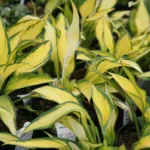
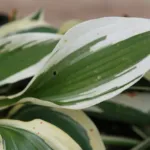
AI-generated illustration
Hosta ‘Valley’s Glacier’ short overview
Hosta 'Valley's Glacier' is a medium-sized, clump-forming perennial grown primarily for its frosty blue-green foliage. Broad leaves carry a wide yellow margin that gradually shifts toward creamy white as the season advances. Pale lavender flowers rise above the foliage in midsummer. Plant it in organically rich, evenly moist soil with morning light, dappled shade, or bright afternoon shade, and protect the leaves from hot sun and drying winds.
Taxonomic classification
Hosta ‘Valley’s Glacier’ care guide
Light and placement
Give morning sun, dappled light, or partial to full shade, with protection from hot afternoon sun and drying wind. North- and east-facing locations are dependable. Too much direct sun may bleach or scorch the blue-green leaves; too little light can produce weaker growth and less vigorous clumps.
Watering and humidity
Water deeply at the root zone whenever the upper soil begins to dry, keeping moisture even through spring and summer. Morning watering is preferable, especially where slugs are common. Increase frequency during heat or drought, but do not leave the crown in saturated soil. Atmospheric humidity is not usually limiting outdoors.
Soil and growing medium
Use fertile, humus-rich soil that holds steady moisture without becoming waterlogged. Loam or amended clay is suitable when drainage is improved with organic matter. A slightly acidic to neutral soil is ideal, although hostas tolerate a broad pH range, including mildly alkaline conditions.
Feeding
Apply a balanced slow-release perennial fertilizer or a thin layer of finished compost in spring as shoots emerge. Avoid heavy nitrogen feeding, which can produce soft foliage and encourage pest damage. Stop routine feeding by late summer so growth can mature before dormancy.
Growth and habit
This cultivar forms a rounded, clumping mound from a rhizomatous crown. Growth is strongest with reliable moisture, rich soil, and shelter from hot afternoon sun and drying wind. Divide established clumps when they become crowded or when propagation is desired.
Planting and repotting
Plant in spring or early fall, setting the crown at soil level with the emerging buds just below or level with the surface. Space plants about 18–24 inches apart for a continuous but uncrowded display. Water thoroughly after planting and mulch lightly, keeping mulch away from the crown.
Repot container-grown divisions in early spring, just as shoots begin to emerge, or in early fall. Choose a container only modestly larger than the root mass, use a moisture-retentive but well-drained potting mix, and keep the crown at its original depth.
Propagation and pruning
Propagation
Division is the practical and reliable method. Divide in early spring before leaves unfurl or in early fall, using a clean knife or spade to separate crowns with viable buds and roots. Seed may be produced, but seedlings will not reliably reproduce this named cultivar.
Pruning
Cut flower scapes after flowering if seed production is not wanted, or leave them until they yellow naturally. Remove collapsed foliage after a hard freeze or in late winter before new shoots emerge. Do not cut healthy leaves prematurely during the growing season.
Overwintering
Leave the plant dormant outdoors in USDA Zones 4–8. After frost collapses the foliage, remove the dead leaves to reduce overwintering pest and disease habitat. A light mulch layer can buffer temperature changes, but keep it off the crown to reduce rot risk.
Uses
Primarily an ornamental foliage perennial for shaded beds, woodland gardens, foundation plantings, and containers. Its contrasting blue-green and cream foliage works well with ferns, heucheras, astilbes, and spring bulbs. Do not use it as an edible plant, and keep it away from pets because hostas are toxic when ingested.
Appearance
The plant has broad, heart-shaped, thick-textured leaves with a frosty blue-green center and a conspicuous yellow margin that lightens toward cream-white as summer progresses. Leaves rise from a central crown to create a rounded mound. Upright lavender-flowered scapes provide vertical contrast above the foliage.
Flowering
Upright, mostly leafless flower scapes rise above the foliage and carry one-sided racemes of bell-shaped, pale lavender flowers. Bloom is normally in July and August in much of the United States. The flowers are ornamental but the cultivar is valued more for its foliage than for floral display.
Pollination and visitors
The pale lavender, nectar-bearing flowers may be visited by bees and bumblebees, but available cultivar-specific documentation does not establish a strong or specialized pollinator association.
Diseases and pests
Diseases
Watch for anthracnose, crown or root problems in poorly drained sites, and Hosta Virus X symptoms such as abnormal mottling, lumpy leaves, or distorted growth. Improve air circulation, avoid overhead watering, disinfect tools, and remove plants with confirmed viral symptoms rather than composting them.
Pests
Slugs and snails commonly rasp irregular holes in hosta leaves, especially in cool, wet shade. Reduce hiding places, improve air movement, water at the soil surface in the morning, and use an appropriately labeled control if monitoring shows persistent damage. Deer and rabbits may also browse foliage.
Related diseases and pests
Only Plant Doctor profiles whose host data indicate this plant may be affected are shown here.
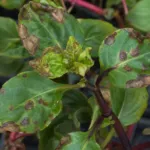 DiseaseImpatiens necrotic spot virus diseaseImpatiens necrotic spot orthotospovirus
 DiseaseSouthern blightAthelia rolfsii
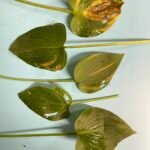 PestStrawberry foliar nematodeAphelenchoides fragariae
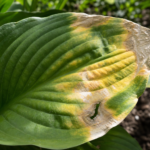 Environmental stressExcess light stress
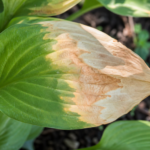 Environmental stressLeaf sunburn
 DiseaseAnthracnoseColletotrichum gloeosporioides
 DiseaseWalnut AnthracnoseOphiognomonia leptostyla
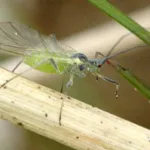 PestGreen Peach AphidMyzus persicae
Toxicity and pollen
Hosta plants contain saponins and are listed by ASPCA as toxic to dogs and cats; ingestion may cause vomiting, diarrhea, or depression. Keep plant material away from pets and seek veterinary advice if a significant amount is eaten. Evidence for this exact cultivar is not separately established, so the assessment follows the genus-level hosta listing.
- Typical season
- July–August
- Pollination / pollen
- Insect-dispersed floral pollen
Hosta flowers release pollen from exposed stamens, but hostas are insect-pollinated and are not generally regarded as major airborne pollen sources. Individual sensitivity is still possible, especially during flowering, so avoid assuming zero allergy risk.
Native habitat
Hostas are associated with open woodlands, woodland margins, glades, and moist grassland habitats in East Asia. In cultivation, the cultivar prefers the cool, moisture-retentive conditions that resemble a sheltered forest edge rather than deeply dry or exposed ground.
Interesting fact
Registered by Jeroen Linneman in 2008 as a sport of 'First Frost'. Its broad leaf margin changes from yellow toward cream-white during the growing season. The cultivar is classed as a medium hosta and is commonly valued for its cool blue-green and cream color contrast.
Frequently asked questions (FAQ)
The most relevant questions about this plant, with short and direct answers.
🌱Quick care
What is Hosta 'Valley's Glacier'?⌄
Hosta 'Valley's Glacier' is a medium-sized, deciduous hosta grown for blue-green leaves with broad margins that shift from yellow to creamy white. It is a clump-forming perennial suited to shaded gardens and containers.
How big does Hosta 'Valley's Glacier' get?⌄
Hosta 'Valley's Glacier' typically grows about 16 inches tall and 35 inches wide at maturity. Individual plants can vary with soil, moisture, climate, and growing conditions.
Is Hosta 'Valley's Glacier' evergreen?⌄
No, Hosta 'Valley's Glacier' is deciduous and dies back to the crown after frost. New leaves emerge in spring as temperatures rise.
🌤️Environment and placement
How much sun does Hosta 'Valley's Glacier' need?⌄
Grow Hosta 'Valley's Glacier' in partial shade to full shade. Gentle morning sun can be suitable, but strong afternoon sun may scorch or fade its leaves, especially in warmer climates.
Can Hosta 'Valley's Glacier' grow in full shade?⌄
Yes, Hosta 'Valley's Glacier' can grow in full shade, although brighter shade usually produces stronger growth and better leaf coloration. Avoid dark, dry locations where the soil stays depleted of moisture.
Where should I plant Hosta 'Valley's Glacier'?⌄
Plant it in a sheltered, shaded bed, woodland garden, border, or the north or east side of a building. Choose a location with humus-rich soil that stays evenly moist but does not remain waterlogged.
What soil is best for Hosta 'Valley's Glacier'?⌄
The best soil is fertile, humus-rich, moisture-retentive, and well drained. Improve poor soil with compost or other organic matter while preserving adequate drainage.
What USDA hardiness zone is Hosta 'Valley's Glacier' suitable for?⌄
Hosta 'Valley's Glacier' is generally hardy to about -30°F, corresponding roughly to USDA Zone 4 and warmer conditions. Winter survival can still depend on exposure, drainage, snow cover, and the plant's establishment.
💧Care and problems
How often should I water Hosta 'Valley's Glacier'?⌄
Water Hosta 'Valley's Glacier' whenever the soil surface begins to dry, keeping the root zone evenly moist. Water more often during hot, dry weather and less often during cool or rainy periods.
Can Hosta 'Valley's Glacier' tolerate dry soil?⌄
Hosta 'Valley's Glacier' does not perform well in prolonged dry soil. Mulch the root zone and provide supplemental water during drought, while avoiding constantly saturated conditions.
Should I mulch Hosta 'Valley's Glacier'?⌄
Yes, apply a 2- to 3-inch layer of organic mulch around Hosta 'Valley's Glacier' to conserve moisture and moderate soil temperature. Keep mulch slightly away from the crown to reduce rot risk.
How do I fertilize Hosta 'Valley's Glacier'?⌄
Feed Hosta 'Valley's Glacier' in spring with compost or a balanced, slow-release fertilizer if the soil is poor. Avoid heavy late-season fertilizing, which can encourage tender growth before winter.
Why are the leaves of Hosta 'Valley's Glacier' turning brown?⌄
Brown leaf edges usually indicate drought stress, excessive sun, wind exposure, or inconsistent watering. Check soil moisture and afternoon light first, and protect the plant from hot, drying conditions.
Why are the leaves of Hosta 'Valley's Glacier' turning yellow?⌄
Older leaves may yellow naturally as the plant ages or enters dormancy, but widespread yellowing can indicate overly wet soil, drought, or root stress. Check drainage and moisture before changing the fertilizing routine.
What pests commonly affect Hosta 'Valley's Glacier'?⌄
Slugs and snails are the most common pests affecting Hosta 'Valley's Glacier', especially in cool, damp gardens. Remove hiding places, water at the soil line, and use a suitable slug-control method when necessary.
Do deer eat Hosta 'Valley's Glacier'?⌄
Yes, deer commonly browse hostas, including Hosta 'Valley's Glacier'. In areas with deer pressure, protect the plant with fencing or a repellent rather than relying on its foliage coloration.
Can Hosta 'Valley's Glacier' be grown in a container?⌄
Yes, Hosta 'Valley's Glacier' grows well in a large container with drainage holes and moisture-retentive potting mix. Choose a container wide enough for its mature spread and protect the roots from severe winter exposure.
🪴Planting and repotting
When is the best time to plant Hosta 'Valley's Glacier'?⌄
Plant Hosta 'Valley's Glacier' in spring or early fall when temperatures are mild and soil moisture is reliable. Avoid planting during extreme summer heat or immediately before hard freezes.
How far apart should I plant Hosta 'Valley's Glacier'?⌄
Space Hosta 'Valley's Glacier' about 24 to 36 inches apart to allow room for its mature clump. Use the wider spacing for a more open planting and the closer spacing for quicker visual coverage.
How deep should I plant Hosta 'Valley's Glacier'?⌄
Plant Hosta 'Valley's Glacier' with the crown at soil level and the roots spread naturally below it. Do not bury the crown deeply, because excessive moisture around it can encourage rot.
Can Hosta 'Valley's Glacier' grow under trees?⌄
Yes, Hosta 'Valley's Glacier' can grow under trees if it receives sufficient shade and regular moisture. Keep it away from dense, thirsty tree roots when possible, and water during dry periods.
Does Hosta 'Valley's Glacier' need good drainage?⌄
Yes, it needs consistently moist soil with good drainage. It tolerates moisture better than drought, but standing water around the crown can cause root or crown rot.
✂️Propagation and pruning
How do I propagate Hosta 'Valley's Glacier'?⌄
Propagate Hosta 'Valley's Glacier' primarily by dividing established clumps. Divide in early spring as shoots emerge or in late summer, keeping roots attached to each crown section.
Can Hosta 'Valley's Glacier' be grown from seed?⌄
Yes, Hosta 'Valley's Glacier' can produce viable seed, but seedlings may not closely reproduce the named cultivar's foliage. Division is preferred when you want plants identical to the parent.
When should I divide Hosta 'Valley's Glacier'?⌄
Divide Hosta 'Valley's Glacier' in early spring or late summer when temperatures are moderate. Water the divisions thoroughly after planting and keep them evenly moist while they reestablish.
Should I cut back Hosta 'Valley's Glacier' in fall?⌄
Cut back Hosta 'Valley's Glacier' after frost has killed the foliage or after it becomes collapsed and untidy. Removing dead leaves helps tidy the bed and may reduce overwintering pest habitat.
⚠️Toxicity and safety
Is Hosta 'Valley's Glacier' toxic to dogs and cats?⌄
Yes, Hosta 'Valley's Glacier' is toxic to dogs and cats if ingested. Keep pets from chewing the leaves, flowers, or other plant parts, and contact a veterinarian promptly if ingestion occurs.
🌸Flowering and special interest
When does Hosta 'Valley's Glacier' bloom?⌄
Hosta 'Valley's Glacier' usually blooms in summer, often from July into August in temperate climates. Its pale lavender to lavender-purple flowers rise above the foliage on tall scapes.
Are the flowers of Hosta 'Valley's Glacier' fragrant?⌄
The flowers of Hosta 'Valley's Glacier' are generally grown for their lavender color rather than fragrance, and strong fragrance is not a defining feature of this cultivar.
Should I remove the flower stalks from Hosta 'Valley's Glacier'?⌄
Remove the flower stalks after blooming if you want to keep the plant looking tidy or direct energy toward foliage. Leaving them in place does not normally harm an established plant.