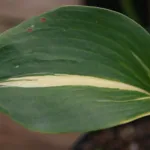
AI-generated illustration
Hosta ‘Twist of Lime’ short overview
Hosta 'Twist of Lime' is a compact, fast-growing hosta valued for its bright chartreuse to golden, narrow leaves edged with irregular dark green margins. The slightly twisted foliage forms a neat clump for sheltered partial shade, rock gardens, edging, and containers. Upright scapes carry deep purple, tubular flowers in early to midsummer. Keep the soil consistently moist but well drained, and protect the plant from slugs, snails, deer, and rabbits.
Taxonomic classification
Hosta ‘Twist of Lime’ care guide
Light and placement
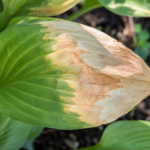
Grow in partial shade to shade, ideally with bright morning light or dappled light and protection from hot afternoon sun. An east-, north-, or sheltered west-facing position is suitable. Scorched, bleached, or crispy margins indicate excessive sun or drought; sparse, stretched growth and duller foliage can indicate overly deep shade.
Watering and humidity
Water deeply when the soil surface begins to dry, keeping the root zone evenly moist rather than alternating between drought and saturation. Increase watering during hot, dry periods and reduce it after fall dormancy while preventing prolonged winter wetness. Apply water to the soil rather than repeatedly wetting the foliage.
Soil and growing medium
Use fertile, humus-rich soil that holds moisture without becoming waterlogged. Loam or amended clay is suitable if drainage is improved with organic matter. A slightly acidic to slightly alkaline soil is tolerated, with neutral to mildly acidic conditions generally practical for garden culture.
Feeding
Top-dress with compost in spring or apply a balanced, slow-release perennial fertilizer as growth begins. Avoid heavy nitrogen feeding, which can produce soft foliage and increase pest pressure. Do not fertilize drought-stressed, newly divided, or dormant plants; water first when soil is dry.
Growth and habit
This cultivar forms a compact, clumping mound from a crown and emerges anew each spring after winter dormancy. It establishes quickly when supplied with steady moisture. Keep competing roots and dense groundcovers away from the crown, and divide only when the clump becomes crowded or requires rejuvenation.
Planting and repotting
Plant in spring or early fall, setting the crown at soil level and spreading the roots outward. Space plants about 12–16 inches apart for a connected display, or allow more room for individual clumps. Water thoroughly after planting and maintain even moisture while roots establish.
Repot container plants in early spring before active growth, using a moisture-retentive but well-drained potting mix. Move up only one container size and keep the crown at the same depth. Divide overcrowded plants at the same time if needed.
Propagation and pruning
Propagation
Propagate by division in early spring as shoots emerge or in late summer after active growth. Separate the crown with a sharp, clean knife, ensuring each division has roots and growing points. Seed is not recommended for maintaining this named cultivar because seedlings may not come true.
Pruning
Remove damaged leaves during the growing season if needed. Cut the foliage to the ground after it has yellowed or collapsed following frost, and clear the debris to reduce overwintering pest and disease habitat.
Overwintering
Leave healthy foliage in place until it naturally collapses after frost, then cut it back and remove debris. A light mulch layer can protect crowns in exposed sites, but keep mulch off the crown to reduce rot and slug habitat. Container plants need protection from repeated freeze-thaw cycles.
Uses
Use as a small-scale foliage accent in shaded borders, rock gardens, woodland plantings, path edging, and containers. Its bright variegation helps illuminate dark planting areas. It is ornamental only and should not be used as a food or medicinal plant, especially where pets may chew plants.
Appearance
The plant forms a neat small clump of narrow, lance-shaped leaves. Blades are bright chartreuse to lemon-yellow or gold in the center, with thin to irregular dark green margins that may jet toward the midrib. Leaves can be slightly twisted, arching, folded, and gently wavy, creating a distinctive fine-textured appearance.
Flowering
Deep purple to violet, tubular, bell-like flowers rise on upright scapes above the foliage. Bloom is usually concentrated from June into July in much of the United States, although timing varies with climate. Flowers are ornamental but secondary to the distinctive foliage.
Pollination and visitors
The tubular purple flowers may be visited by bees, bumblebees, and occasional butterflies, but this compact foliage cultivar is not primarily grown as a pollinator plant. Visitor activity depends on local insect populations and weather.
Diseases and pests
Diseases
Watch for crown and root rot in poorly drained soil, leaf spot, anthracnose, and viral diseases including Hosta Virus X. Remove and discard clearly infected plants rather than propagating them. Water at the soil surface, improve air movement, and sanitize tools between plants.
Pests
Slugs and snails commonly rasp holes in emerging leaves. Deer and rabbits may browse the foliage, while voles can damage roots. Reduce hiding places, avoid excessive wet mulch against the crown, hand-pick or use labeled controls for mollusks, and protect plants with fencing where browsing is severe.
Related diseases and pests
Only Plant Doctor profiles whose host data indicate this plant may be affected are shown here.
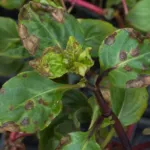 DiseaseImpatiens necrotic spot virus diseaseImpatiens necrotic spot orthotospovirus
 DiseaseSouthern blightAthelia rolfsii
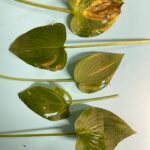 PestStrawberry foliar nematodeAphelenchoides fragariae
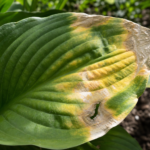 Environmental stressExcess light stress
 Environmental stressLeaf sunburn
 DiseaseAnthracnoseColletotrichum gloeosporioides
 DiseaseAlternaria leaf spot and fruit rotAlternaria alternata
 DiseasePhytophthora root and crown rotPhytophthora nicotianae
Toxicity and pollen
Hosta plants contain saponins and are listed as toxic to dogs and cats. Ingestion commonly causes gastrointestinal upset such as vomiting or diarrhea and may cause depression or lethargy. Keep pets from chewing the foliage, flowers, or roots; contact a veterinarian or animal poison service after suspected ingestion.
- Typical season
- Usually June–July in the United States
- Pollination / pollen
- Insect-dispersed flower pollen
Hosta pollen is released from exposed stamens within insect-visited flowers and is not generally considered a major airborne seasonal allergen. Because individual sensitivity varies, people with known pollen allergies should still avoid rubbing the eyes or handling flowers during bloom.
Native habitat
Hostas are woodland-edge perennials associated with temperate East Asian habitats, where they grow in fertile soils with regular moisture and filtered light. In cultivation, this cultivar performs best in sheltered shade with protection from hot afternoon sun and drying wind.
Interesting fact
This cultivar is a sport of Hosta 'Lemon Lime'. Its narrow leaves combine a bright chartreuse or yellow-gold center with a dark green margin that can streak toward the midrib. Despite its small size, it is described as vigorous and fast growing. The foliage is often more visually important than the summer flowers.
Frequently asked questions (FAQ)
The most relevant questions about this plant, with short and direct answers.
🌱Quick care
What is Hosta 'Twist of Lime'?⌄
Hosta 'Twist of Lime' is a small, deciduous perennial hosta with chartreuse to yellow-green leaves edged in dark green. It forms a compact mound and is valued mainly for its colorful foliage.
How big does Hosta 'Twist of Lime' get?⌄
Hosta 'Twist of Lime' typically grows about 6–10 inches tall and 10–20 inches wide. Its exact mature size varies with climate, soil, moisture, and growing conditions.
Is Hosta 'Twist of Lime' easy to grow?⌄
Yes, Hosta 'Twist of Lime' is generally easy to grow when planted in moist, fertile soil and protected from harsh afternoon sun. Slugs and snails are usually the main maintenance concern.
🌤️Environment and placement
Does Hosta 'Twist of Lime' grow in full shade?⌄
Yes, Hosta 'Twist of Lime' can grow in full shade, but it may develop more slowly and produce less dense foliage. Bright, indirect light or filtered shade usually gives better color and growth.
How much sun does Hosta 'Twist of Lime' need?⌄
Give Hosta 'Twist of Lime' partial shade to shade, ideally with morning sun or filtered light. Strong afternoon sun can scorch its lighter leaves, especially in hot regions.
Can Hosta 'Twist of Lime' tolerate morning sun?⌄
Yes, Hosta 'Twist of Lime' usually tolerates gentle morning sun well. Provide afternoon shade in warm climates or whenever the leaves show bleaching, browning, or scorch.
What soil is best for Hosta 'Twist of Lime'?⌄
Plant Hosta 'Twist of Lime' in fertile, humus-rich, moist but well-drained soil. Incorporating compost or leaf mold can improve moisture retention without creating stagnant, waterlogged conditions.
Is Hosta 'Twist of Lime' hardy in the United States?⌄
Hosta 'Twist of Lime' is a cold-hardy perennial that can overwinter outdoors across much of the United States. Winter survival is best when the crown is planted in well-drained soil and protected from repeated freeze-thaw exposure.
💧Care and problems
How often should I water Hosta 'Twist of Lime'?⌄
Water Hosta 'Twist of Lime' whenever the soil surface begins to dry, keeping the root zone evenly moist. During hot or dry weather, check small plants and container specimens more frequently.
Why are the leaves of my Hosta 'Twist of Lime' turning brown?⌄
Brown leaves on Hosta 'Twist of Lime' are commonly caused by drought, excessive sun, hot wind, or slug damage. Improve moisture consistency and afternoon shade, and inspect the foliage for pests.
How do I protect Hosta 'Twist of Lime' from slugs and snails?⌄
Reduce slug and snail damage by removing hiding places, watering near the soil rather than over the leaves, and checking plants at night. Barriers or a locally approved slug control product can be used when damage is severe.
Does Hosta 'Twist of Lime' need fertilizer?⌄
Hosta 'Twist of Lime' benefits from compost or a balanced slow-release fertilizer in spring. Avoid heavy late-season feeding, which can encourage soft growth before winter.
Should I remove damaged leaves from Hosta 'Twist of Lime'?⌄
Yes, remove badly damaged or diseased leaves from Hosta 'Twist of Lime' with clean scissors. Lightly damaged leaves can remain if they still contribute to photosynthesis and visual interest.
🪴Planting and repotting
When is the best time to plant Hosta 'Twist of Lime'?⌄
The best time to plant Hosta 'Twist of Lime' is spring or early fall, when temperatures are moderate and soil moisture is easier to maintain. Avoid planting during extreme heat or drought.
Can Hosta 'Twist of Lime' be grown in a container?⌄
Yes, Hosta 'Twist of Lime' performs well in a container because of its small mature size. Use a pot with drainage holes, quality moisture-retentive potting mix, and winter protection in the coldest regions.
How far apart should I plant Hosta 'Twist of Lime'?⌄
Space Hosta 'Twist of Lime' about 8–16 inches apart, depending on whether you want individual clumps or a fuller edging. Allow additional room if the plants are being grown in rich soil.
Can Hosta 'Twist of Lime' grow in a rock garden?⌄
Yes, Hosta 'Twist of Lime' is well suited to shaded rock gardens, borders, and pathway edging. Give it humus-rich soil and consistent moisture because exposed rock areas can dry quickly.
✂️Propagation and pruning
How do you propagate Hosta 'Twist of Lime'?⌄
Propagate Hosta 'Twist of Lime' by dividing the clump in early spring or late summer. Separate sections with healthy roots and shoots, then replant them promptly at the original depth.
Can Hosta 'Twist of Lime' be grown from seed?⌄
Hosta 'Twist of Lime' can produce seed, but seedlings may not reproduce the distinctive chartreuse center and dark green margin of the named cultivar. Division is the preferred method for preserving its exact characteristics.
When should I divide Hosta 'Twist of Lime'?⌄
Divide Hosta 'Twist of Lime' in early spring as growth begins or in late summer after the main heat. Water the divisions well after planting and keep them evenly moist while roots reestablish.
Should I cut back Hosta 'Twist of Lime' in fall?⌄
Allow Hosta 'Twist of Lime' foliage to die back naturally, then remove the dead leaves after frost or once they become loose and unattractive. Clearing the foliage helps tidy the planting and removes hiding places for pests.
⚠️Toxicity and safety
Is Hosta 'Twist of Lime' poisonous to dogs and cats?⌄
Yes, Hosta 'Twist of Lime' is toxic to dogs and cats if eaten. Ingestion can cause gastrointestinal signs such as vomiting, diarrhea, or loss of appetite, so contact a veterinarian or animal poison service if a pet consumes it.
Is Hosta 'Twist of Lime' safe for children?⌄
Keep Hosta 'Twist of Lime' out of reach of children because eating plant material may cause stomach upset. The greatest practical concern is usually pets, which may be more likely to chew hosta foliage.
🌸Flowering and special interest
When does Hosta 'Twist of Lime' bloom?⌄
Hosta 'Twist of Lime' generally blooms from late spring to midsummer, often around June or July depending on local conditions. Its flowers rise above the foliage on upright scapes.
What color are the flowers of Hosta 'Twist of Lime'?⌄
Hosta 'Twist of Lime' produces deep violet to purple, tubular flowers. The flower color contrasts strongly with its bright chartreuse foliage and dark green margins.
Are Hosta 'Twist of Lime' flowers fragrant?⌄
No, the flowers of Hosta 'Twist of Lime' are generally considered nonfragrant. This cultivar is grown primarily for its compact form and variegated foliage.