 Source:
Hosta ‘Regal Splendor’ short overview
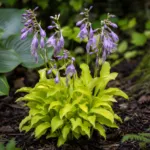
Hosta 'Regal Splendor' is a large, vase-shaped perennial with wavy blue-gray leaves edged in creamy white to pale yellow. It thrives in evenly moist, rich soil and part to full shade, producing tall scapes of lavender flowers in midsummer. This 1987 sport of 'Krossa Regal' is valued primarily for its architectural foliage and dependable performance in American shade gardens. A large, upright hosta with thick wavy blue-gray leaves and irregular creamy margins. ‘Regal Splendor’ is a sport of ‘Krossa Regal’, forms a strong vase-shaped clump, and sends tall scapes of pale lavender flowers above the foliage in midsummer.
Taxonomic classification
Hosta ‘Regal Splendor’ care guide
Light and placement
Grow in part shade to full shade, ideally with morning light or filtered light beneath open trees. East- and north-facing beds are often suitable; a sheltered west-facing site may work if afternoon sun is filtered. Too much direct sun can bleach the blue foliage and scorch cream margins, while deep, dry shade can reduce vigor and leaf quality.
Watering and humidity
Water deeply when the soil surface begins to dry, keeping the root zone evenly moist rather than alternating between drought and saturation. Apply water beneath the leaves to reduce foliar disease. Increase irrigation during hot, dry summer weather and reduce it after dormancy, while preventing newly planted divisions from drying out.
Soil and growing medium
Use fertile, organically enriched soil that holds moisture without becoming waterlogged. Loam amended with compost is ideal; clay should be improved for drainage, while very sandy soil benefits from added organic matter. Hostas tolerate a broad pH range, from mildly acidic through alkaline, provided moisture and structure are reliable.
Feeding
Top-dress with compost in spring as growth begins. If additional fertilizer is needed, apply a balanced slow-release product at label rate rather than repeated heavy feeding. Avoid fertilizing drought-stressed, newly divided or late-season plants, since soft late growth is more vulnerable to winter damage.
Growth and habit
This slow-to-moderate perennial develops a substantial clump from a rhizomatous crown and maintains an upright, vase-shaped habit. Thick leaves help established plants tolerate some dry shade, but consistent moisture produces better size and foliage quality. Divide only when needed because mature clumps take time to rebuild.
Planting and repotting
Plant in spring or early fall when soil is workable. Set the crown at the same depth it was growing, with the buds just at or slightly below the soil surface. Space mature plants about 30–36 inches apart, allowing room for the vase-shaped clump and airflow. Water thoroughly after planting and mulch lightly without covering the crown.
Container-grown plants can be moved or divided in early spring, before leaves fully unfurl, or in early fall. Refresh crowded containers when the crown fills the pot, using a moisture-retentive but well-drained potting mix. Choose a container with drainage holes and avoid burying the crown deeply.
Propagation and pruning
Propagation
Propagate by division in early spring before leaf unfurling or in early fall. Lift the clump, separate crowns with viable buds and roots using a clean knife, and replant divisions promptly at the original depth. Seed is not the practical method for maintaining this named cultivar because seedlings will not reliably reproduce it.
Pruning
Remove spent flower scapes after flowering if seed production is not desired. Cut back yellowed or frosted foliage after it collapses in late fall, then clear debris to reduce overwintering pests and disease. Do not cut healthy leaves during the growing season unless damaged.
Overwintering
Leave healthy foliage until it naturally collapses or is killed by frost, then remove it and clear debris. A light mulch can buffer soil temperature in exposed sites, but keep mulch away from the crown. Established plants are outdoor hardy through USDA Zone 3; containers need extra protection because roots experience colder temperatures.
Uses
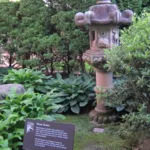
Use as a specimen, background plant, mass planting or foliage accent in shade borders, woodland gardens and sheltered container displays. Its tall, vase-shaped habit gives structure without relying on flowers. It is ornamental only; because hostas are toxic to dogs and cats, do not use it where pets may chew the plant.
Appearance
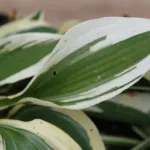
The broad, heart-shaped leaves are thick, wavy and often strongly glaucous, giving the center a blue-gray appearance. Irregular creamy white to pale yellow margins narrow toward the leaf tips. Leaves are held upward in a distinctive vase-shaped mound, and tall gray-green scapes rise above the foliage.
Flowering
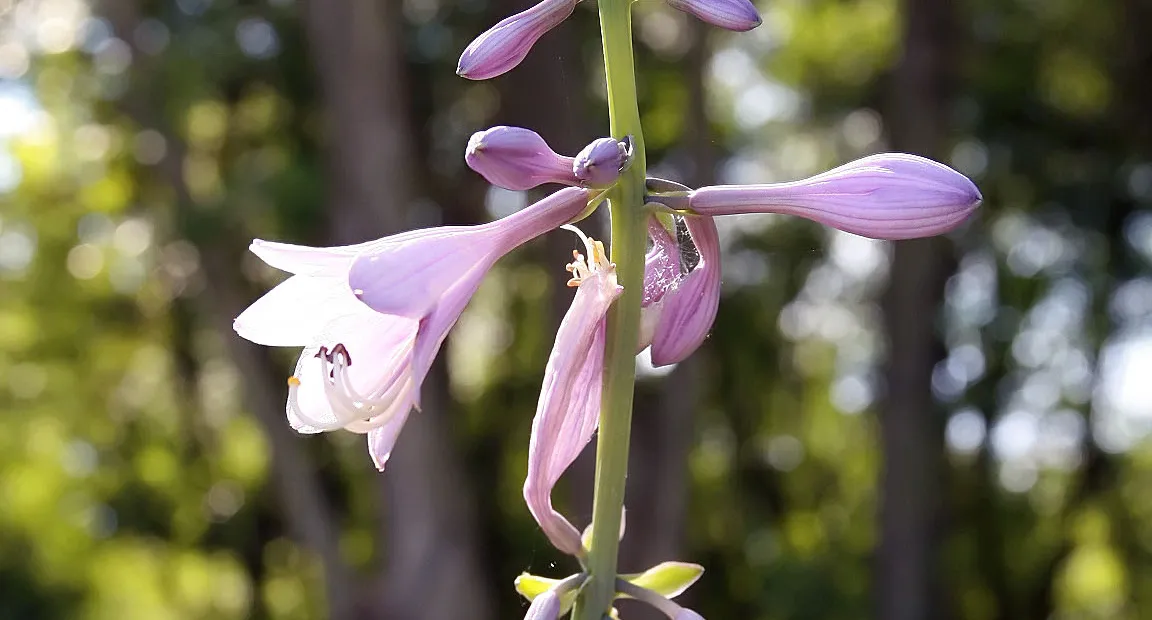
Pale lavender, bell-shaped flowers are carried in one-sided racemes on tall, mostly leafless scapes that rise well above the foliage. Flowering is typically concentrated in July and August in much of the United States. The cultivar is grown chiefly for its foliage rather than its flowers.
Pollination and visitors
Hosta flowers can provide nectar and pollen for insect visitors, and hosta plantings are also associated with hummingbird visits. Evidence located for this named cultivar did not establish a particular pollinator species, so no species-level Latin name is supplied.
Hosta 'Regal Splendor' photos
Click any photo for a larger view. Source, author and license are shown separately.
Diseases and pests
Diseases
Watch for crown rot, foliar spots, foliar nematodes and virus symptoms such as abnormal streaking or mottling. Prevent problems with well-drained soil, good air circulation, clean tools and removal of severely diseased plants. Avoid overhead watering when foliage will remain wet overnight.
Pests
Slugs and snails commonly chew irregular holes in the foliage; deer and rabbits may also browse it. Reduce damage with hand-picking, barriers and habitat management, and use only locally permitted controls according to label directions. Maintain steady growth and avoid unnecessary insecticide use during bloom.
Related diseases and pests
Only Plant Doctor profiles whose host data indicate this plant may be affected are shown here.
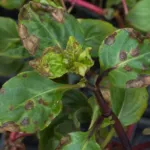 DiseaseImpatiens necrotic spot virus diseaseImpatiens necrotic spot orthotospovirus
 DiseaseSouthern blightAthelia rolfsii
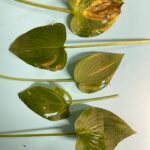 PestStrawberry foliar nematodeAphelenchoides fragariae
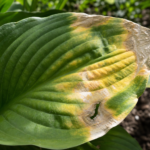 Environmental stressExcess light stress
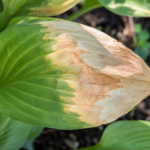 Environmental stressLeaf sunburn
 DiseaseAlternaria leaf spot and fruit rotAlternaria alternata
 DiseasePhytophthora root and crown rotPhytophthora nicotianae
Toxicity and pollen
Hosta plants are reported as toxic to dogs and cats because of saponins; ingestion may cause vomiting, diarrhea and depression. Evidence is generally presented for Hosta as a genus rather than for this named cultivar specifically. Keep pets from chewing leaves, crowns or flowers and contact a veterinarian if ingestion occurs.
- Typical season
- July–August
- Pollination / pollen
- Insect-dispersed pollen
The flowers are insect-pollinated, so pollen is generally transferred by visiting animals rather than released in large airborne clouds. This suggests low airborne exposure, but it does not prove zero allergy risk; sensitive people may still react to direct flower contact or nearby pollen.
Native habitat
The cultivar is of garden origin rather than a wild population. Its Hosta background reflects woodland, woodland-edge and glade ecology in East Asia, where plants typically grow in humus-rich soils with dependable moisture and filtered light.
Interesting fact
‘Regal Splendor’ was discovered in tissue culture while ‘Krossa Regal’ was being propagated. It is a sport of ‘Krossa Regal’ and retains that cultivar’s upright habit while adding a creamy margin. The cultivar was registered in 1987 and was selected as the 2003 Hosta of the Year.
Frequently asked questions (FAQ)
The most relevant questions about this plant, with short and direct answers.
🌱Quick care
How do you care for Hosta 'Regal Splendor'?⌄
Grow Hosta 'Regal Splendor' in part shade to full shade, fertile moisture-retentive soil, and even moisture. Morning sun or dappled light is generally preferable to hot afternoon sun.
Is Hosta 'Regal Splendor' a perennial?⌄
Yes, Hosta 'Regal Splendor' is a long-lived herbaceous perennial that dies back in cold weather and regrows from the crown in spring.
What USDA hardiness zones can grow Hosta 'Regal Splendor'?⌄
Hosta 'Regal Splendor' is generally hardy in USDA Zones 3 through 8, although local exposure and winter protection can affect performance.
How big does Hosta 'Regal Splendor' get?⌄
A mature Hosta 'Regal Splendor' typically forms a vase-shaped mound about 3 feet tall and wide, with flower scapes rising 3 to 5 feet. It may take several years to reach full size.
🌤️Environment and placement
Does Hosta 'Regal Splendor' grow in full shade?⌄
Yes, Hosta 'Regal Splendor' grows well in full shade, provided the soil remains evenly moist. Its foliage may develop best with some filtered light or gentle morning sun.
How much sun does Hosta 'Regal Splendor' need?⌄
Provide part shade to full shade, ideally with morning sun or dappled light. Protect it from intense afternoon sun, especially in hot climates, because the leaves can scorch.
Can Hosta 'Regal Splendor' tolerate morning sun?⌄
Yes, Hosta 'Regal Splendor' usually tolerates morning sun well when its soil stays moist. Avoid exposing it to prolonged hot afternoon sunlight.
What soil is best for Hosta 'Regal Splendor'?⌄
Use fertile, organically enriched, moisture-retentive, well-drained loam. The soil should hold moisture without remaining waterlogged around the crown.
Can Hosta 'Regal Splendor' grow under trees?⌄
Yes, it can grow beneath trees if it receives shade and does not have to compete severely for water and roots. Irrigation may be needed during dry periods.
Can Hosta 'Regal Splendor' grow in a container?⌄
Yes, Hosta 'Regal Splendor' can be grown in a large container with drainage holes and consistently moist potting mix. Choose a container wide and deep enough for a plant that can eventually reach about 3 feet across.
💧Care and problems
How often should you water Hosta 'Regal Splendor'?⌄
Water Hosta 'Regal Splendor' whenever the soil surface begins to dry so the root zone stays evenly moist. Water at the soil line rather than repeatedly wetting the foliage.
Why are the leaves of Hosta 'Regal Splendor' turning brown?⌄
Brown leaves commonly indicate drought stress, sun scorch, heat, or physical damage such as hail. Check soil moisture and afternoon exposure before assuming the plant has a disease.
How do you protect Hosta 'Regal Splendor' from slugs?⌄
Reduce hiding places, avoid excessive surface moisture, and monitor plants regularly for slug damage. Slugs and snails can chew conspicuous holes in the thick foliage, so use a control method labeled for hostas if needed.
Are deer attracted to Hosta 'Regal Splendor'?⌄
Yes, deer commonly eat hostas, including Hosta 'Regal Splendor'. In areas with deer pressure, use fencing or a suitable deer repellent rather than relying on the cultivar's foliage texture.
Is Hosta 'Regal Splendor' resistant to slugs?⌄
Its thick leaves may offer some practical tolerance compared with thin-leaved hostas, but Hosta 'Regal Splendor' is not slug-proof. Slugs can still damage plants under moist, sheltered conditions.
What are common problems with Hosta 'Regal Splendor'?⌄
Common problems include slug and snail feeding, deer browsing, leaf spot, crown rot, and occasional foliar nematodes. Poor drainage, overhead watering, and prolonged drought can increase stress and damage.
🪴Planting and repotting
When is the best time to plant Hosta 'Regal Splendor'?⌄
Plant Hosta 'Regal Splendor' in spring or early fall while soil moisture is reliable and temperatures are moderate. Avoid planting into frozen, waterlogged, or very hot, dry soil.
How far apart should Hosta 'Regal Splendor' be planted?⌄
Space Hosta 'Regal Splendor' about 3 feet apart when planning for mature width. Closer spacing creates a faster massed effect but will require earlier division or relocation.
Can Hosta 'Regal Splendor' be planted near black walnut trees?⌄
Yes, Hosta 'Regal Splendor' is reported to tolerate black walnut conditions better than many plants. It still needs adequate moisture and enough root space to establish well.
How do you plant Hosta 'Regal Splendor' in the ground?⌄
Set the crown at soil level, spread the roots through fertile well-drained soil, and water thoroughly after planting. Add a light organic mulch layer, keeping it away from direct contact with the crown.
✂️Propagation and pruning
How do you propagate Hosta 'Regal Splendor'?⌄
Propagate Hosta 'Regal Splendor' by dividing established crowns, preferably in early spring before the leaves fully unfurl or in early fall. Seed will not reliably reproduce the named cultivar.
When should Hosta 'Regal Splendor' be divided?⌄
Divide Hosta 'Regal Splendor' in early spring before leaf emergence or in early fall. Division is usually unnecessary unless the plant has outgrown its space or you want additional plants.
How do you prune Hosta 'Regal Splendor'?⌄
Remove spent flower scapes and damaged leaves as needed, then cut the foliage to the ground after it collapses in fall. Avoid removing healthy leaves while they are still supplying energy to the crown.
⚠️Toxicity and safety
Is Hosta 'Regal Splendor' toxic to dogs and cats?⌄
Yes, Hosta 'Regal Splendor' should be treated as toxic to dogs and cats because hostas contain saponins. Ingestion may cause vomiting, diarrhea, or depression, so contact a veterinarian or pet poison service if a pet eats the plant.
Is Hosta 'Regal Splendor' poisonous to people?⌄
Hosta 'Regal Splendor' is not generally treated as a major human-poisoning plant, but it should not be consumed as an ornamental cultivar. Keep plant material away from children and do not assume that pet toxicity applies identically to people.
🌸Flowering and special interest
When does Hosta 'Regal Splendor' bloom?⌄
Hosta 'Regal Splendor' usually blooms from July through August, producing lavender, bell-shaped flowers on tall, leafless scapes.
What color flowers does Hosta 'Regal Splendor' have?⌄
Hosta 'Regal Splendor' has lavender flowers carried on tall gray-green scapes. The cultivar is grown primarily for its blue-green foliage and creamy margins rather than its flowers.
Does Hosta 'Regal Splendor' attract hummingbirds?⌄
Yes, the lavender tubular flowers of Hosta 'Regal Splendor' can attract hummingbirds and other pollinators during summer bloom.