Source:
 Hosta ‘Kiwi Full Monty’ short overview
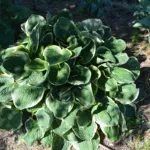
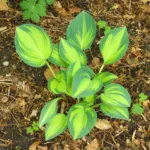
Hosta 'Kiwi Full Monty' is a distinctive deciduous perennial grown primarily for its variegated foliage. Its blue-green outer margins surround chartreuse to golden centers, often separated by a slim white line. The compact, mound-forming plant prefers partial to full shade, fertile soil, and steady moisture. Pale lavender flowers rise above the foliage in summer, while the leaves provide reliable color from spring emergence until frost.
Taxonomic classification
Hosta ‘Kiwi Full Monty’ care guide
Light and placement
Give bright filtered light, morning sun, or partial shade with protection from hot afternoon sun. East- or west-facing sheltered positions are suitable. Excessive direct sun can bleach or scorch the leaf centers and margins, while very deep shade may produce slower growth and weaker flowering. In hot climates, increase afternoon shade and maintain even soil moisture.
Watering and humidity
Water deeply when the upper inch of soil begins to dry, keeping the root zone evenly moist but never saturated. Newly planted divisions need more frequent watering until established. Increase irrigation during hot or dry summer weather and reduce it after foliage dies back in fall. Water at the soil surface to keep leaves drier and discourage disease.
Soil and growing medium
Use fertile, moisture-retentive soil that still drains freely. Loam or improved clay is suitable, and sandy soil should be enriched with organic matter. Hostas tolerate acidic, neutral, or mildly alkaline conditions; avoid persistently waterlogged ground and very dry, compacted soil.
Feeding
Top-dress with compost or apply a balanced slow-release perennial fertilizer in early spring as shoots emerge. Water after feeding and avoid heavy nitrogen applications, which can produce soft growth and reduce the quality of variegation. Do not fertilize after late summer, when the plant should be preparing for dormancy.
Growth and habit
Forms a mound-like clump from a short rhizomatous crown and emerges in spring. Growth is vigorous once established, with the foliage providing the main ornamental value. Divide crowded clumps rather than repeatedly cutting leaves, and keep the crown from being buried under thick mulch.
Planting and repotting
Plant in spring or early fall, setting the crown at soil level and spreading the roots outward. Allow about 20–24 inches between plants for a compact display, or more space if grown for a broad specimen. Water deeply during establishment and mulch lightly, keeping mulch away from the crown.
Repot container-grown plants when the clump fills the pot or roots circle densely, preferably in early spring as shoots emerge. Move into a container only modestly larger than the root mass, using a moisture-retentive but well-drained potting mix. Keep the crown at the same depth and water thoroughly after transplanting.
Propagation and pruning
Propagation
Divide established clumps in early spring or late summer. Cut through the crown with a clean knife or spade, ensuring each division has viable roots and at least one growing point. Seed is not the practical method for preserving this named cultivar because seedlings will not reliably reproduce its variegation.
Pruning
No routine pruning is needed during the growing season. Remove damaged leaves for appearance, and cut the spent foliage to ground level after a hard frost or once it collapses naturally. Disinfect tools if disease is suspected.
Overwintering
Leave the plant outdoors in the ground in suitable USDA Zones 3–9. After frost collapses the foliage, remove the dead leaves and apply a light mulch over the root zone, especially during the first winter or in exposed sites. Do not keep the crown permanently wet under heavy mulch.
Uses
Use as a foliage accent in shaded beds, woodland gardens, underplanting, groundcover groupings, and containers. Its contrasting leaf margins and centers provide season-long visual interest. It is not recommended as an edible crop in this profile because the named cultivar has documented pet-toxicity concerns and ornamental identity is the primary use.
Appearance
Leaves are broadly ovate with a cordate base, slightly rippled margins, light corrugation, and a glaucous bloom on both surfaces. The central chartreuse to golden area is separated from the broad blue-green margin by a narrow white line. The foliage emerges greener and develops stronger contrast as it matures.
Flowering
Upright scapes carry loose clusters of pale lavender, tubular to funnel-shaped flowers in summer, usually around July in much of the United States. Flowering is secondary to the foliage display, and flower production may be reduced in very deep shade or on newly divided plants.
Pollination and visitors
The pale lavender flowers are typical of insect-visited Hosta blooms, but reliable cultivar-specific records identifying the principal visitor group were not found. Pollinator attraction is therefore left unclassified rather than inferred from flower color or shape alone.
Hosta 'Kiwi Full Monty' photos
Click any photo for a larger view. Source, author and license are shown separately.
Diseases and pests
Diseases
Avoid prolonged wet foliage and poor air circulation. Watch for crown or root rots in waterlogged soil and remove affected tissue promptly. Virus symptoms such as irregular streaking, mottling, or distorted leaves are not reliably curable; isolate and discard confirmed infected plants rather than propagating them.
Pests
Slugs and snails commonly rasp holes in the leaves, especially in cool, damp gardens. Hand-pick or trap them, keep debris cleared from around the crown, and water at the soil surface. Container plants may also be vulnerable to vine weevil larvae. Deer and rabbits may browse foliage despite some reports of reduced palatability.
Related diseases and pests
Only Plant Doctor profiles whose host data indicate this plant may be affected are shown here.
 DiseaseImpatiens necrotic spot virus diseaseImpatiens necrotic spot orthotospovirus
 DiseaseSouthern blightAthelia rolfsii
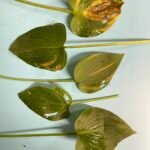 PestStrawberry foliar nematodeAphelenchoides fragariae
 Environmental stressExcess light stress
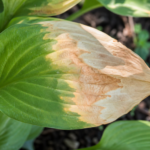 Environmental stressLeaf sunburn
 PestBlack Vine WeevilOtiorhynchus sulcatus
 Environmental stressWaterlogging
 PestPeach weevilRhynchites bacchus
Toxicity and pollen
Hosta is listed by ASPCA as toxic to dogs and cats because of saponins, with vomiting, diarrhea, and depression reported after ingestion. Evidence is generally based on the genus or commonly listed Hosta species rather than this named cultivar specifically. Prevent pets from chewing leaves, flowers, or crowns and contact a veterinarian if ingestion causes symptoms.
- Typical season
- Not specifically documented for this cultivar
- Pollination / pollen
- Flower pollen; primarily associated with insect pollination
Hosta flowers release pollen from exposed anthers, but this cultivar is generally grown as an insect-pollinated ornamental and no strong airborne-allergy profile specific to 'Kiwi Full Monty' was located. People with known pollen sensitivity should still avoid handling flowers during bloom if symptoms occur.
Native habitat
The genus Hosta is native to temperate East Asia, including Japan, Korea, China, and the Russian Far East. Cultivated hostas favor cool, sheltered woodland-like conditions with humus-rich soil, filtered light, and dependable moisture rather than exposed, drought-prone sites.
Interesting fact
Registered in 2000 as a sport of Hosta 'Striptease'. The cultivar reverses its parent's broad color arrangement, placing blue-green tissue toward the margins and brighter yellow-green tissue toward the center. Its leaves develop a glaucous bloom on both surfaces and may become more golden as they mature.
Frequently asked questions (FAQ)
The most relevant questions about this plant, with short and direct answers.
🌱Quick care
What is Hosta 'Kiwi Full Monty'?⌄
Hosta 'Kiwi Full Monty' is a clump-forming, deciduous perennial with blue-green leaves marked by chartreuse to cream centers and pale margins. It is a sport of Hosta 'Striptease' and is grown mainly for its foliage.
How big does Hosta 'Kiwi Full Monty' get?⌄
Hosta 'Kiwi Full Monty' typically grows about 18–21 inches tall and 3–4 feet wide at maturity. Its final size depends on age, moisture, soil quality, and growing conditions.
Is Hosta 'Kiwi Full Monty' easy to grow?⌄
Yes, Hosta 'Kiwi Full Monty' is generally an easy-care perennial when grown in shade or partial shade with consistently moist, well-drained soil. Protecting it from hot afternoon sun prevents leaf scorch.
🌤️Environment and placement
Does Hosta 'Kiwi Full Monty' grow in full shade?⌄
Yes, Hosta 'Kiwi Full Monty' grows in full shade, although some filtered or gentle morning light can help maintain strong growth and attractive variegation. Dense, dry shade may produce a smaller plant.
How much sun does Hosta 'Kiwi Full Monty' need?⌄
Give Hosta 'Kiwi Full Monty' partial shade to shade, preferably with morning sun and afternoon protection. Too much intense sun can bleach or scorch the leaves, especially in hot U.S. climates.
Can Hosta 'Kiwi Full Monty' tolerate afternoon sun?⌄
Hosta 'Kiwi Full Monty' is best protected from hot afternoon sun. It may tolerate a limited amount of late-day light in cool, moist conditions, but prolonged exposure can cause scorched or faded foliage.
What soil is best for Hosta 'Kiwi Full Monty'?⌄
Plant Hosta 'Kiwi Full Monty' in fertile, moisture-retentive, well-drained soil such as loam, amended clay, or amended sand. Avoid sites that remain waterlogged or dry out rapidly.
How much water does Hosta 'Kiwi Full Monty' need?⌄
Water Hosta 'Kiwi Full Monty' regularly so the soil stays evenly and consistently moist, particularly during its first growing season and during summer drought. Do not keep the crown in standing water.
What USDA zones can grow Hosta 'Kiwi Full Monty'?⌄
Hosta 'Kiwi Full Monty' is commonly listed as hardy in approximately USDA Zones 3–9. Local performance can vary with winter exposure, snow cover, soil drainage, and summer heat.
💧Care and problems
Why are the leaves of my Hosta 'Kiwi Full Monty' turning brown?⌄
Brown leaf edges or patches usually indicate heat, drought, excessive sun, wind exposure, or physical damage. Move container plants to brighter shade and keep the soil consistently moist without overwatering.
How do I prevent slug damage on Hosta 'Kiwi Full Monty'?⌄
Reduce slug habitat by removing excess debris, watering at the soil surface, and inspecting plants at night or in damp weather. Barriers, traps, or a labeled slug control product may be needed where damage is persistent.
Do deer and rabbits eat Hosta 'Kiwi Full Monty'?⌄
Yes, deer and rabbits may eat Hosta 'Kiwi Full Monty', even though some listings describe this cultivar as somewhat less palatable than others. Use fencing or a proven animal-repellent strategy where browsing is common.
Why is my Hosta 'Kiwi Full Monty' not growing well?⌄
Poor growth is commonly caused by insufficient moisture, excessive sun, root competition from trees, compacted soil, pests, or transplant stress. Improve soil moisture and shade conditions before adding fertilizer.
Should I fertilize Hosta 'Kiwi Full Monty'?⌄
Apply a balanced, slow-release fertilizer in spring if the soil is poor or growth is weak. Avoid heavy late-season fertilization, which can encourage soft growth before dormancy.
🪴Planting and repotting
When is the best time to plant Hosta 'Kiwi Full Monty'?⌄
The best planting times are spring and early fall, when temperatures are moderate and soil moisture is easier to maintain. Water newly planted divisions or nursery plants regularly until established.
How far apart should I plant Hosta 'Kiwi Full Monty'?⌄
Space Hosta 'Kiwi Full Monty' about 3–4 feet apart for individual mature clumps. For a faster massed effect, plants can be placed closer, but they will need eventual thinning or division.
Can Hosta 'Kiwi Full Monty' grow in a container?⌄
Yes, Hosta 'Kiwi Full Monty' grows well in a large container with drainage holes and moisture-retentive potting mix. Choose a container wide enough for its mature clump and protect the roots from extreme winter temperatures.
Can Hosta 'Kiwi Full Monty' grow under trees?⌄
Yes, Hosta 'Kiwi Full Monty' can grow under trees if it receives adequate shade and regular moisture. Avoid planting directly against large tree roots, which compete strongly for water and nutrients.
✂️Propagation and pruning
How do you propagate Hosta 'Kiwi Full Monty'?⌄
Propagate Hosta 'Kiwi Full Monty' by dividing the established crown. Division preserves the cultivar’s variegated characteristics, while seed may not reproduce the parent plant accurately.
When should I divide Hosta 'Kiwi Full Monty'?⌄
Divide Hosta 'Kiwi Full Monty' in early spring as shoots emerge or in late summer to early fall. Replant divisions promptly and keep them evenly moist while they reestablish.
Can I grow Hosta 'Kiwi Full Monty' from seed?⌄
You can grow hostas from seed, but seedlings of Hosta 'Kiwi Full Monty' are unlikely to be identical to the named cultivar. Use division when you want plants with the same foliage pattern.
Should I cut back Hosta 'Kiwi Full Monty' after flowering?⌄
Remove spent flower stalks after flowering if you prefer a tidier appearance, but cutting them is not required for plant health. Remove the dead foliage after frost or once it has naturally collapsed in fall.
⚠️Toxicity and safety
Is Hosta 'Kiwi Full Monty' toxic to dogs and cats?⌄
Yes, Hosta 'Kiwi Full Monty' should be treated as toxic to dogs and cats if eaten. Keep pets from chewing the leaves or flowers and contact a veterinarian or pet poison service if ingestion occurs.
Is Hosta 'Kiwi Full Monty' poisonous to people?⌄
Human toxicity for Hosta 'Kiwi Full Monty' is not well documented, so do not intentionally eat the plant. Keep foliage away from children and seek medical advice after significant ingestion or if symptoms develop.
🌸Flowering and special interest
When does Hosta 'Kiwi Full Monty' bloom?⌄
Hosta 'Kiwi Full Monty' usually blooms in summer, producing pale lavender to mauve, funnel-shaped flowers on upright scapes. Flowering time varies with climate and spring temperatures.
How tall are the flower stalks on Hosta 'Kiwi Full Monty'?⌄
The flower stalks of Hosta 'Kiwi Full Monty' commonly rise to about 2 feet above the foliage. Stalk height may vary with plant age, fertility, and growing conditions.
Should I remove the flowers from Hosta 'Kiwi Full Monty'?⌄
No, removing the flowers is optional. Leave them for ornamental value and pollinators, or cut the spent stalks after blooming to keep the clump looking neat.