 AI-generated illustration
Hosta ‘Dew Drop’ short overview
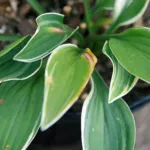
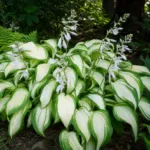
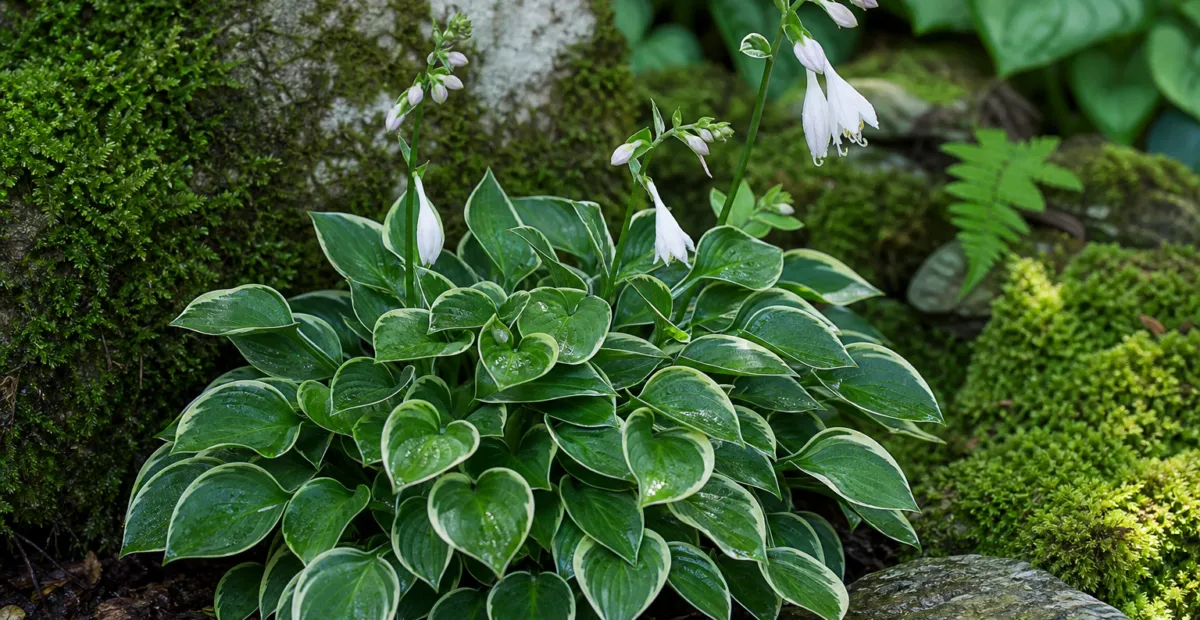
Hosta 'Dew Drop' is a very small registered hosta introduced by Walters Gardens in 1988 as a sport of 'Gold Drop'. Its compact clump carries cupped, heavily textured dark green leaves edged with a narrow creamy-white margin; new foliage may emerge chartreuse before deepening in color. White to pale lavender bell-shaped flowers rise in summer. It suits moist, well-drained shade, miniature gardens, rock gardens, and containers.
Taxonomic classification
Hosta ‘Dew Drop’ care guide
Light and placement
Give bright shade, dappled light, or gentle morning sun with protection from hot afternoon rays. An east-facing bed or filtered woodland edge is suitable. Too much direct sun can bleach or scorch the margins and cause brown leaf edges; excessively deep shade may reduce vigor and flowering.
Watering and humidity
Water deeply when the upper inch of soil begins to dry, keeping the root zone evenly moist rather than constantly saturated. Check plants under trees more often because tree roots compete for water. Reduce watering after foliage dies back, but do not allow containers to become bone dry.
Soil and growing medium
Use fertile, humus-rich soil that stays evenly moist but drains freely. A loamy mix amended with compost or leaf mold is suitable. Slightly acidic to neutral soil is appropriate; avoid compacted, waterlogged ground because crowns and roots can rot, especially in winter.
Feeding
Apply a balanced, slow-release fertilizer or a thin compost layer in early spring as shoots emerge. Avoid heavy nitrogen applications, which can produce soft foliage and encourage pest damage. Stop routine feeding by late summer so growth can mature before dormancy.
Growth and habit
This is a compact, clump-forming hosta with a moderate growth rate. It emerges from a dormant crown in spring, expands gradually, and dies back after frost. The small root system suits containers, but regular division prevents overcrowding and maintains vigor.
Planting and repotting
Plant in spring or early fall, setting the crown at soil level with roots spread outward. Allow about 8 to 12 inches between plants for a compact display, with more room if a broader clump is desired. Water consistently during establishment and mulch lightly without covering the crown.
Repot container-grown plants in early spring as shoots emerge, using a fresh, well-drained potting mix with added compost or fine bark. Move up only one pot size. Keep the crown at the same level and water thoroughly after transplanting.
Propagation and pruning
Propagation
Divide established clumps in early spring as shoots emerge or in early fall. Seed is possible but will not reliably reproduce the named cultivar. Division or tissue culture is preferred for maintaining 'Dew Drop' characteristics.
Pruning
Remove flower scapes after blooming if seed production is not wanted, or leave them until they yellow for a more natural appearance. Cut the foliage to the ground after it collapses in late fall; remove diseased leaves promptly during the growing season.
Overwintering
Leave the plant outdoors in the ground through winter in suitable USDA zones. After foliage collapses, remove debris and apply a light mulch in exposed sites. Container plants have less root insulation than in-ground plants; protect the pot in a sheltered location or overwinter it cold, not warm and actively growing.
Uses
Use as a foreground edging plant, miniature-garden specimen, shaded rock-garden accent, woodland planting, or container perennial. Its small scale and narrow white margin provide contrast among larger hostas. It is ornamental rather than a recommended edible plant, and all parts should be kept away from pets.
Appearance
The cultivar forms a tiny mound of small, cordate, cupped leaves with a heavy texture and narrow creamy-white edging. New leaves may emerge chartreuse and deepen to green by summer. Early leaves can show a drawstring-like appearance, while the short, narrow scapes carry small pale flowers.
Flowering
Flowers are carried on slender leafless scapes above the foliage in summer. Sources describe them as white, near-white, or lavender, and the cultivar may rebloom. The flowers are small, bell-shaped, and arranged in a raceme; flowering is secondary to the ornamental foliage.
Pollination and visitors
Hosta flowers are documented as attracting bees, butterflies, and hummingbirds across the genus. Exact visitor records for 'Dew Drop' are limited, so these groups are treated as characteristic hosta visitors rather than cultivar-specific observations.
Diseases and pests
Diseases
Watch for crown and root rot in poorly drained soil, foliar leaf spots, anthracnose, and Hosta Virus X. Buy clean stock, avoid overhead watering, remove diseased foliage, improve drainage, and destroy plants confirmed with viral infection rather than composting them.
Pests
Slugs and snails commonly rasp hosta leaves; deer and rabbits may browse the foliage, while voles can damage roots. Use barriers, hand-picking, habitat management, or labeled controls as appropriate. Avoid persistently wet crowns, which increase disease risk.
Related diseases and pests
Only Plant Doctor profiles whose host data indicate this plant may be affected are shown here.
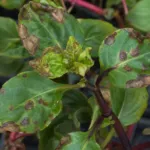 DiseaseImpatiens necrotic spot virus diseaseImpatiens necrotic spot orthotospovirus
 DiseaseSouthern blightAthelia rolfsii
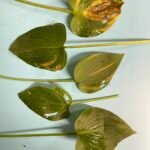 PestStrawberry foliar nematodeAphelenchoides fragariae
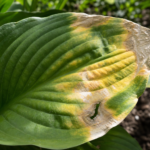 Environmental stressExcess light stress
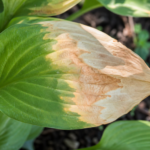 Environmental stressLeaf sunburn
 DiseaseAnthracnoseColletotrichum gloeosporioides
 DiseaseAlternaria leaf spot and fruit rotAlternaria alternata
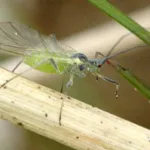 PestGreen Peach AphidMyzus persicae
Toxicity and pollen
Hosta foliage, flowers, roots, and other tissues contain saponins and are listed as toxic to dogs and cats; ingestion can cause vomiting, diarrhea, and depression. Keep pets from chewing the plant and seek veterinary advice after ingestion. Human toxicity data for this exact cultivar are limited, so avoid eating it and wash hands after extensive handling.
- Typical season
- Summer flowering season
- Pollination / pollen
- Insect-carried pollen; limited airborne dispersal
Hosta pollen is primarily released from exposed anthers during summer flowering and is generally associated with a low airborne-allergy concern compared with strongly wind-pollinated plants. Individual sensitivity is still possible, especially during close contact with blooming plants.
Native habitat
Hostas are woodland-edge perennials native broadly to East Asia, where they grow in shaded, seasonally moist soils rich in organic matter. In cultivation, 'Dew Drop' performs best where summer heat is moderated and the soil drains well without becoming dry.
Interesting fact
Registered in 1988 by Walters Gardens as a sport of 'Gold Drop'. The cultivar belongs to the American Hosta Society's very small classification. Its first leaves may show a drawstring-like effect, and established plants may rebloom.
Frequently asked questions (FAQ)
The most relevant questions about this plant, with short and direct answers.
🌱Quick care
What is Hosta 'Dew Drop' like?⌄
Hosta 'Dew Drop' is a small, vigorous hosta with dark green, heavily textured leaves edged in narrow white. It is a miniature-to-small cultivar suited to containers, rock gardens, edging, and shaded borders.
How big does Hosta 'Dew Drop' get?⌄
Hosta 'Dew Drop' typically reaches about 4–6 inches tall and 6–8 inches wide, although some references list it closer to 12 inches tall when flowering. Its flower scapes can rise to about 14 inches.
Is Hosta 'Dew Drop' a miniature hosta?⌄
Yes, Hosta 'Dew Drop' is generally treated as a miniature or very small hosta. Its compact size makes it especially useful for troughs, small containers, rock gardens, and front-of-border planting.
🌤️Environment and placement
How much light does Hosta 'Dew Drop' need?⌄
Grow Hosta 'Dew Drop' in partial shade to shade, with bright filtered light or gentle morning sun. Protect it from intense afternoon sun, which can scorch the narrow white margins and dry the soil quickly.
Can Hosta 'Dew Drop' grow in full shade?⌄
Yes, Hosta 'Dew Drop' can grow in full shade if the site still has bright ambient light and evenly moist, well-drained soil. Very dense shade may reduce vigor and flowering.
Can Hosta 'Dew Drop' tolerate morning sun?⌄
Yes, it can usually tolerate gentle morning sun, especially where the soil remains consistently moist. Avoid prolonged hot afternoon exposure, particularly in warmer USDA Zones.
What USDA hardiness zones are suitable for Hosta 'Dew Drop'?⌄
Hosta 'Dew Drop' is generally reported as hardy from USDA Zones 3 or 4 through Zone 9. Exact performance depends on winter protection, summer heat, moisture, and the source’s zone rating.
Where should I plant Hosta 'Dew Drop' outdoors?⌄
Plant it in a sheltered, shady location with fertile, humus-rich, evenly moist but well-drained soil. Good sites include shaded borders, woodland gardens, rock gardens, troughs, and the front of a hosta collection.
💧Care and problems
How often should I water Hosta 'Dew Drop'?⌄
Water Hosta 'Dew Drop' whenever the soil surface begins to dry, keeping the root zone evenly moist but not soggy. Small plants and containers may need more frequent watering during hot, dry weather.
What type of soil does Hosta 'Dew Drop' need?⌄
Use fertile, humus-rich loam that holds moisture while draining excess water. Improve poor soil with compost or leaf mold, but avoid sites that remain waterlogged after rain.
Should I mulch Hosta 'Dew Drop'?⌄
Yes, apply a thin layer of organic mulch to conserve moisture and moderate soil temperature. Keep mulch away from the crown to reduce the risk of rot and pest shelter.
Why are the leaves of Hosta 'Dew Drop' turning yellow?⌄
Yellow leaves may result from normal seasonal decline, drought stress, excessive sun, overwatering, or poorly drained soil. Check moisture and drainage first, and remove naturally declining foliage after the plant enters dormancy.
How do I protect Hosta 'Dew Drop' from slugs and snails?⌄
Inspect the plant regularly and use cultural controls such as removing hiding places, watering at the soil line, and hand-picking pests. Slug and snail damage is especially noticeable on the small leaves of this compact hosta.
Does Hosta 'Dew Drop' need fertilizer?⌄
Hosta 'Dew Drop' usually needs only moderate feeding in fertile soil. Apply a balanced slow-release fertilizer in spring if growth is weak, and avoid excessive nitrogen, which can produce soft foliage and fewer flowers.
🪴Planting and repotting
When is the best time to plant Hosta 'Dew Drop'?⌄
Plant Hosta 'Dew Drop' in spring or early fall when temperatures are moderate and soil moisture is reliable. Planting during active summer heat increases transplant stress and watering requirements.
Can Hosta 'Dew Drop' grow in a container?⌄
Yes, Hosta 'Dew Drop' is well suited to containers, troughs, and other miniature gardens. Use a container with drainage holes and a moisture-retentive but well-drained potting mix, and monitor it closely during hot weather.
How should I plant Hosta 'Dew Drop' in a pot?⌄
Set the crown at the same depth it was growing in its nursery container, then water thoroughly. Choose a pot only modestly larger than the root system and provide bright shade rather than hot direct sun.
Does Hosta 'Dew Drop' die back in winter?⌄
Yes, Hosta 'Dew Drop' is a deciduous perennial that normally goes dormant in winter. Allow the foliage to yellow naturally, then remove it after frost or once it has collapsed.
✂️Propagation and pruning
How do I propagate Hosta 'Dew Drop'?⌄
Propagate Hosta 'Dew Drop' primarily by division in spring as new shoots emerge or in early fall. Because it is a named cultivar, division preserves its characteristic foliage better than growing from seed.
Can Hosta 'Dew Drop' be grown from seed?⌄
It can produce seed, but seedlings may not resemble the parent because Hosta 'Dew Drop' is a cultivar. Divide the plant or obtain tissue-cultured stock when an exact copy is needed.
When should I divide Hosta 'Dew Drop'?⌄
Divide it in early spring or early fall, avoiding hot, dry periods. Lift the clump carefully, separate sections with healthy roots and shoots, and replant them promptly at the original depth.
Should I cut off the flowers of Hosta 'Dew Drop'?⌄
Remove flower scapes after blooming if you want to emphasize the compact foliage or tidy the plant. Leaving them in place does not usually harm the plant, and the flowers can provide seasonal interest.
⚠️Toxicity and safety
Is Hosta 'Dew Drop' toxic to dogs and cats?⌄
Yes, Hosta 'Dew Drop' is toxic to dogs and cats if eaten. Keep pets away from the plant and contact a veterinarian promptly if a pet chews or consumes any part of it.
Can Hosta 'Dew Drop' be grown safely around children?⌄
Because Hosta 'Dew Drop' is not considered edible and plant material should not be swallowed, grow it where young children will not chew the leaves or flowers. Teach children not to eat ornamental plants.
Is Hosta 'Dew Drop' deer resistant?⌄
No, Hosta 'Dew Drop' should not be considered reliably deer resistant. Deer may browse hostas, so use fencing, repellents, or other local wildlife-management measures where browsing pressure is high.
🌸Flowering and special interest
When does Hosta 'Dew Drop' bloom?⌄
Hosta 'Dew Drop' usually blooms in early to mid-summer, with some records placing flowering from late June into July. Flowering time varies with climate and growing conditions.
What color are the flowers on Hosta 'Dew Drop'?⌄
The flowers are commonly described as lavender, soft lavender, or near-white depending on the reference and growing conditions. They appear on upright scapes that rise above the compact foliage.
Does Hosta 'Dew Drop' rebloom?⌄
Hosta 'Dew Drop' may rebloom under favorable conditions, although this is not guaranteed. Consistent moisture, adequate nutrition, and removing spent scapes can support continued seasonal performance.