AI-generated illustration
Hosta ‘Designer Genes’ short overview
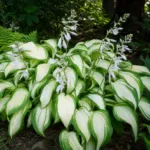
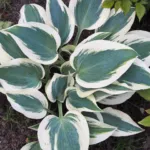
Hosta 'Designer Genes' is a compact shade perennial with bright yellow spring foliage that gradually matures to chartreuse green, set off by striking red petioles. Pale lavender, tubular flowers rise on red scapes in summer. Grow it in evenly moist, organically rich, well-drained soil in partial to full shade. Its modest size suits woodland borders, shaded beds, and containers, while division provides a straightforward way to propagate established clumps.
Taxonomic classification
Hosta ‘Designer Genes’ care guide
Light and placement
Grow in partial shade to full shade, ideally with morning sun, dappled light, or bright north- and east-facing exposure. Some light improves the yellow foliage, but hot afternoon sun can scorch leaves and fade color. Too much shade may produce greener, less vigorous foliage; too little light can cause bleached or scorched leaves.
Watering and humidity
Water deeply when the upper soil begins to dry, keeping the root zone evenly moist rather than constantly saturated. Water at the soil line to keep foliage dry and reduce disease risk. Increase frequency during hot, dry weather and reduce it during cool, naturally wet periods, while never allowing established plants to remain parched for long.
Soil and growing medium
Use fertile, organically rich soil that holds moisture without becoming waterlogged. Loam amended with compost is suitable, and reliable drainage helps prevent crown problems. Hostas generally tolerate mildly acidic to neutral garden soils; avoid allowing the root zone to dry completely.
Feeding
Apply compost as a light spring mulch or use a balanced slow-release fertilizer as growth begins. Feed only when plants are actively growing and soil moisture is adequate. Avoid heavy late-season nitrogen, which can encourage soft growth and does not improve winter survival.
Growth and habit
This cultivar forms a compact, rounded to spreading clump from a rhizomatous crown. Leaves emerge early in spring and the plant becomes more visually green as the season advances. Divide crowded clumps to maintain vigor and preserve a tidy outline.
Planting and repotting
Plant in spring or early fall. Set the crown so the growing eyes are just below soil level, then water thoroughly. Space plants about 12–18 inches apart for a connected display while allowing airflow. Mulch lightly with compost or shredded leaves, keeping mulch away from the crown.
Repot container-grown plants in spring as new shoots begin to emerge, or divide and replant when the container becomes crowded. Use a moisture-retentive but well-drained potting mix and a container with drainage holes. Replant the crown at the same depth, with the eyes just below the surface.
Propagation and pruning
Propagation
Divide established clumps in early spring before the leaves fully unfurl or in early fall. Separate crown sections with viable eyes and roots, then replant promptly at the original depth. Seed is not recommended for maintaining cultivar traits.
Pruning
No routine pruning is required during the growing season. Remove spent flower scapes after flowering if seed production is not desired, and cut the deciduous foliage to the ground after frost or once it has collapsed. Remove damaged leaves as needed.
Overwintering
Plants are fully dormant and generally overwinter outdoors in USDA Zones 3–8. After frost collapses the foliage, cut it back and apply a light mulch in colder regions. Container plants are more exposed to freezing and may need insulation or placement in an unheated sheltered location.
Uses
Primarily an ornamental foliage plant for shaded borders, woodland gardens, containers, and underplanting. Its flowers can be used as short-lived cut material. Do not treat the plant as edible or medicinal, and prevent pets from chewing it.
Appearance
The plant forms a compact clump of broadly ovate to heart-shaped leaves. New foliage is bright yellow and gradually mellows to chartreuse green. Strong red petioles provide vivid contrast, while red scapes carry pale lavender tubular flowers above the foliage.
Flowering
Pale lavender, tubular flowers are produced in loose terminal racemes on upright red scapes in summer, generally from July into August in much of the United States. The flowers rise well above the foliage and are showy, but the cultivar is grown primarily for its changing leaf color and red stems.
Pollination and visitors
The tubular flowers are visited by hummingbirds and insect visitors, including bees and bumblebees. Available cultivar references document attraction but do not establish a single species-level pollinator.
Diseases and pests
Diseases
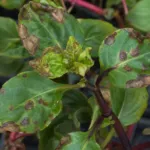
Watch for crown rot, leaf spot, and virus diseases including Hosta Virus X. Buy clean stock, avoid overhead watering, improve drainage, and remove severely diseased plants rather than propagating from them. Disinfect tools between divisions and discard infected tissue.
Pests
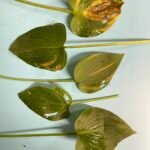
Slugs and snails commonly chew irregular holes in the leaves. Deer and rabbits may browse the foliage, while foliar nematodes can cause interveinal browning. Use barriers, hand-picking, habitat management, or labeled controls proportionate to the problem.
Related diseases and pests
Only Plant Doctor profiles whose host data indicate this plant may be affected are shown here.
 PestStrawberry foliar nematodeAphelenchoides fragariae
 DiseaseImpatiens necrotic spot virus diseaseImpatiens necrotic spot orthotospovirus
 DiseaseSouthern blightAthelia rolfsii
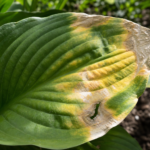 Environmental stressExcess light stress
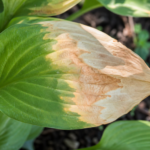 Environmental stressLeaf sunburn
 PestBrown Garden SnailCornu aspersum (Müller, 1774)
 DiseaseAlternaria leaf spot and fruit rotAlternaria alternata
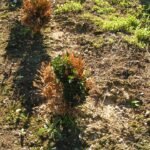 DiseasePhytophthora root and crown rotPhytophthora nicotianae
Toxicity and pollen
Hostas contain saponins and are recognized as toxic to dogs, cats, and horses if eaten, with gastrointestinal upset and other signs possible. Keep pets from consuming leaves, flowers, or roots; routine garden contact is not generally a poisoning concern.
- Typical season
- Summer flowering period
- Pollination / pollen
- Insect-dispersed pollen
Hosta flowers are insect-pollinated, so pollen is not typically released in large airborne clouds. Exposure is expected to be low, but sensitive individuals can still react to pollen or plant contact; avoid assuming zero allergy risk.
Native habitat
The genus Hosta is associated with open woodlands, woodland margins, and glades of East Asia. In cultivation, this cultivar favors sheltered, moisture-retentive conditions resembling a cool woodland floor rather than hot, exposed, drought-prone sites.
Interesting fact
The cultivar was developed by Arthur Wrede and registered in 2005. Its foliage emerges bright yellow before maturing toward chartreuse green. The red petioles remain a major identification feature. It was raised from Hosta 'Miss Susie' as the seed parent.
Frequently asked questions (FAQ)
The most relevant questions about this plant, with short and direct answers.
🌱Quick care
What is Hosta 'Designer Genes'?⌄
Hosta 'Designer Genes' is a small, clump-forming herbaceous perennial grown mainly for its bright yellow-to-chartreuse foliage and red petioles. It typically reaches about 9–12 inches tall and 18–24 inches wide.
How big does Hosta 'Designer Genes' get?⌄
Hosta 'Designer Genes' usually grows 9–12 inches tall and spreads 18–24 inches wide. Its final size depends on age, moisture, soil quality, and growing conditions.
What USDA hardiness zones are best for Hosta 'Designer Genes'?⌄
Hosta 'Designer Genes' is generally hardy in USDA Zones 3–8. In warmer areas, reliable shade and consistent soil moisture are especially important.
Is Hosta 'Designer Genes' easy to grow?⌄
Yes, Hosta 'Designer Genes' is generally easy to grow when planted in partial shade to full shade with rich, evenly moist, well-drained soil. It is a low-maintenance perennial once established.
🌤️Environment and placement
Does Hosta 'Designer Genes' need sun or shade?⌄
Hosta 'Designer Genes' grows best in partial shade to shade, especially with morning sun or filtered light. Strong afternoon sun can scorch its yellow foliage, particularly when the soil is dry.
Can Hosta 'Designer Genes' grow in full shade?⌄
Yes, Hosta 'Designer Genes' can grow in full shade, although its growth may be less vigorous and its foliage color may be less intense. Bright filtered shade is usually the best compromise.
How much water does Hosta 'Designer Genes' need?⌄
Hosta 'Designer Genes' needs medium, consistent moisture and should not be allowed to dry out for extended periods. Water the soil beneath the leaves during dry spells, preferably in the morning.
What soil is best for Hosta 'Designer Genes'?⌄
The best soil for Hosta 'Designer Genes' is rich, organically amended, moist, and well-drained loam. Avoid poorly drained sites where water remains around the crown.
Can Hosta 'Designer Genes' grow under trees?⌄
Yes, Hosta 'Designer Genes' can grow beneath trees if it receives sufficient filtered light and regular moisture. Competing tree roots may require extra watering and added organic matter.
Is Hosta 'Designer Genes' suitable for containers?⌄
Yes, Hosta 'Designer Genes' is suitable for containers because of its compact size. Use a pot with drainage holes and keep the potting mix evenly moist without leaving the plant in standing water.
💧Care and problems
Why are the leaves of Hosta 'Designer Genes' turning green?⌄
Hosta 'Designer Genes' naturally changes from bright yellow in spring to chartreuse green as the season progresses. Excess shade, aging foliage, or stressful growing conditions can also reduce the intensity of its yellow color.
Why are the leaves of Hosta 'Designer Genes' turning brown?⌄
Brown leaf edges on Hosta 'Designer Genes' are commonly caused by drought, excessive sun, wind, or heat stress. Keep the soil evenly moist and provide protection from hot afternoon exposure.
How do I protect Hosta 'Designer Genes' from slugs and snails?⌄
Reduce slug and snail damage by removing hiding places, watering at soil level, and checking plants after dark or during damp weather. Barriers or labeled slug controls can be used when damage is persistent.
Do deer and rabbits eat Hosta 'Designer Genes'?⌄
Yes, deer and rabbits may eat Hosta 'Designer Genes', especially young spring foliage. Use fencing, repellents, or another physical protection method where browsing pressure is high.
What common problems affect Hosta 'Designer Genes'?⌄
Common problems include slug and snail feeding, deer or rabbit browsing, leaf spot, crown rot, and occasional virus symptoms. Good drainage, careful watering, sanitation, and purchasing from reputable growers help reduce risk.
Should Hosta 'Designer Genes' be mulched?⌄
Yes, apply a thin layer of organic mulch around Hosta 'Designer Genes' to conserve moisture and moderate soil temperature. Keep mulch away from the crown to reduce the risk of rot.
🪴Planting and repotting
When is the best time to plant Hosta 'Designer Genes'?⌄
The best planting times are spring and early fall, when temperatures are moderate and soil moisture is easier to maintain. Water thoroughly after planting and monitor the plant closely during its first growing season.
How far apart should Hosta 'Designer Genes' be planted?⌄
Space Hosta 'Designer Genes' about 18–24 inches apart, measured from the centers of the plants. This allows room for its mature spread while creating a connected planting over time.
Can Hosta 'Designer Genes' be grown in a pot indoors?⌄
Hosta 'Designer Genes' is primarily an outdoor perennial and is not well suited to permanent indoor culture. It requires seasonal outdoor conditions, including a winter dormancy period, to grow normally.
✂️Propagation and pruning
How do you propagate Hosta 'Designer Genes'?⌄
Hosta 'Designer Genes' is most reliably propagated by division. Divide established clumps in early spring before the leaves fully unfurl or in late summer, ensuring each division has roots and at least one growing point.
Can Hosta 'Designer Genes' be grown from seed?⌄
Hosta 'Designer Genes' can produce seeds, but seedlings usually will not come true to the named cultivar. Division is preferred when you want new plants that retain the parent’s foliage color and form.
When should Hosta 'Designer Genes' be divided?⌄
Divide Hosta 'Designer Genes' in early spring before leaf unfurling or in late summer after the main flush of growth. Replant divisions promptly and keep them evenly moist while they establish.
Should Hosta 'Designer Genes' be cut back in fall?⌄
Cut back Hosta 'Designer Genes' after frost has killed the foliage or when it becomes untidy. Removing dead leaves helps keep the planting clean, but routine pruning during the growing season is unnecessary.
⚠️Toxicity and safety
Is Hosta 'Designer Genes' toxic to dogs and cats?⌄
Yes, Hosta 'Designer Genes' should be considered toxic if eaten by dogs, cats, or horses because hostas contain saponins. Ingestion may cause vomiting, diarrhea, or depression, so contact a veterinarian if a pet eats the plant.
Is Hosta 'Designer Genes' safe for children to touch?⌄
Touching Hosta 'Designer Genes' is not generally considered a problem, but the plant should not be eaten. Keep it away from children who may chew ornamental plants, and seek medical advice if ingestion occurs.
🌸Flowering and special interest
When does Hosta 'Designer Genes' bloom?⌄
Hosta 'Designer Genes' usually blooms from July into August. Its tubular lavender flowers appear on tall red flower scapes that can reach about 2 feet.
What color are the flowers on Hosta 'Designer Genes'?⌄
The flowers of Hosta 'Designer Genes' are lavender and tubular, with subtle striping reported on the blooms. They rise above the compact foliage on red scapes.
Should I remove the flowers from Hosta 'Designer Genes'?⌄
No, removing the flowers is optional rather than necessary. Leave them if you enjoy the lavender display or want to support visiting hummingbirds; remove spent scapes after flowering for a tidier appearance.