 Source:
Hosta ‘Blue Ivory’ short overview
Hosta 'Blue Ivory' is a slow-maturing, medium-sized perennial grown mainly for its thick blue-green leaves edged with broad ivory-white margins. The compact clump performs best in partial to full shade, where consistent moisture helps preserve strong foliage and steady growth. Lavender flowers rise above the leaves in midsummer. Use this hardy hosta in woodland borders, shaded beds, foundation plantings, or containers, while keeping it away from pets that may chew the foliage.
Taxonomic classification
Hosta ‘Blue Ivory’ care guide
Light and placement
Give bright filtered light, partial shade, or full shade, ideally with morning sun or dappled light and protection from hot afternoon exposure. East- and north-facing locations are reliable; west-facing sites require strong shade. Too much sun can bleach or scorch the ivory margins, while excessively dark conditions may reduce vigor and flowering.
Watering and humidity
Water deeply when the upper inch of soil begins to dry, directing the stream beneath the leaves rather than over the crown. Keep the root zone evenly moist through spring and summer, increasing attention during heat and drought. Mature plants tolerate brief dryness better than young divisions, but prolonged drying reduces leaf quality.
Soil and growing medium
Plant in fertile, moisture-retentive soil with good drainage. Loam enriched with compost is ideal. The cultivar tolerates clay, sand, and a broad pH range, but waterlogged ground can encourage crown and root problems. A 2–3 inch organic mulch layer helps moderate soil temperature and moisture without touching the crown.
Feeding
In spring, top-dress with compost or apply a balanced slow-release perennial fertilizer according to the product label. Avoid heavy nitrogen feeding, which can produce soft growth and reduce color quality. Do not fertilize drought-stressed, newly divided, or dormant plants; water first and stop routine feeding by late summer.
Growth and habit
This cultivar forms a symmetrical, clumping mound and expands gradually from a basal crown. It is noted for slow maturity, so allow several growing seasons before judging its final presence. Consistent moisture supports larger, cleaner foliage, while division is best reserved for genuine overcrowding or propagation.
Planting and repotting
Plant in spring or early fall, setting the crown at soil level rather than burying it deeply. Spread the roots outward over prepared soil, water thoroughly, and mulch lightly. Allow about 24–36 inches between plants for a full mature clump, with closer spacing only for a temporary mass planting.
Repot container plants in early spring as new shoots emerge, moving them into fresh, well-drained potting soil and a container only modestly larger than the root mass. Divide and refresh overcrowded plants when growth becomes congested. Ensure the pot has generous drainage holes and protect containers from repeated freeze-thaw exposure.
Propagation and pruning
Propagation
Propagate by division in early spring before leaves fully unfurl or in early fall. Separate crowns with a sharp, clean knife, ensuring each division has viable roots and shoots. Tissue culture is used commercially, but garden division is the practical home method. Seed is not a reliable way to reproduce the cultivar true to type.
Pruning
Cut back frost-killed foliage after it collapses in late fall or leave it until spring for winter structure. Remove damaged leaves during the growing season and cut flower scapes after bloom if preferred. Avoid cutting healthy foliage prematurely because leaves continue to replenish the crown.
Overwintering
Leave the plant outdoors in the ground in its hardiness range. After foliage collapses, remove or leave it until spring, then clear debris before new shoots emerge. Container specimens need extra root protection because roots experience colder, faster temperature changes than plants in the ground.
Uses
Use as a foliage specimen, repeated mass planting, shaded border plant, woodland underplanting, foundation accent, or container perennial. Its blue-green and ivory variegation contrasts well with ferns, heucheras, astilbes, and dark-leaved shade plants. Do not treat it as edible for people or pets because hostas are documented as toxic to dogs and cats.
Appearance
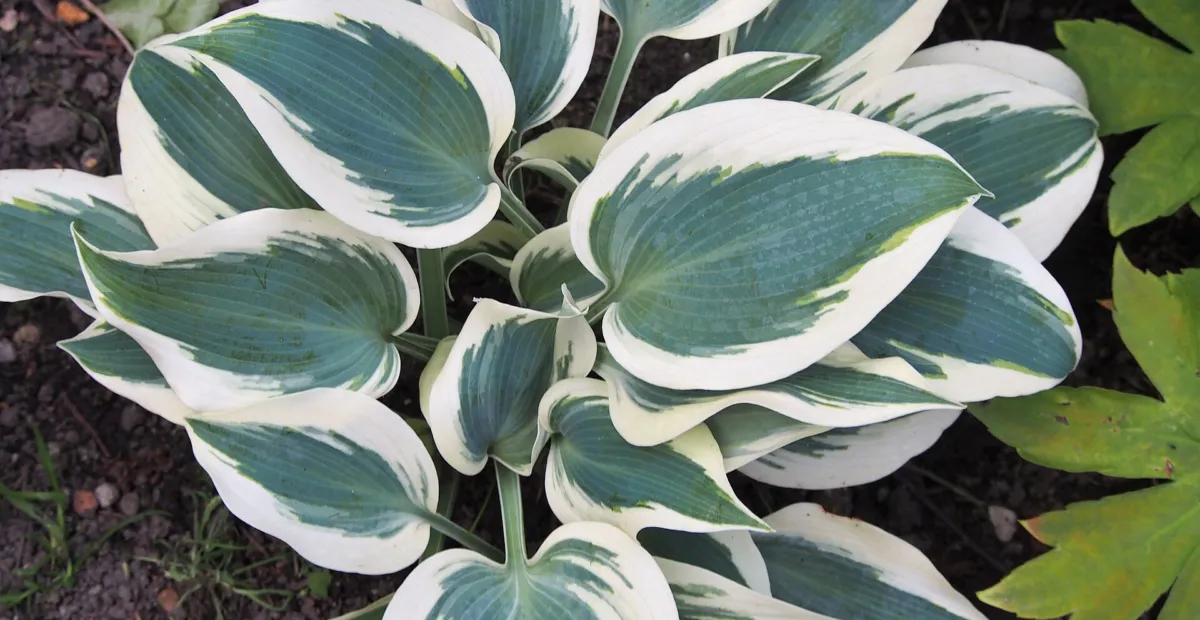
Leaves are thick, heart-shaped to broadly ovate, and blue-green to medium blue-green at the center, with a notably wide creamy ivory margin that often becomes whiter in warmer weather. The leaves form an arching, symmetrical mound, and the bluish bloom on the surface contributes to the cultivar’s cool-toned appearance.
Flowering
Upright scapes rise above the foliage in midsummer and carry loose clusters of pendulous, bell-shaped lavender flowers. Flowering is ornamental but secondary to the distinctive leaves. Remove spent scapes after flowering if seed production is not desired; leaving them in place does not harm the plant.
Pollination and visitors
The lavender flowers can provide nectar for visiting hummingbirds and other flower visitors, but strong cultivar-specific pollinator studies were not located. The low attraction rating reflects limited direct documentation rather than evidence that the flowers are unused.
Hosta 'Blue Ivory' photos
Click any photo for a larger view. Source, author and license are shown separately.
Diseases and pests
Diseases
Watch for crown rot, leaf spots, foliar nematodes, and viral diseases such as Hosta Virus X. Use clean planting stock, avoid wet crowns, improve drainage, and remove symptomatic plants showing unusual mosaic or streaking rather than composting them. Water at the soil surface to keep foliage drier.
Pests
Slugs and snails may chew holes in the leaves, while deer and rabbits can browse the foliage. Reduce hiding places, keep mulch away from the crown, hand-pick pests, and use barriers or labeled controls where needed. Container plants may also encounter vine weevil. Thick blue foliage offers some resistance but does not eliminate damage.
Related diseases and pests
Only Plant Doctor profiles whose host data indicate this plant may be affected are shown here.
 DiseaseImpatiens necrotic spot virus diseaseImpatiens necrotic spot orthotospovirus
 DiseaseSouthern blightAthelia rolfsii
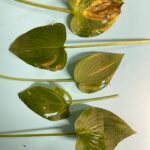 PestStrawberry foliar nematodeAphelenchoides fragariae
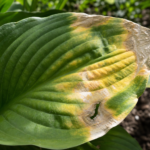 Environmental stressExcess light stress
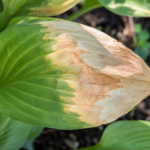 Environmental stressLeaf sunburn
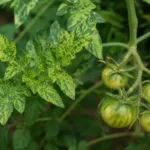 DiseaseTomato mosaic virusTobamovirus tomatotessellati
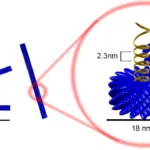 DiseaseTobacco mosaic virusTobamovirus tabaci
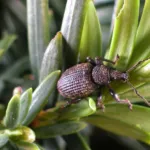 PestBlack Vine WeevilOtiorhynchus sulcatus
Toxicity and pollen
Hostas contain saponins and are listed by the ASPCA as toxic to dogs and cats. Ingestion may cause vomiting, diarrhea, or depression; severity depends on the amount consumed. Prevent chewing, especially of leaves, flowers, and crown tissue, and contact a veterinarian or poison-control service if a pet eats the plant.
- Typical season
- July–August
- Pollination / pollen
- Flower pollen, primarily animal-visited
Hosta flowers release pollen from exposed anthers, but the plant is generally insect- or bird-visited rather than a major wind-pollinated allergen source. No cultivar-specific airborne-allergy studies were located, so the pollen concern is rated low rather than absent.
Native habitat
The cultivar is not a wild species and has no native habitat of its own. Its Hosta background reflects herbaceous woodland plants adapted to cool, seasonally moist soils beneath deciduous canopy. In gardens, it performs best in sheltered shade with organic matter and protection from drying winds.
Interesting fact
‘Blue Ivory’ originated as a natural sport of ‘Halcyon’. Its broad margin emerges cream and generally lightens toward white as the season progresses. The thick foliage is considered more slug-resistant than many thin-leaved hostas, although no hosta is completely slug-proof.
Frequently asked questions (FAQ)
The most relevant questions about this plant, with short and direct answers.
🌱Quick care
Is Hosta 'Blue Ivory' easy to grow?⌄
Yes, Hosta 'Blue Ivory' is generally easy to grow when planted in fertile, consistently moist, well-drained soil in partial to full shade. Protecting it from harsh afternoon sun helps preserve its blue foliage.
How big does Hosta 'Blue Ivory' get?⌄
Hosta 'Blue Ivory' typically grows about 14–16 inches tall and 28–30 inches wide at maturity. Give it enough room to form a broad, rounded clump rather than planting it tightly against other perennials. ([bowoodfarms.com](https://bowoodfarms.com/products/hosta-blue-ivory-g01?utm_source=openai))
Is Hosta 'Blue Ivory' a miniature hosta?⌄
No, it is better treated as a small to medium-sized hosta rather than a true miniature. Its mature spread can approach 30 inches, even though the foliage is relatively compact. ([bowoodfarms.com](https://bowoodfarms.com/products/hosta-blue-ivory-g01?utm_source=openai))
🌤️Environment and placement
What light does Hosta 'Blue Ivory' need?⌄
Plant Hosta 'Blue Ivory' in partial shade to full shade. Bright morning light or filtered light is usually safer than strong afternoon sun, which can scorch leaves and reduce the blue coloration.
Can Hosta 'Blue Ivory' grow in full sun?⌄
Hosta 'Blue Ivory' is not usually a good full-sun plant, especially in hot summer climates. It may tolerate more morning sun in cool, moist conditions, but afternoon exposure increases the risk of leaf scorch.
Where should I plant Hosta 'Blue Ivory' in the garden?⌄
Place it in a shaded border, woodland-style bed, foundation planting, or sheltered container where the soil stays evenly moist. Avoid locations with reflected heat, drying wind, or standing water.
What USDA hardiness zones are suitable for Hosta 'Blue Ivory'?⌄
Hosta 'Blue Ivory' is a frost-hardy perennial suited to many temperate U.S. gardens, but the exact zone range should be confirmed from the plant tag or nursery source. Winter dormancy and dieback are normal in colder areas.
Can Hosta 'Blue Ivory' grow in containers?⌄
Yes, Hosta 'Blue Ivory' can grow in a container if the pot has drainage holes and is large enough for its mature width. Use a moisture-retentive potting mix, water regularly, and protect the container from extreme winter exposure.
💧Care and problems
How often should I water Hosta 'Blue Ivory'?⌄
Water Hosta 'Blue Ivory' whenever the top inch of soil begins to dry, providing moderate and even moisture. During hot or dry weather, container plants and newly planted divisions may need watering more often.
What soil is best for Hosta 'Blue Ivory'?⌄
Use fertile, humus-rich, moist but well-drained soil for Hosta 'Blue Ivory'. Improve poor soil with compost, but do not plant it where water remains stagnant after rain.
Why are the leaves of my Hosta 'Blue Ivory' turning brown?⌄
Brown leaf edges usually indicate drought stress, excessive sun, heat, wind, or physical damage from slugs and hail. Check soil moisture first, then provide more shade and inspect the foliage for pests.
How do I protect Hosta 'Blue Ivory' from slugs?⌄
Reduce slug habitat by removing dense debris, watering at the soil line, and keeping the planting area open around the crown. Hand-picking, traps, or a labeled slug control product can be used when damage is persistent.
Does Hosta 'Blue Ivory' need fertilizer?⌄
Hosta 'Blue Ivory' benefits from a spring application of balanced, slow-release fertilizer when new shoots emerge. Avoid excessive nitrogen, which can produce soft growth and may reduce overall plant quality.
Should I mulch Hosta 'Blue Ivory'?⌄
Yes, apply a 2–3-inch layer of organic mulch to conserve moisture and moderate soil temperature. Keep mulch a few inches away from the crown to reduce the risk of rot.
🪴Planting and repotting
When is the best time to plant Hosta 'Blue Ivory'?⌄
Plant Hosta 'Blue Ivory' in spring or early fall when temperatures are moderate and soil moisture is reliable. Water thoroughly after planting and continue monitoring it until the root system is established.
How deep should I plant Hosta 'Blue Ivory'?⌄
Plant it with the crown at soil level, keeping the eyes and emerging shoots just at or slightly above the surrounding soil. Planting the crown too deeply can encourage rot and delayed growth.
How far apart should I plant Hosta 'Blue Ivory'?⌄
Space Hosta 'Blue Ivory' about 24–30 inches apart, depending on whether you want the plants to touch at maturity. Use the wider spacing for better air circulation and a more defined clump.
✂️Propagation and pruning
How do I divide Hosta 'Blue Ivory'?⌄
Divide Hosta 'Blue Ivory' in early spring as shoots emerge or in early fall. Dig up the clump, separate sections containing healthy roots and at least one or two growing points, and replant them promptly.
Can Hosta 'Blue Ivory' be grown from seed?⌄
It can produce seed, but seedlings will not reliably reproduce the named cultivar’s foliage pattern. Division or professionally produced tissue-cultured plants are the dependable ways to preserve 'Blue Ivory' characteristics.
Should I cut back Hosta 'Blue Ivory' in fall?⌄
Remove spent flower stalks and collapsed leaves in fall or after frost has damaged the foliage. Do not cut healthy leaves early merely for appearance, because they continue supporting the crown while the plant prepares for dormancy.
⚠️Toxicity and safety
Is Hosta 'Blue Ivory' toxic to dogs?⌄
Yes, Hosta 'Blue Ivory' is toxic to dogs if eaten and may cause gastrointestinal upset, including vomiting or diarrhea. Keep pets away from the plant and contact a veterinarian if ingestion is suspected.
Is Hosta 'Blue Ivory' toxic to cats?⌄
Yes, Hosta 'Blue Ivory' is toxic to cats if eaten. Prevent chewing and seek veterinary advice promptly if a cat consumes the foliage or shows signs of illness.
Is Hosta 'Blue Ivory' poisonous to people?⌄
Hostas are not generally considered highly poisonous to people, but eating the plant may cause stomach upset, and individual sensitivity is possible. Keep the plant away from children and do not treat it as an edible garden crop.
🌸Flowering and special interest
Does Hosta 'Blue Ivory' flower?⌄
Yes, Hosta 'Blue Ivory' produces flower scapes above the foliage, typically during the summer. The flowers are a secondary feature compared with the plant’s blue-green and cream-variegated leaves.
Should I remove the flowers from Hosta 'Blue Ivory'?⌄
Remove the flower stalks after blooming if you prefer a tidier appearance or want the foliage to remain the main focus. Leaving them in place does not normally harm an established plant.
Why is my Hosta 'Blue Ivory' not flowering?⌄
A young plant may need several seasons to establish before flowering well. Excessive shade, drought stress, transplant shock, or removal of developing scapes can also reduce flowering.