
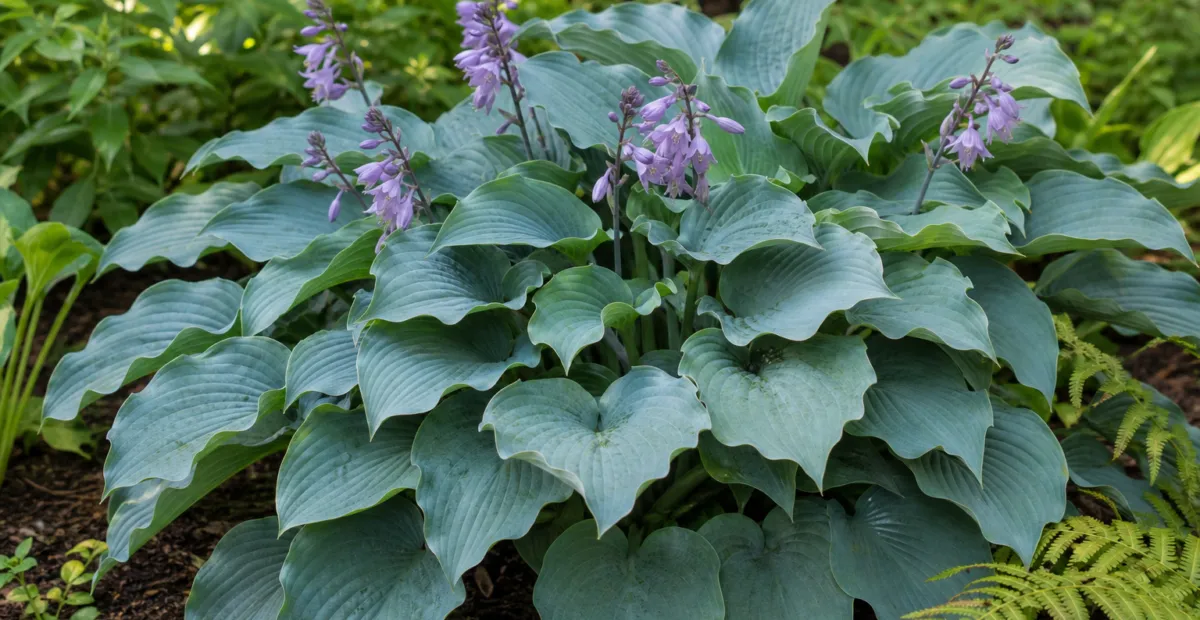
 AI-generated illustration
Hosta ‘Azure Snow’ short overview
Hosta 'Azure Snow' is a registered 1991 cultivar by Pete Ruh, grown for its broad, powdery blue-green leaves, undulating margins, and pale undersides. The medium-to-large clump is best placed in partial to deep shade with evenly moist, well-drained soil. Lavender, funnel-shaped flowers rise above the foliage in midsummer. It is a durable shade perennial, though slugs, deer, rabbits, and pet ingestion require attention.
Taxonomic classification
Hosta ‘Azure Snow’ care guide
Light and placement
Place in morning sun with afternoon shade, dappled woodland light, or bright open shade. Blue foliage generally holds its waxy blue cast best away from hot afternoon sun. Excess light can bleach the blue surface and scorch leaf margins; excessively dark, crowded conditions can produce stretched petioles and slower, weaker growth.
Watering and humidity
Water deeply when the upper few inches of soil begin to dry, aiming for steady moisture rather than frequent shallow sprinkling. Increase watering during hot, dry weather and where tree roots compete for moisture; reduce it after dormancy begins. Water at the soil surface in the morning to limit slug habitat and foliar disease.
Soil and growing medium
Use fertile, humus-rich soil that holds moisture without remaining waterlogged. A loam amended with compost is suitable. Good drainage is important, particularly in containers and heavy clay. Hostas generally tolerate slightly acidic to neutral soil; avoid strongly alkaline conditions unless organic matter is regularly replenished.
Feeding
Apply a balanced, slow-release perennial fertilizer in early spring as shoots emerge, or top-dress with compost. Avoid heavy nitrogen applications, which can produce soft growth and encourage pest problems. Stop routine feeding by late summer so the plant can enter dormancy naturally.
Growth and habit
This cultivar forms a broad, mounding clump from a crown and expands gradually through multiple shoots. Mature plants become more substantial with age. Divide only when necessary, because frequent disturbance slows establishment; keep surrounding vegetation from crowding the crown and preserve airflow through the foliage.
Planting and repotting
Plant in spring or early fall while the soil is workable. Set the crown at the soil surface or only slightly below it, with buds facing upward. Allow about 30–36 inches between plants for a broad clump, or provide more space where a larger specimen is desired. Water thoroughly after planting and maintain steady moisture during establishment.
Repot container-grown plants in early spring, just as shoots emerge, when the crown has filled the pot or roots circle densely. Move into a container only one size larger, use a moisture-retentive but well-drained potting mix, and keep the crown at its previous depth.
Propagation and pruning
Propagation
Division is the most reliable method and preserves the cultivar. Divide in early spring as shoots emerge or in early fall, using a clean knife or spade to separate crowns with several buds and healthy roots. Seed is possible because the cultivar is reported fertile, but seedlings may not reproduce the named cultivar exactly.
Pruning
Remove damaged leaves during the growing season for appearance. Cut the foliage to the ground after a hard freeze or once it has collapsed in fall. Flower scapes may be removed after bloom if seed pods are not wanted; make cuts close to the crown without injuring emerging buds.
Overwintering
Leave healthy foliage in place until frost has killed it, then cut back to the crown. A thin mulch layer can moderate freeze-thaw cycles, but keep mulch off the crown to reduce rot and slug shelter. Containers need extra protection because roots experience colder temperatures than plants in the ground.
Uses
Use as a specimen or massed foliage plant in shaded beds, woodland borders, foundation plantings, and large containers. Its blue-green leaves provide strong texture beside ferns, astilbes, heucheras, and other shade perennials. Do not treat this cultivar as an edible hosta; ornamental use is the supported application.
Appearance
The plant is identified by broad, blue-green leaves with a powdery surface, pronounced texture, undulating margins, and pale backs. Leaves are reported as roughly 12–14 inches long and about 8–10 inches wide, with approximately 11–13 vein pairs. The foliage arches outward from long petioles, creating a low, spreading mound.
Flowering
Lavender flowers are carried on upright scapes above the foliage. The funnel-shaped blooms typically appear in July or August in the United States, although timing varies with climate and season. Flowers can be left for seed production or removed at the base after blooming if foliage is the primary feature.
Pollination and visitors
Hosta flowers are documented as attractive to bees, butterflies, and hummingbirds at the genus level. No reliable source located a pollinator species uniquely associated with 'Azure Snow', so the visitor profile is generalized from Hosta rather than claimed as cultivar-specific.
Diseases and pests
Diseases
Watch for crown rot, root rots, foliar fungal spots, and virus-like mosaic symptoms. Reduce risk with well-drained soil, clean planting stock, good air circulation, and watering at the soil surface rather than over the leaves. Remove and discard severely diseased plants; do not compost suspect virus-infected material.
Pests
Slugs and snails commonly chew irregular holes through the leaves, especially in cool, wet, shady conditions. Deer and rabbits may remove leaves or entire sections of foliage. Reduce shelter and excess moisture around the crown, water in the morning, inspect at night for slugs, and use fencing or repellents where browsing is persistent.
Related diseases and pests
Only Plant Doctor profiles whose host data indicate this plant may be affected are shown here.
 DiseaseImpatiens necrotic spot virus diseaseImpatiens necrotic spot orthotospovirus
 DiseaseSouthern blightAthelia rolfsii
 PestStrawberry foliar nematodeAphelenchoides fragariae
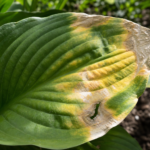 Environmental stressExcess light stress
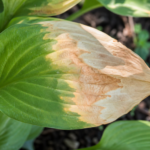 Environmental stressLeaf sunburn
 DiseaseTomato mosaic virusTobamovirus tomatotessellati
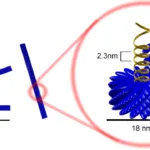 DiseaseTobacco mosaic virusTobamovirus tabaci
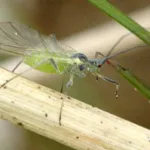 PestGreen Peach AphidMyzus persicae
Toxicity and pollen
Hosta species are listed by the ASPCA as toxic to dogs and cats because of saponins, with gastrointestinal upset such as vomiting and diarrhea reported after ingestion. Evidence is not specific to this cultivar, so keep plant material away from pets and seek veterinary advice after significant ingestion. Human toxicity for this cultivar is not well documented.
- Typical season
- Midsummer flowering period
- Pollination / pollen
- Insect-dispersed floral pollen
The lavender flowers release pollen during bloom, but Hosta is primarily insect-pollinated and is not generally treated as a major airborne pollen source. Individual sensitivity cannot be ruled out, and flower contact may still expose highly sensitive people to pollen.
Native habitat
The cultivar is a garden hybrid associated with Hosta breeding rather than a wild population. Its parentage is recorded as a seedling of Hosta hypoleuca. Like many hostas, it is adapted to moist, humus-rich woodland-edge conditions with filtered light and seasonal dormancy.
Interesting fact
Registered by Pete Ruh in 1991.
Frequently asked questions (FAQ)
The most relevant questions about this plant, with short and direct answers.
🌱Quick care
What is Hosta 'Azure Snow'?⌄
Hosta 'Azure Snow' is a registered 1991 hosta cultivar bred by P. Ruh, known for powdery blue-green, wavy leaves with pale undersides. It forms a medium-to-large clump rather than a compact miniature.
How much light does Hosta 'Azure Snow' need?⌄
Grow Hosta 'Azure Snow' in partial to deep shade, ideally with bright filtered light or gentle morning sun. Protect its blue foliage from strong afternoon sun, especially in hot climates.
How often should I water Hosta 'Azure Snow'?⌄
Water Hosta 'Azure Snow' regularly to maintain even soil moisture, particularly during its first growing season and summer dry spells. Do not leave it in constantly waterlogged soil.
What soil is best for Hosta 'Azure Snow'?⌄
Plant Hosta 'Azure Snow' in humus-rich, moisture-retentive, well-drained loam. Incorporating compost can improve both moisture holding and drainage in ordinary garden soil.
How large does Hosta 'Azure Snow' get?⌄
Hosta 'Azure Snow' typically grows about 15 to 20 inches tall and 31 to 45 inches wide at maturity. Give it enough room for its broad, arching foliage to develop without crowding.
🌤️Environment and placement
Can Hosta 'Azure Snow' grow in full shade?⌄
Yes, Hosta 'Azure Snow' can grow in full or deep shade, although very dense shade may reduce vigor and flowering. Bright indirect light or dappled shade generally produces a stronger clump.
Can Hosta 'Azure Snow' tolerate morning sun?⌄
Yes, Hosta 'Azure Snow' generally tolerates gentle morning sun, especially where summers are mild. Shield it from hot afternoon or reflected sunlight to reduce leaf scorch and fading of the blue coating.
Where should I plant Hosta 'Azure Snow' in a US garden?⌄
Place Hosta 'Azure Snow' in a shaded woodland bed, north- or east-facing border, or beneath an open-canopy tree. Avoid dry sites, exposed afternoon sun, and areas where tree roots aggressively compete for moisture.
What USDA zones can Hosta 'Azure Snow' grow in?⌄
Hosta 'Azure Snow' is a cold-hardy outdoor perennial, but a cultivar-specific USDA zone range is not consistently documented in the available registration records. Its dormant crown generally suits cold-winter hosta climates when planted in well-drained soil.
💧Care and problems
Why are the leaves of my Hosta 'Azure Snow' turning green?⌄
The blue color of Hosta 'Azure Snow' can appear greener when the waxy surface coating wears off, after heavy rain, or under stronger sunlight. Seasonal color variation is normal, but persistent fading usually indicates excessive light or heat.
How do I prevent slug damage on Hosta 'Azure Snow'?⌄
Reduce slug damage by watering in the morning, removing hiding places and dense debris, and keeping the soil surface from staying excessively wet. Check beneath leaves in the evening and use a slug control method labeled for ornamental plants if needed.
Why does Hosta 'Azure Snow' have holes in its leaves?⌄
Irregular holes in Hosta 'Azure Snow' leaves are most commonly caused by slugs or snails, while missing sections can indicate deer or other animal browsing. Inspect for slime trails, nighttime pests, tracks, or nearby droppings before choosing a control.
Do deer eat Hosta 'Azure Snow'?⌄
Yes, deer may browse Hosta 'Azure Snow' because hostas are generally attractive to deer. Use fencing, repellents, or a protected planting location if deer are common in your area.
Should I fertilize Hosta 'Azure Snow'?⌄
Apply a balanced, slow-release fertilizer in early spring as new shoots emerge if soil fertility is low. Avoid heavy late-season feeding, which can encourage soft growth before dormancy.
Should I cut back Hosta 'Azure Snow' in the fall?⌄
Cut Hosta 'Azure Snow' foliage to the ground after it has yellowed or been killed by frost. Removing declining leaves helps tidy the bed and reduces overwintering places for pests and disease organisms.
🪴Planting and repotting
When is the best time to plant Hosta 'Azure Snow'?⌄
Plant Hosta 'Azure Snow' in spring or early fall while temperatures are moderate and soil moisture is reliable. Water newly planted divisions or nursery plants consistently until they are established.
How deep should I plant Hosta 'Azure Snow'?⌄
Plant Hosta 'Azure Snow' with the crown at soil level or just slightly above it, keeping the buds and growing points from being buried deeply. Water thoroughly after planting and apply a light mulch without covering the crown.
Can Hosta 'Azure Snow' be grown in a container?⌄
Yes, Hosta 'Azure Snow' can be grown in a large container with drainage holes and moisture-retentive potting mix. Choose a pot wide enough for its mature clump and protect the containerized roots from severe winter exposure.
✂️Propagation and pruning
How do I propagate Hosta 'Azure Snow'?⌄
Propagate Hosta 'Azure Snow' by dividing the established clump, preferably in early spring as growth begins or during mild fall weather. Each division should retain at least one viable bud and a healthy portion of roots.
Can I grow Hosta 'Azure Snow' from seed?⌄
You can grow hostas from seed, but seedlings will not reliably reproduce the named cultivar. Division is the dependable method for making new plants that retain the characteristics of Hosta 'Azure Snow'.
⚠️Toxicity and safety
Is Hosta 'Azure Snow' toxic to dogs and cats?⌄
Yes, Hosta 'Azure Snow' should be treated as toxic to dogs and cats because it is a hosta and contains saponins. Ingestion may cause vomiting, diarrhea, or depression; contact a veterinarian or animal poison-control service if a pet eats the plant.
🌸Flowering and special interest
When does Hosta 'Azure Snow' bloom?⌄
Hosta 'Azure Snow' usually produces lavender, flared flowers in midsummer to late summer, with some references placing flowering around July or August. Bloom timing varies with climate, exposure, and growing season.
Does Hosta 'Azure Snow' have fragrant flowers?⌄
Hosta 'Azure Snow' is not generally documented as a fragrant-flowered hosta. Its primary ornamental feature is the blue-green foliage rather than flower fragrance.
Similar plants
 Sinensis Ruby Red (Hibiscus rosa ‘Sinensis Ruby Red’)Hibiscus rosa 'Sinensis Ruby Red'
 Cotton-rose (Hibiscus mutabilis) care guideHibiscus mutabilis
 Japanese Chestnut (Castanea crenata) care guideCastanea crenata
 Hosta ‘Autumn Frost’Hosta 'Autumn Frost'
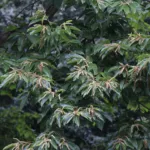 He Chinese chestnu (Castanea mollissima) care guideCastanea mollissima
 Hibiscus ‘Syriacus’Hibiscus 'Syriacus'