
 Source:
 Cotton-rose (Hibiscus mutabilis) short overview
Hibiscus mutabilis, known in the United States as cotton-rose, is a fast-growing deciduous shrub from southern China and Taiwan. Its large saucer-shaped flowers open white and deepen through pink as they age, creating a long late-season display. Give it full sun, fertile well-drained soil, summer moisture, and room to mature. It is best suited to warm climates or protected overwintering. Hibiscus mutabilis is a fast-growing, deciduous shrub or small multi-stemmed tree native to southern China and Taiwan. In warm U.S. gardens it produces large saucer-shaped flowers that open white and mature through pink shades.
Taxonomic classification
Cotton-rose (Hibiscus mutabilis) care guide
Light and placement
Give cotton-rose at least 6 hours of direct sun, ideally with a south- or west-facing exposure and shelter from cold winds. Full sun supports stronger stems and heavier flowering. Sparse, stretched growth and fewer flowers usually indicate inadequate light; scorched leaves or severe midday wilt suggest reflected heat, root restriction, or insufficient water rather than a need for deep shade.
Watering and humidity
Water deeply when the upper few inches of soil begin to dry, then let excess water drain. Keep young plants evenly moist through their first summer; established plants tolerate occasional wetness but perform best without prolonged saturation. Reduce watering after leaf fall and during cool indoor storage, while preventing complete root-ball dryness in containers.
Soil and growing medium
Use fertile loam or another organic-rich soil that drains freely but does not dry rapidly. The species tolerates clay, sand, and occasional wetness when established, but persistent waterlogging can weaken roots. A slightly acidic to neutral soil is a practical target; moderate alkalinity is generally tolerated.
Feeding
Mix compost into the planting area before planting, then apply a balanced slow-release fertilizer in spring as growth begins. A light second feeding in early summer can support vigorous flowering in poor soil. Stop heavy fertilization by late summer so tender growth can harden before cold weather; avoid feeding drought-stressed or waterlogged plants.
Growth and habit
This is a vigorous, upright, multi-stemmed woody perennial that can become shrub-like or small-tree-like. It flowers on new growth, so substantial winter cutting is compatible with good flowering. Its rapid growth and broad canopy make early placement and regular renewal pruning more useful than frequent light trimming.
Planting and repotting
Plant after the danger of hard frost has passed, preferably in spring, in full sun. Set the root ball at the same depth it grew in its container. Allow roughly 8–12 feet of clearance for a mature landscape specimen, and water deeply during the first growing season while mulch is kept away from the stems.
Repot container plants in spring before vigorous growth begins, moving up only one pot size. Use a stable, well-drained mix amended with compost, and avoid burying the stem crown. Large specimens may be easier to refresh by root-pruning and replacing the upper mix than by using a much larger container.
Propagation and pruning
Propagation
Take softwood or semi-ripe stem cuttings in late spring or summer; this is the easiest practical method and cuttings root readily. Seeds can be sown when fresh, but offspring may vary and flowering takes longer. Use clean tools, a sterile free-draining medium, and steady moisture without saturation.
Pruning
Prune in late winter or early spring before new growth, or after fall flowering where local frost timing makes that safer. Remove weak, damaged, or crossing stems and shorten lanky growth to encourage a fuller framework. Severe renewal cutting can rejuvenate old plants, but allow enough time for new shoots to mature before the next flowering season.
Overwintering
In Zones 7–9, mulch the root zone after leaf fall and protect young plants from severe cold. In colder regions, grow in a large container and move it indoors before frost, keeping it cool and bright with reduced watering. Deciduous plants may drop leaves indoors; avoid warm, dark, overly wet storage.
Uses
Use as a specimen shrub, informal screen, mixed border accent, butterfly or pollinator-garden plant, or large patio container. Its late-season flowers provide strong ornamental value. Published sources also record food and medicinal uses for the species, but those uses should not be treated as a recommendation without correct identification and specialist guidance.
Appearance
The plant has coarse, bright green leaves that are alternate, broadly ovate to elliptical, palmately veined, lobed, and edged with teeth. Young and mature stems form an erect multi-stemmed framework. The most distinctive identification feature is the sequence of flower colors, with white blooms aging through pink shades.
Flowering
Large, mostly solitary, five-petaled flowers appear on new growth in summer and fall. Individual blooms open pale or white and change through light pink to deeper pink as they mature, so several colors can appear simultaneously. The flowering period is often extended in warm climates, but timing varies with frost and latitude.
Pollination and visitors
Flowers attract specialized bees and other bees; NC State also lists butterflies and hummingbirds. A recent field study documented four bee species and one hawkmoth visiting flowers, while also finding that late flowers can produce seed through autonomous self-pollination.
Hibiscus mutabilis photos
Click any photo for a larger view. Source, author and license are shown separately.
Diseases and pests
Diseases
North Carolina Extension reports no significant recurring problems. Reduce disease pressure with good air circulation, avoid chronically waterlogged soil, remove fallen diseased material, and water at the root zone rather than wetting foliage repeatedly.
Pests
Inspect new growth for aphids, whiteflies, and spider mites, especially on stressed container plants. Hand-wash small infestations, encourage natural enemies, and use labeled horticultural soap or oil only when needed and according to the product label. Avoid broad-spectrum insecticides during bloom.
Related diseases and pests
Only Plant Doctor profiles whose host data indicate this plant may be affected are shown here.
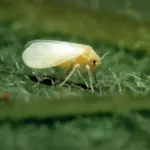 PestSweetpotato whiteflyBemisia tabaci species complex
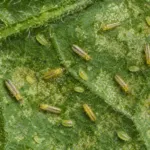 PestMelon thripsThrips palmi Karny
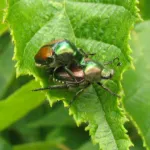 PestJapanese beetlePopillia japonica
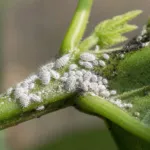 PestCotton mealybugPhenacoccus solenopsis Tinsley
 Environmental stressWaterlogging
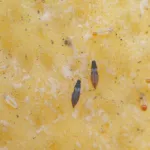 PestGreenhouse thripsHeliothrips haemorrhoidalis
 PestBrown Garden SnailCornu aspersum (Müller, 1774)
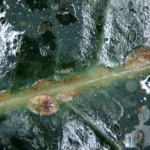 PestBrown Soft ScaleCoccus hesperidum
Toxicity and pollen
Reliable species-specific human toxicity information was not located in the reviewed authoritative sources. Do not assume that a plant is edible or harmless because other Hibiscus species are used in food. Avoid consuming unidentified plant material, and seek medical or veterinary advice after significant ingestion or an unusual reaction.
- Typical season
- Flowering season, typically late summer through fall in the United States
- Pollination / pollen
- Insect-carried pollen; airborne-allergy relevance not established
The flowers are insect-visited and expose pollen on a prominent central staminal structure, but species-specific airborne-pollen measurements and clinical allergy data were not found. Sensitive gardeners should monitor personal reactions during heavy bloom and avoid unnecessary handling of pollen-laden flowers.
Native habitat
The accepted native range is southern China and Taiwan, where the species occurs in subtropical climates. In cultivation it favors warm, sunny conditions, fertile soils, and consistent moisture, with occasional wetness tolerated once established. It is introduced in parts of the southeastern United States and other warm regions.
Interesting fact
The species name mutabilis refers to the changing flower color. Flowers can show several color stages on one plant at once. Late-season flowers are especially valuable when many summer shrubs are finishing. The species is self-compatible, and recent research found that late flowers may self-pollinate more readily as visitor activity declines.
Frequently asked questions (FAQ)
The most relevant questions about this plant, with short and direct answers.
🌱Quick care
What is Hibiscus mutabilis commonly called in the United States?⌄
Hibiscus mutabilis is commonly called cotton-rose. It is also known in U.S. gardening references as Confederate rose, but cotton-rose is the documented common name used here.
Is cotton-rose a tree, shrub, or perennial?⌄
Cotton-rose is a large, fast-growing shrub that can develop a small-tree form. In colder parts of the United States, its stems may die back in winter and regrow from the base.
How much sunlight does Hibiscus mutabilis need?⌄
Hibiscus mutabilis grows best in full sun, meaning at least 6 hours of direct sunlight daily. A sunny, sheltered location generally produces stronger growth and better flowering.
How often should I water cotton-rose?⌄
Water cotton-rose moderately, keeping the soil evenly moist while the plant establishes. Increase watering during prolonged heat or drought, but avoid continually saturated soil.
What type of soil is best for Hibiscus mutabilis?⌄
The best soil is organic-rich loam with good drainage. The plant can tolerate occasional wetness, but persistent standing water can stress the roots.
Is cotton-rose cold hardy?⌄
Cotton-rose is best grown in a protected, warm location and is not reliably hardy in cold climates. In areas with freezing winters, expect dieback or grow it in a container that can be sheltered.
🌤️Environment and placement
Where should I plant Hibiscus mutabilis outdoors?⌄
Plant it in full sun with protection from strong winds and winter exposure. Allow substantial room because mature plants can reach roughly 10 to 12 feet tall and 8 to 10 feet wide in favorable conditions.
Can cotton-rose grow in partial shade?⌄
Cotton-rose may survive in partial shade, but full sun is preferable for compact growth and abundant flowers. Too much shade can produce weaker, leggier stems and reduced blooming.
Can Hibiscus mutabilis tolerate wet soil?⌄
Hibiscus mutabilis tolerates soil that is occasionally wet, especially when organic-rich and well drained. It should not be planted where water remains stagnant around the roots.
Can cotton-rose grow in a container?⌄
Cotton-rose can be grown in a large container if it receives full sun and has excellent drainage. Container plants need more frequent watering and winter protection than plants grown in the ground.
Is cotton-rose suitable for USDA Zones 7 and 8?⌄
Cotton-rose is commonly grown outdoors in warmer parts of USDA Zones 7 and 8, where winter protection or seasonal dieback may be expected. Local exposure, winter lows, and shelter strongly affect survival.
Does Hibiscus mutabilis attract pollinators?⌄
Yes, Hibiscus mutabilis attracts bees and other pollinators, and its flowers may also be visited by butterflies and hummingbirds. It works well as a specimen plant or in a pollinator-oriented shrub border.
💧Care and problems
How fast does cotton-rose grow?⌄
Cotton-rose grows rapidly when provided with full sun, adequate moisture, warmth, and fertile soil. In climates with winter dieback, much of that growth may come from the base during one growing season.
Why is my cotton-rose not blooming?⌄
Poor flowering is commonly associated with insufficient sun, drought stress, excessive shade, or severe cold damage. Give the plant full sun, consistent moisture, and time to produce new flowering growth after winter.
Why are the leaves of Hibiscus mutabilis turning yellow?⌄
Yellow leaves can result from overwatering, poor drainage, drought, nutrient stress, or normal seasonal leaf loss. Check soil moisture and root conditions before adding fertilizer.
Does cotton-rose lose its leaves in winter?⌄
Yes, cotton-rose is often deciduous or semi-deciduous, especially where temperatures cool significantly. Leaf loss can be normal in fall or winter, while severe cold may also kill the aboveground stems.
What pests affect Hibiscus mutabilis?⌄
Cotton-rose generally has few serious pest problems, but aphids, whiteflies, scale, mealybugs, and other sap-feeding insects may occasionally occur. Inspect new growth and treat only when an infestation is clearly established.
Should I fertilize cotton-rose?⌄
Fertilize cotton-rose only when growth is weak or the soil is known to be deficient, using a balanced fertilizer according to the product label. Excessive nitrogen can encourage foliage at the expense of flowers.
🪴Planting and repotting
When is the best time to plant Hibiscus mutabilis?⌄
Plant Hibiscus mutabilis in spring after the threat of hard frost has passed. This gives the root system a full warm season to establish before winter.
How do I plant cotton-rose in the ground?⌄
Dig a hole about as deep as the root ball and two to three times as wide, set the plant at its original soil level, backfill with native soil, and water thoroughly. Mulch lightly without touching the stem.
How often should I repot a container-grown cotton-rose?⌄
Repot cotton-rose when roots circle the container, drainage slows, or growth becomes weak, usually in spring. Move it into a pot only one size larger and use a well-drained, organic-rich mix.
✂️Propagation and pruning
How do I propagate Hibiscus mutabilis from cuttings?⌄
Propagate Hibiscus mutabilis from stem cuttings by taking a healthy, nonflowering section, removing the lower leaves, and placing it in a moist, well-drained rooting medium. Keep it warm, humid, and in bright indirect light until roots form.
Can cotton-rose cuttings root in water?⌄
Cotton-rose cuttings may root in water, but a clean, moist rooting medium is generally more reliable for producing transplantable roots. Move rooted cuttings carefully because water-grown roots can be delicate.
Can Hibiscus mutabilis be grown from seed?⌄
Hibiscus mutabilis can produce seed capsules, but stem cuttings are the more commonly recommended propagation method because they root readily and preserve the parent plant’s characteristics.
When should I prune cotton-rose?⌄
Prune cotton-rose in winter after its fall flowering has finished or in early spring before vigorous new growth begins. Since flowers form on new growth, this timing minimizes the loss of the next flowering season.
Can I cut cotton-rose back to the ground?⌄
Yes, established cotton-rose can tolerate severe pruning to the ground and may regrow vigorously from the base. Use this approach for badly overgrown or leggy plants, and expect flowering to be delayed while new stems develop.
How do I keep Hibiscus mutabilis compact?⌄
Prune the plant during its dormant season to shorten tall stems, remove weak growth, and shape the framework. Avoid repeated light shearing during the growing season if you want to preserve its natural form and flowering cycle.
⚠️Toxicity and safety
Is Hibiscus mutabilis toxic to dogs, cats, or people?⌄
The toxicity of Hibiscus mutabilis to people and pets is not well established, so treat the plant as potentially unsafe to ingest. Keep fallen leaves, flowers, and plant material away from children and animals, and contact a poison-control or veterinary service after ingestion.
🌸Flowering and special interest
What color are cotton-rose flowers?⌄
Cotton-rose flowers commonly open white, then change to light pink and finally darker pink or red as they age. A single plant can display several flower colors at the same time.
When does Hibiscus mutabilis bloom?⌄
Hibiscus mutabilis usually blooms from late summer into fall, with the strongest display often occurring before frost. Bloom timing varies with climate, plant age, sunlight, and winter damage.
Why do cotton-rose flowers change color?⌄
Cotton-rose flowers change color naturally as they mature, typically moving from white through pink to darker pink or red. The color progression is a characteristic feature of Hibiscus mutabilis, not usually a sign of disease.
Are cotton-rose flowers edible or medicinal?⌄
Do not eat or use cotton-rose flowers medicinally without guidance from a qualified professional. Traditional-use reports exist, but safety for this exact species and preparation is not sufficiently established for general self-treatment.
Similar plants
 Campbell’s Magnolia (Magnolia campbellii) care guideMagnolia campbellii
 Magnolia ‘Susan’Magnolia 'Susan'
 Magnolia ‘Star Wars’Magnolia 'Star Wars'
 Devil’s tobacco (Lobelia tupa) care guideLobelia tupa
 Blue Lobelia (Lobelia siphilitica) care guideLobelia siphilitica
 Crystal Palace (Lobelia erinus ‘Crystal Palace’)Lobelia erinus 'Crystal Palace'