
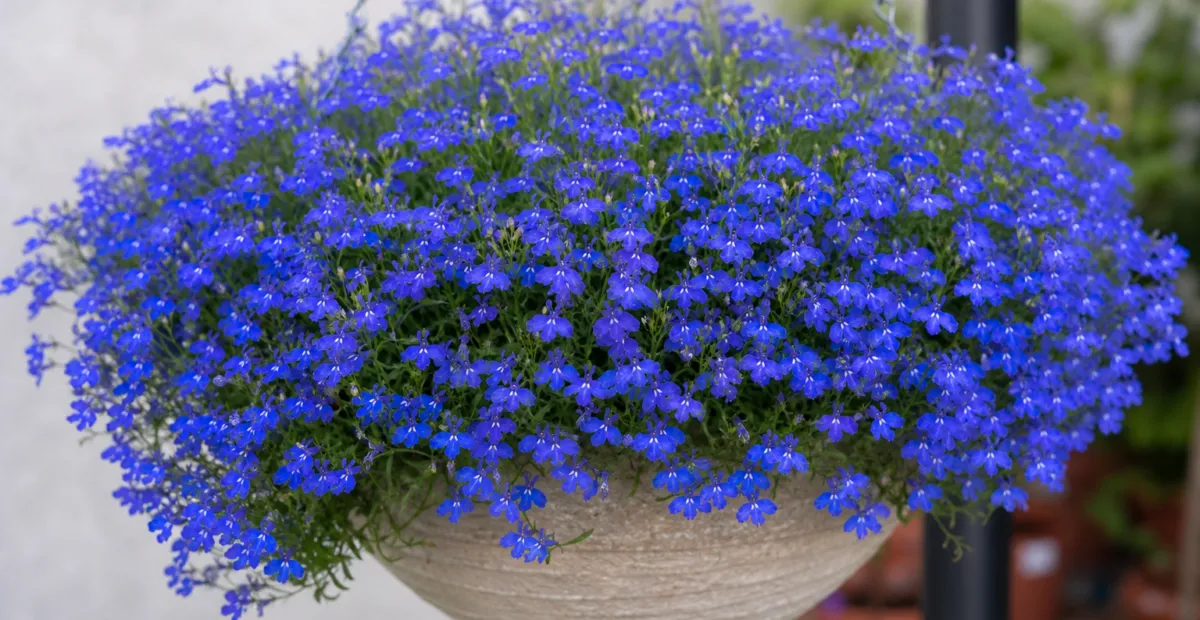
 AI-generated illustration
Lobelia ‘Techno Blue’ short overview
Lobelia 'Techno Blue' is a compact, heat-tolerant selection of annual lobelia grown for its intense blue flowers and densely branched, mounding-to-spreading habit. It reaches about 6–10 inches tall and can spread 18–22 inches, making it especially effective in hanging baskets, window boxes, mixed containers, and sunny or partly shaded beds. Unlike older lobelias, this series was bred to maintain color through summer heat when moisture is kept consistent.
Taxonomic classification
Lobelia ‘Techno Blue’ care guide
Light and placement
Grow in full sun to partial shade. In cooler climates, 6 or more hours of sun supports the strongest flowering; in hot regions, morning sun with afternoon shade can reduce wilting. Too little light produces stretched growth and fewer flowers, while harsh reflected afternoon heat can cause rapid dehydration and flower decline.
Watering and humidity
Water deeply when the upper inch of soil begins to dry, then allow excess water to drain. Containers may need frequent watering during hot, windy weather, while outdoor beds usually need less once established. Do not let the root zone remain saturated, but avoid repeated severe wilting because flowering can pause.
Soil and growing medium
Use a fertile, moisture-retentive but well-drained potting mix or garden soil. Avoid dense, waterlogged soil. A slightly acidic to neutral reaction is suitable; container media should drain freely while holding enough moisture to prevent repeated wilting.
Feeding
Feed after planting once active growth begins, using a balanced water-soluble fertilizer at half strength every 2–3 weeks, or use a controlled-release fertilizer according to its label. Do not fertilize drought-stressed, wilted, or waterlogged plants; water first and correct root conditions.
Growth and habit
This is a fast-growing, naturally well-branched plant with a mounding to spreading and partly trailing habit. It fills containers quickly and can be pinched lightly after establishment to encourage basal branching and an even shape. In hot weather, consistent moisture is important for continued flowering.
Planting and repotting
Plant after the last spring frost when nights are reliably mild. Set plants at the same depth as in the nursery container and space about 12–15 inches apart for a continuous display. Water thoroughly after planting and keep evenly moist while roots establish.
Move rooted plants into their final container after frost danger has passed. Choose a container with drainage holes and avoid burying the crown. Repot only when the root system has filled the existing pot, since unnecessary disturbance can delay establishment.
Propagation and pruning
Propagation
Commercial production is by rooted cuttings. Home gardeners can also allow flowers to set seed, but seedlings may not reliably reproduce the named cultivar. Take healthy cuttings during active growth and root them in a sterile, lightly moist medium.
Pruning
Pinch lightly about 10–14 days after transplanting if fuller basal branching is desired. Trim leggy or tired stems after a flush of flowering to refresh the shape. Avoid heavy cutting during drought or immediately after transplanting.
Overwintering
Protect from frost. In USDA Zones 8–11 it may persist as a tender perennial under mild conditions, but colder regions usually grow it as an annual. Container plants can be overwintered in a bright, cool, frost-free location, although performance may decline indoors.
Uses
Best used as an ornamental annual in hanging baskets, window boxes, mixed containers, patio pots, borders, and mass plantings. Its blue flowers combine well with white, silver, pink, and chartreuse companions. It is not supported here as an edible or medicinal plant.
Appearance
The plant forms a dense cushion of narrow, dark green leaves on many slender, branched stems. Bright blue flowers are held throughout the foliage, creating a saturated blue display. Growth is mounding, spreading, and partly trailing, with enough flexibility for baskets and combination containers.
Flowering
Small, vivid blue, two-lipped flowers are produced abundantly along branched stems. The Techno series flowers early and is bred to continue blooming through summer heat when plants do not dry out. Flowering may weaken during severe stress, then resume after improved watering and cooler conditions.
Pollination and visitors
The breeder identifies the Techno series as pollinator friendly, but the available cultivar-specific material does not establish a reliable primary visitor group or named pollinator species. Treat attraction as moderate rather than assuming a particular bee or butterfly association.
Diseases and pests
Diseases
Prevent crown and root problems by using clean containers, free-draining media, and careful watering. Remove badly affected plants if crown rot develops. Good air movement helps limit foliar disease in dense, persistently wet growth.
Pests
Watch for aphids, thrips, and whiteflies, especially in crowded containers. Inspect new growth and flower stems regularly. Use a strong water spray or an appropriately labeled insecticidal soap when needed, and avoid spraying open flowers during pollinator activity.
Toxicity and pollen
Lobelia species contain alkaloids including lobeline, and ingestion can be harmful. The available animal-toxicity evidence is stronger for Lobelia generally than for this exact cultivar, so do not treat the plant as edible or pet-safe. Prevent chewing and seek veterinary or medical advice after ingestion.
- Typical season
- Spring through summer flowering period
- Pollination / pollen
- Limited airborne release; insect-associated pollen
As an insect-pollinated annual, this cultivar is not expected to produce large clouds of wind-dispersed pollen. Airborne-allergy risk is therefore likely low, but individual sensitivity cannot be ruled out and cultivar-specific allergen testing was not located.
Native habitat
Lobelia erinus is associated with southern African origins and is cultivated in the United States as a warm-season bedding plant. The named Techno Blue cultivar is a bred horticultural selection rather than a wild habitat form, so its practical ecology is primarily container and garden production under frost-free or seasonal conditions.
Interesting fact
The cultivar belongs to the Techno series, bred for improved heat tolerance. Its flowers can create an almost continuous blue mass across the plant. It was selected for naturally controlled branching, so routine growth regulators are not needed in normal production.
Frequently asked questions (FAQ)
The most relevant questions about this plant, with short and direct answers.
🌱Quick care
What is Lobelia 'Techno Blue'?⌄
Lobelia 'Techno Blue' is a heat-tolerant annual lobelia with vivid blue flowers and a mounding, semi-trailing habit. It typically reaches about 6–10 inches tall and spreads roughly 18–22 inches wide. ([syngentaflowers.com](https://www.syngentaflowers.com/ams/product/flower/70003825?utm_source=openai))
Is Lobelia 'Techno Blue' an annual or perennial?⌄
In most of the United States, Lobelia 'Techno Blue' is grown as a frost-tender annual. It may persist in very mild, frost-free climates, but it is generally replaced seasonally. ([finegardening.com](https://www.finegardening.com/plant/lobelia-techno-blue?utm_source=openai))
🌤️Environment and placement
How much sun does Lobelia 'Techno Blue' need?⌄
Give Lobelia 'Techno Blue' full sun to partial shade. In hot climates, morning sun with afternoon shade can help keep the soil evenly moist while maintaining flowering. ([finegardening.com](https://www.finegardening.com/plant/lobelia-techno-blue?utm_source=openai))
Can Lobelia 'Techno Blue' tolerate summer heat?⌄
Yes, Lobelia 'Techno Blue' was selected for improved heat tolerance and can continue flowering through summer better than many traditional trailing lobelias. It still performs best when heat is combined with adequate moisture. ([finegardening.com](https://www.finegardening.com/plant/lobelia-techno-blue?utm_source=openai))
Where should I plant Lobelia 'Techno Blue'?⌄
Plant it in containers, hanging baskets, window boxes, borders, or as an edging plant where its mounding and trailing growth can spill over the edges. It is especially useful as a blue filler in mixed containers. ([finegardening.com](https://www.finegardening.com/plant/lobelia-techno-blue?utm_source=openai))
💧Care and problems
How often should I water Lobelia 'Techno Blue'?⌄
Water Lobelia 'Techno Blue' whenever the surface of the soil begins to dry, keeping the root zone evenly moist but not waterlogged. Containers may need daily checks during hot, dry weather because they dry faster than garden beds.
What type of soil is best for Lobelia 'Techno Blue'?⌄
Use fertile, well-drained soil or potting mix that retains some moisture without becoming soggy. Adding compost or other organic matter can improve moisture retention while good drainage helps prevent root problems. ([finegardening.com](https://www.finegardening.com/plant/lobelia-techno-blue?utm_source=openai))
Why is my Lobelia 'Techno Blue' wilting?⌄
Wilting usually means the plant is too dry, overheated, or suffering from waterlogged roots. Check the soil several inches down, water thoroughly if it is dry, and improve drainage if the mix remains saturated.
Why is Lobelia 'Techno Blue' turning yellow?⌄
Yellow leaves can result from overwatering, poor drainage, underwatering, or normal aging of older foliage. Check soil moisture and roots first, because consistently soggy soil is a common cause of decline.
Does Lobelia 'Techno Blue' need fertilizer?⌄
Yes, feed Lobelia 'Techno Blue' lightly with a balanced flowering-plant fertilizer during active growth, especially when it is grown in containers. Follow the product label because excessive fertilizer can produce foliage at the expense of flowers.
Does Lobelia 'Techno Blue' need deadheading?⌄
No, Lobelia 'Techno Blue' generally does not require deadheading to keep flowering. Removing damaged or untidy growth can still improve its appearance. ([lucasgreenhouses.com](https://www.lucasgreenhouses.com/plant/Lobelia-Erinus-Techno-Blue?utm_source=openai))
🪴Planting and repotting
Can Lobelia 'Techno Blue' grow in a hanging basket?⌄
Yes, it is well suited to hanging baskets because its mounding, semi-trailing stems can spill over the sides. Use a moisture-retentive but well-drained potting mix and monitor watering closely. ([finegardening.com](https://www.finegardening.com/plant/lobelia-techno-blue?utm_source=openai))
How far apart should Lobelia 'Techno Blue' be planted?⌄
Space plants about 12–15 inches apart in beds, allowing room for their spreading habit. In containers, spacing can be closer when the plants are being used as fillers. ([davesgarden.com](https://davesgarden.com/guides/pf/go/156361?utm_source=openai))
When should I plant Lobelia 'Techno Blue' outdoors?⌄
Plant Lobelia 'Techno Blue' outdoors after the danger of frost has passed and nighttime temperatures are consistently mild. It is frost tender, so protect it from late spring freezes and early fall frost.
Can Lobelia 'Techno Blue' be grown indoors?⌄
It can be kept indoors temporarily in a very bright, cool location, but it is primarily an outdoor bedding and container annual. Indoor plants need strong light, good air circulation, and careful watering.
✂️Propagation and pruning
How is Lobelia 'Techno Blue' propagated?⌄
Lobelia 'Techno Blue' is commonly propagated commercially from vegetative cuttings rather than being grown from seed. Seed-grown plants may not reliably reproduce the exact cultivar, so cuttings are preferred for maintaining its characteristics. ([syngentaflowers.com](https://www.syngentaflowers.com/ams/product/flower/70003825?utm_source=openai))
Should I pinch Lobelia 'Techno Blue'?⌄
Pinching is optional but can encourage fuller basal branching and help shape plants in larger containers. Make light cuts rather than removing large sections, particularly once flower buds have formed. ([gpnmag.com](https://gpnmag.com/article/best-show/?utm_source=openai))
⚠️Toxicity and safety
Is Lobelia 'Techno Blue' toxic to dogs, cats, or people?⌄
Lobelia species may be toxic if ingested, and the exact risk for this cultivar is not well documented separately. Keep the plant away from children and pets, and contact a medical professional, veterinarian, or Poison Control if plant material is eaten. ([greg.app](https://greg.app/plant-care/lobelia-erinus-techno-blue-lobelia-techno-blue?utm_source=openai))
🌸Flowering and special interest
When does Lobelia 'Techno Blue' bloom?⌄
Lobelia 'Techno Blue' can begin blooming in spring and continue through summer, with flowering potentially extending into early fall under favorable conditions. Warm temperatures and adequate moisture support longer-lasting bloom. ([finegardening.com](https://www.finegardening.com/plant/lobelia-techno-blue?utm_source=openai))
Why is my Lobelia 'Techno Blue' not flowering?⌄
Insufficient light, excessive fertilizer, drought stress, or severe heat can reduce flowering. Move it toward brighter light if appropriate, keep the soil evenly moist, and avoid heavy nitrogen feeding.
What color are Lobelia 'Techno Blue' flowers?⌄
The flowers are an intense cobalt or true blue, making this cultivar useful for adding strong blue color to containers and mixed plantings. ([finegardening.com](https://www.finegardening.com/plant/lobelia-techno-blue?utm_source=openai))
Similar plants
 Green lavender or white lavende (Lavandula viridis) care guideLavandula viridis
 Lavandula dentata care guideLavandula dentata
 Lavende (Lavandula angustifolia) care guideLavandula angustifolia
 Lobelia ‘Compacta’Lobelia 'Compacta'
 Cardinal plant (Lobelia cardinalis) care guideLobelia cardinalis
 Edging lobelia (Lobelia erinus) care guideLobelia erinus
Sources and data reliability
iNaturalist – localized genus name
Techno® Blue | Syngenta Flowers
Lobelia Techno® Blue - Fine Gardening
Lobelia erinus Techno Blue | Lucas Greenhouses
PlantFiles: The Largest Plant Identification Reference Guide - Dave's Garden
Best in Show - Greenhouse Product News
Lobelia 'Techno Blue' Plant Care: Water, Light, Nutrients | Greg App 🌱