
 Source:
 Hosta ‘Autumn Frost’ short overview
Hosta 'Autumn Frost' is a compact, shade-loving perennial selected for its dramatic seasonal foliage. Thick blue-green leaves emerge with broad bright-yellow margins, then mature to green centers edged in creamy white. Pale lavender flowers rise on short scapes in mid to late summer. The clump performs well in moist, organically enriched soil and works especially well in shaded borders, woodland plantings, and containers. It is hardy across a broad USDA Zone 3–9 range.
Taxonomic classification
Hosta ‘Autumn Frost’ care guide
Light and placement
Grow in part shade to shade, ideally with morning light or bright filtered light and protection from hot afternoon sun. Too much direct sun can bleach or scorch the broad margins and cause leaf scorch, especially where soil dries quickly. Too little light may reduce vigor and soften the foliage contrast, though deep shade is tolerated.
Watering and humidity
Water deeply when the upper inch of soil begins to dry, keeping the root zone consistently moist but not saturated. Increase watering during hot, dry summer weather and reduce it after foliage dies back in fall. Mulch helps moderate moisture and temperature, but keep mulch away from the crown.
Soil and growing medium
Use moisture-retentive but well-drained soil enriched with compost or other organic matter. A loam-based garden soil is ideal, though hostas tolerate heavier clay when drainage is improved. Slightly acidic to neutral conditions are suitable. Avoid persistently waterlogged sites, especially in containers.
Feeding
Apply a balanced slow-release perennial fertilizer or a modest layer of compost in spring as growth begins. Avoid heavy nitrogen feeding, which can produce soft foliage and encourage pest problems. Stop routine fertilizing by late summer so the plant can enter dormancy naturally.
Growth and habit
This cultivar forms a neat, mounded clump from a crown and returns from winter dormancy each year. The foliage is the main ornamental feature, while flower scapes rise above the leaves in summer. Maintain even moisture and divide crowded crowns when vigor declines or the clump outgrows its space.
Planting and repotting
Plant in spring or early fall, setting the crown at soil level rather than burying the buds. Spread the roots outward and water thoroughly after planting. Space about 24 inches apart for a full mature clump; allow extra room where a larger specimen is expected.
Repot container plants in early spring as new shoots begin to emerge, moving them into fresh, organically enriched potting mix. Use a container with drainage holes and only increase the pot size modestly. Divide and refresh crowded clumps before vigorous summer growth.
Propagation and pruning
Propagation
Propagate by division in early spring as shoots emerge or in early fall. Lift the clump, separate crowns with healthy roots and buds, and replant immediately at the original depth. Seed is not the reliable method for preserving cultivar characteristics.
Pruning
Cut flower scapes after blooming if seed production is unwanted. Remove yellowed or frost-damaged leaves after autumn dormancy; do not cut healthy foliage prematurely during the growing season.
Overwintering
Allow foliage to die back naturally after frost, then remove it to reduce overwintering pest habitat. Established plants are very cold hardy in USDA Zones 3–9 and generally need no special winter covering. Container plants benefit from protection from repeated freeze-thaw cycles.
Uses
Use as a foliage-focused accent in shaded borders, woodland gardens, foundation beds, mass plantings, and containers. The bold margin provides contrast with ferns, heucheras, hellebores, and other shade perennials. Do not treat it as edible; hosta ingestion can cause pet illness.
Appearance
The plant forms a low, rounded mound of thick, broadly ovate leaves. New foliage has a frosty blue-green center and unusually wide bright-yellow margins; the margins lighten to creamy white as the season progresses. Short upright scapes carry pale lavender flowers above the foliage.
Flowering
Pale lavender, lily-like flowers appear on upright scapes in mid to late summer, generally from July into August in much of the United States. Flowering is secondary to the foliage display. Remove spent scapes if seed production is not desired.
Pollination and visitors
The tubular lavender flowers can provide nectar for hummingbirds and other flower visitors, although this cultivar is grown primarily for foliage and is not documented as a major pollinator plant.
Hosta 'Autumn Frost' photos
Click any photo for a larger view. Source, author and license are shown separately.
Diseases and pests
Diseases
Reduce crown and root rot risk with well-drained soil, good air circulation, and watering at the soil surface. Remove collapsing or discolored tissue promptly. Avoid working around wet foliage, and discard severely rotted plants rather than composting diseased material.
Pests
Slugs and snails commonly chew hosta leaves, especially in damp, shaded beds. Reduce hiding places, water early in the day, remove debris, and use proportionate barriers or labeled controls when necessary. Deer and rabbits may also browse the foliage; physical exclusion is usually the most dependable protection.
Related diseases and pests
Only Plant Doctor profiles whose host data indicate this plant may be affected are shown here.
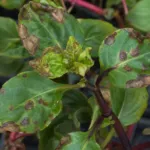 DiseaseImpatiens necrotic spot virus diseaseImpatiens necrotic spot orthotospovirus
 DiseaseSouthern blightAthelia rolfsii
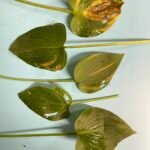 PestStrawberry foliar nematodeAphelenchoides fragariae
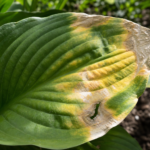 Environmental stressExcess light stress
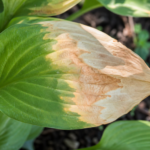 Environmental stressLeaf sunburn
 DiseasePhytophthora cactorum crown, collar, root and fruit rotPhytophthora cactorum
 DiseasePhytophthora root and crown rotPhytophthora nicotianae
Toxicity and pollen
Hosta plants are listed by the ASPCA as toxic to dogs and cats because of saponins; reported signs include vomiting, diarrhea, and depression after ingestion. Evidence for serious human toxicity is limited, but children should not chew the foliage or flowers, and pets should be prevented from eating the plant.
- Typical season
- Not well documented for allergy forecasting; flowering is mainly July–August
- Pollination / pollen
- Flower pollen; not primarily wind-dispersed
Hosta pollen is released from summer flowers and is generally not regarded as a major windborne allergen because the flowers are insect- or bird-visited rather than wind-pollinated. Specific clinical allergy data for this cultivar are unavailable, so highly sensitive individuals should use ordinary flowering-plant precautions.
Native habitat
Hostas are cultivated woodland-edge perennials originating from East Asian lineages, especially Japan, Korea, and China. In gardens they favor cool, shaded conditions, humus-rich soils, and steady moisture similar to a moist forest-floor environment.
Interesting fact
‘Autumn Frost’ is a sport of ‘First Frost’ and is associated with Walters Gardens. Its wide margins change from bright yellow in spring toward creamy white later in the season. The cultivar was named a 2019 Hosta of the Year and is a tetraploid selection according to horticultural references.
Frequently asked questions (FAQ)
The most relevant questions about this plant, with short and direct answers.
🌱Quick care
What is Hosta 'Autumn Frost'?⌄
Hosta 'Autumn Frost' is a medium-sized, very hardy perennial grown for its frosty blue-green leaves with wide yellow margins that mature to creamy white. It is a sport of 'First Frost' and is commonly sold in the Proven Winners SHADOWLAND® Collection.
How big does Hosta 'Autumn Frost' get?⌄
Hosta 'Autumn Frost' typically grows about 10–12 inches tall and spreads around 24 inches wide. Some nursery references list a mature spread closer to 18–24 inches, depending on age and growing conditions.
What USDA hardiness zones are suitable for Hosta 'Autumn Frost'?⌄
Hosta 'Autumn Frost' is generally hardy in USDA Zones 3–9. In warmer zones, afternoon shade and consistently moist soil help protect the foliage.
Is Hosta 'Autumn Frost' easy to grow?⌄
Yes, Hosta 'Autumn Frost' is considered an easy-care perennial when grown in shade or part shade with average moisture. Its main recurring problems are slug damage, animal browsing, and drought stress.
🌤️Environment and placement
How much sun does Hosta 'Autumn Frost' need?⌄
Hosta 'Autumn Frost' grows best in part shade to shade, with protection from intense afternoon sun. Gentle morning sun can improve the yellow margin, but excessive direct sun may scorch the leaves.
Can Hosta 'Autumn Frost' grow in full shade?⌄
Yes, Hosta 'Autumn Frost' can grow in full shade, although its growth may be slower and the yellow margins may be less vivid. Bright, indirect light or filtered shade usually produces the best balance of color and foliage quality.
Can Hosta 'Autumn Frost' tolerate morning sun?⌄
Yes, Hosta 'Autumn Frost' usually tolerates a few hours of mild morning sun, especially when the soil stays evenly moist. Avoid hot late-afternoon exposure, which can bleach or scorch the variegated leaves.
What soil is best for Hosta 'Autumn Frost'?⌄
Use moist, fertile, well-drained soil enriched with organic matter. The soil should retain moisture without staying waterlogged around the crown.
How much water does Hosta 'Autumn Frost' need?⌄
Provide average, consistent moisture, especially during the first growing season and during summer heat. Water deeply when the soil surface begins to dry, and do not allow container-grown plants to dry out completely.
Can Hosta 'Autumn Frost' grow under trees?⌄
Yes, Hosta 'Autumn Frost' can grow beneath trees in filtered shade if it receives adequate water. Avoid planting it directly against large tree roots, which can compete strongly for moisture.
💧Care and problems
Why are the leaves of my Hosta 'Autumn Frost' turning green?⌄
The yellow margins naturally lighten to creamy white as the season progresses, while insufficient light can make the overall foliage appear greener. Excessive shade, drought, or plant stress may also reduce the clarity of the variegation.
Why does Hosta 'Autumn Frost' have holes in its leaves?⌄
Irregular holes in Hosta 'Autumn Frost' leaves are most often caused by slugs or snails, although deer, rabbits, hail, and chewing insects can also be responsible. Check the plant at night and inspect nearby foliage and soil for pests.
How can I prevent slug damage on Hosta 'Autumn Frost'?⌄
Reduce hiding places around the plant, keep mulch from touching the crown, and hand-pick slugs at night or use a locally approved slug-control method. Watering early in the day can also make the planting area less favorable overnight.
Is Hosta 'Autumn Frost' deer resistant?⌄
No, Hosta 'Autumn Frost' is not reliably deer resistant. Deer may eat the leaves and flower scapes, so fencing or a proven deer-management strategy may be necessary in areas with browsing pressure.
Does Hosta 'Autumn Frost' need fertilizer?⌄
Hosta 'Autumn Frost' usually performs well with fertile soil and does not require heavy feeding. If growth is weak, apply a balanced slow-release fertilizer in spring according to the product label.
Should I cut back Hosta 'Autumn Frost' in fall?⌄
Remove the foliage after it has been killed by frost and begins to collapse. Cutting it back too early can reduce the plant’s ability to store energy for the following season.
🪴Planting and repotting
When should I plant Hosta 'Autumn Frost'?⌄
Plant Hosta 'Autumn Frost' in spring or early fall when temperatures are moderate and the soil is workable. Water it thoroughly after planting and keep the soil consistently moist while roots establish.
How far apart should I plant Hosta 'Autumn Frost'?⌄
Space Hosta 'Autumn Frost' about 24–30 inches apart to allow room for its mature mound. Closer spacing is possible for a faster visual fill, but crowded plants may have reduced airflow.
Can Hosta 'Autumn Frost' be grown in a container?⌄
Yes, Hosta 'Autumn Frost' grows well in a container with drainage holes and a moisture-retentive potting mix. Choose a pot at least 12 inches wide initially and monitor it more often because containers dry out faster than garden soil.
How do I plant Hosta 'Autumn Frost' in the ground?⌄
Dig a hole about twice as wide as the root ball, set the crown at the same level it was growing in its container, and backfill with amended soil. Water deeply and apply a light organic mulch without covering the crown.
✂️Propagation and pruning
Can Hosta 'Autumn Frost' be divided?⌄
Yes, Hosta 'Autumn Frost' can be propagated by division. Divide established clumps in early spring as the shoots emerge, using a sharp knife or spade to separate sections with roots and growing points.
How often should I divide Hosta 'Autumn Frost'?⌄
Divide Hosta 'Autumn Frost' only when the clump becomes crowded, weak in the center, or larger than its planting space. Healthy hostas can remain undivided for many years.
Can Hosta 'Autumn Frost' be grown from seed?⌄
It can produce seeds, but seedlings may not retain the distinctive variegation of Hosta 'Autumn Frost'. Division or nursery-propagated plants are preferred when an identical plant is needed.
⚠️Toxicity and safety
Is Hosta 'Autumn Frost' toxic to dogs?⌄
Yes, Hosta 'Autumn Frost' should be considered toxic to dogs if eaten. Ingestion may cause gastrointestinal signs such as vomiting, diarrhea, or depression, so contact a veterinarian if a dog consumes the plant.
Is Hosta 'Autumn Frost' toxic to cats?⌄
Yes, Hosta 'Autumn Frost' should be considered toxic to cats if eaten. Keep cats away from the foliage and contact a veterinarian or animal poison-control service if ingestion occurs.
Is Hosta 'Autumn Frost' poisonous to people?⌄
Hosta 'Autumn Frost' is not generally treated as a major human-poisoning concern, but ornamental hostas should not be eaten unless specifically identified and prepared as an edible hosta species. Keep plant material away from children and consult a medical professional after significant ingestion.
🌸Flowering and special interest
When does Hosta 'Autumn Frost' bloom?⌄
Hosta 'Autumn Frost' generally blooms in summer, often from early to midsummer depending on the climate. The flowers are pale lavender and rise above the foliage on upright scapes.
Are the flowers of Hosta 'Autumn Frost' fragrant?⌄
Hosta 'Autumn Frost' is grown primarily for its foliage, and its pale lavender flowers are not generally considered strongly fragrant. Fragrance is more characteristic of certain other hosta types, such as Hosta plantaginea cultivars.
Should I remove the flowers from Hosta 'Autumn Frost'?⌄
Remove the flower scapes after blooming if you prefer a tidier appearance or want the plant’s energy directed toward foliage. Leaving them in place does not normally harm an established plant.
Similar plants
 Mandevilla splendens care guideMandevilla splendens
 White mandevilla and white dipladenia (Mandevilla boliviensis) care guideMandevilla boliviensis
 Mandevilla ‘Sundaville White’Mandevilla 'Sundaville White'
 Mandevilla ‘Sundaville Red’Mandevilla 'Sundaville Red'
 Mandevilla ‘Sun Parasol Pink’Mandevilla 'Sun Parasol Pink'
 Mandevilla ‘Rio White’Mandevilla 'Rio White'