
 Source:
 Japanese Chestnut (Castanea crenata) short overview
Japanese Chestnut (Castanea crenata) is a deciduous tree native to Japan and Korea, valued for its edible chestnuts, handsome foliage and distinctive summer catkins. It performs best in full sun with deep, well-drained, mildly acidic soil and adequate moisture during establishment. Male and female flowers occur on the same tree, but reliable nut production generally requires cross-pollination with a compatible chestnut nearby. The spiny burs mature in fall.
Taxonomic classification
Japanese Chestnut (Castanea crenata) care guide
Light and placement
Choose an open site with full sun for the canopy and fruiting. Morning-to-afternoon sun is preferable; avoid dense shade, which produces weak, sparse growth and reduces flowering and nut yield. Excessive reflected heat can stress young trees if roots dry rapidly. Keep grass and competing roots away from the planting circle during establishment.
Watering and humidity
Water deeply when the upper several inches of soil begin to dry, directing water over the developing root zone rather than sprinkling the foliage. Maintain even moisture during establishment and during drought while burs and nuts develop. Reduce irrigation after leaf drop, but do not allow newly planted trees to desiccate in winter or early spring.
Soil and growing medium
Use deep, fertile, well-drained loam with good organic matter and no prolonged winter saturation. A mildly acidic to near-neutral reaction is suitable; avoid strongly alkaline soils and heavy compacted clay. Chestnuts develop broad root systems, so improve drainage across the planting area rather than creating a small amended pocket.
Feeding
Apply a thin layer of finished compost in spring, or use a balanced slow-release tree fertilizer only if growth or soil tests indicate a need. Avoid heavy nitrogen late in the season, which can delay hardening and increase lush, weak growth. Keep fertilizer away from the trunk and water it into the root zone.
Growth and habit
This is a long-lived, broad-crowned deciduous tree that becomes increasingly substantial with age. Young trees establish best with consistent moisture and weed-free soil. Allow generous root and canopy room, protect the trunk from mower damage, and maintain a compatible pollination partner rather than treating it as a solitary specimen.
Planting and repotting
Plant dormant bare-root or container trees in fall or early spring, with the root flare level with or slightly above the surrounding soil. Space trees about 30–40 feet apart for orchard-style growth and pollination. Water deeply during the first two growing seasons and mulch widely without touching the trunk.
Young container trees should be shifted into a larger, deep container before roots circle densely. Plant into the landscape while dormant, preferably in fall or early spring. Avoid repeatedly potting up a chestnut for long-term culture because the tree ultimately needs substantial root space.
Propagation and pruning
Propagation
Fresh seed can be stratified and sown promptly because chestnut nuts lose viability when allowed to dry. Seedlings are useful for rootstocks but vary genetically. Named cultivars are commonly propagated by grafting onto compatible chestnut rootstock; grafting is best done by experienced growers in spring.
Pruning
Prune during dormancy to establish one strong central leader or a stable open framework. Remove crossing, damaged or weakly attached branches and low growth that interferes with mowing. Avoid severe topping; chestnut responds better to gradual structural pruning. Disinfect tools when moving between trees with suspected disease.
Overwintering
Established trees generally need no special winter protection within suitable hardiness zones. Protect young trunks from rodents and sunscald where needed, apply mulch over the root zone without touching the bark, and avoid late-season nitrogen. Container-grown trees are more vulnerable to root freezing and should be sheltered in an unheated protected location or planted out before severe winter.
Uses
Useful as an edible nut tree, orchard subject, large ornamental shade tree and wildlife-food plant. Nuts are roasted or cooked after proper identification and handling. It needs substantial space and is not a good choice for small yards; use a compatible second chestnut for reliable crops. Do not confuse it with horse chestnut, whose seeds are toxic.
Appearance
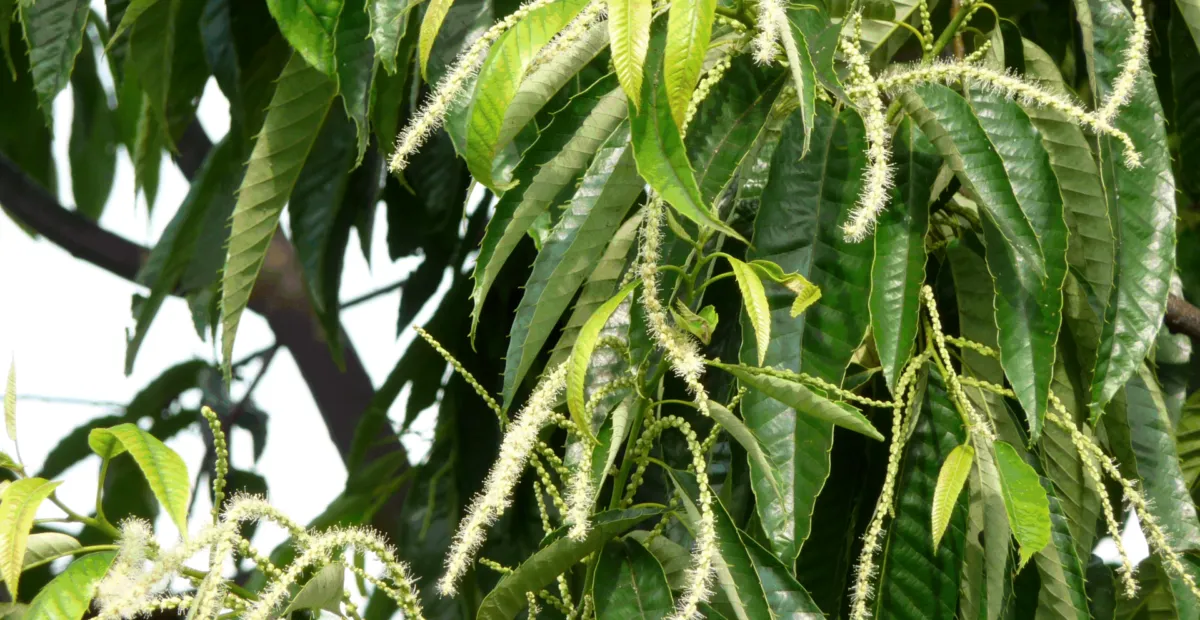
Leaves are alternate, glossy and lance-shaped to elliptic, with coarse pointed teeth along the margins. Young twigs are brown to gray, while older bark becomes gray-brown and furrowed. The tree forms a rounded to broad crown, produces conspicuous upright catkins in early summer, and encloses its nuts in densely spiny burs.
Flowering
Long, upright catkins appear in early summer after the leaves expand. Male flowers are abundant along the catkins, while small female flowers occur near the bases of bisexual inflorescences. Flowering phases can overlap within a tree, but the species is functionally self-incompatible for dependable seed production and benefits from a compatible second tree.
Pollination and visitors
Flowers are visited by bees, bumblebees, beetles, hoverflies and other insects. Field research on Japanese chestnut has documented pollen transport by bumblebees, small bees, flies, beetles and honey bees; bumblebees can be effective carriers of outcross pollen. Animal visitation and cross-pollination support nut production.
Castanea crenata photos
Click any photo for a larger view. Source, author and license are shown separately.
Diseases and pests
Diseases
Provide full sun, air circulation and well-drained soil to reduce leaf and root problems. Watch for chestnut blight symptoms such as sunken bark lesions, orange fruiting bodies and dieback; remove and destroy infected material where appropriate and avoid moving suspect wood. Root rot is favored by saturated soil. Local extension diagnosis is advisable because symptoms overlap.
Pests
Monitor for chestnut weevils, borers, aphids and leaf-feeding caterpillars. Collect fallen burs and nuts promptly where weevils are a concern, maintain tree vigor, and use targeted controls only when correctly identified. Inspect trunks and branches for boring dust or dieback; consult local extension guidance before treating.
Related diseases and pests
Only Plant Doctor profiles whose host data indicate this plant may be affected are shown here.
 DiseaseChestnut blightCryphonectria parasitica (Murrill) M.E. Barr
 DiseasePhytophthora cambivora root and crown rotPhytophthora cambivora (often written Phytophthora × cambivora in modern taxonomic treatments)
 DiseaseChestnut brown rotGnomoniopsis smithogilvyi
 PestLeopard mothZeuzera pyrina
 PestEuropean shot-hole borerXyleborus dispar (Fabricius)
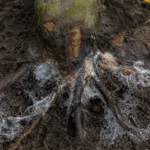 DiseaseWhite Root Rot (Rosellinia Root Rot)Rosellinia necatrix Berl. ex Prill. (synonym: Dematophora necatrix)
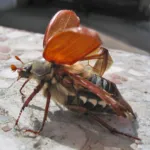 PestCommon cockchafer (European cockchafer)Melolontha melolontha
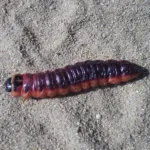 PestGoat MothCossus cossus
Toxicity and pollen
The species produces edible chestnuts, but raw or spoiled nuts can cause digestive upset, and the spiny burs can injure skin or mouths. Do not confuse edible Castanea with toxic horse chestnut (Aesculus). Remove shells and debris before offering prepared nuts, and seek medical or veterinary advice after unusual exposure or symptoms.
- Typical season
- Typically June–August in the United States, depending on region
- Pollination / pollen
- Abundant fine pollen from male catkins
Japanese chestnut releases abundant, small pollen grains from male catkins during flowering. Although chestnut is primarily insect-visited, airborne pollen can still be relevant for sensitive people, especially when trees flower in groups. Local exposure depends on weather, tree density and individual sensitivity; this is not a diagnosis of allergy risk.
Native habitat
In its native range, Japanese Chestnut occurs in temperate parts of Japan and Korea, including forest margins, open woodland and cultivated landscapes. It favors warm growing seasons, adequate summer moisture and soils that drain freely while retaining fertility. It is also grown outside its native range, including parts of the United States and Europe.
Interesting fact
Castanea crenata is native to Japan and Korea and is accepted as a distinct species. The tree bears both male and female flowers, yet late-acting self-incompatibility limits seed production from self-pollen. Its edible nuts develop inside spiny cupules, and its flowers can provide nectar and pollen for diverse insects.
Frequently asked questions (FAQ)
The most relevant questions about this plant, with short and direct answers.
🌱Quick care
What is Castanea crenata?⌄
Castanea crenata, commonly called Japanese Chestnut, is a deciduous nut tree in the beech family, Fagaceae. It is native to Japan and Korea and is grown for its chestnuts and ornamental value.
How much sunlight does Japanese Chestnut need?⌄
Japanese Chestnut needs full sun, ideally at least 6–8 hours of direct sunlight daily. Adequate light supports stronger growth, flowering, and nut production.
How often should I water Japanese Chestnut?⌄
Water Japanese Chestnut moderately, keeping the soil evenly moist while the tree is establishing. Once established, water deeply during prolonged dry spells, especially in summer.
Is Japanese Chestnut cold hardy?⌄
Japanese Chestnut is generally cold-hardy, but hardiness varies by cultivar, tree age, and site conditions. Protect young trees from severe winter exposure and avoid frost pockets.
🌤️Environment and placement
Where should I plant Japanese Chestnut?⌄
Plant Japanese Chestnut in a sunny, open location with good air circulation and enough room for a spreading canopy. Avoid sites with standing water, compacted soil, or heavy shade.
What soil is best for Castanea crenata?⌄
The best soil is deep, fertile, well-drained loam that is slightly acidic to neutral. Japanese Chestnut performs poorly in persistently wet or poorly aerated soil.
Can Japanese Chestnut grow in clay soil?⌄
Japanese Chestnut can tolerate some clay if drainage is improved, but heavy, waterlogged clay is unsuitable. Incorporating organic matter and planting slightly above the surrounding grade can help.
Can Japanese Chestnut grow in a lawn?⌄
Japanese Chestnut can grow in a lawn if it receives full sun and competing turf is kept away from the trunk. A wide mulch ring is usually better because grass competes for water and nutrients.
How large does Japanese Chestnut get?⌄
Japanese Chestnut is a small to medium-sized tree that can develop a broad, spreading crown. Final size depends on cultivar, climate, soil, pruning, and whether it is grown as a seedling or grafted tree.
💧Care and problems
Why is my Japanese Chestnut not producing nuts?⌄
The most common reason is inadequate cross-pollination, because chestnuts generally need compatible pollen from another tree. Young age, poor sunlight, drought, excessive nitrogen, and unsuitable weather can also reduce production.
Does Japanese Chestnut need a pollinator?⌄
Yes, plant at least two genetically compatible chestnut trees if you want reliable nut production. Japanese Chestnut is largely self-incompatible, and pollen timing must overlap between cultivars.
When does Japanese Chestnut flower?⌄
Japanese Chestnut flowers after the leaves expand, typically in late spring to summer depending on the local climate. The flowers appear as conspicuous catkins and are pollinated mainly by wind.
Why are Japanese Chestnut leaves turning brown?⌄
Brown leaves may result from drought, heat stress, root problems, leaf diseases, or insect damage. Check soil moisture and drainage first, then inspect leaves and shoots for spots, distortion, cankers, or pests.
Is Japanese Chestnut resistant to chestnut blight?⌄
Japanese Chestnut has some resistance to chestnut blight but is not immune. Trees can still become infected, especially when stressed or wounded, so remove diseased wood and maintain good vigor.
What pests attack Japanese Chestnut?⌄
Japanese Chestnut can be affected by chestnut gall wasps, weevils, caterpillars, borers, and other regionally variable pests. Monitor new shoots, leaves, burrs, and developing nuts rather than treating automatically.
🪴Planting and repotting
When is the best time to plant Japanese Chestnut?⌄
Plant Japanese Chestnut in early spring or fall when the tree is dormant and soil can be worked. Spring planting is preferable in areas with severe winters or where fall establishment is unreliable.
How do I plant a Japanese Chestnut tree?⌄
Dig a hole no deeper than the root ball and two to three times wider, set the tree with the root flare level with the soil surface, and water thoroughly. Mulch broadly but keep mulch several inches away from the trunk.
How far apart should Japanese Chestnut trees be planted?⌄
Space Japanese Chestnut trees according to their mature canopy, commonly about 30–40 feet apart for home orchard conditions. Closer spacing may be used commercially but requires more pruning and management.
Can Japanese Chestnut be grown in a container?⌄
Japanese Chestnut is not a good long-term container tree because it develops a large root system and ultimately needs substantial space. A young tree can be temporarily container-grown in a deep, well-drained pot.
✂️Propagation and pruning
How do you grow Japanese Chestnut from seed?⌄
Grow Japanese Chestnut from fresh, viable nuts after cold-moist stratification, then sow them in a deep, well-drained medium. Protect seeds from rodents and transplant seedlings carefully because chestnuts develop sensitive roots.
Can Japanese Chestnut be grown from cuttings?⌄
Japanese Chestnut is not usually propagated successfully from ordinary hardwood cuttings. Named cultivars are more reliably reproduced by grafting onto compatible chestnut rootstock.
When does Japanese Chestnut start producing nuts?⌄
Grafted Japanese Chestnut trees may begin producing nuts in roughly 2–4 years under favorable conditions. Seed-grown trees commonly take longer, often about 5–7 years or more.
How should Japanese Chestnut be pruned?⌄
Prune Japanese Chestnut during dormancy to establish a strong central leader or well-spaced scaffold branches and to remove dead, damaged, crossing, or weak growth. Avoid excessive pruning because it can stimulate vigorous shoots and temporarily reduce crops.
⚠️Toxicity and safety
Are Japanese Chestnuts edible?⌄
Yes, the properly identified and fully developed nuts of Japanese Chestnut are edible when appropriately prepared and cooked. Do not eat any chestnut unless the tree and nut have been positively identified.
How can I tell Japanese Chestnut from a poisonous horse chestnut?⌄
Japanese Chestnut belongs to Castanea and produces edible nuts inside densely spiny burrs, usually with multiple nuts per burr. Horse chestnut belongs to Aesculus, has a different fruit capsule and seed, and should not be eaten.
Is Japanese Chestnut toxic to dogs or cats?⌄
Japanese Chestnut is generally considered low toxicity when correctly identified and prepared, but raw nuts, shells, burrs, and spoiled material can cause choking or digestive problems. Prevent pets from chewing unknown chestnut-like seeds, especially horse chestnuts.
Can you eat Japanese Chestnuts raw?⌄
Japanese Chestnuts are traditionally cooked, roasted, or otherwise prepared rather than eaten raw. Remove the shell and inner skin, and discard nuts that are moldy, spoiled, or incorrectly identified.
🌸Flowering and special interest
Does Japanese Chestnut have male and female flowers?⌄
Yes, Japanese Chestnut is monoecious, meaning one tree produces both male and female flowers. However, the tree generally needs pollen from a compatible second tree for dependable nut set.
How are Japanese Chestnut flowers pollinated?⌄
Japanese Chestnut flowers are pollinated primarily by wind, although insects may visit the pollen-bearing catkins. Planting compatible cultivars with overlapping bloom periods improves pollination.
Why do Japanese Chestnut burrs contain empty nuts?⌄
Empty or poorly filled nuts usually result from incomplete pollination, drought, nutritional stress, or pest damage. Planting a compatible pollinizer and maintaining steady moisture during flowering and nut development can improve fill.
Similar plants
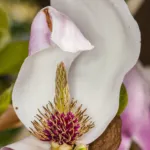 Saucer Magnolia (Magnolia soulangeana) care guideMagnolia soulangeana
 Magnolia × loebneri ‘Merrill’Magnolia × loebneri 'Merrill'
 Magnolia loebneri care guideMagnolia loebneri
 Sweetbay magnolia (Magnolia virginiana) care guideMagnolia virginiana
 Star magnolia (Magnolia stellata) care guideMagnolia stellata
 Magnolia sprengeri care guideMagnolia sprengeri