
 Source:
 Blue Wave (Hydrangea macrophylla ‘Blue Wave’) short overview
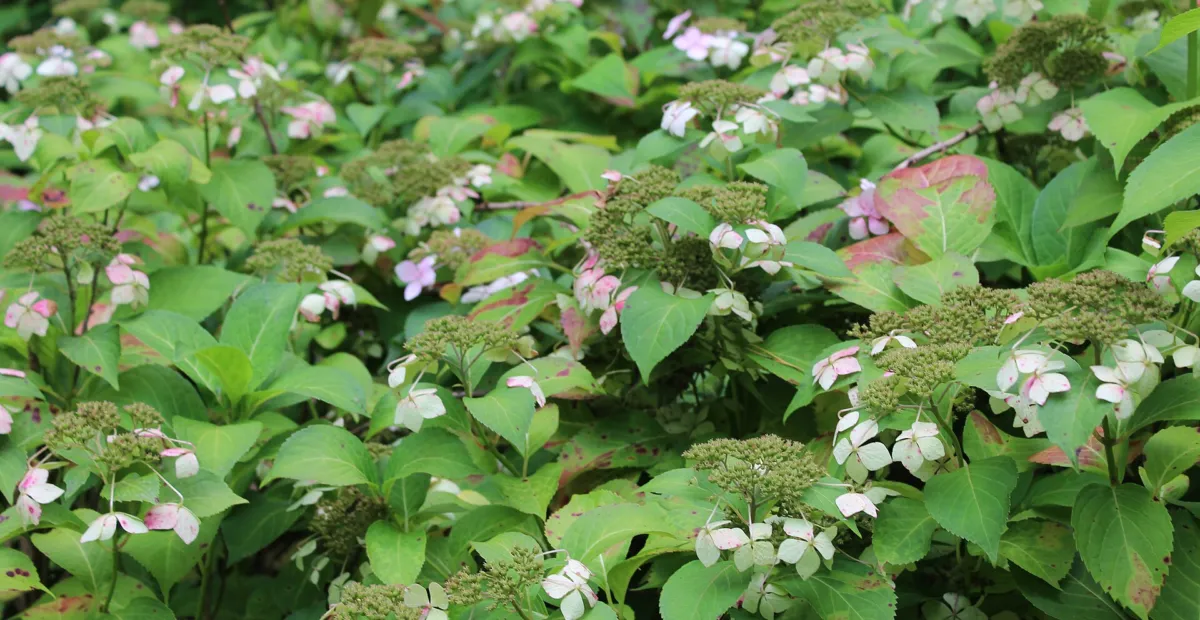
Hydrangea macrophylla 'Blue Wave' is a vigorous lacecap hydrangea valued for its flat flower heads, where small fertile flowers are framed by larger blue to pink sterile florets. Flower color is strongly influenced by soil chemistry, with bluer tones favored by acidic conditions. Glossy foliage, upright growth, and good cold tolerance make it useful in sheltered beds, woodland-style plantings, and large containers across much of the United States.
Taxonomic classification
Blue Wave (Hydrangea macrophylla ‘Blue Wave’) care guide
Light and placement
Give morning sun or bright partial shade, especially in warmer U.S. climates. An east-facing site or a location with afternoon shade is usually safer than hot western exposure. Too much sun can cause midday wilt, scorched leaves, and faded florets; too little light may produce lanky growth and fewer flower heads. Shelter from drying wind.
Watering and humidity
Water deeply when the top inch of soil begins to dry, aiming for steady moisture rather than alternating drought and saturation. Increase frequency during hot weather, especially for containers, and reduce it during cool dormant periods without allowing the root ball to dry completely. Drip irrigation or a soaker hose helps keep foliage dry.
Soil and growing medium
Use fertile, moisture-retentive soil that still drains freely. Loam amended with compost is suitable, while heavy clay should be improved with organic matter and drainage. Acidic soil and available aluminum generally encourage bluer flowers; near-neutral or alkaline conditions commonly produce pinker or lilac tones. Avoid repeated major pH changes around established roots.
Feeding
Apply compost or a slow-release balanced shrub fertilizer in early spring as growth begins. Feed lightly; excessive nitrogen promotes soft leafy growth and can reduce flowering. Do not fertilize drought-stressed, newly transplanted, or late-season plants, and avoid pushing tender growth before winter.
Growth and habit
A vigorous, upright lacecap shrub that can become broad and substantial with age. Growth is strongest in fertile, evenly moist soil and can be less dependable after severe winter damage. Because flowering commonly depends on older stems, maintenance should favor selective thinning over routine hard cutting.
Planting and repotting
Plant in spring or fall, setting the root ball level with the surrounding soil. Space plants about 5–7 feet apart for a broad mature display, allowing extra room where the cultivar grows vigorously. Mulch with 2–3 inches of organic material, keeping it away from stems, and maintain consistent moisture during the first growing season.
Repot container plants when roots fill the pot or the mix becomes compacted, preferably in early spring. Move into a container only one size larger, use a moisture-retentive but well-drained shrub mix, and water thoroughly after transplanting. Large established specimens are better refreshed by replacing the upper layer of mix than by frequent root disturbance.
Propagation and pruning
Propagation
Semi-ripe or softwood cuttings are the practical method, usually taken in late spring or early summer from healthy nonflowering shoots. Keep cuttings humid, shaded, and evenly moist until rooted. Cultivar traits are preserved by vegetative propagation; seedlings will not reliably reproduce the named plant.
Pruning
Prune immediately after flowering, removing spent heads and the oldest or weakest stems at the base. Avoid late-winter hard pruning because flower buds are commonly carried on older wood. If winter damage occurs, wait until new growth shows before cutting back, since apparently dead stems may still contain viable lower buds.
Overwintering
Mulch the root zone before hard freezes and protect plants from drying winter winds. In colder areas, preserve older stems with a loose wrap of burlap or breathable frost fabric rather than plastic. Container plants need extra root insulation or should be moved to an unheated protected space before severe freezes.
Uses
Use as a specimen shrub, foundation planting, woodland-edge accent, informal border plant, or container subject. The lacecap flowers are suitable for dried arrangements when allowed to mature on the plant. It is ornamental rather than edible, and no culinary or medicinal use should be inferred.
Appearance
The plant has glossy, broad, serrated green leaves on woody stems and an upright, open habit. Its defining feature is the lacecap inflorescence: small fertile flowers occupy the center, while larger four-lobed sterile florets form an outer ring. Flower heads are held above the foliage and may age through blue, pink, lilac, and muted greenish tones.
Flowering
This lacecap produces flat to slightly domed clusters with small central fertile flowers and larger showy sterile florets around the margin. The florets may range from blue to pink or lilac according to soil conditions and can fade as they age. Flowering is generally on older stems, so hard winter dieback or untimely pruning can reduce the next display.
Pollination and visitors
The small fertile flowers can be visited by miscellaneous insects, but this cultivar is primarily valued for ornamental sterile florets rather than documented high pollinator performance. Avoid treating its low documented attraction as evidence that no insects ever visit the flowers.
Hydrangea macrophylla 'Blue Wave' photos
Click any photo for a larger view. Source, author and license are shown separately.
Diseases and pests
Diseases
Watch for leaf spots, powdery mildew, botrytis, and root problems in poorly drained soil. Improve air circulation, water at the base, remove heavily affected foliage, and avoid unnecessary overhead irrigation. Sanitation and drainage are usually more useful than routine fungicide applications.
Pests
Common pests include aphids, scale, spider mites, and Japanese beetles. Inspect new growth and leaf undersides, wash off light infestations, and encourage beneficial insects. Reduce plant stress through consistent watering; use targeted treatments only when damage is significant.
Related diseases and pests
Only Plant Doctor profiles whose host data indicate this plant may be affected are shown here.
 DiseaseGray MoldBotrytis cinerea
 PestCyclamen mitePhytonemus pallidus
 PestChilli thripsScirtothrips dorsalis Hood
 DiseaseAster yellows‘Candidatus Phytoplasma asteris’
 PestStrawberry foliar nematodeAphelenchoides fragariae
 PestJapanese beetlePopillia japonica
 DiseaseMaple powdery mildewSawadaea bicornis
 DiseaseCucurbit Powdery MildewPodosphaera xanthii (Castagne) U. Braun & Shishkoff
Toxicity and pollen
Hydrangeas contain cyanogenic compounds and are listed by veterinary poison-control references as toxic to dogs and cats if eaten. Small accidental exposures may cause gastrointestinal upset, while larger ingestions warrant prompt veterinary advice. Keep prunings and fallen foliage away from children and pets; do not consume any plant part.
- Typical season
- Late spring through summer when flowers are open
- Pollination / pollen
- Insect-dispersed pollen
As an insect-pollinated shrub, its pollen is not typically released in large airborne clouds. Nevertheless, pollen exposure is not literally zero, and sensitive people may react to contact with flowers or plant dust. Keep the plant away from high-contact areas if a household member has strong pollen or plant allergies.
Native habitat
The species complex is associated with moist woodland margins, coastal regions, and fertile soils in Japan and nearby parts of East Asia. In cultivation it performs best where roots stay cool and evenly moist, with protection from intense afternoon heat and drying winter winds.
Interesting fact
The name 'Blue Wave' is widely associated with the lacecap cultivar 'Mariesii Perfecta'. Its flower color is not fixed: acidic conditions can intensify blue tones, while less acidic soils often produce pink or lilac shades. The showy outer florets are sterile and mainly serve visual display, while the small central flowers contain the reproductive structures.
Frequently asked questions (FAQ)
The most relevant questions about this plant, with short and direct answers.
🌱Quick care
What is Hydrangea macrophylla 'Blue Wave'?⌄
Hydrangea macrophylla 'Blue Wave' is a deciduous bigleaf hydrangea with lacecap flower heads. Its fertile flowers are surrounded by larger sterile florets that may range from blue to pink depending on soil conditions.
How much sun does Hydrangea macrophylla 'Blue Wave' need?⌄
Give Hydrangea macrophylla 'Blue Wave' morning sun or partial shade. Protect it from intense afternoon sun, especially in hot climates, because strong heat can wilt the foliage and dry the soil quickly.
How often should I water Hydrangea macrophylla 'Blue Wave'?⌄
Water Hydrangea macrophylla 'Blue Wave' whenever the soil surface begins to dry, keeping the root zone evenly moist but not waterlogged. During hot or dry weather, it may need supplemental watering several times per week.
How large does Hydrangea macrophylla 'Blue Wave' get?⌄
Hydrangea macrophylla 'Blue Wave' can reach about 6 to 7 feet tall and wide when growing conditions are favorable. Size varies with climate, pruning, soil moisture, and winter damage.
🌤️Environment and placement
Where should I plant Hydrangea macrophylla 'Blue Wave'?⌄
Plant it in a sheltered spot with morning sun, afternoon shade, and fertile, moisture-retentive soil. A location protected from drying wind and late spring frost helps preserve its flower buds.
What type of soil does Hydrangea macrophylla 'Blue Wave' prefer?⌄
Hydrangea macrophylla 'Blue Wave' prefers fertile, moisture-retentive, well-drained loam. Improve poor soil with organic matter, but avoid sites that remain saturated after rain.
Can Hydrangea macrophylla 'Blue Wave' grow in full shade?⌄
It can survive in bright shade, but flowering is usually better with morning sun or filtered light. Dense shade may produce fewer flower heads and weaker growth.
Is Hydrangea macrophylla 'Blue Wave' cold hardy?⌄
Hydrangea macrophylla 'Blue Wave' is relatively cold hardy, but its flower buds form on older stems and remain vulnerable to winter injury and late spring freezes. In colder areas, use a sheltered site and protect the stems during severe weather.
Can Hydrangea macrophylla 'Blue Wave' grow in containers?⌄
Yes, it can grow in a large container with drainage holes and moisture-retentive potting mix. Choose a container with room for root growth and provide more frequent watering than you would for a plant in the ground.
💧Care and problems
Why is my Hydrangea macrophylla 'Blue Wave' wilting?⌄
Wilting is usually caused by insufficient moisture, intense afternoon heat, root damage, or wind exposure. Water deeply, check the soil several inches below the surface, and move container plants out of hot afternoon sun if necessary.
Why are the leaves of Hydrangea macrophylla 'Blue Wave' turning brown?⌄
Brown leaf edges commonly result from drought, heat, wind, or excess fertilizer. Keep the soil evenly moist, apply mulch without touching the stems, and avoid fertilizing a drought-stressed plant.
Why is Hydrangea macrophylla 'Blue Wave' not blooming?⌄
The most common causes are winter-killed flower buds, excessive shade, drought stress, or pruning at the wrong time. Because this bigleaf hydrangea flowers on older stems, late-season, fall, or spring pruning can remove the coming season's buds.
Should I fertilize Hydrangea macrophylla 'Blue Wave'?⌄
Apply a balanced, slow-release fertilizer in spring if the plant shows weak growth or nutrient deficiency. Avoid excessive nitrogen, which can produce lush foliage while reducing flowering.
Should I mulch Hydrangea macrophylla 'Blue Wave'?⌄
Yes, apply a 2- to 3-inch layer of organic mulch over the root zone to conserve moisture and moderate soil temperature. Keep mulch a few inches away from the stems to reduce the risk of rot.
How do I protect Hydrangea macrophylla 'Blue Wave' in winter?⌄
Protect the root zone with mulch and shield the stems from drying wind and severe temperature swings. In colder regions, loosely wrap the plant or use a breathable cover after dormancy, removing protection in spring when severe freezes have passed.
🪴Planting and repotting
When is the best time to plant Hydrangea macrophylla 'Blue Wave'?⌄
Plant it in spring after the ground can be worked or in early fall at least several weeks before the ground freezes. Avoid planting during periods of extreme summer heat or drought.
How do I plant Hydrangea macrophylla 'Blue Wave' in the ground?⌄
Dig a hole about twice as wide as the root ball and no deeper than the root ball's height. Set the crown level with the surrounding soil, backfill with native soil amended with modest organic matter, water thoroughly, and mulch the root zone.
Can I transplant Hydrangea macrophylla 'Blue Wave'?⌄
Yes, transplant it during dormancy or in early spring before active growth begins. Preserve as much of the root ball as possible and keep the plant consistently watered while it reestablishes.
✂️Propagation and pruning
How can I propagate Hydrangea macrophylla 'Blue Wave'?⌄
Propagate it most reliably from softwood cuttings taken in late spring or early summer. Use healthy nonflowering shoots, keep the rooting medium evenly moist, and provide bright indirect light and high humidity.
When should I prune Hydrangea macrophylla 'Blue Wave'?⌄
Prune Hydrangea macrophylla 'Blue Wave' immediately after flowering, limiting cuts to dead, damaged, crossing, or overly long stems. Avoid routine pruning in fall, winter, or spring because it may remove flower buds for the next season.
How do I prune an overgrown Hydrangea macrophylla 'Blue Wave'?⌄
Thin out a few of the oldest stems at the base after flowering rather than shearing the whole plant. If major size reduction is necessary, do it gradually over several years to preserve more flowering wood.
Should I deadhead Hydrangea macrophylla 'Blue Wave'?⌄
Deadheading is optional and can be done after the flowers fade by cutting just above a healthy pair of buds. Leave dried flower heads in place through winter if you prefer their ornamental appearance or want extra protection for the buds below.
⚠️Toxicity and safety
Is Hydrangea macrophylla 'Blue Wave' poisonous to dogs and cats?⌄
Yes, Hydrangea macrophylla 'Blue Wave' is toxic if ingested, including by pets. Keep pets away from fallen leaves, stems, and flowers, and contact a veterinarian or poison service if ingestion is suspected.
Is Hydrangea macrophylla 'Blue Wave' poisonous to people?⌄
Yes, ingestion can be harmful to people, and plant contact may irritate sensitive skin. Keep it away from young children and seek medical or poison-control advice if any part is eaten.
🌸Flowering and special interest
What color are the flowers of Hydrangea macrophylla 'Blue Wave'?⌄
The lacecap flowers may be blue, lavender, purple, pink, or mixed depending largely on soil chemistry and plant conditions. Blue flowers are more likely in acidic soil with available aluminum, while alkaline conditions tend to produce pinker shades.
How can I make Hydrangea macrophylla 'Blue Wave' flowers bluer?⌄
Maintain acidic soil and use a product labeled for turning bigleaf hydrangeas blue, following the product instructions. Results vary with soil chemistry, and changing flower color can take more than one season.
Why did my blue Hydrangea macrophylla 'Blue Wave' turn pink?⌄
The color can shift toward pink when soil conditions are less acidic or when aluminum is unavailable to the plant. Natural soil chemistry, irrigation water, and seasonal conditions can all affect the final color.
When does Hydrangea macrophylla 'Blue Wave' bloom?⌄
Hydrangea macrophylla 'Blue Wave' generally blooms from early or midsummer into summer's later weeks, depending on climate and winter survival. Flowering may be sparse or delayed after a harsh winter damages older stems.
Are the flowers of Hydrangea macrophylla 'Blue Wave' lacecaps?⌄
Yes, Hydrangea macrophylla 'Blue Wave' is a lacecap cultivar. Its flatter flower heads contain small fertile flowers in the center and larger showy sterile florets around the edge.
Similar plants
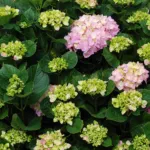 Bigleaf Hydrangea (Hydrangea macrophylla) care guideHydrangea macrophylla
 Smooth hydrangea or sevenbark (Hydrangea arborescens) care guideHydrangea arborescens
 Altona (Hydrangea macrophylla ‘Altona’)Hydrangea macrophylla 'Altona'
 Hamburg mophead hydrangea (Hydrangea macrophylla ‘Hamburg’)Hydrangea macrophylla 'Hamburg'
 Lanarth White (Hydrangea macrophylla ‘Lanarth White’)Hydrangea macrophylla 'Lanarth White'
 Mariesii (Hydrangea macrophylla ‘Mariesii’)Hydrangea macrophylla 'Mariesii'