
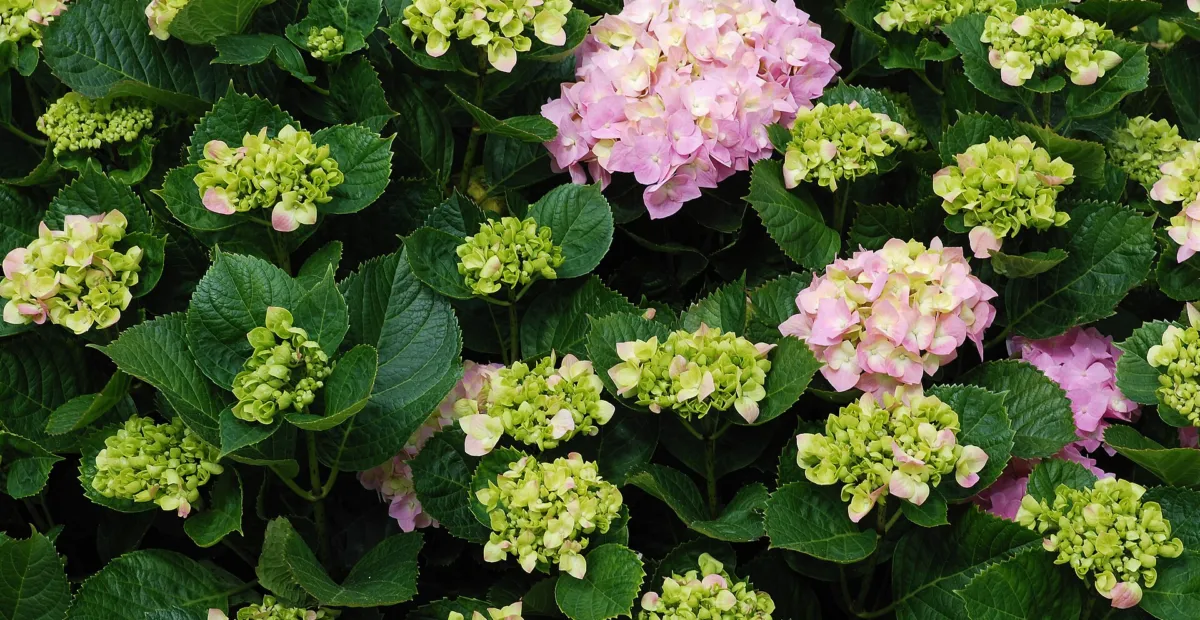
 Source:
 Bigleaf Hydrangea (Hydrangea macrophylla) short overview
Bigleaf Hydrangea is a deciduous shrub from Japan, grown in U.S. gardens for its glossy leaves and showy summer flower clusters. Depending on the cultivar, the inflorescences may form rounded mopheads or flatter lacecaps, with colors ranging from white and pink to purple and blue. It performs best with morning sun, afternoon shade, consistently moist organic soil, and restrained pruning that protects flower buds formed on older stems.
Taxonomic classification
Bigleaf Hydrangea (Hydrangea macrophylla) care guide
Light and placement
Give bright morning light with afternoon shade, especially in hot-summer regions. East-facing sites are often reliable; filtered light beneath high trees can also work if soil moisture is maintained. Too much hot afternoon sun may cause leaf scorch, wilting, and faded flowers. Excessive shade produces weak, leafy growth and fewer flower clusters.
Watering and humidity
Water deeply when the upper soil begins to dry, then allow excess water to drain. During establishment and summer heat, check frequently because large leaves lose moisture quickly. Maintain consistent moisture rather than alternating drought and saturation. Apply mulch over the root zone to moderate temperature and evaporation, but keep it off the stems. Container plants may need daily checks in hot weather.
Soil and growing medium
Use fertile, organic-rich soil that holds moisture without remaining waterlogged. Loam improved with compost is suitable. A well-drained but moisture-retentive root zone is especially important during summer heat. Soil reaction influences flower color in many cultivars: acidic conditions with available aluminum can encourage blue or purple shades, while less acidic soils commonly favor pink or red shades.
Feeding
Apply a balanced, slow-release shrub fertilizer in early spring if growth is weak or soil testing indicates a need. A thin compost mulch can improve soil structure and nutrient supply. Avoid heavy nitrogen feeding, which promotes soft leafy growth and can reduce flowering quality. Stop routine feeding by late summer so the plant can harden before winter.
Growth and habit
This is a multi-stemmed shrub that branches from the base and can become broad and dense with age. Stems may be thick and somewhat brittle under heavy flower clusters. Maintain an open, balanced framework by removing weak or damaged stems rather than repeatedly shearing the whole plant. Cultivar habit and reblooming behavior vary widely.
Planting and repotting
Plant in spring or fall when the soil is workable and temperatures are moderate. Set the crown at the same level as in the nursery container; planting too deeply can weaken the plant. Space about 3–6 feet apart depending on cultivar size and desired density. Water deeply during establishment and mulch with organic material, keeping mulch away from the stems.
Repot container-grown plants in early spring before strong new growth begins, moving only one container size larger. Use a moisture-retentive but well-drained shrub or patio-plant mix. Avoid disturbing the root ball unnecessarily, and water thoroughly after repotting. Large plants are often easier to renew by planting into the ground than by repeatedly shifting into larger pots.
Propagation and pruning
Propagation
Softwood cuttings are commonly taken in late spring or early summer, while semi-hardwood cuttings can be used later in the season. Layering is also practical for selected stems. Seed propagation is possible but slower and does not preserve cultivar traits. Keep cuttings evenly moist, shaded from intense sun, and humid until rooted.
Pruning
Prune conservatively because many traditional cultivars set flower buds on older wood. Remove spent clusters and dead or damaged stems after flowering or in early spring once live growth is clear. Avoid hard late-winter cutting unless you accept reduced flowering or know the cultivar blooms on new wood. Reblooming cultivars may tolerate more shaping, but the label should be checked first.
Overwintering
In Zones 6 and colder or exposed sites, mulch the root zone after the ground cools and protect stems and dormant buds from drying wind. Do not rush to remove winter protection during early spring freezes. Container plants are more vulnerable than in-ground specimens and may need an insulated, sheltered location. Cultivar-specific hardiness is often more important than the species label.
Uses
Used as a flowering foundation shrub, woodland-edge accent, patio container plant, hedge component, and cut or dried flower subject. Lacecap selections can offer more accessible fertile flowers than dense mopheads. Do not use the plant as food or medicine; ingestion can be harmful.
Appearance
Leaves are opposite, thick-textured, glossy to semi-glossy, broadly ovate to elliptic, sharply pointed, and toothed along the margins. Stems are stout and often develop a dense basal framework. Terminal flower clusters may be flat, hemispherical, or rounded, depending on the cultivar. The combination of large serrated leaves and prominent clustered sepals is distinctive.
Flowering
Terminal flower clusters appear from late spring into summer. Wild-type plants and lacecap cultivars have small fertile flowers surrounded by larger sterile sepals, while many mophead cultivars produce rounded clusters dominated by showy sterile florets. Flower color is variable and may shift with cultivar genetics, soil reaction, aluminum availability, and aging of the inflorescences.
Pollination and visitors
Small fertile flowers can be visited by bees, bumblebees, and hoverflies, particularly in lacecap-type inflorescences where fertile florets are exposed. Dense mophead cultivars may offer fewer accessible fertile flowers because showy sterile florets dominate the cluster. This is generally a modest rather than major pollinator resource.
Hydrangea macrophylla photos
Click any photo for a larger view. Source, author and license are shown separately.
Diseases and pests
Diseases
Watch for powdery mildew, leaf spot, botrytis, root rot, and bacterial or fungal problems favored by wet foliage or poor drainage. Improve air circulation, water at the soil surface, remove badly affected leaves, and avoid overhead irrigation. Correct drainage problems rather than relying on repeated fungicide use. Stressed plants are more vulnerable.
Pests
Common problems include aphids, scale, spider mites, thrips, slugs, and occasionally Japanese beetles. Inspect leaf undersides and tender shoots, rinse small infestations with water, encourage natural enemies, and use targeted controls only when damage is substantial. Heat, drought, and excess nitrogen can worsen pest pressure.
Related diseases and pests
Only Plant Doctor profiles whose host data indicate this plant may be affected are shown here.
 DiseaseGray MoldBotrytis cinerea
 DiseaseAster yellows‘Candidatus Phytoplasma asteris’
 PestChilli thripsScirtothrips dorsalis Hood
 PestCyclamen mitePhytonemus pallidus
 PestStrawberry foliar nematodeAphelenchoides fragariae
 PestJapanese beetlePopillia japonica
 Environmental stressPoor drainage stress (waterlogging)
 DiseaseMaple powdery mildewSawadaea bicornis
Toxicity and pollen
Hydrangea tissues contain cyanogenic glycosides, and chewing can cause gastrointestinal upset. Serious cyanide poisoning is considered uncommon, but ingestion should still be discouraged. Keep plant material away from children and pets, and contact a veterinarian or poison service if significant amounts are eaten or symptoms develop.
- Typical season
- Usually late spring through summer during flowering
- Pollination / pollen
- Insect-dispersed pollen; not commonly windborne
The species is insect-pollinated and its conspicuous flower clusters are not typically considered a major source of airborne pollen. The small fertile flowers still produce pollen, so a zero-allergy claim would be unjustified. People with strong plant allergies should avoid direct contact with pollen-bearing flowers and monitor personal reactions.
Native habitat
In its native range, the species occurs in temperate coastal areas of Japan, including central Honshu and nearby islands. It is associated with forest margins, woodland, and grassy habitats, often in sites with adequate moisture and relatively mild winters. Garden performance is best where roots stay cool and moist and flower buds are sheltered from severe winter cold.
Interesting fact
The species name macrophylla means large-leaved. Wild-type plants usually show lacecap-like clusters, while rounded mopheads became especially important in cultivation. Flower color can change with soil chemistry and aluminum availability, but genetics still limits the possible color range. Many popular cultivars are selections or hybrids within the broader bigleaf hydrangea group.
Frequently asked questions (FAQ)
The most relevant questions about this plant, with short and direct answers.
🌱Quick care
What is Bigleaf Hydrangea?⌄
Bigleaf Hydrangea is the common name for Hydrangea macrophylla, a deciduous shrub grown for its large mophead or lacecap flower clusters. It belongs to the Hydrangeaceae family and is widely grown in U.S. gardens.
How much sun does Bigleaf Hydrangea need?⌄
Give Bigleaf Hydrangea morning sun and afternoon shade for the best balance of flowering and moisture retention. In cooler climates it may tolerate more sun, while hot afternoon sun can scorch leaves and shorten bloom life.
How often should I water Hydrangea macrophylla?⌄
Water Hydrangea macrophylla whenever the soil surface begins to dry, keeping the root zone evenly moist but not waterlogged. During hot or dry weather, it may need deep watering several times per week.
What soil is best for Bigleaf Hydrangea?⌄
Plant Bigleaf Hydrangea in organic-rich, moisture-retentive, well-drained soil. Heavy clay or very sandy soil should be improved with organic matter, but avoid sites where water remains around the roots.
How large does Hydrangea macrophylla get?⌄
Hydrangea macrophylla commonly grows about 3 to 6 feet tall and wide, although mature size varies substantially by cultivar and growing conditions. Check the plant label for the specific variety’s expected dimensions.
🌤️Environment and placement
Can Bigleaf Hydrangea grow in full sun?⌄
Bigleaf Hydrangea can grow in full sun if the climate is mild and the soil stays consistently moist, but afternoon shade is usually safer. Full, hot sun increases the risk of wilting, leaf scorch, and reduced flowering.
What USDA hardiness zones are suitable for Hydrangea macrophylla?⌄
Many Hydrangea macrophylla cultivars grow best in USDA Zones 5 through 9, but hardiness varies by cultivar. In colder areas, winter protection is important because flower buds on older stems are vulnerable to freezing.
Can I grow Bigleaf Hydrangea in a container?⌄
Yes, Bigleaf Hydrangea grows well in a large container with drainage holes and moisture-retentive potting mix. Containers dry out and freeze more quickly than garden soil, so they require closer watering and extra winter protection.
Does Hydrangea macrophylla need afternoon shade?⌄
Afternoon shade is recommended, especially in hot or humid parts of the United States. Protection from intense afternoon sun helps prevent wilting, scorched leaves, and rapid drying of the soil.
How do I protect Bigleaf Hydrangea from winter cold?⌄
Apply mulch over the root zone and protect the stems from drying wind and severe cold with a loose covering when needed. Winter protection is most important for traditional cultivars that form flower buds on old wood.
💧Care and problems
Why is my Hydrangea macrophylla not blooming?⌄
The most common causes are winter-killed flower buds, pruning at the wrong time, insufficient light, and excessive nitrogen. Bigleaf Hydrangea often blooms on old wood, so cutting stems in fall, winter, or early spring can remove the next season’s flower buds.
When should I prune Bigleaf Hydrangea?⌄
Prune traditional Bigleaf Hydrangea immediately after flowering, removing only weak, damaged, or overcrowded stems as needed. Some reblooming cultivars flower on both old and new wood, but the specific cultivar should be confirmed before making a hard cut.
Should I deadhead Hydrangea macrophylla?⌄
You may deadhead Hydrangea macrophylla for appearance, preferably soon after the flowers fade. Cut just above healthy buds, because late-season removal of stems can eliminate flower buds formed for the following year.
Why are my Bigleaf Hydrangea leaves turning brown?⌄
Brown leaves are commonly caused by drought stress, hot afternoon sun, wind, or fertilizer injury. Keep the soil evenly moist, provide afternoon shade, and avoid applying concentrated fertilizer to dry soil.
Why are the leaves on my Hydrangea macrophylla wilting?⌄
Wilting usually indicates water stress or heat stress, especially when the plant receives intense afternoon sun. Check the soil before watering; if it is moist and the plant recovers in the evening, temporary heat stress may be the cause.
How often should I fertilize Bigleaf Hydrangea?⌄
Fertilize Bigleaf Hydrangea lightly in spring with a balanced, slow-release fertilizer if growth is weak or soil fertility is low. Avoid heavy nitrogen applications, which can produce leafy growth at the expense of flowers.
What pests affect Hydrangea macrophylla?⌄
Common pests include aphids, scale, spider mites, and Japanese beetles, while slugs may damage young foliage. Inspect leaves regularly and use the least-toxic control appropriate for the pest and severity of the damage.
What diseases affect Bigleaf Hydrangea?⌄
Bigleaf Hydrangea can develop leaf spot, powdery mildew, gray mold, or root problems in persistently wet conditions. Improve air circulation, water at the soil line, remove severely affected leaves, and correct poor drainage.
🪴Planting and repotting
When is the best time to plant Hydrangea macrophylla?⌄
Plant Hydrangea macrophylla in spring or fall when temperatures are moderate and the soil is workable. Spring planting is preferable in colder areas because it gives the roots more time to establish before winter.
How do I plant Bigleaf Hydrangea in the ground?⌄
Dig a hole about twice as wide as the root ball and no deeper than the existing soil level, then backfill with the native soil improved with organic matter. Water thoroughly and apply a 2- to 3-inch layer of mulch without touching the stems.
How far apart should Bigleaf Hydrangeas be planted?⌄
Space Bigleaf Hydrangeas according to their mature width, commonly about 3 to 6 feet apart. Allow additional room for large cultivars and provide enough air circulation to reduce foliar disease.
Can I transplant Hydrangea macrophylla?⌄
Yes, transplant Hydrangea macrophylla during dormancy in early spring or fall, keeping as much of the root ball intact as possible. Water consistently after transplanting because temporary root loss can cause wilting.
Can Hydrangea macrophylla grow in acidic soil?⌄
Yes, Hydrangea macrophylla tolerates and often performs well in moderately acidic soil. Soil pH also affects flower color in many cultivars, but it should be tested before applying amendments.
✂️Propagation and pruning
How do I propagate Bigleaf Hydrangea from cuttings?⌄
Take softwood cuttings in late spring or early summer, remove the lower leaves, and place the cuttings in a sterile, consistently moist rooting medium. Rooting success varies by cultivar, so use several cuttings rather than relying on one.
Can I propagate Hydrangea macrophylla by layering?⌄
Yes, layering is a practical way to propagate Hydrangea macrophylla. Bend a low, flexible stem to the soil, lightly wound or pin part of it beneath the soil, and separate the rooted section after it develops a strong root system.
⚠️Toxicity and safety
Is Bigleaf Hydrangea toxic to dogs and cats?⌄
Yes, Bigleaf Hydrangea is considered toxic to dogs, cats, and horses if chewed or swallowed. Keep pets from eating the plant and contact a veterinarian or animal poison service if ingestion occurs.
Is Hydrangea macrophylla poisonous to people?⌄
Hydrangea macrophylla is moderately toxic if chewed or swallowed and may cause gastrointestinal upset. Keep leaves, flowers, and plant parts away from children, and seek medical advice if a significant amount is ingested.
🌸Flowering and special interest
How do I make Bigleaf Hydrangea flowers blue?⌄
Blue flowers are more likely when the soil is acidic and aluminum is available to the plant, but cultivar genetics also matter. Test the soil before using an acidifying or aluminum-containing amendment, and do not expect reliable color changes in every cultivar.
How do I make Hydrangea macrophylla flowers pink?⌄
Pink flowers are favored by less-acidic or alkaline soil, although the result depends on the cultivar and available soil minerals. A soil test should guide any amendment, because changing pH too aggressively can harm the plant or nearby plants.
Can white Bigleaf Hydrangea flowers change color?⌄
Most white-flowered Bigleaf Hydrangea cultivars do not turn blue or pink simply because soil pH changes. Some flowers may age to green, pink, or burgundy depending on the cultivar and weather.
When does Hydrangea macrophylla bloom?⌄
Bigleaf Hydrangea generally blooms from late spring through summer, with timing varying by cultivar and climate. Reblooming cultivars may produce additional flowers later in the season on new growth.
What is the difference between mophead and lacecap Bigleaf Hydrangea?⌄
Mophead cultivars have rounded clusters made mostly of showy sterile florets, while lacecaps have a flatter arrangement with larger sterile florets around smaller fertile flowers. Both forms belong to Hydrangea macrophylla and have similar basic care needs.
Similar plants
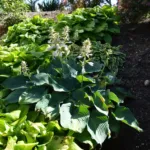 Elegans (Hosta sieboldiana ‘Elegans’)Hosta sieboldiana 'Elegans'
 Smooth hydrangea or sevenbark (Hydrangea arborescens) care guideHydrangea arborescens
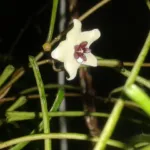 Hoya retusa care guideHoya retusa
 Vascular Plants (Tracheophyta) care guideTracheophyta
 Shooting star hoya (Hoya multiflora) care guideHoya multiflora
 Hydrangea ‘Anomala Petiolaris’Hydrangea 'Anomala Petiolaris'