
 Source:
 Veitchii (Hydrangea macrophylla ‘Veitchii’) short overview
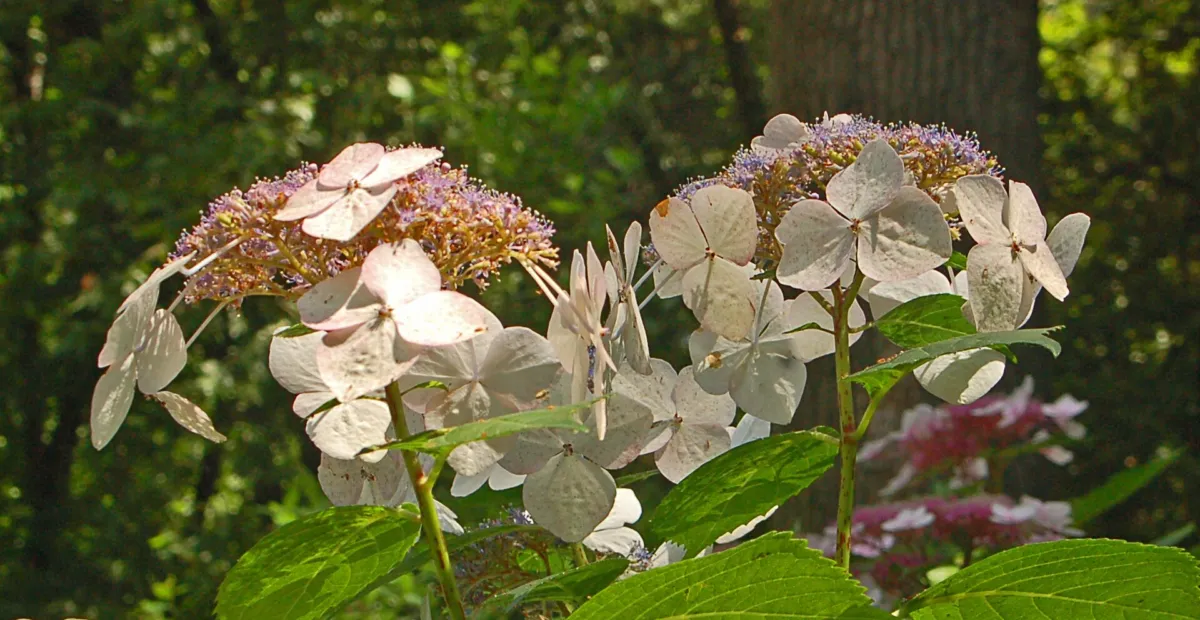
Hydrangea macrophylla 'Veitchii' is a classic lacecap hydrangea valued for its broad, glossy foliage and flat flower clusters. The outer sterile florets open white and may age pink, while the smaller fertile flowers can vary from white to pink or blue with soil conditions. This vigorous, deciduous shrub performs best in moist, well-drained soil and light shade, where afternoon sun and drying winds are limited.
Taxonomic classification
Veitchii (Hydrangea macrophylla ‘Veitchii’) care guide
Light and placement
Grow in bright filtered light or light shade, ideally with morning sun and afternoon protection. An east-facing or sheltered north-facing site is often suitable. Too much direct afternoon sun can scorch leaves, wilt stems, and fade flowers; too little light may produce weak growth and fewer blooms. Shelter from drying wind.
Watering and humidity
Water deeply when the upper inch of soil begins to dry, keeping the root zone evenly moist rather than constantly saturated. Increase frequency during hot, windy weather and reduce it during cool or rainy periods. Mulch the root zone to moderate moisture swings, but keep mulch away from the stems.
Soil and growing medium
Use fertile, moisture-retentive soil that still drains freely. Loam amended with compost is suitable, and clay can work if drainage is improved. Soil reaction influences the color of the smaller fertile flowers: acidic conditions may favor blue tones, while less acidic conditions may produce pink or mauve tones. Avoid prolonged waterlogging.
Feeding
Apply a balanced, slow-release fertilizer in early spring as growth begins, following the product label. A thin compost mulch can improve soil structure and moisture retention. Avoid heavy nitrogen feeding, which encourages lush foliage at the expense of flowering, and stop routine feeding by late summer.
Growth and habit
This is a vigorous, branching shrub that can broaden substantially when grown in moist, mild conditions. It flowers on older wood, so hard winter dieback or late pruning can remove the next season's buds. Its vigor makes an adequately sized planting site and restrained pruning especially useful.
Planting and repotting
Plant in spring or early fall after extreme heat has passed. Set the root ball level with the surrounding soil, mulch lightly without touching the stems, and water deeply during establishment. Allow generous room for broadening growth, especially in mild, humid climates.
Repot container plants in spring, moving only one pot size larger. Refresh part of the growing medium while preserving the root ball, and water thoroughly after planting. Choose a container with drainage holes and avoid letting the pot remain in standing water.
Propagation and pruning
Propagation
Use softwood cuttings in late spring or semi-ripe cuttings in summer. Keep cuttings evenly moist under bright, indirect light until rooted. Hardwood cuttings are possible but slower. Seed is not a reliable way to reproduce the named cultivar true to type.
Pruning
Prune sparingly immediately after flowering, removing weak, damaged, or crossing stems and shortening only overly long shoots. Avoid hard late-winter pruning because flower buds are carried on older wood. If winter damage occurs, wait until spring growth clarifies which stems are alive.
Overwintering
In USDA Zone 6 and exposed parts of Zone 7, mulch the root zone after the ground cools and protect young plants from drying winter wind. Do not cut the shrub to the ground in fall. Container plants need insulation or an unheated protected location where roots do not freeze solid for extended periods.
Uses
Use as a specimen shrub, woodland-edge planting, foundation accent, informal border plant, or container subject in climates where winter protection is practical. The lacecap flowers are useful for fresh or dried arrangements. Do not use as food or medicine.
Appearance
Recognized by broad, glossy, dark-green leaves and flat lacecap heads rather than rounded mopheads. The outer sterile florets have pointed sepals and surround a center of smaller fertile flowers. Stems are woody and branching, and old flower heads may persist briefly as they age.
Flowering
A single-flowered lacecap with small fertile flowers in the center and larger sterile florets around the margin. The outer florets are typically white and can age pink, while fertile flowers may appear white, pink, or blue depending partly on soil chemistry. The cultivar is not reliably remontant and generally flowers on older wood.
Pollination and visitors
The central fertile flowers can be visited by bees, bumblebees, and hoverflies, but the large outer sterile florets contribute mainly visual display. Documented attraction is therefore variable and generally lower than in hydrangeas with a higher proportion of fertile flowers.
Hydrangea macrophylla 'Veitchii' photos
Click any photo for a larger view. Source, author and license are shown separately.
Diseases and pests
Diseases
Provide air circulation, avoid overhead irrigation, and remove fallen diseased foliage. Watch for leaf spot, powdery mildew, and root problems caused by persistently saturated soil. Prune out affected material during dry weather and improve drainage rather than relying on repeated fungicide use.
Pests
Inspect new growth and leaf undersides for aphids, scale, spider mites, and slugs. Encourage beneficial insects, wash off light infestations, and use targeted treatment only when damage is substantial. Avoid drought stress, which can worsen mite problems.
Related diseases and pests
Only Plant Doctor profiles whose host data indicate this plant may be affected are shown here.
 PestCyclamen mitePhytonemus pallidus
 PestChilli thripsScirtothrips dorsalis Hood
 DiseaseAster yellows‘Candidatus Phytoplasma asteris’
 PestStrawberry foliar nematodeAphelenchoides fragariae
 DiseaseGray MoldBotrytis cinerea
 DiseasePowdery mildew caused by Golovinomyces cichoracearumGolovinomyces cichoracearum
 DiseaseMaple powdery mildewSawadaea bicornis
 DiseaseCucurbit Powdery MildewPodosphaera xanthii (Castagne) U. Braun & Shishkoff
Toxicity and pollen
Hydrangea plant material contains cyanogenic compounds and should not be eaten. Exposure most often causes gastrointestinal upset, but severity depends on the amount consumed. Keep leaves, flowers, and prunings away from children and pets; seek professional advice after ingestion.
- Typical season
- Late spring through summer
- Pollination / pollen
- Heavy insect-carried pollen
As an insect-pollinated flowering shrub, its pollen is not typically released in large quantities into the air. The cultivar's showy sterile florets produce no pollen, but the fertile flowers do. People with individual plant sensitivities should still avoid assuming zero allergy risk.
Native habitat
The species is associated with moist, forested and coastal environments in Japan, where soils are generally humus-rich and moisture-retentive but not permanently saturated. In cultivation, woodland-edge conditions with shelter and filtered light best approximate its preferred environment.
Interesting fact
'Veitchii' received the Royal Horticultural Society Award of Garden Merit. It is an old cultivar associated with the Veitch nursery and was introduced from Japan in the late nineteenth century. Its lacecap structure preserves a clear distinction between showy sterile florets and smaller fertile flowers.
Frequently asked questions (FAQ)
The most relevant questions about this plant, with short and direct answers.
🌱Quick care
What is Hydrangea macrophylla 'Veitchii'?⌄
Hydrangea macrophylla 'Veitchii' is a deciduous lacecap bigleaf hydrangea with large, flat flower heads, white sterile florets, and smaller fertile flowers that may appear blue or pink depending on soil conditions.
How big does Hydrangea macrophylla 'Veitchii' get?⌄
Hydrangea macrophylla 'Veitchii' commonly grows about 5 to 6 feet tall and 8 to 10 feet wide, although size varies with climate, soil, and pruning.
What USDA hardiness zones are suitable for Hydrangea macrophylla 'Veitchii'?⌄
Hydrangea macrophylla 'Veitchii' is generally suitable for USDA Zones 6 through 9. In colder parts of Zone 6, winter protection may be needed to preserve flower buds.
Is Hydrangea macrophylla 'Veitchii' a lacecap or mophead hydrangea?⌄
Hydrangea macrophylla 'Veitchii' is a lacecap hydrangea. Its flower heads have showy outer florets surrounding a central cluster of smaller fertile flowers.
🌤️Environment and placement
How much sun does Hydrangea macrophylla 'Veitchii' need?⌄
Grow Hydrangea macrophylla 'Veitchii' in light shade or morning sun with protection from intense afternoon heat. Too much direct sun can cause wilting and leaf scorch, especially when soil is dry.
Can Hydrangea macrophylla 'Veitchii' grow in full shade?⌄
Hydrangea macrophylla 'Veitchii' can survive in bright shade, but heavy shade may reduce flowering and produce weaker growth. Filtered light or several hours of gentle morning sun is usually better.
What soil is best for Hydrangea macrophylla 'Veitchii'?⌄
Use moist, fertile, well-drained loam enriched with organic matter. The soil should retain moisture without staying waterlogged around the roots.
Does soil pH change the flower color of Hydrangea macrophylla 'Veitchii'?⌄
Yes, soil chemistry can influence the fertile flowers and aging tones of Hydrangea macrophylla 'Veitchii'. Acidic conditions may encourage blue or bluish centers, while alkaline conditions may produce pinker tones, but the large outer florets remain primarily white before aging.
Is Hydrangea macrophylla 'Veitchii' suitable for hot climates?⌄
Hydrangea macrophylla 'Veitchii' can grow in warm areas within its hardiness range if it receives afternoon shade and consistent moisture. Hot, dry exposure increases wilting, leaf scorch, and flower-bud stress.
💧Care and problems
How often should I water Hydrangea macrophylla 'Veitchii'?⌄
Water Hydrangea macrophylla 'Veitchii' whenever the soil surface begins to dry, keeping the root zone evenly moist. Increase watering during hot or dry weather, but avoid saturated soil.
Why is Hydrangea macrophylla 'Veitchii' wilting?⌄
Wilting is most often caused by dry soil, excessive afternoon sun, heat, or root problems from poor drainage. Check soil moisture first, then provide deep watering and temporary shade if the plant is heat-stressed.
Why does Hydrangea macrophylla 'Veitchii' have brown leaf edges?⌄
Brown leaf edges usually indicate drought stress, hot sun, wind, or inconsistent watering. Maintain even soil moisture, add organic mulch, and protect the plant from harsh afternoon exposure.
Is Hydrangea macrophylla 'Veitchii' resistant to powdery mildew?⌄
Hydrangea macrophylla 'Veitchii' is considered relatively resistant to powdery mildew compared with many bigleaf hydrangeas. Good air circulation, proper spacing, and watering at the soil line can still help prevent disease.
What pests commonly affect Hydrangea macrophylla 'Veitchii'?⌄
Aphids, hydrangea scale, spider mites, and leaf-feeding insects may affect Hydrangea macrophylla 'Veitchii'. Most infestations can be managed by improving plant vigor, rinsing foliage, or using a labeled insecticidal soap or horticultural oil when appropriate.
Why are the leaves on Hydrangea macrophylla 'Veitchii' turning yellow?⌄
Yellow leaves may result from overwatering, poor drainage, nutrient deficiency, or normal seasonal senescence. Check the roots and soil moisture before applying fertilizer, because persistently wet soil can cause more serious problems than low fertility.
🪴Planting and repotting
When is the best time to plant Hydrangea macrophylla 'Veitchii'?⌄
Plant Hydrangea macrophylla 'Veitchii' in spring or fall when temperatures are moderate and the soil is workable. In colder regions, spring planting gives the roots more time to establish before winter.
How should I plant Hydrangea macrophylla 'Veitchii' in the ground?⌄
Set Hydrangea macrophylla 'Veitchii' at the same depth it grew in its container, place it in moist well-drained soil, and water thoroughly after planting. Leave enough room for its potentially wide mature spread.
Can Hydrangea macrophylla 'Veitchii' be grown in a container?⌄
Hydrangea macrophylla 'Veitchii' can be grown in a large container while young, but its broad mature size makes long-term container culture demanding. Use a pot with drainage, fertile moisture-retentive mix, and regular watering.
How should I protect Hydrangea macrophylla 'Veitchii' over winter?⌄
Protect Hydrangea macrophylla 'Veitchii' by applying several inches of mulch over the root zone and shielding dormant stems from drying wind and severe cold. In colder areas, cover or wrap the plant after dormancy without trapping excess moisture.
✂️Propagation and pruning
How do you propagate Hydrangea macrophylla 'Veitchii' from cuttings?⌄
Propagate Hydrangea macrophylla 'Veitchii' from softwood cuttings taken in late spring or early summer. Place leaf-node cuttings in a sterile, evenly moist rooting medium under bright indirect light and high humidity until roots develop.
Can Hydrangea macrophylla 'Veitchii' be propagated by layering?⌄
Yes, Hydrangea macrophylla 'Veitchii' can be propagated by layering a flexible stem into moist soil while leaving its tip exposed. Once roots form, separate the new plant from the parent and transplant it carefully.
When should Hydrangea macrophylla 'Veitchii' be pruned?⌄
Prune Hydrangea macrophylla 'Veitchii' immediately after flowering, removing weak or damaged stems and shortening overgrown shoots as needed. Avoid late-summer, fall, winter, or early-spring pruning because this cultivar flowers mainly on old wood.
Should I remove old flowers from Hydrangea macrophylla 'Veitchii'?⌄
You may remove spent flower heads from Hydrangea macrophylla 'Veitchii' after flowering for tidier growth. Make cuts just above healthy buds and finish before the plant sets next season’s flower buds.
⚠️Toxicity and safety
Is Hydrangea macrophylla 'Veitchii' toxic to people?⌄
Hydrangea macrophylla 'Veitchii' should be considered moderately toxic if eaten. Ingestion can cause gastrointestinal upset and other symptoms, so keep plant material away from children and seek medical advice after a significant exposure.
Is Hydrangea macrophylla 'Veitchii' toxic to dogs and cats?⌄
Hydrangea macrophylla 'Veitchii' should not be eaten by dogs or cats because hydrangeas can cause gastrointestinal illness after ingestion. Contact a veterinarian or animal poison-control service if a pet consumes a substantial amount.
🌸Flowering and special interest
When does Hydrangea macrophylla 'Veitchii' bloom?⌄
Hydrangea macrophylla 'Veitchii' usually blooms from late spring into summer, depending on local climate. Flowering may be sparse after a cold winter if its old wood and flower buds were damaged.
What do the flowers of Hydrangea macrophylla 'Veitchii' look like?⌄
The flowers form broad, flat lacecap heads with large white sterile florets around smaller fertile flowers. The outer florets may age through pink, lilac, or lightly bluish tones depending on conditions.
Why is Hydrangea macrophylla 'Veitchii' not blooming?⌄
The most common causes are winter damage to old-wood buds, pruning at the wrong time, insufficient light, drought stress, or excessive nitrogen. Protect the stems in winter and prune only just after flowering.
Does Hydrangea macrophylla 'Veitchii' bloom on old wood or new wood?⌄
Hydrangea macrophylla 'Veitchii' primarily blooms on old wood formed during the previous growing season. This is why late pruning or severe winter damage can remove the following summer’s flowers.
Can Hydrangea macrophylla 'Veitchii' flowers be used as cut flowers?⌄
Yes, the lacecap flower heads of Hydrangea macrophylla 'Veitchii' can be cut for fresh arrangements or dried displays. Harvest sturdy stems after the flowers have developed fully, and condition them promptly in water.
Similar plants
 Annabelle Hydrangea (Hydrangea arborescens ‘Annabelle’)Hydrangea arborescens 'Annabelle'
 Lanarth White (Hydrangea macrophylla ‘Lanarth White’)Hydrangea macrophylla 'Lanarth White'
 Smooth hydrangea or sevenbark (Hydrangea arborescens) care guideHydrangea arborescens
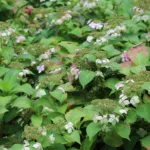 Blue Wave (Hydrangea macrophylla ‘Blue Wave’)Hydrangea macrophylla 'Blue Wave'
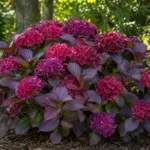 Merveille Sanguine (Hydrangea macrophylla ‘Merveille Sanguine’)Hydrangea macrophylla 'Merveille Sanguine'
 Blue Danube (Hydrangea macrophylla ‘Blue Danube’)Hydrangea macrophylla 'Blue Danube'