
 AI-generated illustration
Lanarth White (Hydrangea macrophylla ‘Lanarth White’) short overview
Hydrangea macrophylla 'Lanarth White' is a compact, deciduous lacecap hydrangea valued for flat flower heads edged with large white florets and centered by small blue-lilac to pink fertile flowers. It performs best in rich, moisture-retentive but well-drained soil with morning sun or partial shade. This adaptable cultivar is suitable for borders, containers, cutting gardens, and sheltered coastal or exposed sites, but its old flowering wood benefits from winter protection.
Taxonomic classification
Lanarth White (Hydrangea macrophylla ‘Lanarth White’) care guide
Light and placement
Give morning sun, bright dappled light, or partial shade. Full sun is possible where soil stays reliably moist, but hot afternoon exposure can scorch leaves and wilt flowers. Too little light may produce weak stems and fewer flower heads; too much heat or reflected sun causes drooping, browning margins, and rapid moisture loss.
Watering and humidity
Water deeply when the upper inch of soil begins to dry, keeping the root zone consistently moist rather than alternately saturated and dry. Increase frequency during hot, windy weather and reduce it during cool wet periods. Apply mulch over the root zone, leaving a gap around stems; humidity is less important than steady soil moisture.
Soil and growing medium
Use rich, organic-matter-containing soil that holds even moisture without becoming waterlogged. Loam, clay, or sandy soil can work if drainage is reliable and the root zone is mulched. Soil reaction may influence the central fertile florets, with more blue-lilac tones in acidic conditions and pinker tones in neutral to alkaline conditions; the large marginal florets remain white.
Feeding
Apply compost or a balanced slow-release shrub fertilizer in spring as growth begins. Water fertilizer in thoroughly and avoid heavy nitrogen feeding, which can produce lush foliage with weaker flowering. Stop routine feeding by late summer so new growth can mature before winter.
Growth and habit
Forms a compact, rounded, multi-stemmed shrub and usually reaches flowering size within several years. Growth is strongest when roots remain evenly moist and cool. Avoid unnecessary hard cutting because the cultivar commonly flowers from older stems; remove only damaged, weak, or crowded wood when possible.
Planting and repotting
Plant in spring or fall, setting the shrub at the same depth as in its nursery container. Space plants about 3 feet apart for a continuous grouping, or allow roughly 3–5 feet for individual development. Water deeply during establishment and mulch without burying the stems.
Move container plants into a slightly larger pot in spring, using a moisture-retentive but well-drained shrub or multipurpose mix. Refresh the upper layer annually if the root ball is not crowded. Avoid unnecessary root disturbance during summer flowering.
Propagation and pruning
Propagation
Propagate from softwood cuttings in late spring or early summer, or by simple layering when flexible stems are available. Keep cuttings evenly moist in bright, indirect light until rooted. Cultivar traits are maintained vegetatively rather than from seed.
Pruning
Prune lightly immediately after flowering if shaping is necessary, cutting flowering stems back to healthy buds. Remove dead or winter-damaged stems in late winter or early spring. Avoid hard fall or spring pruning because it can remove old wood carrying next season’s flower buds.
Overwintering
In Zones 6–9, mulch the root zone with about 3 inches of compost, bark, or similar material. In colder or exposed sites, protect stems and flower buds with breathable fabric or a loose layer of leaves after the ground cools. Zone 5 plants may survive in shelter but can lose flowering wood after severe winter fluctuations.
Uses
Use as a specimen shrub, informal border plant, patio container, cottage-garden accent, or source of cut flowers. Its durable lacecap structure also provides seasonal interest after flowering. Do not use it as food or medicine, and keep fallen plant material away from pets and children.
Appearance
Leaves are broadly ovate, coarse-textured, and deciduous, creating a dense green backdrop for the flat lacecap heads. The outer florets are conspicuously larger than the central fertile flowers, giving the inflorescence its classic lacecap outline. Stems become woody with age and carry the next season’s flower buds.
Flowering
This lacecap cultivar produces flattened terminal flower heads in midsummer. Large white sterile florets form an outer ring around a central cluster of small fertile flowers that can open blue-lilac, greenish, or pinkish depending partly on soil reaction. It generally flowers on older wood, so winter injury or late pruning can reduce the following season’s display.
Pollination and visitors
The small fertile flowers in the center of the lacecap can provide access to insects, while the large white marginal florets are primarily visual and sterile. Reliable cultivar-specific visitor records are limited; bee and hoverfly visits are reasonable species-level expectations, so attraction is rated low rather than high.
Diseases and pests
Diseases
Watch for leaf spot, powdery mildew, gray mold, and occasionally honey fungus. Improve air circulation, avoid wetting foliage late in the day, remove badly affected leaves, and clean up fallen debris. Avoid routine fungicide use unless symptoms are persistent and accurately identified.
Pests
Aphids, capsid bugs, hydrangea scale, and vine weevil may occur. Inspect young shoots, leaf undersides, and container roots; encourage natural enemies, improve plant vigor, and use targeted control only when damage is significant.
Related diseases and pests
Only Plant Doctor profiles whose host data indicate this plant may be affected are shown here.
 DiseaseGray MoldBotrytis cinerea
 PestCyclamen mitePhytonemus pallidus
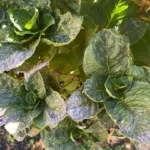 PestChilli thripsScirtothrips dorsalis Hood
 DiseaseAster yellows‘Candidatus Phytoplasma asteris’
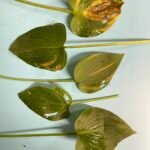 PestStrawberry foliar nematodeAphelenchoides fragariae
 DiseaseMaple powdery mildewSawadaea bicornis
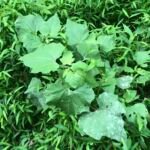 DiseaseCucurbit Powdery MildewPodosphaera xanthii (Castagne) U. Braun & Shishkoff
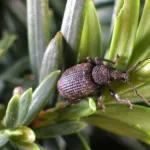 PestBlack Vine WeevilOtiorhynchus sulcatus
Toxicity and pollen
Hydrangea macrophylla is listed by North Carolina Extension as having low-severity poisonous characteristics because of cyanogenic glycosides. Large ingestions of leaves, flowers, stems, or bark may cause nausea, stomach pain, vomiting, or sweating. Keep plant material away from children and pets and seek professional advice after ingestion.
- Typical season
- Usually July–August, coinciding with flowering
- Pollination / pollen
- Insect-presented pollen with limited wind dispersal
This insect-pollinated shrub is not generally regarded as a major airborne-pollen source. Its pollen is mainly presented within flowers and is less readily dispersed by wind than pollen from wind-pollinated trees or grasses. Sensitive individuals may still react to plant contact or nearby flowering material.
Native habitat
The species is native to East Asia, including Japan, China, and Korea, where it occurs in moist woodland margins, forest habitats, and other temperate settings. In cultivation it favors humus-rich soils, reliable moisture, and protection from intense afternoon heat.
Interesting fact
Lanarth White is recognized for unusually good performance in exposed or coastal positions. Its lacecap heads combine sterile display florets with a central fertile flower cluster. The cultivar has received the RHS Award of Garden Merit.
Frequently asked questions (FAQ)
The most relevant questions about this plant, with short and direct answers.
🌱Quick care
What is Hydrangea macrophylla 'Lanarth White'?⌄
Hydrangea macrophylla 'Lanarth White' is a compact lacecap hydrangea with flattened flower heads, white outer florets, and smaller central florets that may show pink or blue tones. It is a deciduous shrub suited to moist, well-drained soil.
How big does Hydrangea macrophylla 'Lanarth White' get?⌄
Hydrangea macrophylla 'Lanarth White' typically grows about 2 to 3 feet tall and wide. Its final size can vary with climate, pruning, soil quality, and available moisture.
How much water does Hydrangea macrophylla 'Lanarth White' need?⌄
Keep Hydrangea macrophylla 'Lanarth White' evenly moist, especially during hot or dry weather. Do not leave the roots in waterlogged soil, because good drainage is essential.
Does Hydrangea macrophylla 'Lanarth White' need full sun or shade?⌄
Give Hydrangea macrophylla 'Lanarth White' full sun to partial shade, with afternoon protection in hot climates. More sun is tolerated when the soil remains consistently moist.
Is Hydrangea macrophylla 'Lanarth White' easy to grow?⌄
Hydrangea macrophylla 'Lanarth White' is generally manageable when given moisture-retentive soil, reliable watering, and protection from severe winter conditions. Flowering can be less dependable after harsh winters because it commonly blooms on older stems.
🌤️Environment and placement
What USDA hardiness zones are suitable for Hydrangea macrophylla 'Lanarth White'?⌄
Hydrangea macrophylla 'Lanarth White' is generally listed for USDA Zones 6 through 9. In colder or exposed Zone 5 locations, winter protection may be needed, and flowering can still be reduced after severe freezes.
Where should I plant Hydrangea macrophylla 'Lanarth White'?⌄
Plant it in a sheltered border, woodland-edge setting, courtyard, or container where it receives morning sun or filtered light and consistent moisture. Avoid hot, dry, exposed sites unless irrigation is reliable.
Can Hydrangea macrophylla 'Lanarth White' grow in full sun?⌄
It can grow in full sun if the soil stays reliably moist. In hot summer regions, partial shade or afternoon shade helps reduce leaf scorch and drought stress.
What type of soil does Hydrangea macrophylla 'Lanarth White' need?⌄
Use rich, moisture-retentive but well-drained soil amended with compost or other organic matter. It can tolerate different soil reactions, but compacted or chronically saturated soil should be avoided.
Does soil pH change the flowers of Hydrangea macrophylla 'Lanarth White'?⌄
Soil pH may influence the smaller central florets, which can appear pinker in less acidic soil or bluer in acidic soil. The large outer florets remain predominantly white, so soil amendments will not turn the entire flower head blue or pink.
💧Care and problems
Why is my Hydrangea macrophylla 'Lanarth White' not flowering?⌄
The most common causes are winter damage to flower buds, excessive shade, drought stress, or pruning at the wrong time. Because this cultivar can flower on older growth, a hard winter or late pruning may remove the following season’s blooms.
Why are the leaves of Hydrangea macrophylla 'Lanarth White' wilting?⌄
Wilting usually indicates insufficient moisture, heat stress, root damage, or waterlogged soil. Check the soil several inches below the surface, water deeply when it is dry, and improve drainage if it stays saturated.
How often should I fertilize Hydrangea macrophylla 'Lanarth White'?⌄
Apply a balanced, slow-release fertilizer in spring if the plant shows weak growth or nutrient deficiency. Avoid excessive nitrogen, which can produce leafy growth at the expense of flowers.
What pests affect Hydrangea macrophylla 'Lanarth White'?⌄
Possible pests include aphids, capsid bugs, hydrangea scale, and vine weevils. Inspect new growth, leaf undersides, and the root zone regularly, and address problems early with the least-disruptive suitable treatment.
What diseases can affect Hydrangea macrophylla 'Lanarth White'?⌄
It may develop leaf spot, powdery mildew, gray mold, or, less commonly, honey fungus. Good air circulation, careful watering at the soil line, removal of damaged foliage, and avoidance of overcrowding can reduce disease pressure.
🪴Planting and repotting
When is the best time to plant Hydrangea macrophylla 'Lanarth White'?⌄
Plant it in spring or fall when temperatures are moderate and the soil is workable. Spring planting is preferable in colder areas where the shrub needs a full growing season to establish before winter.
Can Hydrangea macrophylla 'Lanarth White' grow in a container?⌄
Yes, Hydrangea macrophylla 'Lanarth White' can grow in a container if the pot has drainage holes and is large enough for its mature root system. Container plants dry out and freeze faster than in-ground plants, so they need closer watering and winter protection.
✂️Propagation and pruning
How do I propagate Hydrangea macrophylla 'Lanarth White'?⌄
Propagate Hydrangea macrophylla 'Lanarth White' from softwood cuttings taken during active growth. Use a clean cutting with several leaves, insert it into a sterile, moist rooting medium, and keep it humid in bright indirect light.
When should I prune Hydrangea macrophylla 'Lanarth White'?⌄
Prune Hydrangea macrophylla 'Lanarth White' immediately after flowering if shaping or size reduction is necessary. Remove weak or winter-damaged stems in late winter or early spring, but avoid cutting healthy older stems heavily because they may carry flower buds.
Should I remove the old flowers from Hydrangea macrophylla 'Lanarth White'?⌄
You may remove faded flower heads after flowering to tidy the plant, cutting back only to healthy buds. Leaving the old heads in place through winter can provide some protection to developing buds and add seasonal interest.
⚠️Toxicity and safety
Is Hydrangea macrophylla 'Lanarth White' toxic to dogs and cats?⌄
Hydrangea macrophylla 'Lanarth White' can cause stomach upset if eaten and may be harmful to pets. Keep pets from chewing the leaves, stems, or flowers, and contact a veterinarian or poison-control service if a significant amount is consumed.
Can Hydrangea macrophylla 'Lanarth White' irritate skin?⌄
Handling Hydrangea macrophylla 'Lanarth White' may irritate sensitive skin. Wear gloves when pruning or taking cuttings, and wash exposed skin after working with the plant.
🌸Flowering and special interest
When does Hydrangea macrophylla 'Lanarth White' bloom?⌄
Hydrangea macrophylla 'Lanarth White' usually blooms in summer, commonly from July into August in temperate climates. The exact timing depends on winter conditions, spring temperatures, location, and plant maturity.
What do the flowers of Hydrangea macrophylla 'Lanarth White' look like?⌄
It produces flattened lacecap flower heads with small central fertile florets surrounded by larger white sterile florets. The central florets may develop pink, mauve, or blue tones depending partly on soil conditions.
Is Hydrangea macrophylla 'Lanarth White' a lacecap hydrangea?⌄
Yes, Hydrangea macrophylla 'Lanarth White' is a lacecap hydrangea. Its open, flattened flower heads differ from the rounded mophead form and are often attractive to pollinating insects because the central fertile florets are exposed.
Can Hydrangea macrophylla 'Lanarth White' bloom after a hard winter?⌄
It may bloom poorly or fail to bloom after a hard winter because cold can damage flower buds on older stems. Mulching the root zone and protecting the stems in colder or exposed locations can improve the chance of flowering, but it cannot guarantee blooms after severe weather.
Similar plants
 Altona (Hydrangea macrophylla ‘Altona’)Hydrangea macrophylla 'Altona'
 Bigleaf Hydrangea (Hydrangea macrophylla) care guideHydrangea macrophylla
 Generale Vicomtesse de Vibraye (Hydrangea macrophylla ‘Generale Vicomtesse de Vibraye’)Hydrangea macrophylla 'Generale Vicomtesse de Vibraye'
 Hamburg mophead hydrangea (Hydrangea macrophylla ‘Hamburg’)Hydrangea macrophylla 'Hamburg'
 Hydrangea ‘Anomala Petiolaris’Hydrangea 'Anomala Petiolaris'
 Hydrangea ‘Aspera Villosa’Hydrangea 'Aspera Villosa'