 Source:
 Hydrangea ‘Aspera Villosa’ short overview
Hydrangea 'Aspera Villosa' is a deciduous shrub in the Villosa Group, valued for its large, softly hairy leaves and broad, flat late-summer flower heads. Mauve fertile flowers are typically surrounded by white sterile florets, creating a refined lacecap effect. Grow it in moist, well-drained soil with morning sun or partial shade; in hotter parts of the United States, protection from intense afternoon sun helps preserve foliage and flowering.
Taxonomic classification
Hydrangea ‘Aspera Villosa’ care guide
Light and placement
Grow in full sun to partial shade, ideally with morning sun and protection from intense afternoon heat. East- or north-facing borders are useful in hot climates. Pale, scorched, or wilted leaves suggest excessive sun or drought; weak, stretched growth and sparse flowering suggest insufficient light. Keep the root zone cool with organic mulch.
Watering and humidity
Water deeply when the upper few inches of soil begin to dry, rather than applying frequent shallow irrigation. Keep moisture steady through spring and summer, especially during flowering and in the first two growing seasons. Reduce watering after leaf fall, but do not allow container plants or newly planted shrubs to become completely dry.
Soil and growing medium
Use fertile, moisture-retentive but well-drained soil. Loam enriched with compost is ideal; clay should be opened with organic matter and sandy soil should be improved for moisture retention. Acidic to neutral conditions are suitable. Avoid persistently waterlogged ground and strongly alkaline sites unless amended.
Feeding
Spread a thin layer of compost or well-rotted organic matter around the root zone in early spring. If growth is weak, apply a balanced slow-release shrub fertilizer at the label rate as growth begins. Do not overfeed with high nitrogen, and avoid late-season fertilizing that can encourage tender growth before winter.
Growth and habit
A naturally rounded, upright-to-bushy shrub that becomes substantial with age. Allow room for its broad habit and avoid repeated hard cutting, since it is most effective as a naturally branching specimen. Consistent moisture supports stronger shoots, larger foliage, and better flowering.
Planting and repotting
Plant in spring or fall when the soil is workable. Set the root ball level with the surrounding soil, water deeply, and mulch without touching the stems. Allow about 5–8 feet of space for a mature specimen, with closer spacing only for a managed mass planting. Maintain even moisture during establishment.
Repot container plants in early spring before active growth, moving them into a pot only modestly larger than the root ball. Refresh part of the growing medium and preserve the root crown at its original level. Large specimens are better renewed by careful root pruning or planted into the landscape.
Propagation and pruning
Propagation
Softwood cuttings are the best-supported practical method, taken in late spring or early summer from healthy non-flowering shoots. Use a sterile, airy medium, maintain high humidity without saturation, and root under bright filtered light. Cultivar or group identity is best preserved vegetatively rather than from seed.
Pruning
Pruning group 1: remove dead, damaged, or weak stems after flowering or in early spring. Thin congested growth selectively rather than cutting the whole plant hard, and avoid late-season pruning that removes developing flowering wood.
Overwintering
In USDA Zone 6 and exposed colder locations, mulch the root zone after the ground cools and shelter plants from drying winter winds. Avoid heavy late-summer nitrogen. Container specimens are more vulnerable to root freezing and may need an unheated protected space or insulation.
Uses
Use as a specimen shrub, woodland-border plant, or background planting where its foliage and late-summer lacecaps can be viewed closely. It is also suitable for large containers in climates where winter protection is practical. Do not use as food or for unverified medicinal purposes; the plant is potentially harmful if eaten.
Appearance
The plant is identified by large ovate leaves with a distinctly rough, velvety surface, sturdy branching, and broad, open lacecap heads. The foliage gives the shrub a textured appearance even when it is not flowering. Young shoots may be softly hairy, and the overall habit is rounded rather than strongly vase-shaped.
Flowering
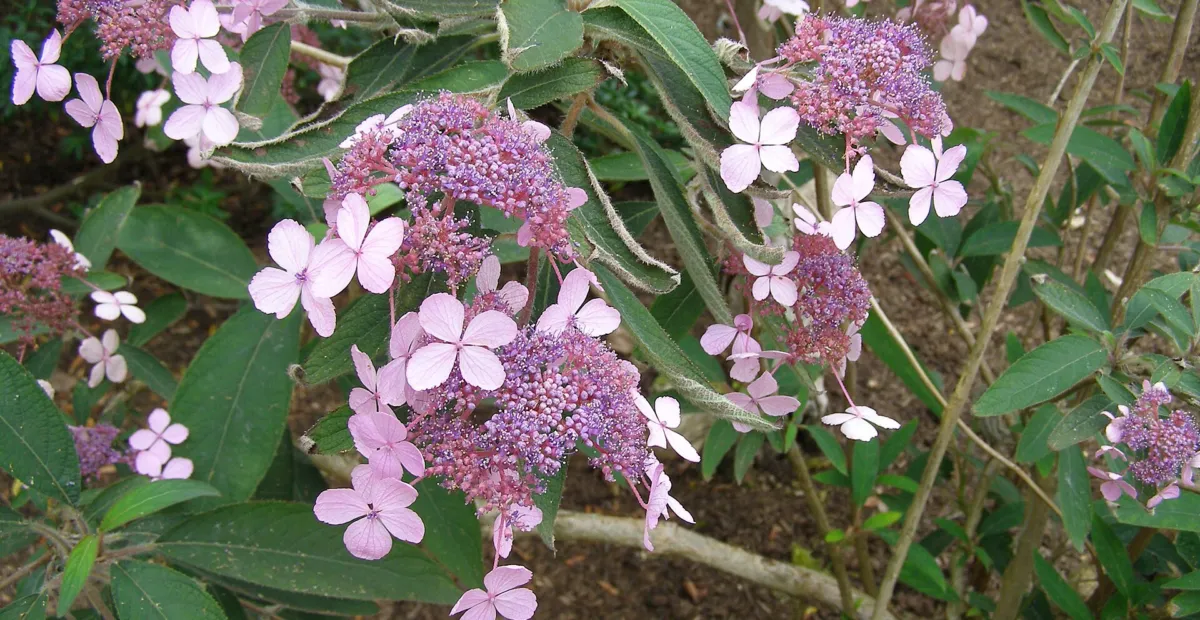
Broad, flat lacecap heads appear in late summer. Small fertile flowers form the central portion, while larger sterile florets are distributed around the margins and are usually white. Flowering is strongest on established plants with steady moisture and adequate light; severe drought can reduce display quality.
Pollination and visitors
The open lacecap structure exposes fertile flowers to a range of insect visitors. Horticultural sources specifically report attraction to bees and butterflies; other small flower-visiting insects may also use the central fertile flowers.
Hydrangea 'Aspera Villosa' photos
Click any photo for a larger view. Source, author and license are shown separately.
Diseases and pests
Diseases
Watch for leaf spot, powdery mildew, gray mold, and rarely honey fungus. Improve air circulation, water at the soil surface, remove heavily affected foliage, and avoid prolonged wetness on leaves. Use sanitation first; reserve labeled fungicides for persistent, correctly identified problems.
Pests
Aphids, capsid bugs, hydrangea scale, and vine weevil may occur. Inspect tender growth and leaf undersides, encourage beneficial insects, improve plant vigor, and use targeted controls only when damage is significant. Container plants are more vulnerable to vine weevil larvae.
Related diseases and pests
Only Plant Doctor profiles whose host data indicate this plant may be affected are shown here.
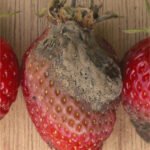 DiseaseGray MoldBotrytis cinerea
 PestCyclamen mitePhytonemus pallidus
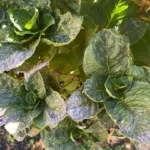 PestChilli thripsScirtothrips dorsalis Hood
 DiseaseAster yellows‘Candidatus Phytoplasma asteris’
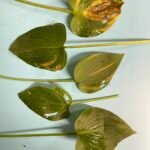 PestStrawberry foliar nematodeAphelenchoides fragariae
 DiseaseMaple powdery mildewSawadaea bicornis
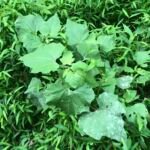 DiseaseCucurbit Powdery MildewPodosphaera xanthii (Castagne) U. Braun & Shishkoff
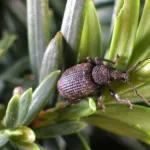 PestBlack Vine WeevilOtiorhynchus sulcatus
Toxicity and pollen
Hydrangeas contain cyanogenic compounds and are listed by horticultural and veterinary sources as potentially harmful if eaten. Handling may also irritate sensitive skin. Keep children and pets from chewing leaves, buds, flowers, stems, or other plant material; seek professional advice after ingestion.
- Typical season
- Late summer during flowering
- Pollination / pollen
- Insect-carried pollen
This is an insect-pollinated flowering shrub, so its pollen is generally less dispersed through the air than pollen from wind-pollinated trees and grasses. Specific clinical allergy data for this exact group are not well established; sensitive people should avoid close contact with flowering heads if symptoms occur.
Native habitat
The species complex is associated with woodland and forest-edge environments from the Himalayas through southern China to Taiwan. It favors humid conditions, filtered light, fertile soils, and reliable moisture, although established garden plants can tolerate brighter exposure when the root zone does not dry out.
Interesting fact
The name Hydrangea villosa is treated in modern taxonomic references as a synonym of Hydrangea aspera. The Villosa Group is notable for unusually velvety foliage and broad lacecap heads. Unlike many mophead hydrangeas, its flower structure remains relatively open and refined. The group is associated with western China in horticultural references.
Frequently asked questions (FAQ)
The most relevant questions about this plant, with short and direct answers.
🌱Quick care
What is Hydrangea 'Aspera Villosa'?⌄
Hydrangea 'Aspera Villosa' is a deciduous, lacecap-style hydrangea valued for velvety, hairy foliage and flat flower clusters with pale outer florets surrounding purple, mauve, or lilac fertile flowers. It is also commonly treated horticulturally as the Villosa Group of Hydrangea aspera.
How big does Hydrangea 'Aspera Villosa' get?⌄
Hydrangea 'Aspera Villosa' typically grows about 6 to 10 feet tall and wide, depending on climate, soil, and pruning. Give it enough room to develop its naturally broad, upright shrub form.
Is Hydrangea 'Aspera Villosa' deciduous?⌄
Yes, Hydrangea 'Aspera Villosa' is deciduous and loses its leaves in fall. New foliage emerges in spring after the plant has completed winter dormancy.
🌤️Environment and placement
What light does Hydrangea 'Aspera Villosa' need?⌄
Grow Hydrangea 'Aspera Villosa' in full sun to partial shade, with afternoon shade preferred in hot climates. More sun is suitable where the soil stays consistently moist.
Where should I plant Hydrangea 'Aspera Villosa'?⌄
Plant it in a sheltered bed, woodland-style border, or location protected from drying winds and harsh afternoon heat. A site with morning sun, afternoon shade, and evenly moist soil is especially suitable.
What USDA zones are suitable for Hydrangea 'Aspera Villosa'?⌄
Hydrangea 'Aspera Villosa' is generally best suited to USDA Zones 7 through 9. In colder areas, winter protection and a sheltered microclimate may improve survival, but flowering can still be reduced after severe winters.
Can Hydrangea 'Aspera Villosa' grow in full shade?⌄
It can survive in bright shade, but flowering is usually weaker than in partial shade or filtered sun. Avoid dense, dry shade beneath large trees where competition for water is severe.
What soil is best for Hydrangea 'Aspera Villosa'?⌄
Use moist, fertile, well-drained loam that is acidic to neutral. Improve poor soil with organic matter, but avoid sites that remain waterlogged after rain.
💧Care and problems
How often should I water Hydrangea 'Aspera Villosa'?⌄
Water it regularly enough to keep the soil evenly moist, especially during the first growing season, hot weather, and periods without rain. A 2- to 3-inch layer of mulch helps reduce moisture loss without touching the stems.
Why are the leaves of my Hydrangea 'Aspera Villosa' wilting?⌄
Wilting is most often caused by dry soil, heat, transplant stress, or root damage from excessive moisture. Check the soil several inches down and water deeply if it is dry, while improving drainage if the soil stays saturated.
Why is Hydrangea 'Aspera Villosa' not flowering?⌄
Common causes include insufficient light, drought stress, winter damage, excessive pruning, or a young plant that has not established. Because it flowers on older wood, cutting back healthy stems at the wrong time can remove the following season’s flower buds.
Does Hydrangea 'Aspera Villosa' need fertilizer?⌄
It usually needs little fertilizer if planted in fertile soil. If growth is weak, apply a balanced, slow-release fertilizer in spring according to the product label, and avoid excessive nitrogen that can promote leaves at the expense of flowers.
Is Hydrangea 'Aspera Villosa' affected by pests or diseases?⌄
It can experience common hydrangea problems such as aphids, scale, spider mites, leaf spot, and powdery mildew. Good air circulation, consistent watering at the soil line, and removal of badly affected foliage help reduce problems.
🪴Planting and repotting
When is the best time to plant Hydrangea 'Aspera Villosa'?⌄
Plant it in spring or fall when temperatures are moderate and the soil is workable. Spring planting is preferable in colder USDA Zones because it gives the roots more time to establish before winter.
How do I plant Hydrangea 'Aspera Villosa'?⌄
Dig a hole about twice the width of the root ball and no deeper than its original soil level, then backfill with native soil amended with modest organic matter. Water thoroughly and mulch the root zone while keeping mulch away from the stem.
Can Hydrangea 'Aspera Villosa' be grown in a container?⌄
It can be grown temporarily in a large container, but its mature size makes in-ground planting preferable. Use a pot with drainage holes, a moisture-retentive but well-drained mix, and provide winter protection where containers may freeze solid.
✂️Propagation and pruning
How do I propagate Hydrangea 'Aspera Villosa'?⌄
Propagation is generally attempted from softwood cuttings in late spring or early summer, although results may vary because this is a less commonly propagated hydrangea. Keep cuttings humid in a sterile, well-drained rooting medium until roots develop.
Can Hydrangea 'Aspera Villosa' be propagated by layering?⌄
Yes, layering is a practical option if a low, flexible branch is available. Bend part of the stem to the soil, cover a leaf node while leaving the tip exposed, and separate the rooted layer after it has formed a strong root system.
When should I prune Hydrangea 'Aspera Villosa'?⌄
Prune it lightly in late winter or early spring after you can identify living and dead wood. Remove dead, damaged, weak, or badly misplaced stems, but avoid cutting back large amounts of healthy older wood.
Can I cut Hydrangea 'Aspera Villosa' back hard?⌄
Hard pruning is possible, but it can reduce flowering for one or more seasons because the plant flowers on older stems. If substantial size reduction is necessary, spread the work over several years rather than removing most stems at once.
Should I deadhead Hydrangea 'Aspera Villosa'?⌄
Deadheading is optional and mainly improves appearance. Remove faded flower heads after flowering, taking care not to cut deeply into stems that may carry next year’s buds.
⚠️Toxicity and safety
Is Hydrangea 'Aspera Villosa' toxic to dogs and cats?⌄
Yes, hydrangeas can be harmful if eaten, and Hydrangea 'Aspera Villosa' should be treated as potentially toxic to pets and people. Keep the plant away from chewing animals and seek veterinary or medical advice if significant amounts are consumed.
Can Hydrangea 'Aspera Villosa' irritate skin?⌄
The plant may irritate sensitive skin, particularly during pruning or handling rough, hairy foliage. Wear gloves when working with it and wash exposed skin after contact.
Are the dried flowers of Hydrangea 'Aspera Villosa' safe to use indoors?⌄
Dried flower heads can be used decoratively, but they should be kept away from children and pets because the plant may be harmful if eaten. Do not use the flowers or leaves for food, tea, or other ingestion.
🌸Flowering and special interest
When does Hydrangea 'Aspera Villosa' bloom?⌄
It generally blooms from mid- to late summer, often continuing into early fall in suitable climates. The flat lacecap clusters usually combine pale outer florets with purple, mauve, or lilac fertile flowers.
What do the flowers of Hydrangea 'Aspera Villosa' look like?⌄
The flowers are held in broad, flat-topped lacecap clusters that may reach roughly 8 to 10 inches across. Showy outer florets frame a central mass of smaller fertile flowers in purple, mauve, lilac, or related tones.
Do Hydrangea 'Aspera Villosa' flowers change color with soil pH?⌄
Flower color may vary somewhat with soil conditions, but it is not as reliably altered by soil pH as in many bigleaf hydrangeas. Expect the cultivar’s natural purple, mauve, lilac, and pale outer-floret coloration rather than a guaranteed blue-to-pink change.
Why does Hydrangea 'Aspera Villosa' have hairy leaves?⌄
The leaves, stems, and flower stalks naturally have a dense covering of hairs, giving the plant its rough or velvety texture. This foliage is a defining ornamental feature, especially on the undersides of the leaves.