Source:
Hoya obovata short overview
Hoya obovata is a tropical, epiphytic vine valued for its thick, glossy, rounded leaves and clusters of waxy, star-shaped flowers. It is grown in the United States primarily as a houseplant, where bright filtered light, warm temperatures, excellent drainage, and a cycle of thorough watering followed by partial drying support healthy growth. Avoid frost and waterlogged roots, and provide a trellis or hanging position for its flexible stems.
Taxonomic classification
Hoya obovata care guide
Light and placement
Provide bright filtered light for compact growth and the best chance of flowering. An east or west window is suitable; a bright south window should be softened with a sheer curtain or placed several feet back. Too little light can cause elongated stems, sparse leaves, and poor flowering. Harsh afternoon sun may bleach or scorch the thick leaves, especially behind glass.
Watering and humidity
Water thoroughly when the upper half of the mix has dried, then let excess drain completely. Do not keep the pot standing in water. Water somewhat less often in winter or in dim rooms, but do not allow the root ball to remain bone dry for prolonged periods. Humidity helps growth but does not replace good drainage or airflow.
Soil and growing medium
Use a loose, airy epiphyte mix that drains rapidly, such as fine orchid bark, coco coir or peat-free potting mix, and perlite. The substrate should hold slight moisture without remaining saturated. A mildly acidic to neutral reaction is suitable; avoid dense garden soil and containers without drainage.
Feeding
Feed during active spring and summer growth with a balanced liquid houseplant fertilizer diluted to about one-quarter to one-half strength every 3–4 weeks. Water first if the mix is very dry. Reduce or stop feeding during cool, dim winter conditions and after repotting until fresh growth appears.
Growth and habit
This is a flexible, woody-based tropical vine that can climb a support or spill from a hanging container. Long shoots may be trained while young; avoid repeatedly cutting short spurs because flowering can occur from established nodes. Bright light and warm conditions generally produce denser growth and better flowering.
Planting and repotting
In the United States, grow this tropical species in a container rather than outdoors except in frost-free conditions. Set the root ball at its original depth and leave the stem base uncovered. Establish it in warm, bright filtered light, then train the flexible stems onto a support or allow them to trail.
Repot in spring or early summer only when the mix has broken down, roots fill the container, or drainage has declined. Move up one pot size rather than overpotting. Handle the roots gently, refresh the airy mix, and keep the plant slightly drier until new growth resumes.
Propagation and pruning
Propagation
Stem cuttings are the most practical method. Take a healthy cutting with at least one node, allow any cut surface to dry briefly, and root it in a barely moist, airy medium with warmth and bright indirect light. Air layering is also possible. Propagate during active growth for the quickest establishment.
Pruning
Prune only to remove dead, damaged, or excessively tangled growth, or to shape the vine. Use clean shears and avoid cutting off short flowering spurs or peduncles, which may produce flowers again. If a long stem must be shortened, retain several healthy nodes for future branching.
Overwintering
Keep indoors before nighttime temperatures fall below 50°F. Give the plant the brightest available filtered light, reduce watering as growth slows, and keep it away from cold windows and forced-air heat. Do not fertilize during a cool, low-light rest period unless active growth continues.
Uses
Primarily used as an ornamental indoor vine, hanging-basket plant, or trellised houseplant for its substantial foliage and fragrant flower clusters. It is also maintained in warm conservatories and frost-free outdoor collections. No culinary or medicinal use is established here.
Appearance
The defining foliage is thick, leathery, and glossy, with broadly obovate to nearly rounded blades and a softly pointed or notched tip. Stems are flexible and become somewhat woody with age. The plant may form a full hanging mass or climb a support, while compact flower clusters arise from short, persistent spurs.
Flowering
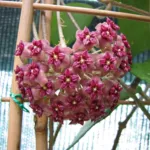
Mature plants produce compact umbels of small, waxy, five-pointed flowers from established flowering spurs. Blooming is most likely when the plant receives strong filtered light, warmth, and consistent but not excessive moisture. Do not remove old flowering spurs, because hoyas may rebloom from them.
Pollination and visitors
The flowers contain nectar and have structures typical of insect-pollinated hoyas, but a species-specific pollinator record for Hoya obovata was not located. Small insects may visit cultivated flowers; the evidence does not justify assigning a named bee, butterfly, or other specialist visitor.
Hoya obovata photos
Click any photo for a larger view. Source, author and license are shown separately.
Diseases and pests
Diseases
The main risks are root or stem rots caused by persistently wet media and poor airflow. Use a porous mix, a draining container, and allow the upper portion of the substrate to dry before watering again. Remove badly rotted tissue with sterile tools and correct the moisture problem before treating further.
Pests
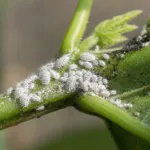
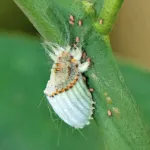
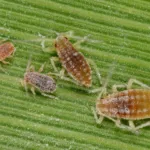
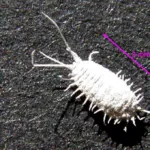
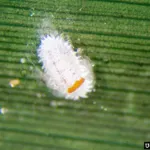
Watch for mealybugs, scale, aphids, and spider mites, especially on stressed or crowded plants. Inspect leaf axils, stems, and new growth regularly. Isolate infested plants, remove small infestations with a cotton swab or water spray, and use a labeled insecticidal soap or horticultural oil according to its directions. Avoid treating in hot direct sun.
Related diseases and pests
Only Plant Doctor profiles whose host data indicate this plant may be affected are shown here.

Toxicity and pollen
Authoritative, species-specific toxicity evidence is limited. Hoya species are commonly grown as ornamental houseplants, but absence of a documented poisoning record should not be treated as proof of complete safety. Keep plant material away from children and pets, prevent chewing, and contact a poison center or veterinarian if a substantial amount is eaten or symptoms occur.
- Typical season
- Indoor flowering periods vary; outdoor exposure is mainly during warm-season bloom
- Pollination / pollen
- Pollinia; primarily insect-transferred
Hoya flowers package pollen into pollinia rather than releasing large quantities of loose, wind-dispersed pollen. However, species-specific airborne-allergen studies for Hoya obovata were not located, so allergy risk cannot be rated confidently. Avoid rubbing flowers or sap into the eyes and wash hands after handling.
Native habitat
Kew records the species from Indo-China, Sulawesi, and the Maluku Islands, where it grows as an epiphyte in wet tropical environments. Its natural lifestyle explains the need for aerated roots, rapid drainage, warmth, and access to bright but filtered light rather than heavy, water-retentive soil.
Interesting fact
The species name obovata refers to its reverse-egg-shaped leaves.
Its native range includes Indo-China, Sulawesi, and the Maluku Islands.
Kew records Hoya obovata as an epiphyte of wet tropical biomes.
The thick leaves help the vine tolerate short dry intervals.
Old flowering spurs can remain productive for later bloom cycles.
Frequently asked questions (FAQ)
The most relevant questions about this plant, with short and direct answers.
🌱Quick care
How do you care for Hoya obovata indoors?⌄
Give Hoya obovata bright filtered light, an airy fast-draining mix, and moderate watering with partial drying between waterings. Keep it warm and protect it from temperatures below 50°F.
Is Hoya obovata easy to grow?⌄
Yes, Hoya obovata is generally considered an easy-care houseplant when it receives bright light and is not kept constantly wet. Its thick leaves tolerate some drying, but prolonged drought or damaged roots can still cause problems.
🌤️Environment and placement
How much light does Hoya obovata need?⌄
Hoya obovata grows best in bright filtered or indirect light. A few hours of gentle morning or late-afternoon sun can be beneficial, but strong midday sun through glass may scorch the leaves.
Can Hoya obovata grow in a north-facing window?⌄
Hoya obovata can survive in a north-facing window, but growth and flowering may be limited if the light is weak. Move it closer to the window or add a grow light if the stems become sparse or the plant does not bloom.
Can Hoya obovata grow under a grow light?⌄
Yes, Hoya obovata grows well under a grow light when the light is bright but not intensely hot. Provide a consistent daily schedule and keep enough distance to prevent leaf bleaching or heat stress.
What temperature is best for Hoya obovata?⌄
Hoya obovata prefers warm indoor temperatures and should be protected below 50°F. Avoid cold drafts, sudden temperature changes, and contact with chilly windows during winter.
Does Hoya obovata need high humidity?⌄
Hoya obovata can grow in average household humidity, although moderate humidity may support steadier growth. Good airflow is more important than keeping the plant constantly damp or enclosed.
💧Care and problems
How often should you water Hoya obovata?⌄
Water Hoya obovata when the upper portion of the mix has partially dried, then water thoroughly and let excess drain away. The interval may range from about weekly in bright, warm conditions to several weeks in cooler or darker rooms.
Should Hoya obovata dry out completely between waterings?⌄
Hoya obovata should dry partially, but it does not always need to become bone-dry throughout the pot. Allowing the mix to stay slightly drier between waterings is safer than keeping it wet, while excessive drought can damage roots.
Why are my Hoya obovata leaves wrinkled?⌄
Wrinkled leaves usually indicate insufficient water uptake, drought stress, or damaged roots rather than a simple need for more frequent watering. Check the roots and mix before watering again, because root rot can also leave leaves soft or wrinkled.
Why are Hoya obovata leaves turning yellow?⌄
Yellow leaves are commonly caused by overwatering, poor drainage, aging foliage, or insufficient light. Check whether the mix remains wet for too long and inspect the roots for brown, mushy tissue.
Why are Hoya obovata leaves soft and mushy?⌄
Soft, mushy leaves often signal overwatering or root rot. Remove the plant from the pot, trim rotten roots, and replant it in fresh, airy mix only after correcting the drainage problem.
What pests attack Hoya obovata?⌄
Mealybugs, scale, spider mites, and aphids can infest Hoya obovata, especially when the plant is stressed. Inspect leaf joints and stems regularly, isolate affected plants, and treat the infestation promptly with an appropriate houseplant method.
Why is my Hoya obovata growing long bare vines?⌄
Long spaces between leaves usually indicate insufficient light, although young vines may also grow sparsely while establishing. Move the plant into brighter filtered light and prune or train the vines after healthy growth resumes.
🪴Planting and repotting
What soil is best for Hoya obovata?⌄
Use an airy, fast-draining epiphyte or orchid-style mix containing materials such as orchid bark, perlite, and a moisture-holding component. The mix should drain quickly while retaining enough moisture for the roots to absorb water.
What type of pot is best for Hoya obovata?⌄
Choose a pot with drainage holes that is only slightly larger than the root ball. A breathable terracotta pot can help wet mix dry faster, while a plastic nursery pot also works if the mix is airy and watering is carefully controlled.
Does Hoya obovata like to be root-bound?⌄
Hoya obovata generally tolerates being slightly root-bound and does not need frequent repotting. Repot when roots severely circle the container, the mix has broken down, drainage has declined, or the plant has become unstable.
When should you repot Hoya obovata?⌄
Repot Hoya obovata during active growth when the existing mix or root system requires it. Move it up only one pot size and avoid placing a small root ball into a large container that stays wet.
✂️Propagation and pruning
How do you propagate Hoya obovata from cuttings?⌄
Propagate Hoya obovata with healthy stem cuttings containing at least one or two nodes. Root the cuttings in water, damp sphagnum, or a lightly moist airy medium, then keep them warm in bright filtered light.
Can you propagate Hoya obovata from a single leaf?⌄
A single Hoya obovata leaf may form roots but usually cannot produce a complete new plant without a piece of stem containing a growth node. For reliable propagation, use a stem cutting with one or more nodes.
Can you prune Hoya obovata?⌄
Yes, prune Hoya obovata to remove damaged growth, control length, or encourage a fuller shape. Avoid cutting off healthy flower spurs, because future flower clusters can develop from established peduncles.
Should Hoya obovata climb or trail?⌄
Hoya obovata can trail from a hanging container or climb a trellis. Guide flexible new vines early, because older stems can harden and become more difficult to train without bending or breaking them.
⚠️Toxicity and safety
Is Hoya obovata toxic to cats and dogs?⌄
Species-specific toxicity evidence for Hoya obovata is limited, so its safety for cats and dogs cannot be confirmed with confidence. Keep it away from pets and contact a veterinarian or poison-control service if ingestion causes symptoms.
Is Hoya obovata toxic to people?⌄
The human toxicity of Hoya obovata is not well documented, so do not assume it is edible or harmless. Keep plant material away from children, and seek medical advice if it is swallowed or causes irritation.
🌸Flowering and special interest
How do you get Hoya obovata to flower?⌄
Provide bright filtered light, steady care, and a mature, established root system to encourage Hoya obovata to flower. Avoid removing old flower spurs, because the plant can rebloom from the same structures.
Why is my Hoya obovata not flowering?⌄
Insufficient light, young age, recent repotting, overly wet conditions, or removal of old flower spurs can prevent flowering. Increase filtered light gradually and give the plant time to mature rather than forcing it with severe drought.
How long does Hoya obovata take to flower?⌄
Hoya obovata may take several years to flower from a small cutting, and the timing varies with maturity, light, root health, and growing conditions. A healthy plant can grow for a long time before producing its first peduncle.
What do Hoya obovata flowers look like?⌄
Hoya obovata produces rounded clusters of waxy, star-shaped flowers, commonly with pale petals and a contrasting central corona. Flower color can vary among forms, and blooms may appear different while still opening.
Should you remove Hoya obovata flower stalks after blooming?⌄
Do not remove healthy Hoya obovata flower stalks, called peduncles, after blooming. New flower clusters may develop from the same stalk in a later flowering cycle.