Source:
 Shooting star hoya (Hoya multiflora) short overview
Hoya multiflora, commonly called shooting star hoya, is an evergreen tropical epiphytic shrub from China through tropical Asia. Its narrow, glossy leaves contrast with clusters of white, reflexed flowers that resemble tiny shooting stars. In the United States it is usually grown as a warm indoor container plant, where bright filtered light, airy soil, steady moisture, and protection from cold help support vigorous growth and repeated flowering.
Taxonomic classification
Shooting star hoya (Hoya multiflora) care guide
Light and placement
Provide bright filtered light, ideally near an east- or west-facing window; use a sheer curtain or move a few feet back from intense southern exposure. Gentle morning sun is useful, but harsh afternoon sun through glass can scorch leaves. Long internodes, sparse growth, and poor flowering suggest insufficient light; bleached patches or crisp brown areas suggest excess light or heat.
Watering and humidity
Water thoroughly when the upper inch of mix feels dry, then let excess drain completely. Do not keep the pot standing in water. Maintain more even moisture while buds and new growth are developing, but allow the surface to dry slightly between waterings. Reduce frequency in cool or dim winter conditions. Humidity helps, though good airflow is more important than saturation.
Soil and growing medium
Use a loose, airy container mix that drains quickly but retains slight, even moisture. A blend based on fine orchid bark, peat or coco coir, and perlite is suitable. The plant is not suited to dense garden soil. A mildly acidic to neutral root environment is appropriate; avoid waterlogged media and containers without drainage.
Feeding
Feed during active growth with a balanced, water-soluble houseplant fertilizer diluted to about half the label strength every 3–4 weeks. Water first if the root ball is dry. Reduce or stop feeding during cool, low-light periods and after repotting until new growth resumes. Excess fertilizer can damage roots and produce weak, lush growth.
Growth and habit
This evergreen species grows as a branching epiphytic shrub with flexible stems. It responds well to warmth, bright filtered light, and a consistently airy root zone. Growth may slow sharply in cool or dim interiors. Support is optional but useful for displaying stems and keeping foliage open enough for air circulation.
Planting and repotting
In the United States, plant outdoors only in frost-free locations with warm nights; elsewhere grow it in a container. Set the root ball at its original depth and provide immediate drainage. Allow room for a compact shrub-like habit, or support stems if they begin to lean. Acclimate gradually when moving a plant outdoors.
Repot in spring or early summer only when the mix has broken down or roots have filled the container. Move up one pot size, retain the root ball as much as practical, and use a fresh, airy mix. Avoid repeatedly disturbing a plant carrying buds or open flowers.
Propagation and pruning
Propagation
Stem cuttings are the practical method for home growers. Take a healthy cutting with at least one node, allow any fresh wound to dry briefly, and root it in a lightly moist, airy medium with warmth and bright indirect light. Seed propagation is possible but uncommon in ordinary houseplant culture and requires fresh, viable seed.
Pruning
Prune only to remove dead, damaged, or unwanted stems. Avoid cutting off spent flowering spurs or peduncles, because future inflorescences may develop from established flowering points. If shaping is necessary, prune immediately above a healthy node during active growth.
Overwintering
Keep indoors before nighttime temperatures approach 55°F. Provide bright light, reduce watering as growth slows, and keep the plant away from cold windows, drafts, and heat vents. Do not expose it to frost or prolonged temperatures near freezing. Resume stronger watering and feeding only when warmth and active growth return.
Uses
Primarily valued as an ornamental indoor container plant for its evergreen foliage and unusual flowers. It can also be grown in a warm, sheltered tropical courtyard or balcony where temperatures remain frost-free. No medicinal or edible use should be inferred from its traditional or ornamental cultivation.
Appearance
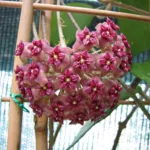
The plant has flexible green stems and narrow, pointed, glossy leaves arranged along the shoots. Its most distinctive feature is the cluster of white flowers whose narrow, reflexed lobes create a shooting-star silhouette. The overall appearance is more shrub-like and leafy than that of strongly trailing hoyas.
Flowering
This species produces umbels of distinctive white flowers with strongly reflexed corolla lobes, giving them a shooting-star appearance. Flowering is commonly reported on mature, actively growing plants and may occur repeatedly under warm indoor conditions. Avoid moving or drying the plant abruptly while buds are developing, as stress can cause bud drop.
Pollination and visitors
The flowers are structurally suited to insect visitation, but reliable species-specific documentation identifying the main pollinator or visitor group was not located. Pollinator attraction is therefore left unclassified rather than inferred from flower shape alone.
Hoya multiflora photos
Click any photo for a larger view. Source, author and license are shown separately.
Diseases and pests
Diseases
Prevent disease by using a porous mix, clean tools, good air circulation, and careful watering. Persistent wetness can contribute to root rot and stem problems; remove affected roots, replace saturated media, and correct the watering interval. Leaf spots or mold-like growth warrant isolation and removal of damaged tissue while improving ventilation.
Pests
Inspect new growth and leaf undersides for mealybugs, scale, aphids, and spider mites. Isolate infested plants, remove visible insects with a cotton swab or water spray, and use insecticidal soap or horticultural oil according to the label. Avoid treating drought-stressed plants and repeat applications as needed.
Related diseases and pests
Only Plant Doctor profiles whose host data indicate this plant may be affected are shown here.
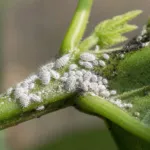 PestCotton mealybugPhenacoccus solenopsis Tinsley
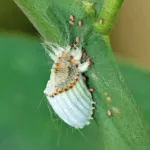 PestCottony Cushion ScaleIcerya purchasi
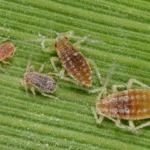 PestMealy Plum AphidHyalopterus pruni (Geoffroy, 1762)
 PestMelon aphid (cotton aphid)Aphis gossypii Glover
 DiseaseAlternaria leaf spot and fruit rotAlternaria alternata
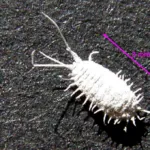 PestObscure mealybugPseudococcus viburni
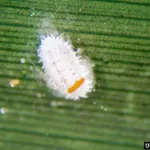 PestCitrus mealybugPlanococcus citri
Toxicity and pollen
No reliable, species-specific authoritative toxicity assessment was located for Hoya multiflora. Do not treat the plant as proven safe solely because it is a Hoya. Keep plant material away from children and pets, avoid ingestion, and seek medical or veterinary advice after significant consumption or if symptoms occur.
- Pollination / pollen
- Insect-dispersed pollen; airborne relevance not well documented
Hoya multiflora is an insect-pollinated flowering plant, but reliable species-specific measurements of airborne pollen release and allergy risk were not located. Its pollen is not expected to be a major indoor airborne exposure under ordinary conditions, yet sensitive people should avoid handling flowers if symptoms occur.
Native habitat
Kew records Hoya multiflora as native from Guangxi and Yunnan in China through tropical Asia. It occurs primarily in wet tropical habitats and is described as an epiphytic shrub, indicating adaptation to humid conditions, organic debris, and excellent drainage rather than saturated soil.
Interesting fact
The accepted species is native from Guangxi and Yunnan in China through tropical Asia.
Its species name multiflora refers to its many-flowered inflorescences.
The flowers have unusually long, strongly reflexed corolla lobes.
It is an epiphytic shrub rather than a conventional terrestrial garden shrub.
Frequently asked questions (FAQ)
The most relevant questions about this plant, with short and direct answers.
🌱Quick care
What is the best basic care routine for shooting star hoya (Hoya multiflora)?⌄
Give shooting star hoya bright filtered light, an airy fast-draining mix, and moderate, even moisture. Protect it from frost, cold drafts, and prolonged waterlogging.
Is Hoya multiflora easy to grow indoors?⌄
Hoya multiflora can grow well indoors when given bright filtered light and consistent watering. It is less forgiving of prolonged drought or saturated soil than some thick-leaved hoyas.
🌤️Environment and placement
How much light does shooting star hoya need?⌄
Provide bright filtered or indirect light for strong growth and flowering. A few hours of gentle morning sun may be tolerated, but harsh afternoon sun can scorch the leaves.
Can Hoya multiflora grow in a north-facing window?⌄
It can survive in a bright north-facing window, but flowering may be reduced if the light is weak. Move it closer to a brighter window or supplement with a grow light if growth is sparse.
Can shooting star hoya grow outdoors in the United States?⌄
Hoya multiflora can grow outdoors in warm, frost-free areas with filtered light and protection from intense sun. Bring it indoors before temperatures approach 50°F, and never expose it to frost.
What temperature is best for Hoya multiflora?⌄
Keep Hoya multiflora in a warm indoor range, ideally about 65–85°F during active growth. Protect it from cold drafts, sudden temperature drops, and temperatures near freezing.
Does shooting star hoya need high humidity?⌄
Moderate to high humidity can support healthier growth, but consistent watering and good airflow are more important than creating extremely humid conditions. Avoid keeping the foliage constantly wet.
Can Hoya multiflora be grown under a grow light?⌄
Yes, Hoya multiflora grows well under a bright full-spectrum grow light. Keep the light close enough to provide strong illumination without heating or bleaching the leaves.
💧Care and problems
How often should I water shooting star hoya?⌄
Water when the upper portion of the mix has begun to dry, then let excess water drain completely. Hoya multiflora often needs more regular moisture than thick-leaved hoyas, especially while flowering or growing actively.
Should Hoya multiflora dry out completely between waterings?⌄
It is better not to let Hoya multiflora remain completely dry for long periods. Allow some drying for root aeration, but maintain moderate, even moisture and avoid repeated severe wilting.
Why are the leaves on my shooting star hoya turning yellow?⌄
Yellow leaves commonly indicate overly wet soil, poor drainage, or stressed roots. Check the roots and potting mix first, and reduce watering only after confirming that the plant is not becoming excessively dry.
Why is my Hoya multiflora dropping flower buds?⌄
Bud drop is often caused by inconsistent moisture, sudden environmental changes, cold temperatures, or insufficient light. Keep the plant warm and stable, and avoid letting the mix swing from very dry to saturated while buds are developing.
Why does shooting star hoya have brown or crispy leaves?⌄
Brown or crispy leaves usually result from drought, harsh direct sun, low humidity combined with dry roots, or cold injury. Check moisture and light exposure before changing several care conditions at once.
What pests affect Hoya multiflora?⌄
Hoya multiflora can be affected by mealybugs, scale, spider mites, and aphids. Inspect leaf joints and new growth regularly, isolate affected plants, and treat infestations promptly with an appropriate houseplant method.
Should I fertilize shooting star hoya?⌄
Fertilize during active growth with a balanced houseplant fertilizer diluted according to the product label. Do not fertilize drought-stressed, recently repotted, or severely damaged plants until they recover.
🪴Planting and repotting
What soil is best for Hoya multiflora?⌄
Use an airy, fast-draining epiphytic mix containing components such as potting mix, orchid bark, and perlite. The mix should hold some moisture while allowing excess water and air to move freely around the roots.
What type of pot is best for shooting star hoya?⌄
Choose a pot with drainage holes that is only slightly larger than the root ball. A breathable pot can help the mix dry more evenly, but drainage and appropriate pot size matter more than the container material.
When should I repot Hoya multiflora?⌄
Repot Hoya multiflora when the mix has broken down, roots fill the container, or water runs through unusually quickly. Spring or the beginning of active growth is generally the least stressful time.
Does shooting star hoya like to be root-bound?⌄
Hoya multiflora generally tolerates a snug pot and does not need frequent repotting. Avoid moving it into a much larger container, because excess wet mix can increase the risk of root problems.
✂️Propagation and pruning
How do you propagate Hoya multiflora?⌄
Propagate Hoya multiflora most reliably from stem cuttings with several nodes. Root the cutting in water or a lightly moist, airy propagation medium under warm, bright, indirect light.
Can Hoya multiflora be propagated from a single leaf?⌄
A single leaf usually cannot produce a complete new Hoya multiflora because it may lack a viable stem node. Use a stem section containing at least one node for dependable propagation.
Can shooting star hoya be propagated in water?⌄
Yes, Hoya multiflora cuttings can root in water, provided the lower leaves stay above the waterline and the water remains clean. Transfer the cutting carefully once it has a useful root system, because water-grown roots can be sensitive during potting.
Should I prune Hoya multiflora?⌄
Prune Hoya multiflora only to remove dead, damaged, overcrowded, or unwanted growth. Avoid unnecessary pruning of healthy flowering stems, since hoyas may produce future flowers from established peduncles.
How can I make shooting star hoya bushier?⌄
Make the plant bushier by rooting several healthy stem cuttings in the same container or by selectively pruning long shoots above a node. Provide strong filtered light and steady care to encourage branching and new growth.
⚠️Toxicity and safety
Is Hoya multiflora toxic to cats and dogs?⌄
Species-specific toxicity information for Hoya multiflora is not sufficiently established here, so prevent cats, dogs, and children from chewing or ingesting it. Contact a veterinarian or poison-control service if ingestion causes symptoms.
Is shooting star hoya safe to keep around children?⌄
Keep shooting star hoya out of reach of children because its species-specific toxicity is uncertain and plant material should not be eaten. Wash hands after handling sap or damaged plant tissue.
🌸Flowering and special interest
When does Hoya multiflora bloom?⌄
Hoya multiflora can bloom repeatedly when it receives strong filtered light, warmth, and consistent moisture. Blooming frequency varies with plant maturity, season, light levels, and growing conditions.
What do shooting star hoya flowers look like?⌄
Shooting star hoya produces clusters of distinctive white to pale flowers with reflexed petals that resemble shooting stars. The flowers are typically held in umbels and may produce nectar.
Why is my Hoya multiflora not flowering?⌄
Insufficient light, immature growth, unstable watering, cool conditions, or excessive pruning can prevent flowering. Increase filtered light gradually, keep moisture consistent, and allow the plant time to mature.
Should I remove old Hoya multiflora flower stalks?⌄
Do not remove healthy old flower peduncles unless they are dead or damaged. Hoya multiflora may flower again from established flowering points, so cutting them can reduce future bloom potential.