
 Source:
 Smooth hydrangea or sevenbark (Hydrangea arborescens) short overview
Hydrangea arborescens, called smooth hydrangea or sevenbark in the United States, is a rounded deciduous shrub native to much of the eastern and central country. It bears broad clusters of small fertile white flowers, often surrounded by showy sterile florets, from early to late summer. Give it evenly moist, well-drained soil and partial shade, or full sun where moisture is dependable. It flowers on new wood and tolerates hard late-winter pruning.
Taxonomic classification
Smooth hydrangea or sevenbark (Hydrangea arborescens) care guide
Light and placement
Grow in morning sun, bright filtered light or partial shade. Full sun is acceptable where soil stays consistently moist, while hot western exposure can scorch leaves and wilt flower stems. Too little light produces lankier growth and fewer flowers; harsh dry sun causes midday wilt, leaf scorch and rapid moisture loss.
Watering and humidity
Water deeply when the upper 1–2 inches of soil begin to dry, aiming for steady moisture rather than repeated shallow sprinkling. Increase frequency during hot weather, transplanting and full-sun culture. Mulch helps moderate root temperature and evaporation, but keep mulch off the stems. Atmospheric humidity is not usually a limiting factor.
Soil and growing medium
Use fertile, well-drained soil that retains moisture without remaining saturated. Loam enriched with compost is suitable; rocky or naturally moist woodland soils can also work. Slightly acidic to neutral conditions are preferred, but the species is adaptable. Avoid chronically dry, compacted or waterlogged ground.
Feeding
Apply a thin layer of compost or a balanced slow-release shrub fertilizer in spring as growth begins. Do not overfeed: excessive nitrogen can produce lush stems with weaker flowering. Stop routine fertilizing by late summer so new growth can mature before winter.
Growth and habit
A broad, suckering shrub with arching stems that can become floppy under heavy flower clusters or after rain. It flowers on new growth and responds well to renewal pruning, making it suitable for gardeners who want to control size or rejuvenate an older planting.
Planting and repotting
Plant in spring or fall, setting the root ball level with the surrounding soil rather than burying the crown. Space plants about 4–6 feet apart for a natural mass. Mulch 2–3 inches deep, keeping it away from stems, and water consistently during the first growing season while roots establish.
Container-grown plants can be moved in spring or fall. Choose a container only modestly larger than the root ball, use a moisture-retentive but well-drained shrub mix, and water thoroughly after transplanting. Because mature plants become broad and thirsty, long-term container culture requires a large pot and regular renewal of the growing medium.
Propagation and pruning
Propagation
Take softwood cuttings in late spring or early summer, or hardwood cuttings after leaf fall. Layering is also practical for established plants. Seed propagation is possible but less commonly used for uniform garden plants because seedlings may vary and require more time to reach flowering size.
Pruning
Prune in late winter or very early spring before new growth begins. Cut stems back substantially, even near the base when rejuvenation is needed, because flowers form on new wood. Remove weak or damaged stems first and thin crowded growth rather than shearing every plant into a rigid ball.
Overwintering
Outdoor plants are generally hardy through USDA Zone 4a when established. Apply mulch over the root zone after the ground cools, especially for new plantings, but do not wrap healthy mature shrubs routinely. Container plants have less root insulation and should be protected in an unheated sheltered location or sunk into the ground in colder regions.
Uses
A useful native ornamental for shrub borders, woodland gardens, rain gardens with drainage, erosion-prone slopes and pollinator plantings. Flower clusters can be used fresh or dried. Do not use it as food or medicine; the plant contains cyanogenic compounds and is toxic if eaten.
Appearance
Leaves are opposite, broadly ovate and coarsely toothed, with a matte to slightly textured green surface. Young stems are green to brown and may arch outward; older bark can become peeling or shredding, contributing to the name sevenbark. Flower heads are usually open and natural-looking rather than the dense balls of many double-flowered cultivars.
Flowering
The straight species produces rounded to somewhat flat-topped clusters containing many small fertile flowers and fewer conspicuous sterile florets. Flowering occurs on current-season stems, generally beginning in early summer and continuing into late summer; spent heads may persist and provide winter interest.
Pollination and visitors
Fertile flowers provide pollen and nectar for a diverse insect community. Documented visitors include bees, bumblebees, butterflies, moths, hoverflies, wasps and beetles. The straight species is generally more useful to insects than forms dominated by dense masses of sterile florets.
Hydrangea arborescens photos
Click any photo for a larger view. Source, author and license are shown separately.
Diseases and pests
Diseases
Watch for powdery mildew, leaf spot, botrytis blight and root problems in poorly drained soil. Improve air circulation, water at the soil line and remove heavily affected debris. Avoid routine fungicide use unless symptoms are persistent and correctly identified; cultural corrections are usually the first response.
Pests
Common problems include aphids, scale, spider mites and hydrangea leaf tiers. Inspect new growth and leaf undersides, encourage beneficial insects, and use a strong water spray for minor infestations. Improve plant vigor through adequate moisture and avoid broad-spectrum insecticides during bloom.
Related diseases and pests
Only Plant Doctor profiles whose host data indicate this plant may be affected are shown here.
 DiseaseGray MoldBotrytis cinerea
 PestCyclamen mitePhytonemus pallidus
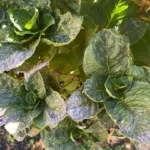 PestChilli thripsScirtothrips dorsalis Hood
 DiseaseAster yellows‘Candidatus Phytoplasma asteris’
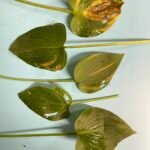 PestStrawberry foliar nematodeAphelenchoides fragariae
 PestBroad mitePolyphagotarsonemus latus (Banks)
 DiseaseMaple powdery mildewSawadaea bicornis
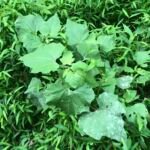 DiseaseCucurbit Powdery MildewPodosphaera xanthii (Castagne) U. Braun & Shishkoff
Toxicity and pollen
Hydrangea arborescens contains cyanogenic glycosides. Ingestion usually causes gastrointestinal upset such as vomiting or diarrhea, while serious cyanide poisoning is considered uncommon. Keep leaves, flowers and other plant parts away from children and pets, and contact a medical or veterinary professional after significant ingestion.
- Typical season
- Typically June through September in the United States
- Pollination / pollen
- Insect-dispersed pollen
This is an insect-pollinated shrub with pollen concentrated in the flowers rather than released in large windborne clouds. Airborne exposure is therefore generally low, but sensitive people may still react to pollen or to flower contact. Symptoms should be evaluated clinically rather than attributed solely to this plant.
Native habitat
Native populations occur in eastern and central North America, especially in moist or seasonally moist woods, ravines, streambanks, bluff bases and rocky slopes. It commonly grows in filtered light or open woodland conditions where soils drain but do not dry rapidly.
Interesting fact
The species epithet arborescens means “becoming tree-like,” although the plant is normally a shrub. Its flowers are produced on new wood, so severe late-winter cutting does not remove the next season’s flower buds. The native straight species generally offers more accessible fertile flowers than many double-flowered selections.
Frequently asked questions (FAQ)
The most relevant questions about this plant, with short and direct answers.
🌱Quick care
What is Hydrangea arborescens called in the United States?⌄
Hydrangea arborescens is commonly called smooth hydrangea or sevenbark. It is a deciduous flowering shrub native to eastern North America and belongs to the Hydrangeaceae family.
How much sun does smooth hydrangea need?⌄
Smooth hydrangea grows in full sun to partial shade. In hot climates, afternoon shade can reduce wilting, especially when the soil dries quickly.
How often should I water Hydrangea arborescens?⌄
Water smooth hydrangea regularly enough to keep the soil evenly moist but not waterlogged. Newly planted shrubs may need watering several times per week during hot, dry weather.
Is Hydrangea arborescens cold hardy?⌄
Yes, Hydrangea arborescens is cold hardy and generally handles cold winters well. Exact performance depends on the cultivar and local USDA hardiness conditions.
🌤️Environment and placement
Where should I plant smooth hydrangea?⌄
Plant smooth hydrangea in moist, well-drained soil with full sun or partial shade. It works well in woodland edges, rain gardens, mixed borders, and naturalized native-plant settings.
Can Hydrangea arborescens grow in clay soil?⌄
Hydrangea arborescens can tolerate clay soil if it drains reasonably well. Improve extremely compact soil with organic matter and avoid locations that stay saturated after rain.
Does smooth hydrangea prefer acidic soil?⌄
Smooth hydrangea is adaptable and does not require strongly acidic soil. Aim for fertile, moist, well-drained soil rather than changing the pH solely to alter flower color.
Can smooth hydrangea grow in full shade?⌄
Smooth hydrangea can survive in bright shade, but flowering is usually better with several hours of sunlight. Dense, dry shade may produce fewer flowers and weaker growth.
How large does Hydrangea arborescens get?⌄
The species commonly reaches about 3 to 5 feet tall and wide, although mature size varies by cultivar and growing conditions. Give it enough room for its rounded form.
💧Care and problems
Why is my smooth hydrangea wilting?⌄
Wilting usually results from dry soil, heat, intense afternoon sun, or temporary stress from large flower heads. Check soil moisture several inches below the surface and water deeply when it is dry.
Why is my Hydrangea arborescens not blooming?⌄
Poor flowering can result from insufficient light, drought stress, excessive nitrogen, severe winter damage, or incorrect pruning timing. Smooth hydrangea flowers on new wood, so late-winter or early-spring pruning usually does not remove that season’s flower buds.
Should I fertilize smooth hydrangea?⌄
Smooth hydrangea usually needs little fertilizer when grown in reasonably fertile soil. If growth is weak, test the soil before applying a balanced, slow-release fertilizer rather than adding high-nitrogen products routinely.
How do I stop smooth hydrangea flowers from flopping?⌄
To reduce flopping, grow the shrub in adequate light, avoid excessive nitrogen, and maintain even moisture. Selective pruning that leaves some sturdy older stems can also provide support, while a discreet plant support may help during bloom.
What pests and diseases affect Hydrangea arborescens?⌄
Smooth hydrangea can be affected by aphids, mites, Japanese beetles, powdery mildew, leaf spots, and stem or root problems. Good air circulation, appropriate watering, sanitation, and avoiding prolonged wet foliage reduce many problems.
🪴Planting and repotting
When is the best time to plant smooth hydrangea?⌄
The best planting times are spring and fall, when temperatures are moderate and soil moisture is easier to maintain. In hot summer conditions, provide consistent irrigation while the shrub establishes.
How do I plant Hydrangea arborescens?⌄
Dig a hole about as deep as the root ball and roughly twice as wide, set the shrub at the same depth it grew in its container, backfill, and water thoroughly. Apply a light mulch layer without piling it against the stems.
Can smooth hydrangea be grown in a container?⌄
Smooth hydrangea can grow in a large container for a time, but it performs best when its roots have ample space and consistent moisture. Use a container with drainage holes and expect to water more often than an in-ground shrub.
✂️Propagation and pruning
How can I propagate Hydrangea arborescens?⌄
Smooth hydrangea can be propagated from softwood cuttings taken during the growing season. Use healthy nonflowering shoots, keep the medium evenly moist and humid, and protect the cuttings from direct sun while roots develop.
When should I prune smooth hydrangea?⌄
Prune smooth hydrangea in late winter or early spring before vigorous new growth begins. Because it flowers on new wood, dormant-season pruning generally preserves flowering for the coming season.
Can I cut Hydrangea arborescens back to the ground?⌄
Yes, established smooth hydrangea can be cut back hard or near ground level in late winter or early spring if rejuvenation or size control is needed. Less severe pruning usually produces a taller plant with more, smaller flower heads.
Should I deadhead smooth hydrangea?⌄
Deadheading is optional and mainly improves appearance. Removing faded flower heads does not normally prevent next year’s flowers because Hydrangea arborescens produces them on new growth.
⚠️Toxicity and safety
Is Hydrangea arborescens poisonous to dogs and cats?⌄
Yes, Hydrangea arborescens is toxic if eaten by dogs, cats, and horses. Ingestion may cause gastrointestinal signs such as vomiting, diarrhea, or depression, so contact a veterinarian or animal poison service if a pet consumes it.
Is smooth hydrangea poisonous to people?⌄
Smooth hydrangea should not be eaten because it contains cyanogenic compounds and may cause illness. Keep leaves, flowers, and other plant parts away from children and consult a medical professional after suspected ingestion.
🌸Flowering and special interest
When does smooth hydrangea bloom?⌄
Smooth hydrangea generally blooms from early to midsummer, with timing varying by cultivar and climate. Flower heads may remain attractive as they age into late summer.
What color are Hydrangea arborescens flowers?⌄
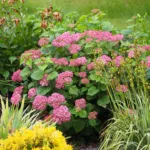
The species typically produces white to greenish-white flower clusters, while some cultivars mature to blush pink or related shades. Flower color is not changed reliably by soil acidity in the way it can be with some bigleaf hydrangeas.
Does smooth hydrangea bloom on old wood or new wood?⌄
Smooth hydrangea blooms on new wood, meaning flower buds form on growth produced during the current season. This is why late-winter or early-spring pruning is generally safe.
Are smooth hydrangea flowers good for pollinators?⌄
Yes, fertile flowers in smooth hydrangea flower heads can provide resources for bees and other small pollinators. Cultivars with many showy sterile flowers may offer less forage than forms with more fertile flowers.
Similar plants
 Annabelle Hydrangea (Hydrangea arborescens ‘Annabelle’)Hydrangea arborescens 'Annabelle'
 Hydrangea ‘Aspera Villosa’Hydrangea 'Aspera Villosa'
 Shooting star hoya (Hoya multiflora) care guideHoya multiflora
 Hoya lacunosa care guideHoya lacunosa
 Narrow-leaved Plantain-lily (Hosta lancifolia) care guideHosta lancifolia
 Hoya obovata care guideHoya obovata