 Source:
 Narrow-leaved Plantain-lily (Hosta lancifolia) short overview
Narrow-leaved Plantain-lily (Hosta lancifolia) is a hardy, clumping perennial valued for its upright, lance-shaped green leaves and late-summer racemes of violet, funnel-shaped flowers. It grows best in partial to full shade with consistent moisture and humus-rich, well-drained soil. This adaptable hosta suits woodland borders, shaded foundations, containers, and low-maintenance groundcover plantings in USDA Zones 3–8.
Taxonomic classification
Narrow-leaved Plantain-lily (Hosta lancifolia) care guide
Light and placement
Grow in partial shade to full shade, ideally with bright filtered light or gentle morning sun and protection from hot afternoon rays. Deep shade is tolerated but may slow growth. Scorched, brown leaf edges or bleached foliage indicate excessive sun or drought; weak, sparse growth can indicate insufficient light or competition from tree roots.
Watering and humidity
Water deeply when the upper inch of soil begins to dry, directing water beneath the foliage rather than over the leaves. Maintain even moisture through summer, especially during heat or beneath thirsty trees, but do not leave the crown in saturated soil. Established plants tolerate brief dry periods better than prolonged drought.
Soil and growing medium
Use humus-rich, moisture-retentive soil that still drains freely. Loam is ideal, while this hosta also tolerates clay when improved with compost and drainage. A slightly acidic to neutral soil is suitable; mildly alkaline conditions are generally tolerated. Avoid persistently waterlogged ground, especially in winter.
Feeding
Spread a thin layer of compost in spring as shoots emerge. If growth is weak, use a balanced slow-release fertilizer at the label rate, keeping granules away from the crown. Avoid heavy nitrogen feeding late in the season, which can produce soft growth and reduce winter readiness. Established plants usually need little supplemental fertilizer.
Growth and habit
Forms a durable basal clump of rhizomatous shoots and may become somewhat stoloniferous. Growth is strongest with regular moisture and spring warmth. It dies back naturally after frost; remove spent foliage after dormancy or leave it until late winter for shelter and easier cleanup.
Planting and repotting
Plant in spring or early fall, setting the crown at soil level and spreading the roots outward. Space plants about 12–18 inches apart for a connected planting, or farther apart for individual clumps. Water thoroughly after planting and mulch lightly without covering the crown.
Repot container-grown plants in early spring as new shoots emerge, moving them into a pot only modestly larger than the root mass. Refresh compacted mix and keep the crown at its original depth. Container plants may need division or replacement every few years if growth becomes congested.
Propagation and pruning
Propagation
Divide established clumps in early spring before the leaves unfurl or in early fall. Separate sections with several shoots and healthy roots, then replant promptly. Seed is possible but uncommon in cultivation because capsules may be sterile and seedlings may not reproduce a selected clonal form.
Pruning
Cut flower scapes after blooming if seed formation and self-sowing are not desired. Remove yellowed or frost-killed foliage in late fall or before new growth begins in spring. Avoid cutting healthy leaves during the growing season unless removing disease.
Overwintering
Plants in USDA Zones 3–8 can overwinter outdoors. After frost, allow foliage to collapse naturally, then remove it in late fall or early spring. A light mulch helps moderate freeze-thaw cycles, but keep mulch off the crown to reduce rot. Container plants need extra root insulation in severe cold.
Uses
Use as a foliage anchor for shaded perennial borders, woodland gardens, foundation plantings, edging, containers, and low-maintenance groundcover. The flowers can be used in small cut-flower arrangements. Do not treat the plant as edible or medicinal, and keep it away from pets because Hosta is recognized as toxic to dogs and cats.
Appearance
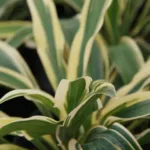
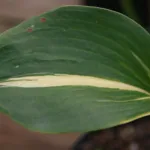
The plant forms an erect to vase-shaped clump of narrow, lance-shaped leaves with slightly wavy margins. Leaves are deep olive to medium green above and glossy, lighter green beneath; petioles may show purple spotting near the base. Slender arching scapes rise above the foliage and carry loose terminal racemes.
Flowering
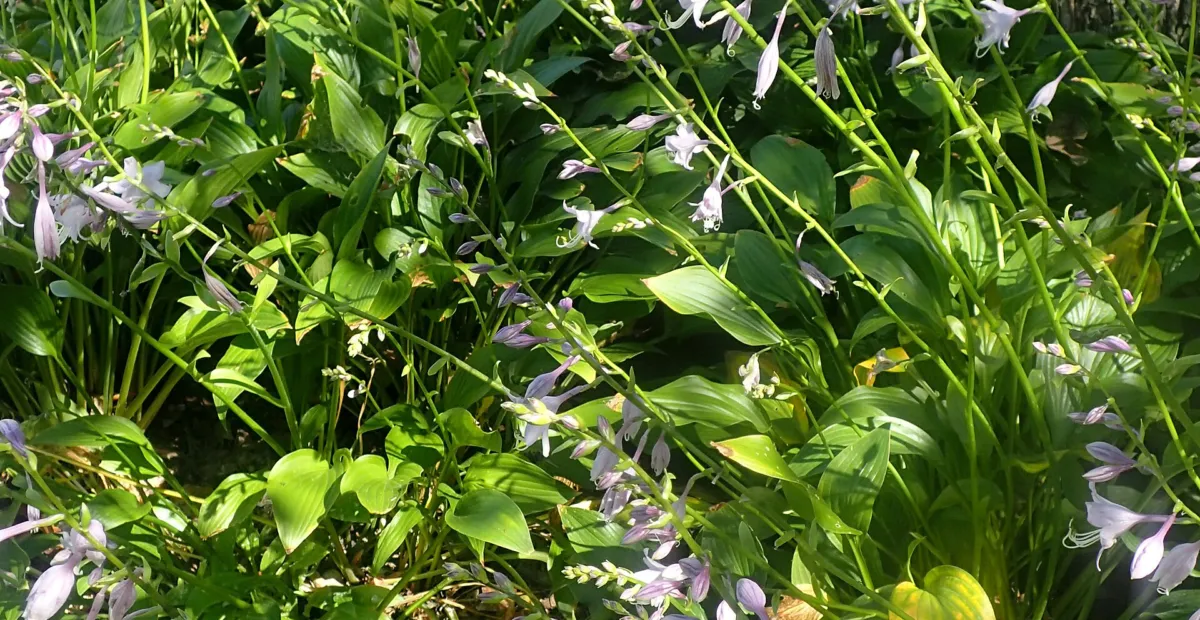
Loose racemes of about 10–20 violet, tubular to funnel-shaped flowers rise above the foliage on arching scapes. The flowers are typically produced from July through September in the United States and are reported as non-fragrant. Seed capsules are uncommon and often sterile.
Pollination and visitors
The showy violet flowers are documented as attractive to hummingbirds and may be visited by other flower visitors, but a species-specific primary insect pollinator was not reliably established in the reviewed sources. Do not equate flower visitation with airborne allergy risk.
Hosta lancifolia photos
Click any photo for a larger view. Source, author and license are shown separately.
Diseases and pests
Diseases
Reduce foliar disease by watering at the soil line, allowing adequate air movement, removing dead foliage, and avoiding chronically wet leaves. Crown or root rot is encouraged by poor drainage; replant affected divisions in well-drained soil and discard severely rotted tissue.
Pests
Slugs and snails are the main recurring pests, especially in cool, damp, shaded beds; they leave irregular holes and ragged leaf margins. Improve drainage, remove hiding places, water early in the day, and use hand-picking or labeled slug controls according to product directions. Deer and rabbits may also browse hosta foliage.
Related diseases and pests
Only Plant Doctor profiles whose host data indicate this plant may be affected are shown here.
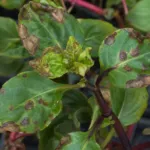 DiseaseImpatiens necrotic spot virus diseaseImpatiens necrotic spot orthotospovirus
 DiseaseSouthern blightAthelia rolfsii
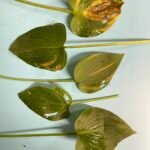 PestStrawberry foliar nematodeAphelenchoides fragariae
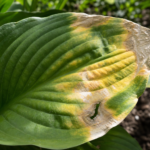 Environmental stressExcess light stress
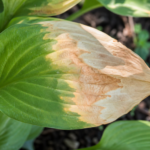 Environmental stressLeaf sunburn
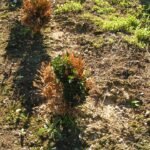 DiseasePhytophthora root and crown rotPhytophthora nicotianae
Toxicity and pollen
Hosta is listed by the ASPCA as toxic to dogs and cats because of saponins; reported signs include vomiting, diarrhea, and depression. Evidence is usually presented for Hosta as a genus or common hosta plants rather than a species-specific toxicology study for Hosta lancifolia. Prevent pets from chewing the foliage or flowers and contact a veterinarian after suspected ingestion.
- Typical season
- Late summer during flowering
- Pollination / pollen
- Flower-associated pollen, not a major wind-dispersed source
Hosta flowers produce pollen, but they are not generally regarded as major wind-pollen sources because pollen is presented within conspicuous flowers and is associated with animal visitation. Individual sensitivity is still possible, so people with strong pollen allergies should avoid handling flowers if symptoms occur.
Native habitat
Kew records the taxon as a garden-origin cultigen associated with the Russian Far East and Japan, while North American references describe it as introduced and naturalized or escaped in disturbed shaded sites. In cultivation it favors temperate conditions, humus-rich soil, and filtered light rather than exposed, drought-prone positions.
Interesting fact
This taxon has a long horticultural history and is treated by some hosta specialists as a garden-origin cultivar rather than a clearly wild species. Its narrow, lance-shaped leaves distinguish it from many broad-leaved hostas. The plant can spread by short stolon-like rhizomes, and its flowers are carried on scapes taller than the foliage.
Frequently asked questions (FAQ)
The most relevant questions about this plant, with short and direct answers.
🌱Quick care
What is Hosta lancifolia commonly called?⌄
Hosta lancifolia is commonly called Narrow-leaved Plantain-lily. It is a clump-forming, deciduous hosta grown mainly for its narrow, lance-shaped green leaves.
How much light does Narrow-leaved Plantain-lily need?⌄
Narrow-leaved Plantain-lily grows best in partial shade to full shade. It can tolerate some gentle morning sun, but hot afternoon sun may scorch the leaves, especially in warmer U.S. climates.
How often should I water Hosta lancifolia?⌄
Water Hosta lancifolia regularly enough to keep the soil evenly moist but not waterlogged. Check the soil during hot or dry weather and water when the surface begins to dry.
Is Hosta lancifolia hardy outdoors?⌄
Yes, Hosta lancifolia is a frost-hardy outdoor perennial in suitable climates. Its foliage dies back in fall, while the crown remains dormant underground and resumes growth in spring.
🌤️Environment and placement
Where should I plant Narrow-leaved Plantain-lily?⌄
Plant Narrow-leaved Plantain-lily in a shaded or partly shaded location with humus-rich, moist but well-drained soil. A site protected from intense afternoon sun and drying winds is especially suitable.
What USDA hardiness zones are suitable for Hosta lancifolia?⌄
Hosta lancifolia is generally suitable for USDA Zones 3 through 8. Local performance can vary with winter exposure, summer heat, soil moisture, and the protection provided by the planting site.
Can Hosta lancifolia grow in full shade?⌄
Yes, Hosta lancifolia can grow in full shade, provided the soil stays evenly moist. Very dense shade may produce slower growth and fewer flowers than bright filtered shade.
Can Hosta lancifolia tolerate morning sun?⌄
Yes, Hosta lancifolia usually tolerates mild morning sun, particularly when the soil remains moist. Protect it from strong afternoon sun, which can cause leaf scorch and browning.
Does Hosta lancifolia spread?⌄
Hosta lancifolia gradually expands into a larger clump through its crown and underground growing points. It is not normally considered an aggressive runner, but established plants can fill their allotted space over time.
💧Care and problems
What soil is best for Hosta lancifolia?⌄
The best soil is humus-rich, moist but well-drained loam. Improve poor soil with organic matter, but avoid sites that remain saturated because constantly wet conditions can damage the roots.
Why are the leaves of my Hosta lancifolia turning brown?⌄
Brown Hosta lancifolia leaves are commonly caused by drought, excessive sun, heat, or wind. Keep the soil evenly moist and provide afternoon shade, while removing badly damaged leaves if needed.
Do slugs eat Hosta lancifolia?⌄
Yes, slugs and snails may chew holes in Hosta lancifolia leaves, particularly in cool, damp conditions. Reduce hiding places, avoid wetting the foliage at night, and use a control method labeled for garden use if damage is severe.
Should I fertilize Hosta lancifolia?⌄
Apply a balanced, slow-release fertilizer in spring as new shoots emerge if the soil is not fertile. Avoid excessive nitrogen or late-season feeding, which can encourage weak growth and reduce winter readiness.
When does Hosta lancifolia die back?⌄
Hosta lancifolia normally dies back after frost or naturally cool weather in fall. Leave healthy dormant crowns in the ground and remove collapsed foliage when it becomes untidy or begins to decay.
🪴Planting and repotting
How do I plant Hosta lancifolia in the ground?⌄
Plant Hosta lancifolia with the crown at or just slightly below the soil surface and spread the roots through moist, amended soil. Water thoroughly after planting and maintain even moisture while it establishes.
Can Hosta lancifolia be grown in a container?⌄
Yes, Hosta lancifolia can grow in a container with drainage holes and moisture-retentive but well-drained potting mix. Place the container in shade and protect the root ball from severe winter temperature swings.
When is the best time to plant Hosta lancifolia?⌄
The best planting times are spring and early fall, when temperatures are moderate and soil moisture is easier to maintain. Avoid planting during extreme summer heat or immediately before hard freezes.
✂️Propagation and pruning
How do you propagate Hosta lancifolia?⌄
The most reliable method is division of the crown. Lift the plant in early spring as shoots emerge, separate rooted sections with healthy growing points, and replant them at the original depth.
When should I divide Hosta lancifolia?⌄
Divide Hosta lancifolia in early spring or during mild early fall weather. Spring division is especially convenient because new shoots show where the crowns are and the plant has the growing season to recover.
Can Hosta lancifolia be grown from seed?⌄
Yes, Hosta lancifolia can be grown from seed, but seedlings may not be identical to the parent plant. Division is preferred when you want a plant that retains the parent’s established characteristics.
Can you propagate Hosta lancifolia from a leaf cutting?⌄
A leaf cutting alone is not a dependable way to propagate Hosta lancifolia. Use a division that includes part of the crown and healthy roots, because hostas regenerate from crown buds rather than ordinary detached leaves.
Should I cut back Hosta lancifolia after flowering?⌄
Cut flower stalks back to the base after flowering if you want a tidier appearance or do not plan to collect seed. Removing the stalks is optional and is not required for the plant to survive.
⚠️Toxicity and safety
Is Hosta lancifolia toxic to dogs?⌄
Yes, Hosta lancifolia should be treated as toxic to dogs. Ingestion may cause gastrointestinal signs such as vomiting or diarrhea, so contact a veterinarian or animal poison-control service if a dog eats the plant.
Is Hosta lancifolia toxic to cats?⌄
Yes, Hosta lancifolia should be treated as toxic to cats. Keep leaves and flower parts away from cats and seek veterinary advice promptly if ingestion occurs or symptoms develop.
Is Hosta lancifolia toxic to people?⌄
Hosta lancifolia is primarily a pet-safety concern, especially for dogs and cats. Do not encourage people or children to eat the plant, and contact a medical professional or poison-control service if a person ingests an unknown amount.
🌸Flowering and special interest
What color flowers does Hosta lancifolia have?⌄
Hosta lancifolia produces funnel-shaped pale violet to lavender flowers. The flowers appear on upright or arching stalks held above the foliage.
When does Hosta lancifolia bloom?⌄
Hosta lancifolia generally blooms in late summer, often around August or September in much of the United States. Exact timing depends on climate, light, plant maturity, and seasonal weather.
Why is my Hosta lancifolia not flowering?⌄
A lack of flowers may result from excessive shade, drought stress, a recently divided plant, or insufficient maturity. Give it consistent moisture and bright filtered shade, while avoiding harsh direct afternoon sun.
Are Hosta lancifolia flowers attractive to pollinators?⌄
Yes, hosta flowers can attract pollinators such as bees. Leaving the flower stalks in place supports their brief bloom period, while cutting them is mainly an aesthetic choice.