 AI-generated illustration
Hosta ‘Summer Breeze’ short overview
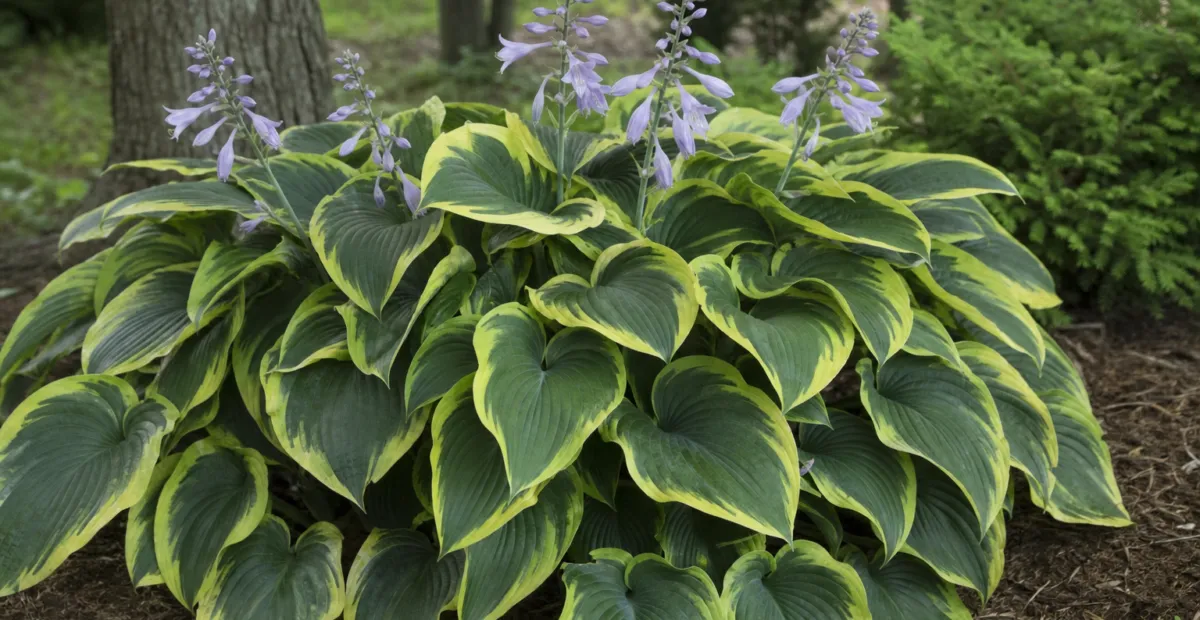
Hosta 'Summer Breeze' is a medium-sized, clump-forming perennial prized for dark green leaves edged with broad, irregular chartreuse to yellow margins. It performs best in moist, well-drained soil and partial to full shade, where the foliage retains its contrast and avoids scorch. Pale lavender tubular flowers rise above the mound in midsummer. This sport of 'Summer Music' works well in woodland borders, containers, mass plantings, and shaded beds.
Taxonomic classification
Hosta ‘Summer Breeze’ care guide
Light and placement
Grow in partial to full shade, ideally with filtered light or gentle morning sun. East-, north-, or sheltered west-facing locations are suitable. A little morning light can strengthen the yellow margin, but hot afternoon sun may scorch it. Excessive shade may reduce margin brightness, while dry, exposed sites can cause leaf browning and stress.
Watering and humidity
Water deeply when the upper inch of soil begins to dry, keeping the root zone evenly moist rather than saturated. Increase watering during hot, dry spells and where tree roots compete for moisture. Container plants usually need more frequent checks than in-ground plants. Water at the soil surface to reduce foliar disease and slug-friendly dampness.
Soil and growing medium
Use fertile, moisture-retentive soil that still drains freely. Loam enriched with compost is ideal; clay should be amended to improve drainage, while very sandy soil benefits from added organic matter. Hostas tolerate a broad pH range from mildly acidic through alkaline, but consistently wet, stagnant soil can cause crown problems.
Feeding
Apply a balanced slow-release perennial fertilizer in spring as growth begins, or top-dress with compost. Avoid heavy nitrogen feeding, which can produce soft foliage and encourage pest damage. Stop routine fertilizing by late summer so new growth can harden before winter.
Growth and habit
Forms a sturdy, rounded mound from a slowly expanding crown and typically reaches mature garden size over several seasons. The medium growth rate makes it dependable for borders without being aggressively spreading. Divide only when the clump becomes crowded or additional plants are wanted.
Planting and repotting
Plant in spring or early fall, setting the crown at soil level and spreading the roots through prepared soil. Allow about 34–40 inches between plants for a mature clump. Water deeply after planting and maintain even moisture during the first growing season while the root system establishes.
Repot container-grown plants in early spring as new shoots emerge, moving them into a slightly larger pot with fresh, moisture-retentive but well-drained mix. Divide and refresh crowded plants when the crown fills the container. Ensure the crown remains at the same depth and the container has adequate drainage.
Propagation and pruning
Propagation
Divide established clumps in early spring or late summer, using a sharp, clean tool and ensuring each division has roots and at least one viable shoot. The cultivar can set viable seed, but seedlings will not reliably reproduce the named foliage pattern and are not the preferred method for maintaining cultivar identity.
Pruning
Remove spent flower scapes after flowering if desired. Cut the foliage to the ground after it collapses in late fall or after a hard freeze. Clear dead leaves from around the crown to reduce shelter for slugs and overwintering disease organisms.
Overwintering
Leave the plant dormant outdoors in USDA Zones 3–9. After a hard freeze, remove collapsed foliage and lightly mulch the crown with compost or shredded leaves, especially in exposed sites. Container plants are more vulnerable to root freezing; move them to a sheltered location or insulate the pot without keeping the mix waterlogged.
Uses
Primarily an ornamental foliage plant for shaded beds, woodland gardens, borders, containers, edging, and mass plantings. Its mound-forming habit provides seasonal groundcover and texture. Hostas are also useful in pollinator-oriented shade gardens because their flowers can provide nectar and pollen, although the cultivar is grown chiefly for foliage.
Appearance
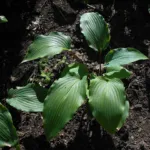
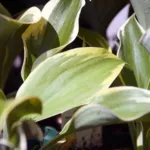
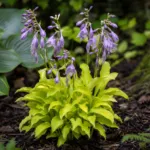
The plant forms a dense mound of broadly ovate to heart-shaped leaves. Centers are dark green, while the broad, irregular margins range from chartreuse to yellow and may mature toward gold. Upright green scapes extend above the foliage and carry pale lavender tubular flowers. The contrasting margin and medium-sized mound are key identification features.
Flowering
Upright scapes rise above the foliage in midsummer, carrying loose clusters of pale lavender, tubular flowers. Blooming is usually concentrated from July into August in much of the United States. Flowers can be removed after display if foliage is the primary feature, but deadheading is not essential to plant health.
Pollination and visitors
Hosta flowers are documented as attractive to bees, butterflies, and hummingbirds at the genus level. The tubular lavender blooms offer nectar and pollen during the summer flowering period. Exact visitor frequency for ‘Summer Breeze’ has not been separately quantified.
Diseases and pests
Diseases
Watch for crown rot in persistently wet soil, foliar damage associated with hosta viruses, and occasional fungal leaf problems. Buy clean stock, avoid overhead irrigation, improve drainage, and remove diseased plants rather than composting them. Good sanitation and avoiding unnecessary division reduce disease spread.
Pests
Slugs and snails are the main recurring pests, especially in cool, damp shade; thin-textured leaves are vulnerable to ragged holes. Deer and rabbits may also browse the foliage. Reduce hiding places, water at the soil surface, hand-pick or trap slugs, and use a proportionate, label-approved control when necessary.
Related diseases and pests
Only Plant Doctor profiles whose host data indicate this plant may be affected are shown here.
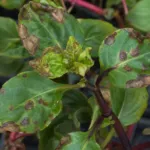 DiseaseImpatiens necrotic spot virus diseaseImpatiens necrotic spot orthotospovirus
 DiseaseSouthern blightAthelia rolfsii
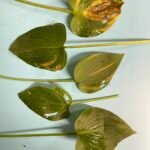 PestStrawberry foliar nematodeAphelenchoides fragariae
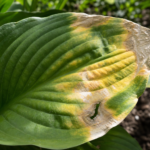 Environmental stressExcess light stress
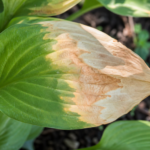 Environmental stressLeaf sunburn
 DiseasePhytophthora root and crown rotPhytophthora nicotianae
Toxicity and pollen
Hosta is listed by the ASPCA as toxic to dogs and cats because of saponins, with vomiting, diarrhea, and depression reported after ingestion. Evidence for serious human toxicity is limited, but plant material should not be eaten and children and pets should be discouraged from chewing it. Contact a veterinarian or poison service after significant pet ingestion.
- Typical season
- July–August during flowering
- Pollination / pollen
- Insect-dispersed pollen
The flowers are insect-pollinated, so pollen is generally not released in large airborne clouds. Sensitive people may still react to contact with flowers or incidental pollen, but this cultivar is best treated as a low airborne-pollen plant rather than pollen-free.
Native habitat
Hostas are woodland-edge perennials native to East Asia, where they grow in humus-rich soils with reliable moisture and filtered or partial shade. Garden forms generally perform best in conditions that resemble a cool, sheltered woodland floor rather than hot, drought-prone exposure.
Interesting fact
‘Summer Breeze’ is a registered sport of Hosta ‘Summer Music’. The American Hosta Society classifies its leaves in the medium-leaved category. Its broad yellow-green margin can mature toward a more golden tone. The cultivar was registered in 1999.
Frequently asked questions (FAQ)
The most relevant questions about this plant, with short and direct answers.
🌱Quick care
What is Hosta 'Summer Breeze'?⌄
Hosta 'Summer Breeze' is a deciduous, clump-forming perennial grown mainly for its dark green leaves with broad, irregular chartreuse-to-gold margins. It produces pale lavender flowers in summer.
How big does Hosta 'Summer Breeze' get?⌄
Hosta 'Summer Breeze' typically grows about 16–30 inches tall and 32–50 inches wide. Mature size varies with climate, soil, moisture, and growing conditions.
What USDA hardiness zones are best for Hosta 'Summer Breeze'?⌄
Hosta 'Summer Breeze' is generally hardy in USDA Zones 3–9, with some sources listing a broader Zone 2–9 range. Provide winter protection for newly planted divisions in colder areas.
🌤️Environment and placement
Does Hosta 'Summer Breeze' need sun or shade?⌄
Grow Hosta 'Summer Breeze' in partial shade to full shade, ideally with bright filtered light or gentle morning sun. Strong afternoon sun can scorch the leaf margins, especially when soil is dry.
Can Hosta 'Summer Breeze' tolerate morning sun?⌄
Yes, Hosta 'Summer Breeze' can usually tolerate gentle morning sun if the soil stays evenly moist. Avoid hot afternoon exposure, which can bleach or scorch its variegated leaves.
What soil is best for Hosta 'Summer Breeze'?⌄
Use moist, fertile, well-drained loam enriched with organic matter. The soil may be acidic, neutral, or mildly alkaline, but it should not remain waterlogged.
How much water does Hosta 'Summer Breeze' need?⌄
Water Hosta 'Summer Breeze' regularly enough to keep the soil evenly moist but not soggy. Increase watering during hot, dry weather, particularly for plants grown in containers or under trees.
Can Hosta 'Summer Breeze' grow under trees?⌄
Yes, Hosta 'Summer Breeze' grows well beneath trees when it receives filtered shade and adequate moisture. Check the soil often because tree roots can compete strongly for water.
Is Hosta 'Summer Breeze' suitable for containers?⌄
Yes, Hosta 'Summer Breeze' can grow in a large container with drainage holes, fertile potting mix, and consistent moisture. Choose a container wide enough for its mature spread and protect the roots from severe temperature swings.
💧Care and problems
How often should I water Hosta 'Summer Breeze'?⌄
Check the soil regularly and water when the surface begins to dry, keeping the root zone consistently moist. Avoid shallow, frequent watering that leaves the deeper roots dry.
Should I fertilize Hosta 'Summer Breeze'?⌄
Apply a balanced, slow-release fertilizer in spring if the soil is poor or growth is weak. Rich soil and a yearly layer of compost are often sufficient, so avoid excessive nitrogen.
Why does Hosta 'Summer Breeze' have holes in its leaves?⌄
Irregular holes in Hosta 'Summer Breeze' leaves are most often caused by slugs or snails. Inspect plants at night, reduce hiding places such as dense debris, and use a slug-control method appropriate for your garden.
How can I protect Hosta 'Summer Breeze' from slugs?⌄
Reduce damp hiding places, water early in the day, and remove leaves or boards where slugs shelter. Handpicking, barriers, traps, or a labeled iron phosphate bait can also help when used according to the product directions.
Do deer and rabbits eat Hosta 'Summer Breeze'?⌄
Deer and rabbits may browse Hosta 'Summer Breeze', even though individual gardens experience different levels of damage. Use fencing or a labeled repellent if browsing is persistent.
Why are the leaves of Hosta 'Summer Breeze' turning brown?⌄
Brown leaf edges usually indicate drought stress, excessive sun, heat, wind, or root damage from poorly drained soil. Move container plants to brighter shade and maintain even moisture without keeping the crown saturated.
Does Hosta 'Summer Breeze' die back in winter?⌄
Yes, Hosta 'Summer Breeze' is deciduous and normally dies back after frost. Remove collapsed foliage after it turns yellow or brown, or leave it until cleanup in late winter or early spring.
🪴Planting and repotting
When is the best time to plant Hosta 'Summer Breeze'?⌄
Plant Hosta 'Summer Breeze' in spring or early fall while temperatures are moderate and soil moisture is reliable. Avoid planting during extreme summer heat or just before deeply freezing conditions.
How far apart should Hosta 'Summer Breeze' be planted?⌄
Space Hosta 'Summer Breeze' about 32–50 inches apart, depending on whether you want individual clumps or a faster ground-cover effect. Leave enough room for the mature width and airflow around the foliage.
How deep should I plant Hosta 'Summer Breeze'?⌄
Plant Hosta 'Summer Breeze' with the crown at soil level, keeping the buds just at or slightly below the surface. Planting the crown too deeply can encourage rot and delay spring growth.
Can Hosta 'Summer Breeze' be grown in a pot?⌄
Yes, plant it in a container at least 18 inches wide with a drainage hole and moisture-retentive but well-drained potting mix. Container plants need more frequent watering and extra winter protection than in-ground plants.
✂️Propagation and pruning
How do you propagate Hosta 'Summer Breeze'?⌄
Propagate Hosta 'Summer Breeze' by dividing the established clump. Dig it in early spring or another mild growing period, separate sections with roots and buds, and replant them promptly.
Can Hosta 'Summer Breeze' be grown from seed?⌄
It can produce seed, but seedlings will not reliably reproduce the named cultivar’s variegated foliage. Division is the preferred method when you want plants true to Hosta 'Summer Breeze'.
When should Hosta 'Summer Breeze' be divided?⌄
Divide Hosta 'Summer Breeze' in early spring as shoots emerge, or during a mild period in late summer or early fall. Water the divisions well while they re-establish.
Should I cut back Hosta 'Summer Breeze' after flowering?⌄
Cutting flower scapes after blooming is optional and mainly improves appearance or prevents seed formation. Leave healthy leaves in place until frost so the plant can store energy for the following year.
⚠️Toxicity and safety
Is Hosta 'Summer Breeze' toxic to dogs and cats?⌄
Yes, hostas are toxic to dogs and cats if eaten, and Hosta 'Summer Breeze' should be treated as unsafe for pets. Ingestion may cause vomiting, diarrhea, or depression; contact a veterinarian or animal poison-control service if a pet eats it.
Is Hosta 'Summer Breeze' safe for children?⌄
Do not encourage children to eat Hosta 'Summer Breeze' or any ornamental plant. Keep it away from young children who may chew leaves, and seek medical advice if plant material is swallowed or symptoms develop.
Is Hosta 'Summer Breeze' safe to plant in a pet-friendly garden?⌄
It can be grown in a pet-friendly garden only if dogs and cats cannot reach or chew it. Use barriers, raised containers, or another location if your pets routinely eat garden plants.
🌸Flowering and special interest
When does Hosta 'Summer Breeze' bloom?⌄
Hosta 'Summer Breeze' usually blooms in summer, from midsummer into late summer depending on climate. Its upright scapes carry pale lavender to lavender-mauve, tubular flowers.
Are the flowers of Hosta 'Summer Breeze' fragrant?⌄
The flowers of Hosta 'Summer Breeze' are generally described by horticultural sources as lavender or pale lavender, not as notably fragrant. Do not assume fragrance based on the broader hosta group, because strong fragrance is cultivar-specific.
Why is my Hosta 'Summer Breeze' not flowering?⌄
A young plant, excessive shade, drought, transplant stress, or damage from pests can reduce flowering. Keep the plant evenly moist and healthy, and give it bright shade rather than deep, stagnant darkness.