Source:
Plantain lily (Hosta ‘Krossa Regal’) short overview
Hosta 'Krossa Regal' is a distinctive large hosta valued for its upright, vase-shaped habit and smooth, thick leaves in frosty blue-green to gray-blue tones. In mid to late summer, unusually tall scapes rise well above the foliage and carry pale lavender, trumpet-shaped flowers. Grow it in sheltered partial to full shade with consistently moist, organically rich, well-drained soil. It is a strong focal plant for woodland borders, shade gardens, and large containers.
Taxonomic classification
Plantain lily (Hosta ‘Krossa Regal’) care guide
Light and placement
Give partial shade to full shade, ideally with morning light or dappled light beneath trees. An east- or north-facing position or sheltered woodland border is suitable. Excess afternoon sun can scorch or bleach the blue foliage; too little light may produce a looser clump and weaker scapes. Consistent filtered light best preserves color and form.
Watering and humidity
Water deeply whenever the upper inch of soil begins to dry, keeping the root zone evenly moist but never saturated. Water at the soil line beneath the leaves to reduce foliar disease. Increase watering during hot, dry periods and reduce it after dormancy while preventing newly planted divisions from drying out.
Soil and growing medium
Use organically rich, moisture-retentive but well-drained soil. Loam or improved clay works well when drainage is adequate. A slightly acidic to neutral reaction is suitable. Add compost to improve structure, but avoid waterlogged ground around the crown.
Feeding
Top-dress with compost in spring or apply a balanced slow-release fertilizer as growth begins. Do not overfeed, especially with high-nitrogen products, because lush soft foliage can be more attractive to pests and may lose desirable form. Stop routine feeding by late summer so growth can mature before winter.
Growth and habit
This cultivar forms a substantial rhizomatous clump with an upright, vase-shaped habit rather than a low rounded mound. Its elevated leaves help maintain a strong architectural outline. Protect the planting from drying winds and divide only when needed, since mature form develops over several seasons.
Planting and repotting
Plant in spring or early fall, setting the crown at soil level with the buds just below the surface. Space about 3–6 feet apart for mature specimens, depending on the desired density. Water deeply after planting and maintain even moisture while the clump establishes.
Repot container-grown plants in early spring as new shoots emerge, moving to a container only modestly larger than the root mass. Use a moisture-retentive, well-drained potting mix and keep the crown at the same depth. Large clumps can be divided during transplanting.
Propagation and pruning
Propagation
Divide established clumps in early spring before the leaves unfurl or in early fall. Separate the rhizomatous crown with a clean knife or spade, ensuring each division has viable buds and roots. Seed is possible in hostas but is not reliable for preserving cultivar traits.
Pruning
Cut flower scapes after bloom if seed production is not desired, or leave them until frost for seasonal structure. Remove collapsed foliage after a hard freeze or in late winter before new shoots emerge. Avoid cutting into emerging crowns.
Overwintering
The plant is dormant and generally hardy through USDA Zone 3. After frost blackens the foliage, remove it if desired and apply a light mulch in exposed sites. Do not bury the crown deeply or leave heavy, wet mulch packed against emerging buds.
Uses
Use as a specimen or vertical accent in shade gardens, woodland borders, foundation plantings, and large containers. Its blue-green foliage provides contrast with golden, chartreuse, or fine-textured shade plants. It is primarily ornamental and should not be treated as an edible plant, especially because hostas are toxic to dogs and cats.
Appearance
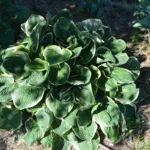
Leaves are smooth, thick, broadly ovate, strongly veined, and frosty blue-green to gray-blue, with slightly wavy margins, rounded lobes, and pointed tips. The upright vase-shaped arrangement is a key identification feature. Tall, mostly leafless green scapes carry the lavender flowers well above the foliage.
Flowering
Flowering occurs in mid to late summer, typically July and August in the United States. Pale lavender, trumpet-shaped flowers are borne in terminal racemes on unusually tall, mostly leafless scapes that can rise 5–6 feet above the foliage. The flowers are showy but secondary to the ornamental leaves.
Pollination and visitors
Hosta flowers provide nectar and are visited by bees, bumblebees, and hummingbirds. Available evidence supports general hosta visitation rather than a documented cultivar-specific pollinator species, so no single Latin-named visitor is assigned.
Hosta 'Krossa Regal' photos
Click any photo for a larger view. Source, author and license are shown separately.
Diseases and pests
Diseases
Avoid planting in poorly drained soil, which increases crown-rot risk. Remove and discard badly affected tissue and improve drainage. Watch for foliar nematodes, leaf spots, and viral symptoms such as irregular mottling or streaking; remove plants suspected of HVX or other hosta viruses rather than propagating them.
Pests
Slugs and snails can chew irregular holes, while deer and rabbits may browse the foliage. Hand-pick or trap slugs, reduce hiding places, and keep foliage dry overnight where practical. Use deer or rabbit exclusion when browsing is persistent. The cultivar has comparatively good slug resistance, but monitoring is still worthwhile.
Related diseases and pests
Only Plant Doctor profiles whose host data indicate this plant may be affected are shown here.
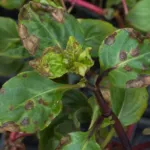 DiseaseImpatiens necrotic spot virus diseaseImpatiens necrotic spot orthotospovirus
 DiseaseSouthern blightAthelia rolfsii
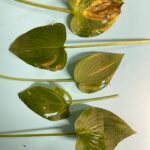 PestStrawberry foliar nematodeAphelenchoides fragariae
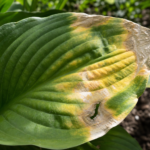 Environmental stressExcess light stress
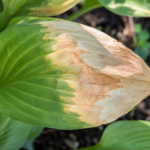 Environmental stressLeaf sunburn
 DiseaseAlternaria leaf spot and fruit rotAlternaria alternata
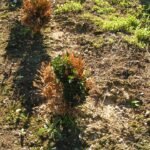 DiseasePhytophthora root and crown rotPhytophthora nicotianae
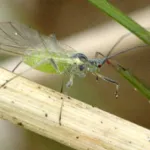 PestGreen Peach AphidMyzus persicae
Toxicity and pollen
Hostas contain saponins and are listed by ASPCA as toxic to dogs and cats. Ingestion may cause vomiting, diarrhea, or depression. The main practical concern is chewing or eating plant material; keep pets from consuming leaves, flowers, crowns, or roots and contact a veterinarian if symptoms occur.
- Typical season
- July–August during bloom
- Pollination / pollen
- Insect-borne flower pollen
Hosta pollen is produced during flowering in summer, but the flowers are primarily insect-pollinated and the pollen is not generally regarded as a major airborne seasonal allergen. Sensitive individuals may still react to plant contact or localized flower exposure.
Native habitat
Hostas are woodland and woodland-margin perennials from East Asia, growing in humus-rich soils with regular moisture and filtered light. In cultivation, 'Krossa Regal' performs best in sheltered conditions that resemble a moist forest edge rather than exposed, hot, dry ground.
Interesting fact
'Krossa Regal' is associated with Hosta nigrescens parentage and is notable for its unusually upright vase-shaped habit. Its flower scapes can reach roughly 5–6 feet, far above the foliage. The thick leaves give it better slug resistance than many thin-leaved hostas, although no hosta is completely pest-proof.
Frequently asked questions (FAQ)
The most relevant questions about this plant, with short and direct answers.
🌱Quick care
How do you care for Hosta 'Krossa Regal'?⌄
Grow Hosta 'Krossa Regal' in partial to full shade, evenly moist organically rich soil, and a sheltered location. Water consistently during dry periods and remove fading foliage after frost.
Is Hosta 'Krossa Regal' easy to grow?⌄
Yes, Hosta 'Krossa Regal' is generally an easy-care, low-maintenance perennial. Its main concerns are drought stress, slugs and snails, deer and rabbits, and poorly drained soil.
How big does Hosta 'Krossa Regal' get?⌄
Hosta 'Krossa Regal' typically grows about 3 feet tall and 3 to 6 feet wide. Its upright, vase-shaped habit makes it appear taller and narrower than many other hostas.
🌤️Environment and placement
How much shade does Hosta 'Krossa Regal' need?⌄
Hosta 'Krossa Regal' grows best in partial shade to full shade, especially with morning sun or filtered light. Too much intense afternoon sun can scorch or bleach the blue-green leaves.
Can Hosta 'Krossa Regal' grow in full sun?⌄
Hosta 'Krossa Regal' can tolerate some additional sun if the soil stays consistently moist, but full-day sun is usually not ideal. In hot climates, provide afternoon shade to reduce leaf scorch.
Where should I plant Hosta 'Krossa Regal'?⌄
Plant Hosta 'Krossa Regal' in a shady border, woodland garden or large foundation bed where it has room to spread. Choose a wind-protected site because its tall scapes and large leaves can be damaged by exposure.
What USDA hardiness zones are suitable for Hosta 'Krossa Regal'?⌄
Hosta 'Krossa Regal' is commonly grown in USDA Hardiness Zones 3 through 8, with some sources extending its range to Zone 9. Performance in warmer zones is best with reliable shade and moisture.
What soil is best for Hosta 'Krossa Regal'?⌄
Use moist, organically rich, well-drained loam or improved clay for Hosta 'Krossa Regal'. The soil should retain moisture without remaining waterlogged around the crown.
Can Hosta 'Krossa Regal' grow under trees?⌄
Yes, Hosta 'Krossa Regal' can grow under trees if it receives adequate moisture and is not competing heavily with tree roots. Add organic matter to the planting area and water during dry weather.
Can Hosta 'Krossa Regal' grow under black walnut trees?⌄
Hosta 'Krossa Regal' is considered relatively tolerant of black walnut conditions compared with many garden perennials. Even so, provide adequate soil moisture and avoid severe root competition.
💧Care and problems
How often should I water Hosta 'Krossa Regal'?⌄
Water Hosta 'Krossa Regal' whenever the upper soil begins to dry, aiming to keep the root zone evenly moist. During hot or dry weather, deep watering is more effective than frequent shallow sprinkling.
Why are the leaves of my Hosta 'Krossa Regal' turning brown?⌄
Brown leaves on Hosta 'Krossa Regal' are commonly caused by drought, excessive sun, wind, hail or root problems. Check soil moisture, improve shade and drainage, and remove badly damaged foliage.
Does Hosta 'Krossa Regal' resist slugs?⌄
Hosta 'Krossa Regal' has relatively good resistance to slug and snail damage because its leaves are thick and held upright. It can still be damaged in cool, damp conditions, so monitor new growth.
Do deer and rabbits eat Hosta 'Krossa Regal'?⌄
Yes, deer and rabbits may eat Hosta 'Krossa Regal', although this cultivar may be somewhat less palatable than some hostas. Use fencing or a suitable wildlife repellent where browsing pressure is high.
Why is my Hosta 'Krossa Regal' not growing well?⌄
Poor growth usually results from inadequate moisture, excessive sun, compacted soil, root competition, crown damage or winter injury. Confirm that the crown is planted correctly and that the soil drains while staying consistently moist.
Should I fertilize Hosta 'Krossa Regal'?⌄
Hosta 'Krossa Regal' usually needs only moderate fertility when planted in rich soil. Apply a light, balanced fertilizer in early spring if growth is weak, keeping granular fertilizer away from the crown.
🪴Planting and repotting
When is the best time to plant Hosta 'Krossa Regal'?⌄
Plant Hosta 'Krossa Regal' in spring or early fall while temperatures are moderate and soil moisture is reliable. Avoid planting during severe summer heat unless you can provide regular irrigation.
How far apart should I plant Hosta 'Krossa Regal'?⌄
Space Hosta 'Krossa Regal' about 3 to 6 feet apart, depending on whether you want separate specimens or a fuller mass. Allow extra room for its mature width and upright vase-shaped form.
How deep should I plant Hosta 'Krossa Regal'?⌄
Plant Hosta 'Krossa Regal' with the crown and growing points at or just below soil level. Spread the roots outward, backfill firmly and water thoroughly after planting.
Can Hosta 'Krossa Regal' grow in a container?⌄
Yes, Hosta 'Krossa Regal' can grow in a large container with drainage holes and a moisture-retentive but well-drained potting mix. Choose a container wide enough for its mature root system and protect it from drying out.
✂️Propagation and pruning
How do you propagate Hosta 'Krossa Regal'?⌄
Propagate Hosta 'Krossa Regal' primarily by dividing the clump in spring before the leaves fully unfurl or in early fall. Each division should include viable roots and at least one growing point.
Can Hosta 'Krossa Regal' be grown from seed?⌄
Hosta 'Krossa Regal' is not a reliable choice for seed propagation because it generally produces few or nonviable seeds. Division or tissue culture is preferred when an identical plant is needed.
When should I divide Hosta 'Krossa Regal'?⌄
Divide Hosta 'Krossa Regal' in early spring before the leaves unfurl or in early fall. Division is usually easiest when the plant is dormant or just beginning active growth.
Should I cut back Hosta 'Krossa Regal' in fall?⌄
Cut back Hosta 'Krossa Regal' after frost turns the foliage yellow or brown, or leave it until late winter. Removing dead foliage helps tidy the planting and reduces places where pests may overwinter.
Should I remove the flower stalks from Hosta 'Krossa Regal'?⌄
Remove the flower stalks only if you prefer a foliage-focused appearance or want to prevent seed development. Leaving them in place does not normally harm the plant, and the tall lavender scapes are a notable feature.
⚠️Toxicity and safety
Is Hosta 'Krossa Regal' toxic to dogs?⌄
Yes, Hosta 'Krossa Regal' is considered toxic to dogs if eaten. Ingestion may cause vomiting, diarrhea or depression, so contact a veterinarian if a dog consumes the plant.
Is Hosta 'Krossa Regal' toxic to cats?⌄
Yes, Hosta 'Krossa Regal' is considered toxic to cats if eaten. Keep pets away from the foliage and contact a veterinarian promptly if ingestion occurs or symptoms develop.
🌸Flowering and special interest
When does Hosta 'Krossa Regal' bloom?⌄
Hosta 'Krossa Regal' usually blooms from July through August in the United States. Lavender, trumpet-shaped flowers appear on tall scapes that rise well above the foliage.
What color are the flowers on Hosta 'Krossa Regal'?⌄
Hosta 'Krossa Regal' produces lavender to pale purple, trumpet-shaped flowers. The flower scapes can reach roughly 5 to 6 feet, creating a strong vertical accent above the blue-green leaves.
Does Hosta 'Krossa Regal' attract hummingbirds?⌄
Yes, the tubular flowers of Hosta 'Krossa Regal' can attract hummingbirds. Blooming is usually strongest when the plant receives some filtered or morning light and has adequate moisture.