 AI-generated illustration
Hosta ‘Eternal Flame’ short overview
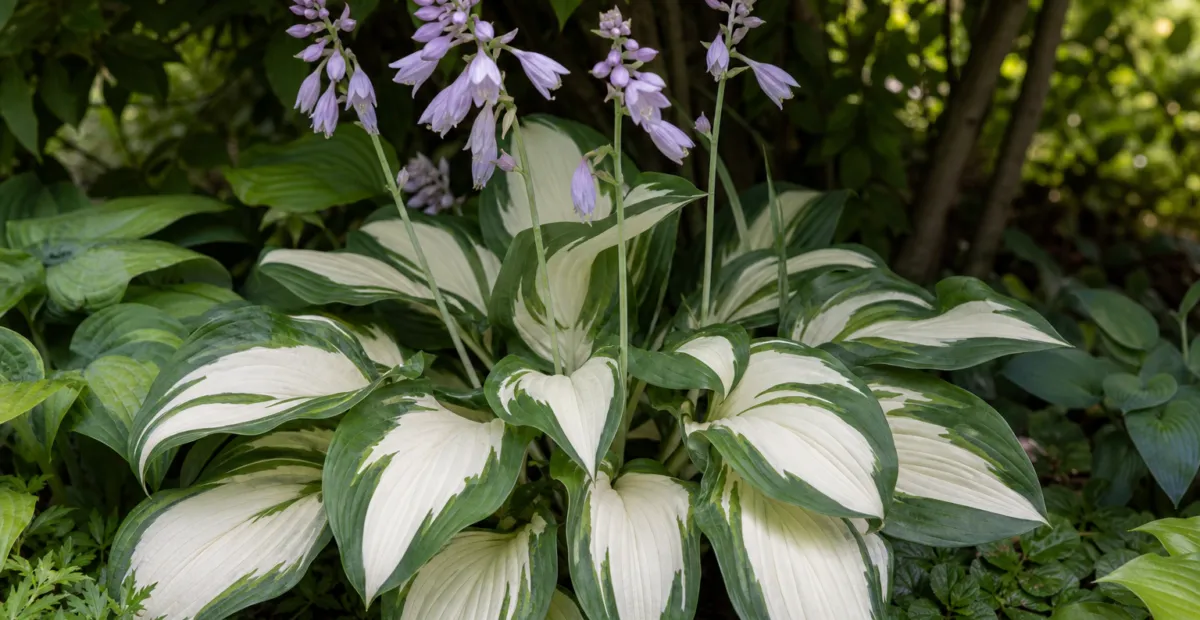
Hosta 'Eternal Flame' is a medium, clump-forming deciduous perennial with broad, fairly flat leaves that hold a striking white center inside a wide dark-green margin. Pale lavender flowers rise on upright scapes in summer. This registered sport of 'Whirlwind' performs best in sheltered partial to full shade, fertile soil, and even moisture with reliable drainage. Grow it in woodland borders, shaded beds, or containers.
Taxonomic classification
Hosta ‘Eternal Flame’ care guide
Light and placement
Choose partial shade to full shade, ideally with morning light and protection from hot afternoon sun. North- and east-facing exposures or filtered light beneath shrubs are suitable. Too much direct sun can bleach or scorch the white-centered leaves; too little light may produce weaker petioles and less compact growth.
Watering and humidity
Water deeply when the upper inch of soil begins to dry, keeping the root zone consistently moist during spring leaf expansion and summer heat. Containers may need more frequent checks than garden plants. Water at the soil line where possible, and reduce watering after foliage dies back while preventing complete winter desiccation.
Soil and growing medium
Use fertile, humus-enriched soil that holds moisture without becoming waterlogged. Loam or improved clay and sandy loam can work if organic matter is added. The cultivar tolerates acidic, neutral, and alkaline conditions, but steady moisture and good drainage are more important than a narrowly targeted pH.
Feeding
Apply a balanced, slow-release perennial fertilizer in spring as shoots emerge, or top-dress with finished compost. Avoid heavy late-season nitrogen, which can produce soft growth and delay dormancy. Water the soil after granular feeding and keep fertilizer off the crown and foliage.
Growth and habit
Forms a deciduous crown that emerges in spring, expands through the growing season, and dies back after frost. Maintain even moisture during leaf expansion, keep mulch away from the crown, and divide only when the clump is well established.
Planting and repotting
Plant in spring or early fall when soil is workable. Set the crown at soil level, spread the roots outward, water thoroughly, and mulch lightly without covering the crown. Allow about 18–24 inches between plants for a medium clump, adjusting spacing for the desired speed of cover.
For containers, repot or divide when the clump fills the pot or roots circle densely. Move it into fresh, moisture-retentive but well-drained mix in early spring, keeping the crown at the original soil level. Container-grown plants may establish more reliably before transfer to the garden.
Propagation and pruning
Propagation
Divide established clumps in early spring as shoots emerge or in late summer after active growth. Separate crowns with a sharp, clean knife, retaining roots and at least one healthy shoot per division. Seed is not a reliable way to reproduce this named cultivar true to type.
Pruning
Remove spent flower scapes after bloom if desired. Cut yellowing or frost-damaged foliage to the ground after it collapses in fall, and clear debris to reduce overwintering pest and disease pressure.
Overwintering
Leave healthy foliage until it naturally collapses, then remove it after frost. Apply a light mulch in exposed or very cold sites, keeping the crown uncovered. Container plants are more vulnerable to repeated freeze-thaw cycles; group pots in a sheltered location and keep the dormant mix slightly moist, not saturated.
Uses
Use as a foliage focal point in shaded borders, woodland gardens, underplanting, informal beds, and patio containers. The high-contrast leaves brighten dark planting areas. It is ornamental only; do not treat it as an edible or medicinal plant, especially where dogs or cats can chew it.
Appearance
Leaves are broad, fairly flat, and strongly centered white with a wide dark-green margin. The stable central pattern distinguishes it from many changing variegated hostas. Upright scapes rise above the mound and carry pale lavender flowers, while the foliage disappears during winter dormancy.
Flowering
Upright scapes appear above the foliage in summer and carry pale lavender, nodding, funnel-shaped hosta flowers in terminal racemes. Flowering is ornamental but secondary to the cultivar’s persistent white-centered foliage. Scapes may be removed after flowering if seed production is not wanted.
Pollination and visitors
No cultivar-specific pollinator study was located. Hosta flowers are insect-pollinated, but a reliable visitor group for this exact cultivar could not be confirmed from the available evidence.
Diseases and pests
Diseases
Reduce disease pressure with good air circulation, clean division tools, and removal of collapsing foliage. Hostas can be affected by virus diseases, including Hosta Virus X; discard suspicious plants rather than propagating them. Avoid chronically saturated soil, which encourages crown and root problems.
Pests
Slugs and snails commonly damage emerging leaves. Hand-pick, trap, or use proportionate, labeled controls while reducing hiding places and avoiding excessive surface moisture. Container plants may also be affected by vine weevil; inspect roots and compost carefully when repotting.
Related diseases and pests
Only Plant Doctor profiles whose host data indicate this plant may be affected are shown here.
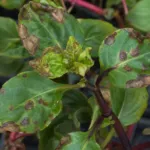 DiseaseImpatiens necrotic spot virus diseaseImpatiens necrotic spot orthotospovirus
 DiseaseSouthern blightAthelia rolfsii
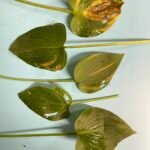 PestStrawberry foliar nematodeAphelenchoides fragariae
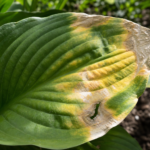 Environmental stressExcess light stress
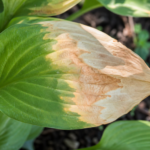 Environmental stressLeaf sunburn
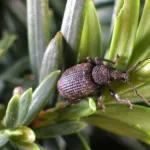 PestBlack Vine WeevilOtiorhynchus sulcatus
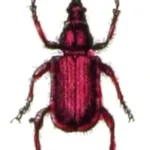 PestPeach weevilRhynchites bacchus
Toxicity and pollen
Hostas contain saponins and are listed as toxic to dogs and cats if eaten, with vomiting, diarrhea, and depression reported. Avoid deliberate ingestion and keep pets from chewing foliage or flowers. Human contact is not generally the concern; ingestion is the relevant exposure route.
- Typical season
- Late spring through summer during flowering
- Pollination / pollen
- Insect-dispersed floral pollen
Hosta flowers release pollen within insect-pollinated blossoms rather than as a conspicuous wind-borne cloud. Airborne exposure is therefore expected to be low, but a zero-allergy claim is not justified because individual sensitivity varies.
Native habitat
Hostas are woodland-associated perennials from East Asia, adapted to humus-rich soils, filtered light, and seasonal moisture. In cultivation, this hybrid cultivar benefits from shelter, protection from hot afternoon sun, and soil that remains moist without standing water.
Interesting fact
This cultivar is a registered sport of Hosta 'Whirlwind'.
Its white leaf center is reported to hold through the season.
The leaves are fairly flat rather than strongly twisted.
It was attributed to Hans Hansen and Shady Oaks Nursery.
The cultivar was recorded in horticultural evaluation trials in Louisiana.
Frequently asked questions (FAQ)
The most relevant questions about this plant, with short and direct answers.
🌱Quick care
What is Hosta 'Eternal Flame'?⌄
Hosta 'Eternal Flame' is a small to medium variegated hosta with creamy white centers and dark green margins. It is a sport of Hosta 'Whirlwind' and is grown primarily for its contrasting foliage.
How much light does Hosta 'Eternal Flame' need?⌄
Give Hosta 'Eternal Flame' partial shade to full shade. Bright filtered light or gentle morning sun is usually suitable, while intense afternoon sun can scorch the pale leaf centers.
How often should I water Hosta 'Eternal Flame'?⌄
Water when the soil surface begins to dry, keeping the root zone evenly moist but not waterlogged. Plants exposed to more sun or summer heat may need additional water.
Is Hosta 'Eternal Flame' hardy?⌄
Yes, Hosta 'Eternal Flame' is a hardy outdoor perennial and is commonly listed for USDA Zones 3–8. Its foliage dies back after frost and returns from dormant crowns in spring.
How big does Hosta 'Eternal Flame' get?⌄
Hosta 'Eternal Flame' typically forms a mound about 15 inches tall and up to 24 inches wide. Mature size can vary with climate, soil, watering, and growing conditions.
🌤️Environment and placement
Where should I plant Hosta 'Eternal Flame'?⌄
Plant it in a shaded or partly shaded bed, woodland garden, border, or container with fertile, humus-rich soil. A location protected from harsh afternoon sun helps preserve its light-colored centers.
Can Hosta 'Eternal Flame' grow in full shade?⌄
Yes, Hosta 'Eternal Flame' can grow in full shade, provided the site is not excessively dry. Some filtered light generally supports stronger growth and better foliage contrast.
Can Hosta 'Eternal Flame' tolerate morning sun?⌄
Yes, it can usually tolerate gentle morning sun, especially where the soil stays moist. Avoid prolonged hot afternoon exposure because the creamy foliage may scorch.
What soil is best for Hosta 'Eternal Flame'?⌄
Use fertile, humus-rich soil that holds moisture while draining well. Improve poor or sandy soil with compost, but avoid locations that remain saturated after rain.
Can Hosta 'Eternal Flame' be grown in a container?⌄
Yes, Hosta 'Eternal Flame' grows well in a container with drainage holes and quality potting mix. Choose a pot wide enough for its mature 24-inch spread and protect the container from extreme winter temperature swings.
💧Care and problems
Why are the leaves of my Hosta 'Eternal Flame' turning brown?⌄
Brown leaf edges usually indicate drought stress, excessive sun, heat, or root problems from poor drainage. Check soil moisture and afternoon exposure before increasing watering.
Why is my Hosta 'Eternal Flame' losing its white center?⌄
The creamy center may appear greener under low light, seasonal stress, or as leaves mature. Excessive green growth can also be a reversion, so remove fully green shoots if they arise from the crown.
Does Hosta 'Eternal Flame' need fertilizer?⌄
It usually benefits from a spring application of a balanced, slow-release fertilizer or compost. Avoid heavy late-season feeding, which can encourage tender growth before winter.
What pests commonly affect Hosta 'Eternal Flame'?⌄
Slugs and snails are the most common pests, particularly in damp, shaded gardens. Deer and rabbits may also browse the foliage, so physical barriers or appropriate repellents may be needed.
How do I protect Hosta 'Eternal Flame' from slugs?⌄
Reduce hiding places, avoid wet mulch touching the crown, and inspect plants regularly for slug damage. Hand-picking, traps, barriers, or a labeled slug control product can be used according to the product directions.
🪴Planting and repotting
When is the best time to plant Hosta 'Eternal Flame'?⌄
Plant it in spring or early fall when temperatures are moderate and the soil is workable. Water consistently during establishment, especially if planting during warm weather.
How do I plant Hosta 'Eternal Flame' in the ground?⌄
Dig a hole as deep as the root ball and about twice as wide, then set the crown at the same depth it was previously growing. Backfill with improved soil, water thoroughly, and add a light layer of mulch without covering the crown.
How far apart should I plant Hosta 'Eternal Flame'?⌄
Space plants about 18–24 inches apart to allow for their expected spread. Use the wider spacing for a more open planting and the closer spacing for quicker visual coverage.
How do I grow Hosta 'Eternal Flame' in a pot?⌄
Use a well-drained container slightly larger than the root system and fill it with moisture-retentive potting mix. Keep the pot in shade or filtered light and water whenever the mix begins to dry.
✂️Propagation and pruning
How do I propagate Hosta 'Eternal Flame'?⌄
Propagate it by division in spring as new shoots emerge or in early fall. Lift the clump, separate sections with roots and shoots, and replant them promptly at the original depth.
Can Hosta 'Eternal Flame' be grown from seed?⌄
It can produce seed, but seedlings may not retain the distinctive creamy-white and green pattern of the named cultivar. Division is the preferred method for producing plants true to Hosta 'Eternal Flame'.
When should I divide Hosta 'Eternal Flame'?⌄
Divide it in spring or early fall when temperatures are mild and the plant is not under drought stress. Avoid dividing during hot, dry weather because newly separated sections can dehydrate quickly.
Should I cut back Hosta 'Eternal Flame' in fall?⌄
Remove collapsed or frost-damaged foliage in late fall or early spring. Cutting back healthy leaves too early can reduce the plant’s ability to store energy for the following season.
Should I remove the flower stalks from Hosta 'Eternal Flame'?⌄
Remove flower stalks after blooming if you prefer a tidier appearance or want the plant to focus on foliage. Leaving them in place does not usually harm an established plant.
⚠️Toxicity and safety
Is Hosta 'Eternal Flame' toxic to dogs?⌄
Yes, Hosta 'Eternal Flame' is toxic to dogs if eaten. Ingestion can cause gastrointestinal upset, so contact a veterinarian or animal poison service if a dog consumes the plant.
Is Hosta 'Eternal Flame' toxic to cats?⌄
Yes, Hosta 'Eternal Flame' is toxic to cats if eaten. Keep pets away from the foliage and seek veterinary advice if ingestion occurs, especially if vomiting, diarrhea, or lethargy develops.
Is Hosta 'Eternal Flame' safe for children?⌄
Hostas are not generally considered edible plants, so children should not be encouraged to chew the leaves or flowers. Keep the plant and any garden treatments out of reach of young children.
🌸Flowering and special interest
What color flowers does Hosta 'Eternal Flame' have?⌄
Hosta 'Eternal Flame' produces lavender flowers on upright stalks above the foliage. The flowers are a secondary feature because the cultivar is primarily valued for its variegated leaves.
When does Hosta 'Eternal Flame' bloom?⌄
It generally blooms in summer, although the timing can vary with climate and growing conditions. Flower stalks rise above the compact foliage mound.
Does Hosta 'Eternal Flame' have fragrant flowers?⌄
Hosta 'Eternal Flame' is not usually grown as a fragrant hosta, and strong fragrance should not be expected. Its main ornamental appeal is the creamy center and dark green leaf margin.