 Source:
 Hosta ‘El Nino’ short overview
Hosta 'El Nino' is a compact, clump-forming perennial prized for blue-green leaves with irregular white margins and pale lavender flowers. It performs best in moist, well-drained soil and partial to full shade, making it a dependable choice for woodland borders, shaded beds, and containers in USDA Zones 3–8. Protect the foliage from strong afternoon sun and watch for slugs and deer, which commonly browse hostas.
Taxonomic classification
Hosta ‘El Nino’ care guide
Light and placement
Grow in partial shade to shade, ideally with gentle morning light and protection from hot afternoon sun. North- and east-facing beds or filtered light beneath deciduous trees work well. Bleached margins, scorched patches, and wilt despite moist soil indicate excessive sun or heat; weak, elongated growth and duller variegation suggest overly dark conditions.
Watering and humidity
Water deeply when the top inch of soil begins to dry, keeping the root zone evenly moist rather than saturated. Increase frequency during hot, dry summer weather and reduce it after leaf senescence. Water at the soil line to keep foliage dry and reduce disease risk. Container plants may need daily checks during heat.
Soil and growing medium
Use fertile, moisture-retentive but well-drained soil with plenty of organic matter. Loam or improved clay is suitable. Hosta tolerates acidic, neutral, and mildly alkaline conditions, but compacted or chronically waterlogged soil can cause crown and root problems.
Feeding
Apply a balanced, slow-release fertilizer or a thin layer of compost in early spring as shoots emerge. Avoid heavy nitrogen feeding, which can produce soft foliage and increase pest appeal. Stop routine feeding by late summer so new growth can mature before winter.
Growth and habit
Forms a dense, symmetrical mound from basal leaves and gradually enlarges by producing additional crowns. It is not a runner or aggressive spreader. Mature clumps benefit from division when crowded, and the thick foliage can conceal slugs in damp conditions.
Planting and repotting
Plant in spring or early fall, setting the crown at the same depth as it was previously grown. Spread the roots across amended soil, water thoroughly, and mulch lightly without covering the crown. Allow about 30–36 inches between plants for a mature display, with closer spacing only for a temporary mass planting.
Container plants should be shifted into fresh, well-drained potting mix when roots fill the container or growth becomes crowded, usually in spring. Choose a pot only one size larger and keep the crown at the same level. Divide and refresh old clumps rather than repeatedly over-potting them.
Propagation and pruning
Propagation
Propagate by division in early spring as shoots emerge or in early fall. Separate crowns with several eyes and healthy roots, then replant promptly at the original depth. Seed is not a reliable way to reproduce this named cultivar because seedlings will not necessarily retain its distinctive variegation.
Pruning
Cut flower scapes after flowering if seed production is not desired. Remove collapsed foliage after a hard freeze or in late winter before new shoots emerge. Do not cut healthy leaves during the growing season unless they are damaged or diseased.
Overwintering
Leave the dormant crown in the ground outdoors in Zones 3–8. After frost has collapsed the foliage, remove debris and apply a light mulch in colder or exposed sites, keeping mulch away from the crown. Containers are more vulnerable to root freezing and should be sheltered or insulated in severe winters.
Uses
Useful as a foliage accent, shaded border plant, woodland planting, specimen, mass planting, or container subject. Its variegated leaves provide contrast beneath trees and shrubs. It is not recommended as an edible plant for household or pet settings because hosta foliage contains saponins and pets may become ill after ingestion.
Appearance
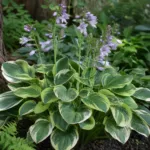
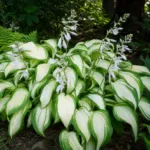
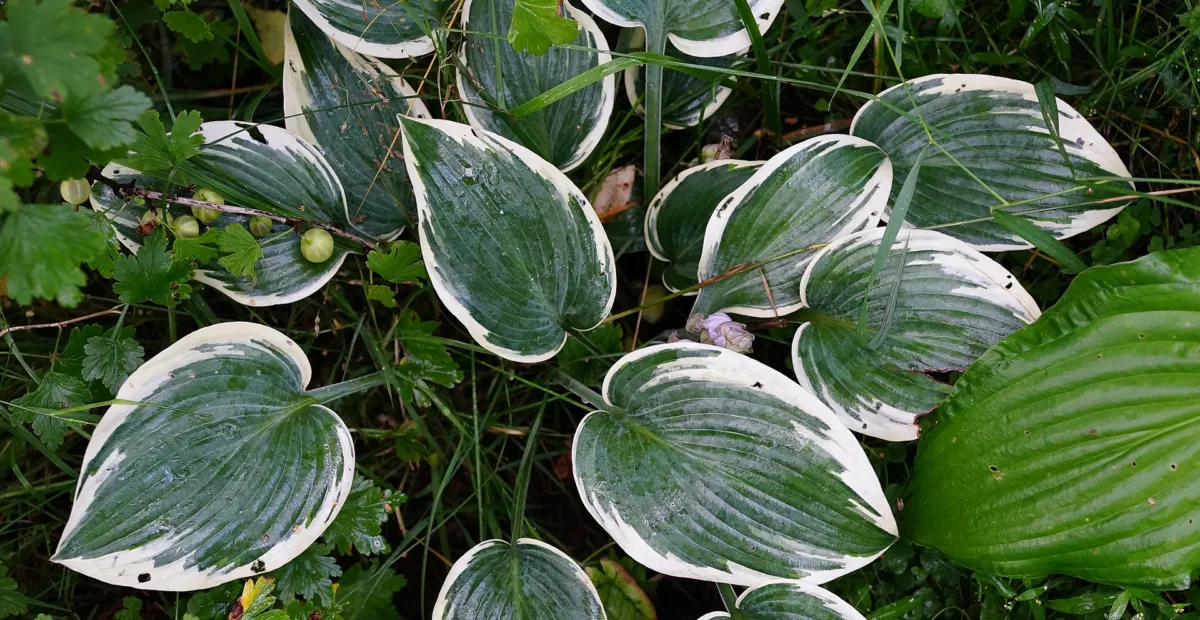
Leaves are basal, ovate to heart-shaped, thick, and matte with a waxy blue-green surface. Irregular white margins contrast with the darker center and may appear creamier early in the season. The plant forms a neat mound, while upright green scapes carry pale lavender flowers above the foliage.
Flowering
Upright scapes rise above the foliage in midsummer and carry nodding, bell-shaped flowers with six fused tepals. Flowers are pale lavender to violet-blue with darker markings. The cultivar is grown mainly for its foliage, but flowering is regular when plants are mature and adequately established.
Pollination and visitors
The tubular, nectar-bearing flowers may be visited by bees and bumblebees during midsummer. Documented cultivar-specific visitor records are limited, so attraction is rated low rather than assumed to be high from the presence of flowers alone.
Hosta 'El Nino' photos
Click any photo for a larger view. Source, author and license are shown separately.
Diseases and pests
Diseases
Avoid overhead watering and crowded, poorly drained sites to reduce crown rot and foliar disease. Remove damaged foliage after frost and discard diseased leaves rather than composting them. Buy clean stock and disinfect tools when dividing, because hosta viruses can spread through sap and propagation practices.
Pests
Slugs and snails commonly rasp holes in the leaves, especially during wet weather. Hand-pick, reduce hiding places, water at soil level, and use barriers where appropriate. Deer may browse hostas heavily. Monitor for foliar damage and avoid relying on cultivar claims of resistance as a substitute for inspection.
Related diseases and pests
Only Plant Doctor profiles whose host data indicate this plant may be affected are shown here.
 DiseaseImpatiens necrotic spot virus diseaseImpatiens necrotic spot orthotospovirus
 DiseaseSouthern blightAthelia rolfsii
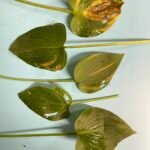 PestStrawberry foliar nematodeAphelenchoides fragariae
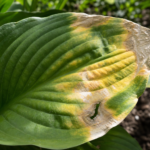 Environmental stressExcess light stress
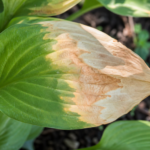 Environmental stressLeaf sunburn
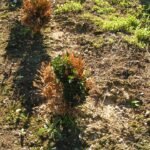 DiseasePhytophthora root and crown rotPhytophthora nicotianae
Toxicity and pollen
Hosta contains saponins and is recognized as toxic to dogs and cats if eaten, typically causing gastrointestinal upset such as vomiting, diarrhea, or depression. Keep pets from chewing the foliage or flowers and contact a veterinarian if ingestion causes symptoms. Evidence for serious human toxicity is limited, but ornamental plant material should not be eaten.
- Typical season
- July–August
- Pollination / pollen
- Insect-dispersed pollen
Hosta flowers release pollen as part of insect pollination, but the pollen is generally not considered a major airborne allergy source because it is not primarily wind-dispersed. Sensitive individuals can still react to direct contact with flowers or plant material.
Native habitat
Hostas are herbaceous woodland perennials associated with moist, humus-rich soils and filtered light. This cultivar was developed in the Netherlands rather than collected from the wild, so its garden performance reflects cultivated hosta genetics rather than a narrowly defined native habitat.
Interesting fact
The cultivar originated from a 1996 cross made in Noordwijk, the Netherlands, with 'Halcyon' as the female parent and an unidentified seedling as the male parent. It was first propagated by division. Its registered name is commonly written 'El Niño', while the patent spelling is 'El Nino'.
Frequently asked questions (FAQ)
The most relevant questions about this plant, with short and direct answers.
🌱Quick care
What is Hosta 'El Nino'?⌄
Hosta 'El Nino' is a clump-forming perennial grown for its blue-green leaves edged in white. It is a shade-loving hosta in the Asparagaceae family and is commonly treated as a Tardiana Group cultivar.
How much sun does Hosta 'El Nino' need?⌄
Hosta 'El Nino' grows best in partial shade to full shade. Protect it from strong afternoon sun, especially in hot climates, because excessive light can scorch or fade its foliage.
How often should I water Hosta 'El Nino'?⌄
Water Hosta 'El Nino' regularly enough to keep the soil evenly moist but not waterlogged. It may need more frequent watering during hot, dry weather or when grown in containers.
How large does Hosta 'El Nino' get?⌄
Hosta 'El Nino' typically forms a mound about 14 to 20 inches tall and 28 to 40 inches wide. It may take several years to reach its mature size.
🌤️Environment and placement
What is the best location for Hosta 'El Nino'?⌄
Plant Hosta 'El Nino' in a sheltered shade or woodland-style bed with filtered light and consistent moisture. Morning sun or bright indirect light is generally safer than hot afternoon exposure.
What soil does Hosta 'El Nino' prefer?⌄
Hosta 'El Nino' prefers moist, fertile, well-drained loam enriched with organic matter. It can tolerate improved clay soil, but heavy ground should be amended so excess water does not remain around the crown.
What USDA hardiness zones are suitable for Hosta 'El Nino'?⌄
Hosta 'El Nino' is generally listed as hardy in USDA Zones 3 through 8. In warmer zones, deep shade, mulch, and reliable moisture can help reduce heat stress.
Can Hosta 'El Nino' grow in full shade?⌄
Yes, Hosta 'El Nino' can grow in full shade, although filtered or partial shade may produce stronger growth and better foliage color. Very dense shade can reduce vigor and flowering.
💧Care and problems
Why are the leaves of my Hosta 'El Nino' turning brown?⌄
Brown leaf edges on Hosta 'El Nino' usually indicate drought, heat, excessive sun, wind exposure, or root stress. Keep the soil consistently moist and move or shade the plant if it receives strong afternoon sunlight.
How do I protect Hosta 'El Nino' from slugs and snails?⌄
Reduce slug and snail damage by removing hiding places, watering near the soil rather than over the leaves, and using a control method labeled for hostas. Inspect plants regularly because the cultivar's foliage can still be damaged despite its texture.
Do deer eat Hosta 'El Nino'?⌄
Yes, deer commonly browse Hosta 'El Nino' and other hostas. Use fencing, repellents, or another deer-management strategy if browsing pressure is high.
Why is my Hosta 'El Nino' not growing well?⌄
Poor growth is commonly caused by inadequate moisture, excessive sun, compacted soil, root competition, or a crown planted too deeply. Check drainage and soil moisture, then provide shade and organic matter as needed.
🪴Planting and repotting
When is the best time to plant Hosta 'El Nino'?⌄
The best time to plant Hosta 'El Nino' is spring or early fall, when temperatures are moderate and soil moisture is easier to maintain. Water thoroughly after planting and keep the root zone evenly moist while it establishes.
How should I plant Hosta 'El Nino' in the ground?⌄
Plant Hosta 'El Nino' with the crown at soil level and the roots spread outward in a wide hole. Backfill with improved soil, water deeply, and apply a light mulch layer without covering the crown.
Can Hosta 'El Nino' be grown in a container?⌄
Yes, Hosta 'El Nino' can be grown in a container with drainage holes and moisture-retentive, well-drained potting mix. Choose a container wide enough for its mature clump and protect the roots from extreme winter temperature swings.
✂️Propagation and pruning
How do I propagate Hosta 'El Nino'?⌄
Propagate Hosta 'El Nino' by dividing the clump in early spring or late summer. Separate sections with healthy roots and at least one growing point, then replant them promptly and keep them moist.
Can Hosta 'El Nino' be grown from seed?⌄
Hosta 'El Nino' can produce seed, but seedlings will not reliably reproduce the cultivar's distinctive foliage. Division is the practical way to preserve the parent plant's characteristics.
Should I cut back Hosta 'El Nino' in fall?⌄
Remove yellowing or collapsed foliage from Hosta 'El Nino' after frost or once it dies back naturally. Clearing the bed in late fall or early spring helps reduce overwintering debris, but avoid cutting healthy leaves prematurely.
⚠️Toxicity and safety
Is Hosta 'El Nino' toxic to dogs and cats?⌄
Yes, Hosta 'El Nino' is toxic to dogs and cats if eaten. Ingestion can cause gastrointestinal upset and other symptoms, so contact a veterinarian or animal poison service if a pet consumes the plant.
🌸Flowering and special interest
When does Hosta 'El Nino' bloom?⌄
Hosta 'El Nino' generally blooms in July and August. Its lavender flowers rise above the foliage on tall flower stalks, although the plant is primarily valued for its leaves.
Should I remove the flower stalks from Hosta 'El Nino'?⌄
Remove the flower stalks after blooming if you prefer a tidier appearance or want the plant to focus on foliage. Leaving them in place does not normally harm an established plant.