Source:
 Plantain lily ‘Revolution’ (Hosta ‘Revolution’) short overview
Hosta 'Revolution' is a medium-sized, shade-loving perennial prized for cream-centered, green-speckled leaves edged in dark green and mid-summer lavender flowers. This sport of 'Loyalist' forms a rounded clump for woodland gardens, shaded borders, and containers, with consistent moisture, rich soil, and protection from hot afternoon sun and drying wind. Its bold variegation provides strong visual interest even when the flowers are not in bloom.
Taxonomic classification
Plantain lily ‘Revolution’ (Hosta ‘Revolution’) care guide
Light and placement
Grow in part shade to full shade, ideally with bright morning light or dappled light and shelter from hot afternoon sun. East- or north-facing beds, woodland margins, and filtered light beneath high tree canopies are suitable. Excess sun can scorch the cream areas and dry the leaves; overly dark conditions may reduce vigor and flower production.
Watering and humidity
Keep the root zone evenly moist, especially during establishment, summer heat, and container culture. Water deeply at the soil surface beneath the leaves rather than frequently wetting the foliage. Mulch to moderate evaporation, but keep mulch away from the crown. Established plants tolerate brief dry periods better than prolonged drought.
Soil and growing medium
Use fertile, organically rich soil that remains evenly moist but drains freely. Loam or improved clay is suitable; incorporate compost where soil is compacted or poor. A slightly acidic to neutral pH is suitable, although hostas tolerate a broader pH range. Avoid permanently waterlogged ground.
Feeding
Apply a balanced, slow-release perennial fertilizer in spring as shoots emerge, or top-dress with finished compost. Avoid heavy nitrogen applications, which can produce soft foliage and weaken the plant's visual form. Do not fertilize during drought, immediately after division, or late in the season when new growth would be vulnerable to cold.
Growth and habit
This is a rhizomatous, clump-forming perennial with moderate growth and a rounded to spreading habit. The crown expands gradually through new shoots, so established plants can be divided when crowded. Shelter from drying wind helps preserve leaf quality and reduces tearing.
Planting and repotting
Plant in spring or early fall, setting the crown at the same depth it occupied in its container. Space about 24 inches apart for a typical mature clump, allowing extra room where a larger specimen is desired. Water deeply after planting and mulch lightly without covering the crown.
Repot container plants in early spring as growth resumes, moving to a slightly larger pot only when the root mass is crowded. Use a moisture-retentive but well-drained container mix, keep the crown at its original level, and water thoroughly after transplanting.
Propagation and pruning
Propagation
Propagate by division in early spring before leaves fully expand or in late summer to early fall. Separate the rhizomatous crown with a sharp, clean knife or spade, keeping each division supplied with healthy roots and one or more buds. Division preserves the cultivar's variegation; seed does not reliably reproduce it.
Pruning
Remove damaged leaves during the growing season if needed. Cut flower scapes after flowering if seed production is not desired, and remove naturally senesced foliage after frost or in late fall. Avoid cutting healthy foliage prematurely because it replenishes the crown for the following season.
Overwintering
Leave foliage in place until it naturally dies back, then remove it after frost or in late fall. A light mulch can protect shallow crowns in exposed sites, but do not bury the crown. Container-grown plants need extra insulation because roots experience colder temperature swings than plants in the ground.
Uses
Primarily an ornamental foliage plant for shade gardens, woodland borders, edging, mass plantings, and containers. Its flowers can be used as cut material, but the cultivar's main value is the cream-and-green foliage. Keep plant material away from pets because hostas contain saponins and can cause gastrointestinal upset if eaten.
Appearance
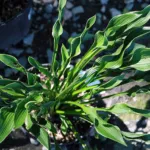
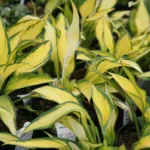
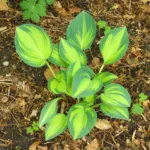
Leaves are oval, slightly glossy, and typically about 7.5–8 inches long by 4 inches wide. The cream-white center is irregularly marked with green speckles and bordered by a dark-green margin. The foliage rises from a basal rhizomatous crown, while greenish-white scapes carry lavender tubular flowers above the mound.
Flowering
Tubular, nodding lavender flowers are carried in terminal racemes on upright greenish-white scapes that rise above the foliage. Bloom is typically concentrated in July and August in much of the United States. Flowers are ornamental, but the cultivar is primarily grown for its variegated leaves.
Pollination and visitors
Hosta flowers are documented as attractive to hummingbirds and insect visitors, including bees and other flower-visiting insects. The tubular lavender flowers provide a seasonal nectar resource in shaded gardens, but this cultivar is chiefly selected for foliage rather than as a specialist pollinator plant.
Diseases and pests
Diseases
Watch for crown rot, leaf spots, foliar nematodes, and virus symptoms such as abnormal mottling or tissue collapse. Improve drainage, avoid overhead watering, sanitize tools between divisions, and remove and destroy plants suspected of Hosta Virus X or other systemic viruses.
Pests
Slugs and snails commonly chew irregular holes in the leaves; deer and rabbits may browse the foliage. Reduce hiding places, water at soil level, use proportionate slug controls, and protect plants with fencing or repellents where browsing pressure is high. Container plants may also encounter vine weevil.
Related diseases and pests
Only Plant Doctor profiles whose host data indicate this plant may be affected are shown here.
 DiseaseImpatiens necrotic spot virus diseaseImpatiens necrotic spot orthotospovirus
 DiseaseSouthern blightAthelia rolfsii
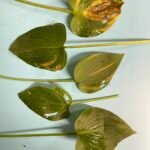 PestStrawberry foliar nematodeAphelenchoides fragariae
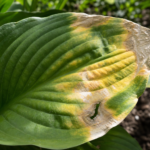 Environmental stressExcess light stress
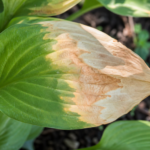 Environmental stressLeaf sunburn
 DiseasePhytophthora cactorum crown, collar, root and fruit rotPhytophthora cactorum
 PestBlack Vine WeevilOtiorhynchus sulcatus
 DiseaseAlternaria leaf spot and fruit rotAlternaria alternata
Toxicity and pollen
ASPCA lists Hosta as toxic to dogs and cats because of saponins, with vomiting, diarrhea, and depression reported after ingestion. The listing is not cultivar-specific, so treat 'Revolution' as potentially harmful if eaten. Prevent pets from consuming leaves, flowers, or other plant material and contact a veterinarian if symptoms occur.
- Typical season
- July–August
- Pollination / pollen
- Heavy, insect-carried pollen
Hosta flowers release pollen during summer bloom, but the flowers are primarily animal-visited rather than wind-pollinated, so airborne pollen exposure is expected to be relatively limited. Sensitive individuals should still avoid direct contact with flowers if they notice symptoms.
Native habitat
The Hosta genus is associated with open woodlands, woodland margins, and glades of East Asia. In cultivation, 'Revolution' performs best in cool or moderately warm sites with fertile, moisture-retentive soil, filtered light, and protection from hot afternoon exposure.
Interesting fact
This cultivar is a sport of Hosta 'Loyalist'. Its cream center is marked by numerous green speckles rather than a solid block of color. The original registration records describe medium-lavender tubular flowers and greenish-white scapes. Variegation may become less pronounced as the season advances.
Frequently asked questions (FAQ)
The most relevant questions about this plant, with short and direct answers.
🌱Quick care
What is Hosta 'Revolution'?⌄
Hosta 'Revolution' is a medium-sized plantain lily grown mainly for its creamy-white leaves, green speckling, and dark green margins. It forms a rounded mound about 18 inches tall and 24 inches wide.
Is Hosta 'Revolution' a perennial?⌄
Yes, Hosta 'Revolution' is a herbaceous perennial that dies back in winter and returns from underground rhizomes in spring. It is generally hardy outdoors in USDA Zones 3 through 8.
How fast does Hosta 'Revolution' grow?⌄
Hosta 'Revolution' typically establishes gradually and reaches its mature size over several growing seasons. Growth is strongest in fertile soil with consistent moisture and suitable shade.
🌤️Environment and placement
How much light does Hosta 'Revolution' need?⌄
Hosta 'Revolution' grows best in part shade to shade, especially with morning sun or filtered light. Strong afternoon sun can scorch its pale leaves, particularly in hot climates.
Can Hosta 'Revolution' grow in full shade?⌄
Yes, Hosta 'Revolution' can grow in full shade, although it may develop more slowly and flower less. Bright indirect light or dappled shade usually produces better foliage color and form.
Can Hosta 'Revolution' tolerate morning sun?⌄
Yes, Hosta 'Revolution' generally tolerates gentle morning sun when the soil remains evenly moist. Protect it from intense afternoon sun, which may bleach or scorch the leaves.
What temperature and USDA zones are suitable for Hosta 'Revolution'?⌄
Hosta 'Revolution' is suitable for USDA Hardiness Zones 3 through 8. It normally goes dormant after frost and resumes growth in spring, provided the crown is not kept waterlogged.
What soil is best for Hosta 'Revolution'?⌄
The best soil is fertile, organically rich, moist but well-drained loam or improved clay. Avoid compacted soil that holds stagnant water around the crown.
Can Hosta 'Revolution' grow under trees?⌄
Yes, Hosta 'Revolution' grows well beneath trees in bright or dappled shade. Keep it away from dense tree roots when possible and monitor moisture because trees can quickly dry the soil.
💧Care and problems
How often should I water Hosta 'Revolution'?⌄
Water Hosta 'Revolution' regularly enough to keep the soil consistently moist but not saturated. During hot or dry periods, check the soil frequently and water at the base rather than over the leaves.
Why are the leaves of my Hosta 'Revolution' turning brown?⌄
Brown leaf edges or patches usually result from drought, excessive sun, heat, wind, hail, or inconsistent watering. Move severely sun-stressed plants to deeper shade and maintain steady soil moisture.
How do I prevent slugs from damaging Hosta 'Revolution'?⌄
Reduce hiding places, remove debris, water in the morning, and inspect regularly for slugs and snails. Traps or labeled slug controls can be used according to their product directions.
What pests commonly attack Hosta 'Revolution'?⌄
Slugs and snails are the most common pests and chew irregular holes in the leaves. Deer and rabbits may also eat the foliage, while foliar nematodes can cause browning between leaf veins.
Why does my Hosta 'Revolution' have holes in its leaves?⌄
Jagged holes are most often caused by slugs or snails, especially in damp, shaded gardens. Check beneath leaves and nearby debris at night or early morning for the pests.
How do I water Hosta 'Revolution' without causing disease?⌄
Apply water directly to the soil beneath the foliage rather than repeatedly wetting the leaves. Good drainage, adequate spacing, and removal of damaged foliage help reduce leaf spots and crown problems.
What should I do if Hosta 'Revolution' shows unusual mottling or distortion?⌄
Isolate the plant and avoid sharing tools until the cause is identified, because viral diseases such as Hosta Virus X can produce abnormal mottling and distortion. Plants confirmed to have a serious virus should be removed and destroyed rather than composted.
🪴Planting and repotting
When is the best time to plant Hosta 'Revolution'?⌄
Plant Hosta 'Revolution' in spring or early fall while temperatures are moderate and the soil is workable. Water thoroughly after planting and keep the root zone consistently moist during establishment.
How far apart should I plant Hosta 'Revolution'?⌄
Space Hosta 'Revolution' about 24 inches apart when allowing room for its mature mound. Closer spacing can create a quicker massed effect but may reduce airflow.
Can Hosta 'Revolution' be grown in a container?⌄
Yes, Hosta 'Revolution' can grow in a container with drainage holes and fertile, moisture-retentive potting mix. Choose a container wide enough for the root system and protect the dormant crown from extreme winter exposure.
How deep should I plant Hosta 'Revolution'?⌄
Plant Hosta 'Revolution' with the crown at or just slightly below the soil surface, keeping the emerging buds covered but not buried deeply. Firm the soil gently and water well after planting.
✂️Propagation and pruning
How do I propagate Hosta 'Revolution'?⌄
Propagate Hosta 'Revolution' by dividing the crown into sections that each contain roots and growing buds. Division is easiest in early spring before the leaves unfurl, although early fall can also work.
Can Hosta 'Revolution' be grown from seed?⌄
Hosta 'Revolution' can produce seed, but seedlings usually do not remain true to the named cultivar. Division is the dependable method for making new plants that retain its characteristic variegated foliage.
Should I divide Hosta 'Revolution' every year?⌄
No, Hosta 'Revolution' does not need annual division and can remain productive for many years. Divide only when the clump becomes crowded, outgrows its space, or you want additional plants.
Should I cut back Hosta 'Revolution' in fall?⌄
Remove yellowed or frost-damaged leaves in fall after the plant has begun to go dormant. Avoid cutting healthy foliage early because it continues to support the crown until dormancy.
Should I remove the flower stalks from Hosta 'Revolution'?⌄
Remove flower stalks after blooming if you prefer a tidier appearance or want the plant to focus visually on its foliage. Leaving them in place does not usually harm an established plant.
⚠️Toxicity and safety
Is Hosta 'Revolution' toxic to dogs?⌄
Yes, Hosta 'Revolution' may be toxic to dogs if eaten, because hostas contain saponins. Ingestion can cause gastrointestinal signs such as vomiting, diarrhea, drooling, or reduced appetite, so contact a veterinarian if symptoms occur.
Is Hosta 'Revolution' toxic to cats?⌄
Yes, Hosta 'Revolution' may be toxic to cats if consumed. Keep the plant away from pets and seek veterinary advice promptly if a cat chews or eats it.
Is Hosta 'Revolution' deer resistant?⌄
No, Hosta 'Revolution' is not reliably deer resistant. Deer may browse its foliage, so use fencing, repellents, or other local deer-management methods where pressure is high.
🌸Flowering and special interest
When does Hosta 'Revolution' bloom?⌄
Hosta 'Revolution' usually blooms in midsummer, commonly from July into August in temperate U.S. gardens. Bloom timing varies with climate, planting site, and spring temperatures.
What color are the flowers of Hosta 'Revolution'?⌄
Hosta 'Revolution' produces tubular lavender flowers on upright greenish-white flower scapes. The flowers rise above the foliage mound and can also be used as cut flowers.
Why is my Hosta 'Revolution' not flowering?⌄
A Hosta 'Revolution' may fail to flower because it is young, growing in very deep shade, stressed by drought, or recovering from division. Consistent moisture and brighter filtered light can improve flowering, although the foliage remains the main ornamental feature.