
 Source:
Hosta ‘Praying Hands’ short overview
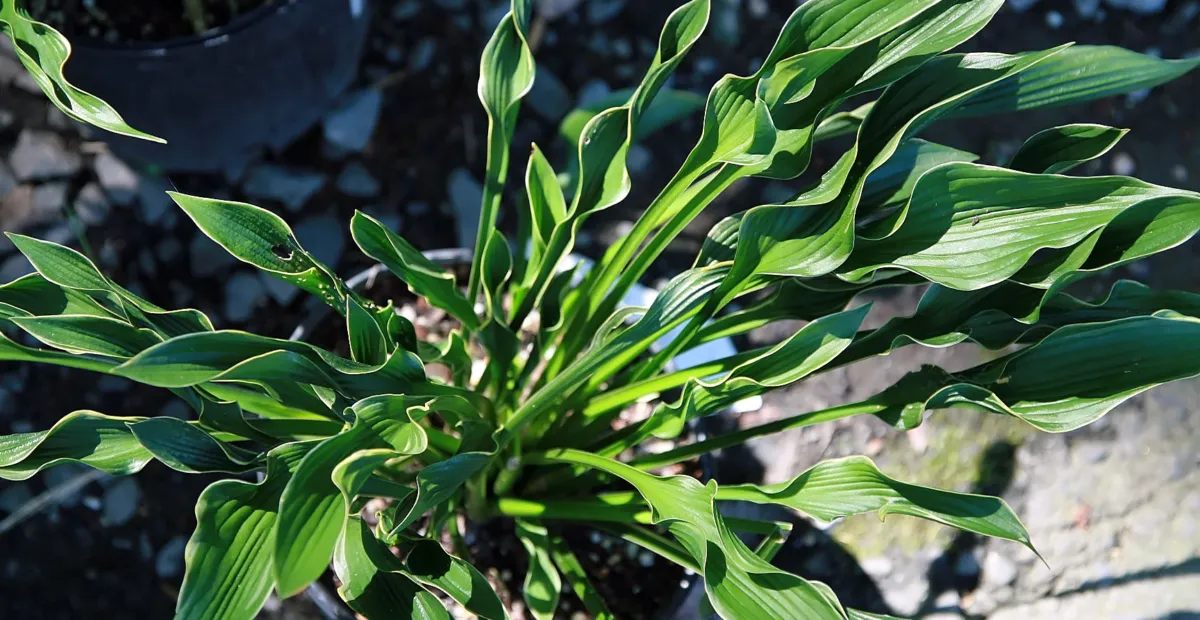
Hosta 'Praying Hands' is a distinctive shade perennial valued for its upright, tightly folded leaves rather than for large flowers. The glossy, dark-green foliage has strong rippling and a narrow creamy-yellow edge, creating a striking architectural clump. Pale lavender, bell-shaped flowers rise on slender scapes in summer. Give it evenly moist, fertile, well-drained soil and protection from hot afternoon sun.
Taxonomic classification
Hosta ‘Praying Hands’ care guide
Light and placement
Grow in partial shade to full shade, ideally with bright filtered morning or late-day light and protection from hot afternoon sun. Too much direct sun can scorch or bleach the margins and cause wilting; excessively deep shade may produce weaker growth and reduce flowering. In hotter regions, favor north- or east-facing positions.
Watering and humidity
Water deeply when the upper inch of soil begins to dry, keeping the root zone consistently moist during active growth. Increase watering during hot, dry weather and reduce it after dormancy while preventing containers from drying completely. Good drainage is essential; avoid repeatedly saturated soil around the crown.
Soil and growing medium
Use fertile, humus-rich soil that holds steady moisture without becoming waterlogged. Loam or improved clay is suitable when drainage is adequate. A slightly acidic to neutral reaction is appropriate; incorporate compost or leaf mold before planting, especially in sandy or compacted ground.
Feeding
Apply a balanced, slow-release perennial fertilizer in spring as shoots emerge, or top-dress with compost. Avoid heavy nitrogen feeding, which can produce soft foliage and increase pest problems. Stop routine fertilizing by late summer so growth can harden before dormancy.
Growth and habit
Forms a dense, upright clump from a perennial crown. The cultivar establishes gradually and remains most distinctive when divided infrequently. Remove damaged leaves during the season and keep competing roots and weeds away from the crown.
Planting and repotting
Plant in spring or early fall, setting the crown at the soil surface rather than burying it. Space plants about 18–24 inches apart for a connected display, allowing extra room where a larger clump is desired. Water thoroughly after planting and mulch lightly without covering the crown.
Repot container plants in early spring as growth resumes, moving them into fresh, moisture-retentive potting mix and a container only modestly larger than the root system. Ensure ample drainage. Divide crowded plants at the same time if needed.
Propagation and pruning
Propagation
Propagate primarily by division in early spring or early fall. Separate the crown with a sharp, clean knife so each division has viable roots and several shoots. Seed is not a reliable way to reproduce the cultivar faithfully.
Pruning
Cut flower scapes at the base after blooming if seed production is not wanted. Remove yellowed or frost-damaged foliage after dormancy in late fall or early spring, using clean tools.
Overwintering
Plants in Zones 3–8 can remain outdoors. Allow foliage to go dormant naturally, then remove collapsed leaves after frost or in early spring. Apply a light winter mulch in exposed cold sites, keeping it away from the crown. Container plants need extra root protection because roots are more exposed to freezing.
Uses
Use as a specimen or accent in shaded beds, woodland gardens, foundation plantings, and containers. Its upright, narrow foliage provides contrast with broad-leaved hostas and ferns. It is ornamental only and should not be used as food or medicine because hostas can be toxic when eaten.
Appearance
The cultivar is recognized by narrow, glossy, heavily rippled leaves that remain tightly folded and point upward, giving the clump an architectural, hand-like appearance. Leaves are dark olive green with a very narrow creamy-yellow margin. The shiny undersides become visible as the blades fold.
Flowering
Pale lavender, bell-shaped flowers are carried in upright racemes on slender scapes above the foliage. Bloom is generally mid to late summer, with timing varying by region and seasonal conditions. The foliage is the primary ornamental feature.
Pollination and visitors
Hosta flowers can provide nectar and pollen for visiting bees and bumblebees, but this cultivar is chiefly grown for foliage and is not documented as a major pollinator plant.
Diseases and pests
Diseases
Maintain airflow, avoid prolonged wet foliage, and remove spent or declining leaves. Watch for crown rot in poorly drained soil and foliar damage from fungal or bacterial problems during persistently wet weather. Divide only healthy plants and disinfect tools between cuts.
Pests
Slugs and snails commonly chew hosta leaves, especially in damp gardens. Hand-pick, reduce hiding places, use barriers, and avoid excessive surface mulch. Deer and rabbits may also browse foliage; physical exclusion is the most reliable control. Check new growth for aphids or foliar feeding damage.
Related diseases and pests
Only Plant Doctor profiles whose host data indicate this plant may be affected are shown here.
 DiseaseImpatiens necrotic spot virus diseaseImpatiens necrotic spot orthotospovirus
 DiseaseSouthern blightAthelia rolfsii
 PestStrawberry foliar nematodeAphelenchoides fragariae
 Environmental stressExcess light stress
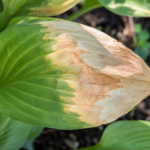 Environmental stressLeaf sunburn
 DiseaseBacterial soft rotPectobacterium carotovorum
 DiseasePhytophthora root and crown rotPhytophthora nicotianae
 DiseaseBacterial WiltRalstonia solanacearum species complex
Toxicity and pollen
Hostas contain saponins and are recognized as toxic to dogs and cats if eaten. Possible signs include vomiting, diarrhea, and depression. Keep pets from chewing foliage, flowers, or other plant parts; seek veterinary advice after suspected ingestion. Human toxicity is not well characterized, so avoid eating the plant.
- Typical season
- Flowering period, typically June–August in the United States
- Pollination / pollen
- Insect-carried flower pollen
Hosta pollen is released by insect-pollinated flowers rather than by wind in large quantities, so airborne exposure is generally low. People with known flower-pollen sensitivities should still avoid handling flowers if symptoms occur.
Native habitat
Hostas are woodland-margin perennials associated with cool, moist, humus-rich soils and filtered light. This cultivar is a cultivated garden selection rather than a naturally occurring wild population, so its natural distribution is not applicable.
Interesting fact
The cultivar is named for leaves that resemble hands folded in prayer. Its narrow, vertically folded foliage is highly unusual among hostas. It was selected by Gerald Williams and became American Hosta Growers Association Hosta of the Year in 2011. It also received the Royal Horticultural Society Award of Garden Merit.
Frequently asked questions (FAQ)
The most relevant questions about this plant, with short and direct answers.
🌱Quick care
How do you care for Hosta 'Praying Hands'?⌄
Grow Hosta 'Praying Hands' in partial to full shade, fertile evenly moist soil, and a sheltered location. Water during dry spells and remove dead foliage after it goes dormant.
Is Hosta 'Praying Hands' easy to grow?⌄
Yes, Hosta 'Praying Hands' is generally easy to grow when its soil stays evenly moist and it is protected from intense afternoon sun. Slugs, snails, deer, and drought are the main common challenges.
How big does Hosta 'Praying Hands' get?⌄
Hosta 'Praying Hands' typically forms an upright clump about 16 inches tall and 18 inches wide. Mature size varies with soil, moisture, climate, and the plant’s age.
🌤️Environment and placement
Does Hosta 'Praying Hands' prefer sun or shade?⌄
Hosta 'Praying Hands' prefers partial shade to full shade. A little gentle morning sun may be tolerated, but strong afternoon sun can scorch or fade the foliage.
Can Hosta 'Praying Hands' grow in full shade?⌄
Yes, Hosta 'Praying Hands' can grow in full shade, provided the soil remains fertile and evenly moist. Growth may be slower and flowering may be lighter than in bright, indirect light.
What soil is best for Hosta 'Praying Hands'?⌄
The best soil for Hosta 'Praying Hands' is fertile, humus-rich, moist, and well drained. Improve poor soil with compost or other organic matter, but avoid locations that remain waterlogged.
Can Hosta 'Praying Hands' grow in containers?⌄
Yes, Hosta 'Praying Hands' grows well in a container with drainage holes and quality potting mix. Choose a pot slightly larger than the root ball and monitor it more often because containers dry out faster than garden soil.
What USDA hardiness zones can grow Hosta 'Praying Hands'?⌄
Hosta 'Praying Hands' is a hardy outdoor perennial and is commonly listed for USDA Zones 3 through 9. Local winter exposure, snow cover, and container conditions can affect survival.
💧Care and problems
How often should you water Hosta 'Praying Hands'?⌄
Water Hosta 'Praying Hands' whenever the soil surface begins to dry, keeping the root zone evenly moist but not saturated. During hot or dry weather, container plants may need watering more frequently than plants in the ground.
Why are the leaves of my Hosta 'Praying Hands' turning brown?⌄
Brown leaf edges on Hosta 'Praying Hands' are commonly caused by drought, hot sun, drying wind, or heat stress. Keep the soil evenly moist and move container plants away from intense afternoon exposure if necessary.
Why does Hosta 'Praying Hands' have holes in its leaves?⌄
Holes and ragged edges on Hosta 'Praying Hands' are most often caused by slugs or snails, although deer and rabbits can also damage the foliage. Inspect plants at night and look for slime trails, missing leaves, or animal tracks.
How do you protect Hosta 'Praying Hands' from slugs?⌄
Reduce hiding places, remove debris, water in the morning, and inspect the plant after dark for slugs and snails. Hand-picking and a labeled slug control product can help when damage is persistent.
Does Hosta 'Praying Hands' need fertilizer?⌄
Hosta 'Praying Hands' usually benefits from compost or a light balanced fertilizer in spring when new growth begins. Avoid placing granular fertilizer directly against the crown, because it can cause injury.
Should you cut back Hosta 'Praying Hands' in the fall?⌄
Cut back Hosta 'Praying Hands' after frost has caused the foliage to collapse and turn yellow or brown. Removing the dead leaves helps tidy the bed and reduces overwintering habitat for some pests.
Why is my Hosta 'Praying Hands' not growing well?⌄
Poor growth is often caused by inadequate moisture, excessive sun, compacted soil, root competition, or pest damage. Check the soil moisture and light first, then inspect the crown and roots for rot or crowding.
🪴Planting and repotting
When is the best time to plant Hosta 'Praying Hands'?⌄
The best time to plant Hosta 'Praying Hands' is in spring or early fall while temperatures are moderate. Water thoroughly after planting and keep the soil consistently moist while the roots establish.
How do you plant Hosta 'Praying Hands' in the ground?⌄
Plant Hosta 'Praying Hands' with the crown at soil level or just slightly below it, spreading the roots into a wide hole. Backfill with improved soil, water well, and add a thin layer of mulch without covering the crown.
How far apart should Hosta 'Praying Hands' be planted?⌄
Space Hosta 'Praying Hands' about 18 inches apart for a natural mature clump, or closer for a quicker massed effect. Allow additional room if you want each plant’s upright form to remain visually distinct.
Can Hosta 'Praying Hands' be grown indoors?⌄
Hosta 'Praying Hands' is best grown outdoors because it needs a seasonal winter dormancy and naturally prefers cool, shaded conditions. It may be held temporarily in a cool, bright location, but it is not a long-term houseplant.
✂️Propagation and pruning
How do you propagate Hosta 'Praying Hands'?⌄
Propagate Hosta 'Praying Hands' by dividing the clump in early spring or late summer. Separate sections with roots and growing points, then replant them promptly at the same depth.
Can Hosta 'Praying Hands' be grown from seed?⌄
Hosta 'Praying Hands' is normally propagated by division rather than seed because seedlings may not come true to the parent cultivar. Seed production and viability can also be limited for this cultivar.
When should you divide Hosta 'Praying Hands'?⌄
Divide Hosta 'Praying Hands' in early spring as shoots emerge or in late summer after the hottest weather. Keep divided sections watered until new roots become established.
Should you remove the flower stalks from Hosta 'Praying Hands'?⌄
Remove the flower stalks after blooming if you prefer a tidier appearance or want the plant to direct more energy toward its clump. Leaving them in place does not usually harm an established plant.
⚠️Toxicity and safety
Is Hosta 'Praying Hands' toxic to dogs?⌄
Yes, Hosta 'Praying Hands' is toxic to dogs if eaten. Ingestion may cause vomiting, diarrhea, lethargy, or depression, so contact a veterinarian or animal poison-control service if your dog consumes it.
Is Hosta 'Praying Hands' toxic to cats?⌄
Yes, Hosta 'Praying Hands' is toxic to cats if eaten. Keep cats away from the plant and contact a veterinarian promptly if ingestion occurs or symptoms such as vomiting or diarrhea develop.
Is Hosta 'Praying Hands' deer resistant?⌄
No, Hosta 'Praying Hands' is not reliably deer resistant. Deer may browse the leaves and flower stalks, so use fencing, repellents, or other deer-management measures where browsing is common.
🌸Flowering and special interest
When does Hosta 'Praying Hands' bloom?⌄
Hosta 'Praying Hands' generally blooms in summer, often from mid- to late summer. Its pale lavender, bell-shaped flowers rise above the upright foliage on tall scapes.
What color are the flowers on Hosta 'Praying Hands'?⌄
The flowers of Hosta 'Praying Hands' are pale lavender to lavender-blue and bell shaped. The cultivar is grown mainly for its unusual folded foliage, with flowering providing additional seasonal interest.
Why is my Hosta 'Praying Hands' not flowering?⌄
Hosta 'Praying Hands' may fail to flower because it is young, stressed by drought, growing in very deep shade, or recovering from division. Improve moisture and growing conditions, then allow the plant time to mature.


